

Remaining an independent source of motorsport business is what we strive for. If Business of Speed has given you useful knowledge this year, please consider a subscription.
On August 25, Angela Jain and Sean Doyle at Disney+ commissioned a live event centered on Max Verstappen attempting to overtake 100 kart racers at Silverstone.
Two days later, Prime Video revealed a three-part documentary about Lando Norris. The same production company behind Netflix’s Drive to Survive will make it. Box to Box can now take a character developed through Netflix’s hit and build his standalone series for Amazon.
Netflix spent eight seasons teaching a global audience how to follow Formula 1 through people. Daniel Ricciardo became the charming one. Christian Horner became the operator. Guenther Steiner became the accidental television star. Verstappen was the uncompromising champion. Norris grew from an anxious McLaren prospect into a world champion.
The other streamers can skip the introductions now. Netflix did the heavy lifting by introducing the F1 drivers as personalities and opening the door for them to become brands.
Formula 1’s 2025 Global Fan Survey found that 40% of U.S. respondents followed a driver before a team or the sport. Two-thirds of all respondents said an F1 driver or team personally inspired them. Among American Gen Z respondents, 70% engaged with F1 content every day.
The streamers are buying access to that relationship.
Max Goes Beast Mode
Max vs 100 will put 101 karts on the Silverstone circuit on September 16. Verstappen starts at the back and tries to pass the other 100 drivers. ESPN and Disney will carry it live through the ESPN hub on Disney+ in participating markets, while ESPN Unlimited subscribers can watch in the United States. ESPN2 will air it later that day.


Disney is getting the pure Max Verstappen: racing anything, anywhere, against an unreasonable number of people. The format needs little Formula 1 knowledge and no season-long commitment. A viewer understands the premise in one sentence.
It also looks like a useful test for Disney+. The event is broadcast inside a subscription many already have, while being a global event and giving ESPN a live property during an F1 season whose U.S. race rights now belong to Apple.
Lando’s Closeup
Prime Video is buying a different product.
The working title is Lando. The three episodes will follow Norris through the summer of his 2026 championship defense, including time with friends and family, and will launch in more than 240 countries and territories in 2027. Norris said he has been heavily involved in the production and will give viewers more access to his life away from racing than he has shared before.
Box to Box Films, creators of Drive to Survive, will produce it.
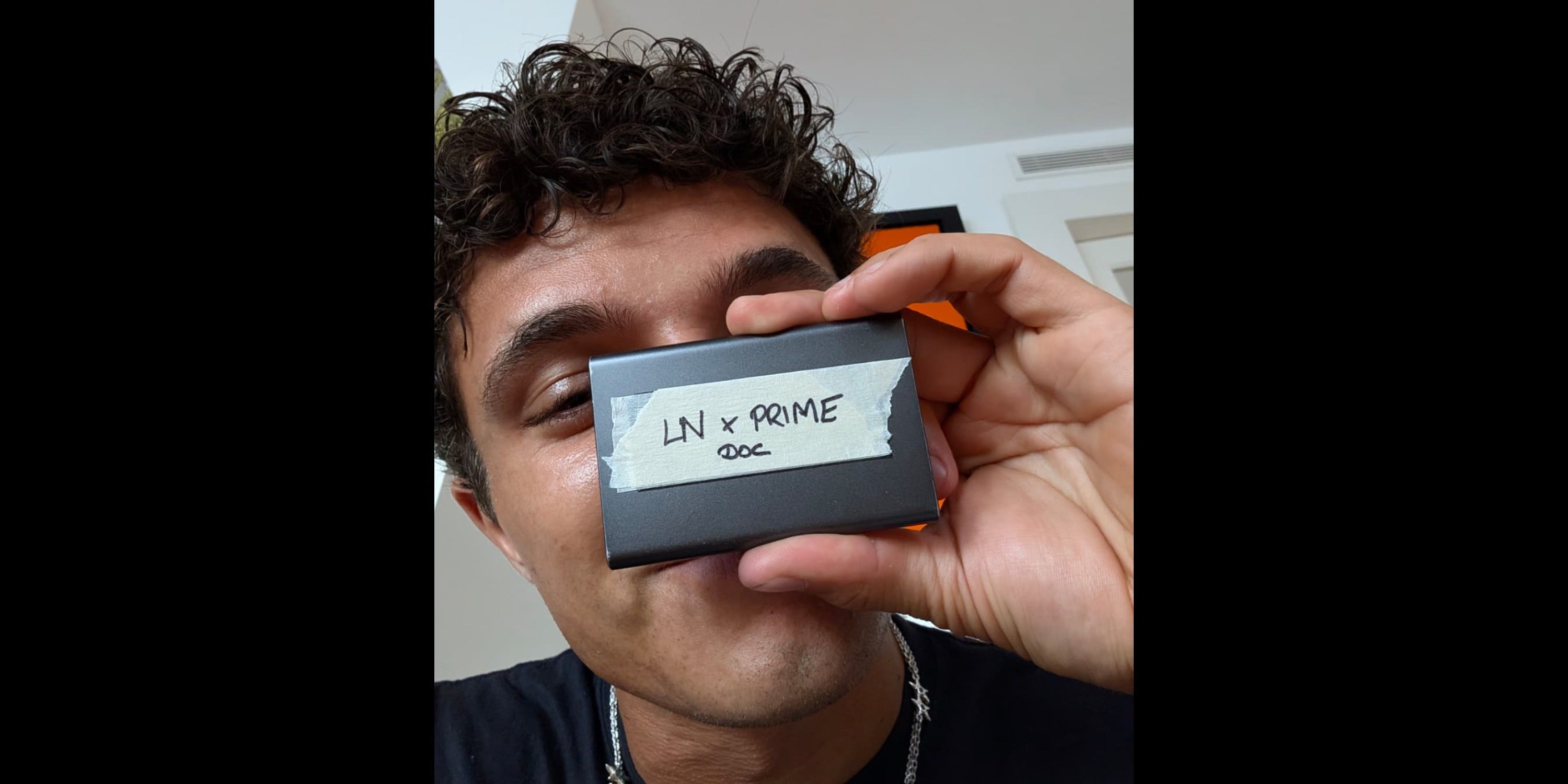
Norris already understood this world. He founded Quadrant as a gaming and content brand in 2020, years before winning the championship, and built a direct audience through streaming, YouTube and social media. BoS has tracked how drivers such as Norris helped move F1 deeper into American culture. Prime Video adds premium distribution to an existing audience business.
Sports Gives Streamers Time on Platform
A streamer needs a reason for viewers to open the app next week. Sports can provide that, and the major services are now building around that supply.
Nielsen’s Gracenote found that Amazon Prime Video, Disney+ and Netflix carried 92% of the sports programming available across the five global services it tracked in May 2025. The category included live events, highlights, news and documentaries. Sports titles across those services grew 7.8% in three months, faster than either movies or television programming.
Although live events are what will ultimately pull in new subscribers (à la Apple x F1 US rights), something like a documentary gives the service something to recommend before the next event and after the season ends.
Sports has become critical to streamers because it creates the appointment and fills the weeks around it.
That second job has become more important as viewers move between subscriptions. Deloitte reported that 90% of U.S. consumers had at least one paid streaming service in March 2025, with the average household paying for four. More than half of Gen Z respondents canceled at least one service during the previous six months. (I’m not Gen Z, but I’ve leaned into the start/stop nature of streaming services as well)
The audience for the offseason programming has tripled. Nielsen measured 16.9 billion minutes of sports documentaries watched on streaming services in 2024, up from 4.7 billion in 2021. The 2025 total was on pace to finish around the same level. Deloitte found 40% of surveyed Gen Z and millennial consumers wanted more documentary-style sports content during the offseason.
Because the schedule renews, the production cycle does too. During the season, cameras follow the rivalries, the failures, the wins, and all the drama. But the offseason adds contract moves, testing, recovery, and access to personal life. Archives support a second track built around retired athletes and legends.
Think about this for a second. For a streamer, one sport can supply live events, weekly studio shows, a current-season documentary, historical films, podcasts, and social clips. Those products give the recommendation engine several routes into the same audience and create advertising inventory on different days.
Streaming Loves Motorsports
F1 supplied the model, and it has been carried across racing.
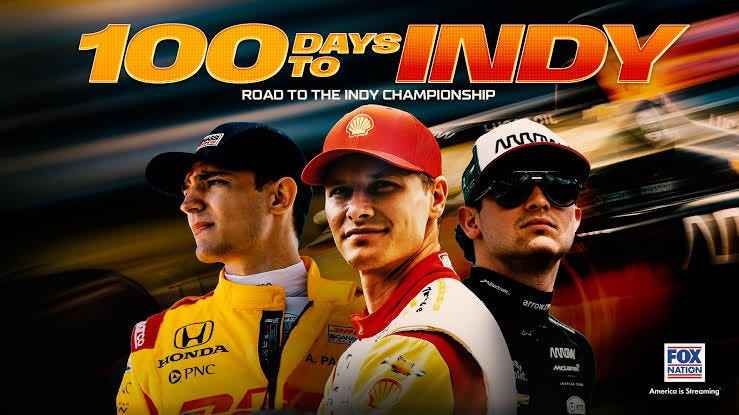
Netflix released the second season of NASCAR: Full Speed in May 2025. Prime Video followed with the four-part Earnhardt, then brought Formula E: Driver back for a second season. Fox Nation carried the third season of 100 Days to Indy. Those products cover a current playoff, a dead champion’s archive, an electric series and the run toward the Indianapolis 500.
IMSA built its own distribution. Its Win the Weekend docuseries returned to YouTube for a fourth season in February. IMSA says the first three seasons generated more than 50 million views, with more than 60% of viewers new to its channel. The series also reported that those viewers went on to watch or attend races and follow drivers or teams, although IMSA did not publish conversion rates for those actions.
IMSA is running the same funnel at a different scale, using free episodes to recruit viewers, driver stories to give them somebody to follow, and the next race to test whether the relationship sticks.
The Content Flywheel
Calling this a content glut misses the point of the business. Each format handles a different job.
Drive to Survive turned a championship into an ensemble drama. Lando sells intimacy. Max vs 100 sells a live stunt. Apple’s F1 The Movie sold the sport as a Hollywood spectacle, then Apple bought the U.S. race rights and built a full product system around the weekly broadcast.
Formula 1’s own YouTube strategy covers the free end. The first season of Amelia Dimoldenberg’s Passenger Princess generated more than 289 million views, according to F1. A six-part second season launched in July, putting Charles Leclerc, Alex Albon, Kimi Antonelli and three other drivers into a creator-native format built around personality.
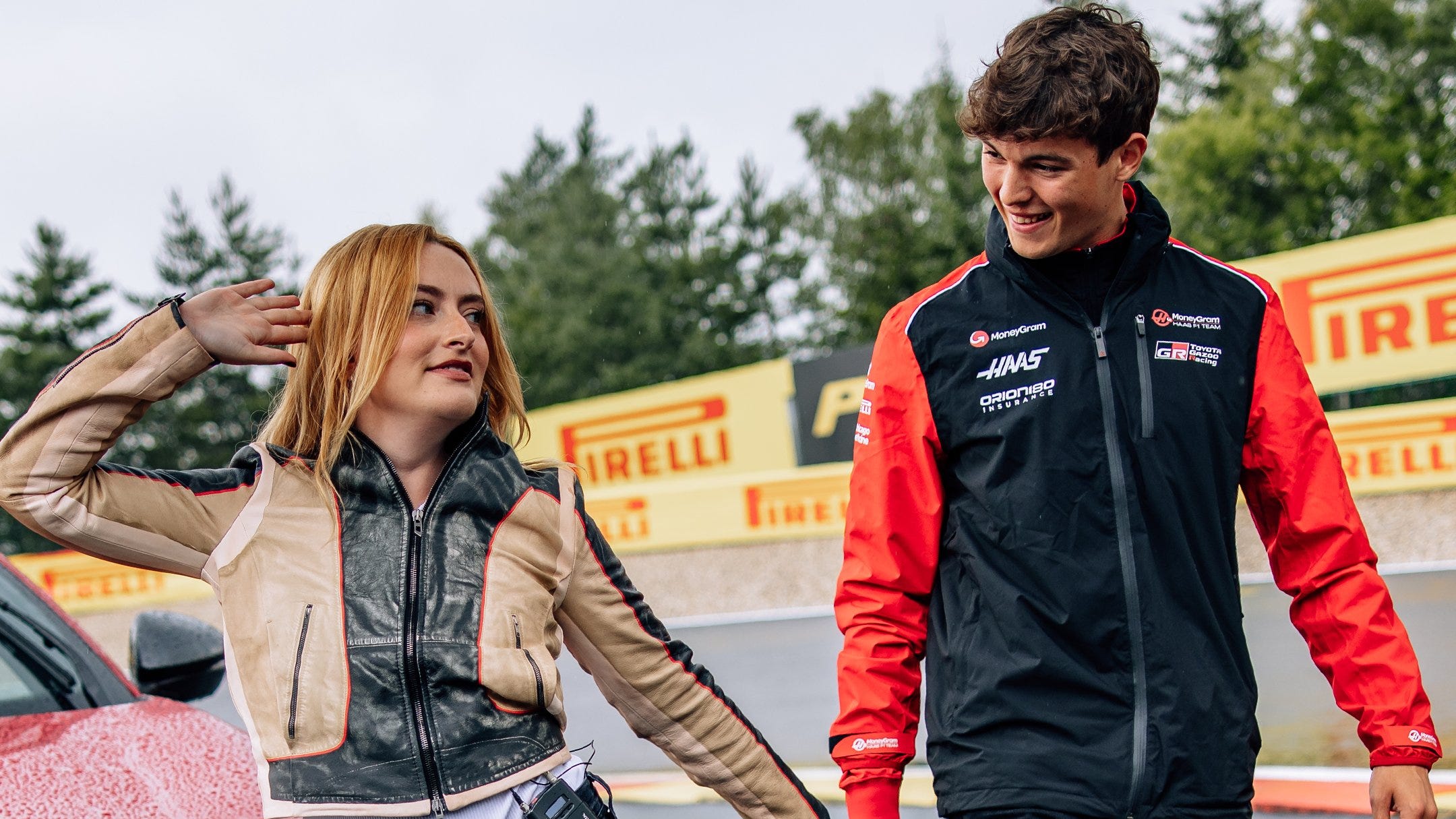
Nobody expects a short YouTube interview to perform the same job as a three-part Prime Video documentary, although that’s up for debate. Both make it easier to care about a driver before Sunday.
The strategy follows the way fans now enter the sport. F1 reported a global fanbase of 827 million in 2025, up 63% from 2018. Its own survey finds that younger fans discover the championship through social media, streaming series, and shared content, and then form identity-based connections with drivers.
F1 has built a content ladder around that behavior. Free creator video creates familiarity. A documentary deepens the relationship. Live racing gives the relationship somewhere to go.
Apple has already connected those steps in the United States. Drive to Survive Season 8 streams on Apple TV as well as Netflix. Netflix carried the Canadian Grand Prix, and Apple holds the rest of the live U.S. season. We called the broadcast the least interesting part because Apple can keep an F1 viewer engaged with Sports, News, Maps, Music, and Fitness+ apps all week.
Prime and Disney own narrower pieces. Their ability to move a viewer into regular Grand Prix consumption will depend on links, promotion and data-sharing arrangements that none of the companies have disclosed.
What’s Missing?
F1’s commercial terms for these productions remain private. So do the measurements that would show whether a viewer of Lando or Max vs 100 becomes a regular race viewer.
The public numbers reward the platform first. Prime can count starts, completions, new subscriptions, and churn. Disney can measure how many people opened ESPN on Disney+ for Verstappen and what they watched next. YouTube can report 289 million views.
Formula 1 needs to see whether that attention moves people toward the championship.
Liberty Media told investors in its 2025 annual report that F1 wants deeper fan engagement and more access to monetizable fan data. Content commissioned by several external platforms generates reach while splitting viewing data across Netflix, Amazon, Disney, YouTube, and Apple.
F1 should judge every production against four numbers: how many viewers were new to the sport, how many watched a Grand Prix afterward, how many returned for another race, and how many engaged with an F1-controlled product, such as F1.com, ticketing, or merchandise.
It’s important to connect it all together. Views without that handoff are just views.
The next round of driver contracts should get more complicated. Personal documentary rights, self-shot footage, creator appearances, and production access are becoming valuable enough to negotiate alongside image rights and sponsor obligations. My bet is that teams formalize those clauses within two seasons.
Business of Speed covers the business, technology, and lifestyle of racing: Formula 1, IndyCar, IMSA, WEC, NASCAR, and more. From Vincenzo Landino, entrepreneur and creator, featured in Bloomberg, TBPN, Yahoo! Finance, Forbes, Adweek, and Front Office Sports. You can find us on Instagram, Substack, and LinkedIn.