

An F1 team bought its first-ever Super Bowl ad, a Ferrari driver starred alongside Lady Gaga in a Pokémon commercial, and Lewis Hamilton sat in a VIP suite with Kim Kardashian. None of this was remotely conceivable ten years ago, when F1 averaged just 538,000 American viewers per race and most Americans couldn’t name a single driver.
The convergence of Netflix storytelling, Liberty Media’s strategic vision, celebrity magnetism, and a $631 million Brad Pitt blockbuster created a cultural flywheel that has made F1 not just a sport Americans watch, but a lifestyle they participate in.
An American coronation
The Cadillac F1 team paid roughly $8 million for a 30-second fourth-quarter spot, the first time ever for an F1 team. The commercial used President John F. Kennedy’s “We choose to go to the moon” speech over footage of the team’s black-and-silver 2026 livery being assembled, scored by Oscar nominee Max Richter and directed by Sam Pilling.

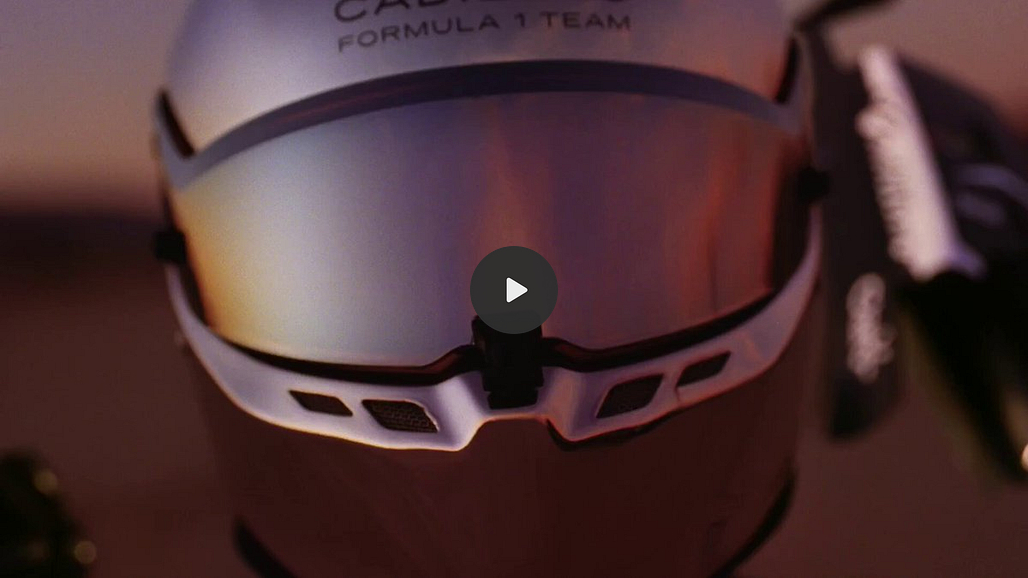
The spot ended with “Watch on Apple TV,” promoting F1’s new American broadcast home. Cadillac simultaneously installed a chrome-clad “Countdown Box” in Times Square containing a replica car that “thawed” to reveal the livery during the broadcast. ESPN’s Nate Saunders called it “a statement aimed as much at mainstream America as at a paddock that, for years, questioned whether the brand belonged on the grid.”
The ad came with unexpected drama: director Michael Bay filed a $1.5 million lawsuit two days before the game, alleging Cadillac stole his concepts, including the JFK speech idea, after hiring and then dropping him. The controversy only amplified the commercial’s visibility.
During the third quarter, Charles Leclerc appeared in Pokémon’s 30th anniversary commercial alongside Lady Gaga, Trevor Noah, Jisoo of BLACKPINK, and soccer prodigy Lamine Yamal. Leclerc championed Arcanine, the fire-type Pokémon known for legendary speed, describing it as “extremely fast” and praising its loyalty. The casting was deliberate: Leclerc is an avid gamer and Twitch streamer who reached a peak of 72,438 concurrent viewers during COVID lockdown streams. His inclusion alongside global pop culture icons demonstrated that F1 drivers now have crossover appeal comparable to that of musicians and actors in American advertising.
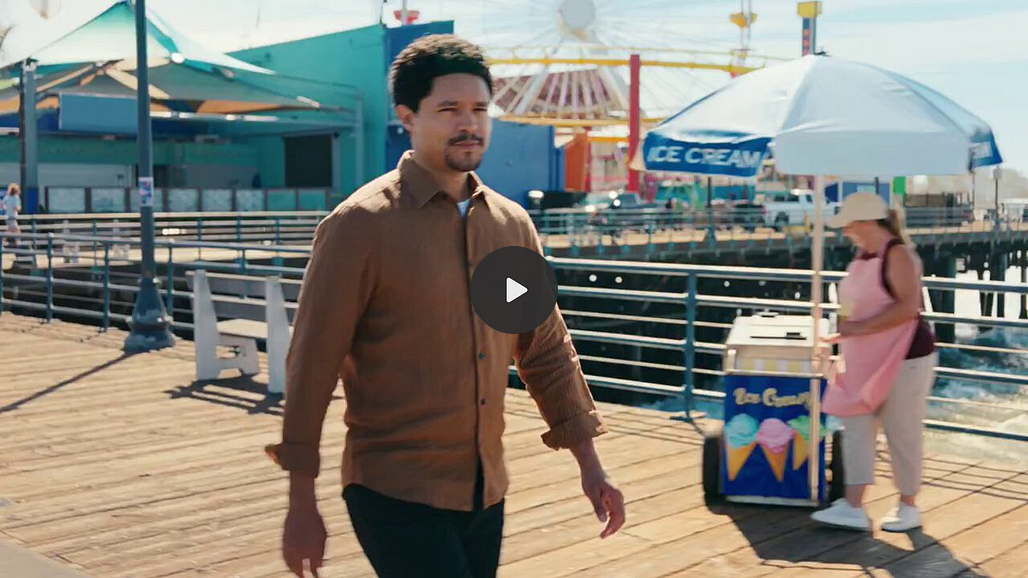
Small anecdote, my wife (a newcomer to F1 fandom) and I had started talking during the commercial, but perked up immediately upon hearing his voice, identifying it as Leclerc’s before even needing to see it.
Then the tabloids ignited. Lewis Hamilton and Kim Kardashian were filmed chatting and laughing together in a VIP suite at Levi’s Stadium, wearing coordinated black outfits and diamond jewelry. TMZ declared them “official,” Harper’s Bazaar called it a “hard launch,” and E! News ran wall-to-wall coverage.
The pair had been friends since 2014 but were first linked romantically after Kate Hudson’s New Year’s Eve party in Aspen, followed by a reported romantic getaway at Estelle Manor in the Cotswolds and a Paris Fashion Week date. The seven-time world champion, dating arguably America’s most famous reality television star, represents the ultimate collision of F1 and American celebrity culture.
Netflix lit the fuse, but the explosion had many accelerants
The single most important catalyst for F1’s American breakthrough was Netflix’s “Formula 1: Drive to Survive,” which premiered in March 2019. But the series didn’t operate in a vacuum. It landed inside a strategic framework built by Liberty Media, which acquired F1 in January 2017 and immediately pivoted toward the American market by lifting restrictive social media policies, refreshing the brand identity, and commissioning the documentary concept.
The timeline tells the story.

In 2018, ESPN took over U.S. broadcast rights and averaged 554,000 viewers. DTS Season 1 launched in March 2019, and viewership jumped 21% to 672,000. Then came the pandemic: DTS Season 2 dropped in March 2020 precisely as millions of Americans entered lockdown, creating a captive binge-watching audience. F1 became one of the first major sports to resume competition in July 2020, giving freshly minted fans something to watch immediately.
The 2021 season delivered the narrative: the Hamilton-Verstappen championship battle went to the final lap in Abu Dhabi in one of the most dramatic sporting conclusions in recent memory.
ESPN viewership surged 56% to 948,000, and Circuit of the Americas attendance exploded from 268,000 to 400,000. A Morning Consult poll found 53% of American F1 fans credited Drive to Survive for getting them into the sport, rising to 74% among viewers under 45.
The cultural transformation was demographic as much as numerical. F1’s average viewer age dropped from 44 to 32. Female fandom surged from roughly 8% in 2017 to approximately 40% by 2024, with the 16-to-24 female demographic becoming the sport’s fastest-growing segment.
America’s newest red carpet
The 2022 Miami Grand Prix was the moment F1 crossed the cultural zeitgeist.
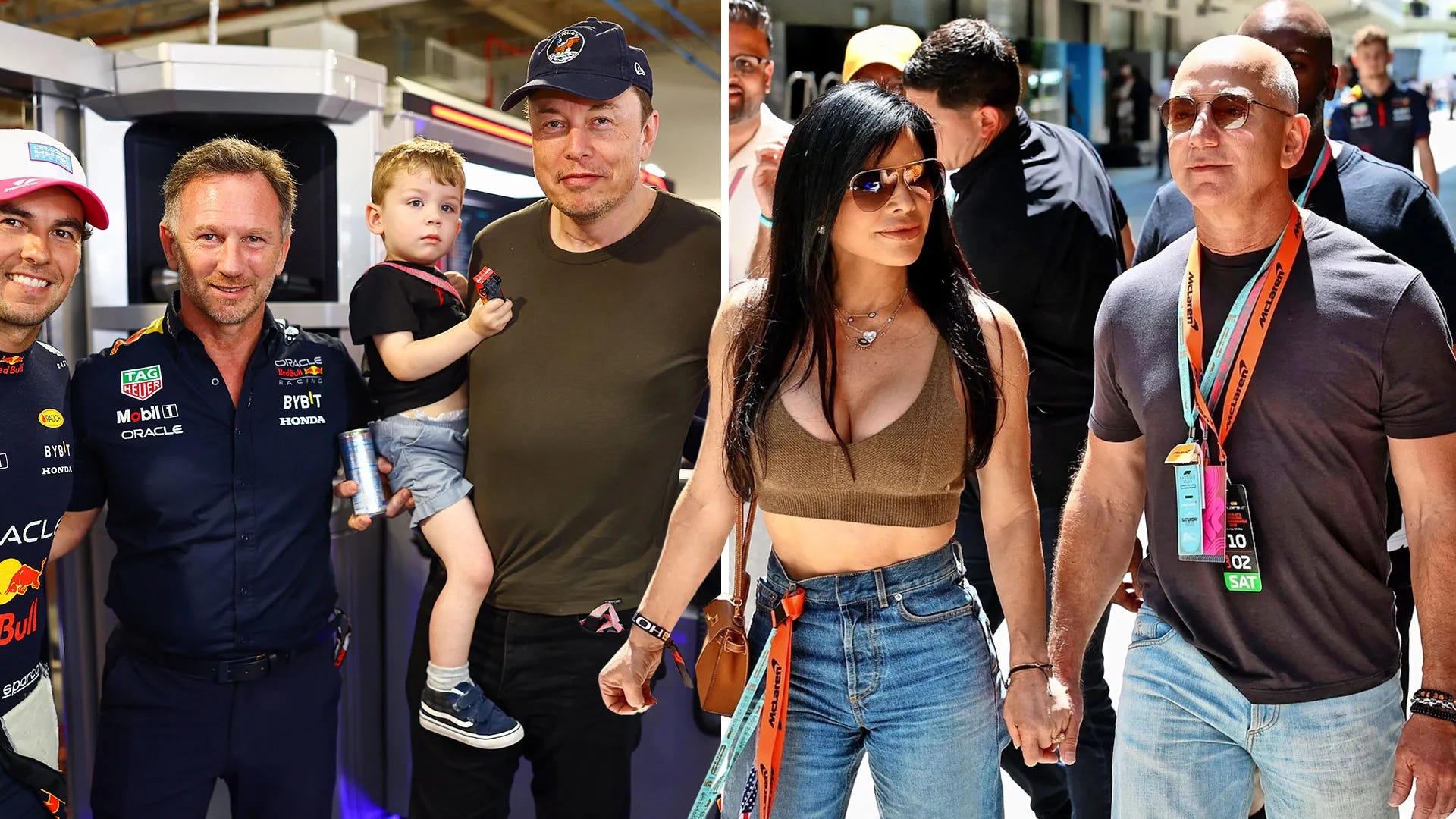
The inaugural race drew 243,000 fans and a celebrity roster that read like an Oscar after-party: Tom Cruise in the Mercedes garage, Patrick Mahomes trackside, Serena and Venus Williams, Elon Musk, Jeff Bezos, and DJ Khaled. By 2024, the Miami GP attracted 3.1 million U.S. television viewers, the largest live F1 audience in American history at the time.
The November 2023 Las Vegas Grand Prix raised the stakes further. Racing on the Strip at night, the event drew 315,000 spectators across four days and an extraordinary celebrity convergence: Brad Pitt, Rihanna and A$AP Rocky, Leonardo DiCaprio, Jennifer Lopez, Shaquille O’Neal, Lupita Nyong’o, and Michael B. Jordan, among dozens of others. Jennifer Lopez and Ben Affleck hosted a charity poker tournament at the Venetian.
American athletes and celebrities began investing real money. Patrick Mahomes, Travis Kelce, Rory McIlroy, Michael B. Jordan, and Ryan Reynolds all joined an investor consortium that acquired a 24% stake in the Alpine F1 team for $218 million. Lewis Hamilton became a co-owner of the Denver Broncos. The crossover became bidirectional. As sports celebrities entered F1, F1 drivers entered mainstream American culture.
The numbers behind this celebrity magnetism are striking. More than 110 U.S. brands now sponsor F1, more than double the figure from 2017. Forty-five percent of McLaren’s 57 sponsors are U.S.-based. LVMH signed a 10-year global luxury partnership encompassing TAG Heuer, Louis Vuitton, and Moët, cementing the paddock as a luxury territory where fashion magazines now send correspondents alongside sports reporters.
The athlete-celebrity playbook
No individual better embodies F1’s American cultural penetration than Lewis Hamilton, who has systematically built a presence spanning fashion, entertainment, activism, and celebrity culture that far transcends motorsport.
Hamilton has attended the Met Gala eight times since 2015 and co-chaired the 2025 edition alongside Colman Domingo, Pharrell Williams, A$AP Rocky, and Anna Wintour. In 2021, he purchased his own Met Gala table and filled it with emerging Black designers, a move that generated significant media coverage beyond fashion circles.
His brand portfolio reads like a map of contemporary influence: co-designed collections with Tommy Hilfiger; a capsule collection with Dior; his own clothing line, Plus 44, with collaborations featuring Takashi Murakami and Tyler, the Creator; and a non-alcoholic spirit brand called Almave. He has appeared on the covers of Vanity Fair, GQ, and Vogue, and his social media following continues to grow to over 39 million.
Hamilton also co-produced the Brad Pitt film “F1,” released in June 2025 through Apple Studios. The $300 million production, directed by Joseph Kosinski of “Top Gun: Maverick” fame, grossed $631.8 million worldwide, making it the highest-grossing sports film of all time.
It earned an 82% Rotten Tomatoes score and four Academy Award nominations, including Best Picture. Its companion album featured Doja Cat, Ed Sheeran, Rosé, Chris Stapleton, and Tate McRae. The film’s fictional team, APXGP, generated its own fashion line through Tommy Hilfiger, and fans began treating it as “the 11th team.”
Other drivers have followed Hamilton’s template at different scales.
Charles Leclerc serves as the face of Armani, launched his own CL16 apparel brand, and even his own production company, SideQuest. Pierre Gasly is an ambassador for Dior and Givenchy. Lando Norris, the 2025 World Champion, appeared in Vogue, founded the gaming and content brand Quadrant, and collaborated with American vlogger Casey Neistat. Daniel Ricciardo, though retired from F1, became perhaps the sport’s most beloved American talk-show presence, appearing on Stephen Colbert, Jimmy Kimmel, and The Daily Show. Ricciardo is now a Ford Racing brand ambassador.
From European curiosity to culture staple
F1’s penetration of American youth culture has been particularly dramatic. The sport now operates as a full TikTok universe, with driver edits, paddock fashion content, “WAG culture” posts, and meme accounts generating billions of views. The U.S. accounts for 23% of F1’s global social media engagement (the highest share of any single country) and is the sport’s largest YouTube market with 135 million views. F1’s total social media following reached 107.6 million by mid-2025, a 21% year-over-year increase and a roughly 445% increase in the U.S. since 2018.
The gaming pipeline feeds directly into fandom. EA Sports’ annual F1 games serve as entry points for younger Americans, while Leclerc and Norris built huge streaming audiences during the 2020 pandemic lockdowns.
Max Verstappen won the Best Driver ESPY Award three consecutive years (2023–2025), embedding F1 into America’s premier sports awards show. The “F1” movie’s success further validated the sport’s entertainment credentials, with Apple SVP Eddy Cue noting that focus group audiences who expressed little interest in F1 before viewing the film overwhelmingly wanted to watch races afterward.
The comparison to other international sports that “made it” in America is instructive. The Premier League grew from roughly 220,000 average viewers in 2012 to 546,000 by 2024, a 148% increase over 12 years, driven by NBC’s quality broadcasting and consistent investment.
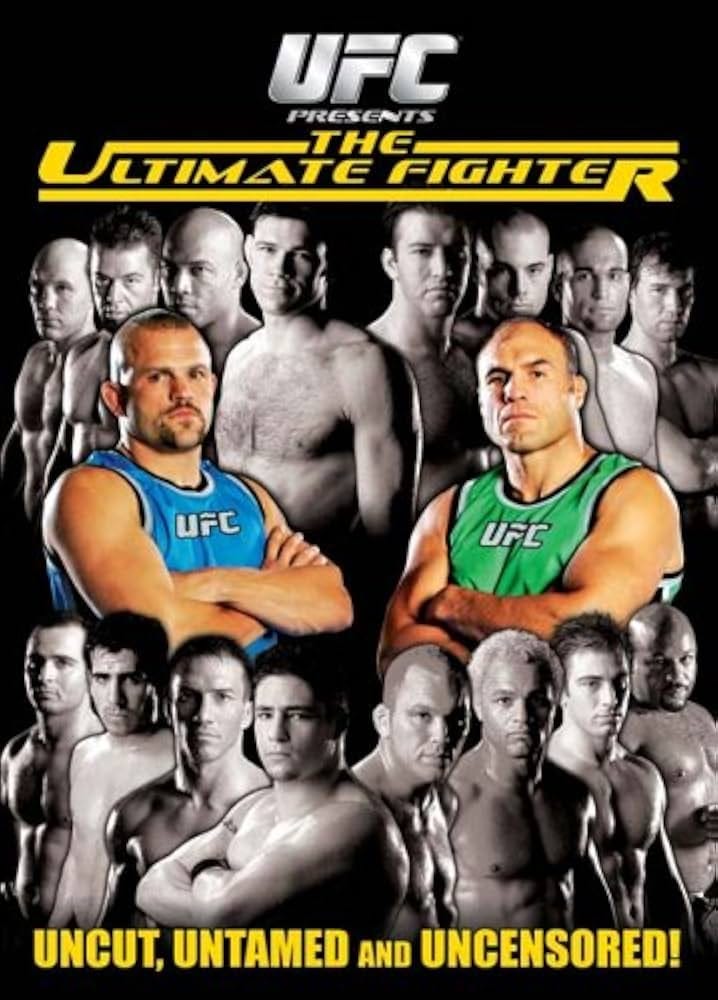
The UFC went from near-bankruptcy in 2001 to mainstream legitimacy by 2013, catalyzed by “The Ultimate Fighter” reality show in 2005. This, a clear precursor and parallel to Drive to Survive.
F1’s trajectory has been notably steeper: 142% viewership growth in just eight years (538,000 to 1.3 million), with the sport now drawing comparable or larger audiences than IndyCar while closing the gap with NASCAR.
All three followed similar playbooks: compelling content that humanized athletes, strategic broadcast partnerships, and personality-driven narratives. But F1 compressed the timeline dramatically by combining Netflix’s global reach with social media virality and an entertainment-first American race calendar.
Keeping the momentum
F1’s American cultural integration represents something rarer than a sports ratings story. The sport has achieved what can be referred to as “cultural embedding”.
The most telling metric may be the simplest. One in two American F1 fans started following within the last five years. This is not a sport with deep American roots that have grown incrementally.
This is a complete cultural transplant that has taken root with extraordinary speed.
From the Ground
Creator Tasia Johnson was on the ground for the livery reveal in Times Square and wrote about it below. Give it a read.

Great reporting per usual! Love the data backed insights
Thanks for the mention!