


This is Part 3 of a 3-part series breaking down Formula 1: the sport, the business, and the culture behind the fastest show on earth. Whether you’re brand new or just filling in the gaps, start here. Read Part 1: The Sport and Part 2: The Business.
If you’re interested in Formula 1 and how the money works in motorsport, please subscribe.
Part 3: The Culture
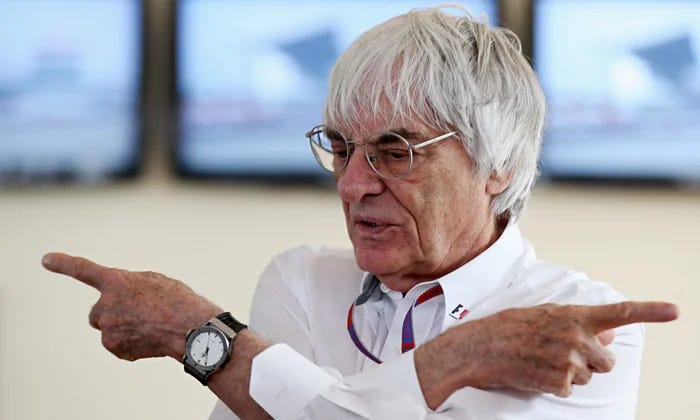
In 2016, the average Formula 1 fan was 36 years old, male, European, and wealthy. Women made up roughly 8% of the fanbase. The sport’s commercial rights holder, CVC Capital Partners, had extracted an estimated $4.5 billion in profits while investing almost nothing back into growth. The man running the show, Bernie Ecclestone, had openly dismissed the idea of courting younger fans. His reasoning was simple: they couldn’t afford a Rolex.
By 2025, the average fan age had dropped to 32. Women represented 42% of the global audience. Three in four new fans were female. The fastest-growing demographic was women aged 16 to 24. The total fan base had swelled to 827 million, surpassing the NBA as the largest international sports property on earth.
Something fundamental changed. Understanding what, why, and who drove it is the story of modern Formula 1.
The Old Regime
Bernie Ecclestone ran Formula 1 for nearly four decades. He was brilliant at extracting value from the sport and terrible at growing it.
His approach to digital media was not indifference. It was hostility. He once told Campaign Asia-Pacific: “I’d rather get to the 70-year-old guy who’s got plenty of cash.” On younger fans and sponsors, he was explicit: “Young kids will see the Rolex brand, but are they going to go and buy one? They can’t afford it. Or our other sponsor, UBS. These kids don’t care about banking. They haven’t got enough money to put in the bloody banks anyway.”
This was a deliberate commercial strategy. F1’s sponsor model was built around ultra-premium brands whose target consumers were older, affluent men. Ecclestone saw no reason to court anyone else.
The content strategy matched the philosophy. Formula One Management aggressively issued DMCA takedowns for any race footage posted online, including decade-old archival clips. Filming inside the paddock was banned for anyone other than official broadcasters. Lewis Hamilton received stacks of cease-and-desist letters for posting onboard clips from his car to Instagram. Teams had almost no latitude to create or share visual content from race weekends. Every image and every second of video was treated as a monetizable asset to be hoarded.
His views on women in the sport were worse. In 2005, he said women “should be dressed in white like all the other domestic appliances.” He told CNN he didn’t believe women would “physically be able to drive an F1 car quickly” and that they “wouldn’t be taken seriously.”
On the American market, he was dismissive. A proposed New Jersey Grand Prix never materialized. The US Grand Prix at Indianapolis collapsed after the infamous 2005 tire debacle. He once said, “So many stupid things come out of America, and everyone’s happy.” Under his reign, the US rarely had more than one Grand Prix, and even that relationship was contentious.
The broadcasting strategy accelerated the decline. Ecclestone shifted from free-to-air television, which had built F1’s global audience to a peak of roughly 600 million cumulative viewers in 2008, toward exclusive pay-TV deals. The result: F1 lost one-third of its worldwide TV audience between 2008 and 2016. Approximately 200 million viewers disappeared.
F1 had no marketing department. No content team. No sponsorship sales operation in any modern sense. No streaming service. No official YouTube channel of substance. The internet was treated as a threat to be contained. Greg Maffei, Liberty Media’s president, later characterized Ecclestone’s approach as the “old rich white guy” economic model.
It worked for Ecclestone and his investors. CVC made roughly $7.6 billion in total returns on F1. Ecclestone himself walked away with an estimated $4.7 billion when Liberty acquired the sport. But the audience was shrinking, the demographics were calcifying, and the commercial infrastructure hadn’t evolved since the 1990s.
The Takeover
In January 2017, Liberty Media completed its $4.4 billion acquisition of Formula 1 and installed a three-person management team: Chase Carey as CEO, Ross Brawn as Managing Director of Motorsports, and Sean Bratches as Managing Director of Commercial Operations.
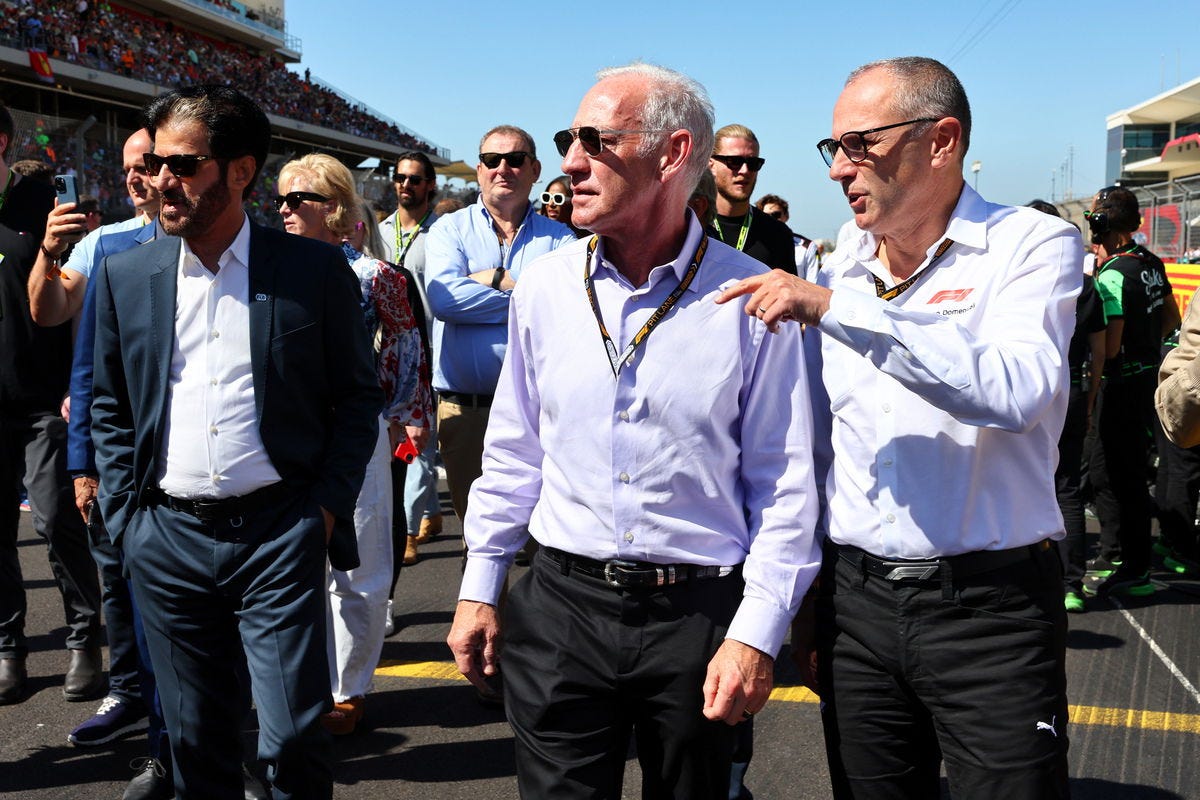
Bratches, a former ESPN executive, was the key figure in the commercial transformation. His mandate was to turn F1 from a motorsport company into a global media and entertainment brand. The starting point was stark: there was no commercial department to inherit. He built it from scratch.
The first move was symbolic and immediate. In February 2017, teams received a formal letter confirming relaxed social media rules. They were now encouraged to post clips from racing events. The paddock filming ban was lifted. Drivers, who had been legally threatened for sharing their own experiences, were suddenly positioned as the sport’s primary content creators.
F1 launched its official YouTube channel in earnest, posting race highlights within hours of each Grand Prix, along with tech explainers, driver Q&As, and full classic race replays. The channel grew from under a million subscribers to over 13.5 million. In select markets, full races were streamed free on YouTube. F1 TV, a direct-to-consumer streaming platform, launched in 2018 and grew to over 3.2 million subscribers by 2023.
Then came TikTok. F1 leaned into short-form content hard: team radio moments, pit lane drama, pre-race rituals, driver personality clips. The account grew to over 5 million followers. Throughout the 2023 season alone, F1’s TikTok content accumulated 111 million views, averaging 3.3 million per post.
The total social media footprint tells the story most efficiently. In 2017, F1 had roughly 18 million followers across platforms. By 2025, that number was 114.5 million. A 512% increase in eight years. F1 became the fastest-growing major sports league on social media for five consecutive years.
Stefano Domenicali replaced Carey as CEO in January 2021 and further extended the vision. His stated goal: make F1 a lifestyle brand. “I want people to talk about different kinds of business,” he said. “I want F1 to be seen as a lifestyle. When you talk about us, you talk about the place to be.”
Drive to Survive
In March 2019, Netflix released Formula 1: Drive to Survive, a docuseries produced by Box to Box Films with unprecedented behind-the-scenes access to the paddock. The same paddock that had been sending Hamilton cease-and-desist letters two years earlier.
The show did something decades of racing couldn’t: it made millions of people who had never watched a Grand Prix care about the sport. The formula was character-driven storytelling over race statistics. Rookies chasing dreams, team principals fighting for their jobs, veterans contemplating retirement, rivalries playing out in real time. The production values were cinematic. The editing was aggressive. The drama was real, even when purists argued it was selectively amplified.
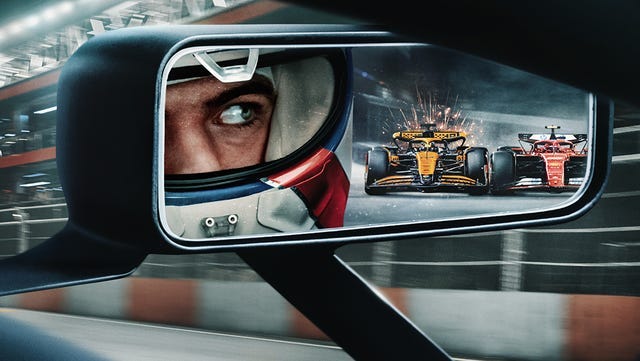
The timing was accidental and perfect. Season 2 landed during COVID-19 lockdowns, when captive audiences were searching for anything to binge. TikTok was emerging at the same time, and Gen Z creators started sharing clips, memes, and explainers that brought F1 to users who had never engaged with motorsport. When live racing resumed, F1 was among the first sports back, and newly hooked viewers could transition directly from episodes to races.
The numbers are unambiguous. In the US, 53% of adult fans cited Drive to Survive as a reason they became regular viewers. Among fans under 45, 74% credited the show as playing a role. More than 360,000 viewers who had not watched F1 in 2021 started watching races in 2022 after first watching DTS. ESPN’s average race viewership jumped from 547,000 in 2018 to 1.32 million by 2025.
The new fans the show attracted looked nothing like the old fanbase. Nielsen data showed DTS-driven fans were younger (46% under 34, compared to 16% of pre-existing viewers), more diverse (23% Hispanic vs. 12% among non-DTS fans), and more affluent. They were also disproportionately female. In the UK, 46% of Drive to Survive viewers were women. By 2022, Domenicali reported that 40% of F1’s US audience was female.
The show’s complicated legacy is worth acknowledging. Longtime fans criticized it for fostering rivalries and compressing timelines to heighten drama. Several drivers, most notably Max Verstappen, refused to participate in certain seasons because they felt misrepresented. The show prioritized accessibility over technical depth, a trade-off that helped expand its audience but alienated some of its core audience.
Every major sport tried to replicate the formula. NASCAR’s Race for the Championship aired on USA Network in a late-night slot and drew roughly 233,000 viewers. Formula E, IndyCar, and MotoGP all announced their own behind-the-scenes series. None achieved the same cultural penetration. The conditions that made Drive to Survive work (unprecedented access, pandemic timing, TikTok virality, Box to Box’s production quality, and the epic 2021 Hamilton-Verstappen championship battle) were a constellation unlikely to repeat.
By 2023, the discovery pipeline had shifted. Social media overtook DTS as the primary channel through which new fans found the sport (22% vs. 14%). The show opened the door. The content ecosystem built behind it kept people walking through.
The Movie
The Brad Pitt F1 film, released in 2025 and starring Damson Idris alongside Pitt, grossed over $630 million worldwide, becoming the highest-grossing sports film ever made.

Its cultural significance went beyond the box office. In a media landscape saturated with irony and deconstruction, the film offered something unfashionable: sincerity. An earnest, aspirational story about merit, collaboration, and what it takes to compete at the highest level. That tone resonated with an audience already primed by Drive to Survive to see F1 as something emotionally legible.
The film’s presence at the 2025 Met Gala crystallized the crossover. Damson Idris wore a white racing suit encrusted with 2,000 Swarovski crystals over a red Tommy Hilfiger tuxedo. Lewis Hamilton arrived in an ivory Grace Wales Bonner ensemble that referenced his ancestral history. These weren’t athletes borrowing fashion credibility. They were cultural figures operating comfortably at the intersection of sport, luxury, and identity.
Who Shows Up Now
The demographic shift is the most consequential change in F1’s modern history, and the data is worth sitting with.
In 2017, women made up roughly 8% of Formula 1’s fanbase. By the end of 2024, Nielsen’s study across 37 markets and 46,000 respondents found that 41% of F1’s 750 million global fans were women. That’s over 300 million female fans worldwide. The 2025 Global Fan Survey, based on over 100,000 responses from 186 countries, found that three in four new fans are female and nearly half of all Gen Z respondents are women.
The age profile shifted in parallel. The average fan age dropped from 36 in 2017 to 32 by 2021. Among new US fans who have followed the sport for five years or less, 47% are aged 18 to 24. More than half of all new fans identify as Gen Z. Seventy percent of Gen Z respondents engage with F1 content daily.
Comscore data from 2024 shows the shift playing out online in real time: unique female visitors to Formula1.com increased by 73%, with women aged 25 to 34 up 670%. On McLaren’s YouTube channel, the female audience share jumped from 28.5% to 50.4%.
These aren’t peripheral trends.
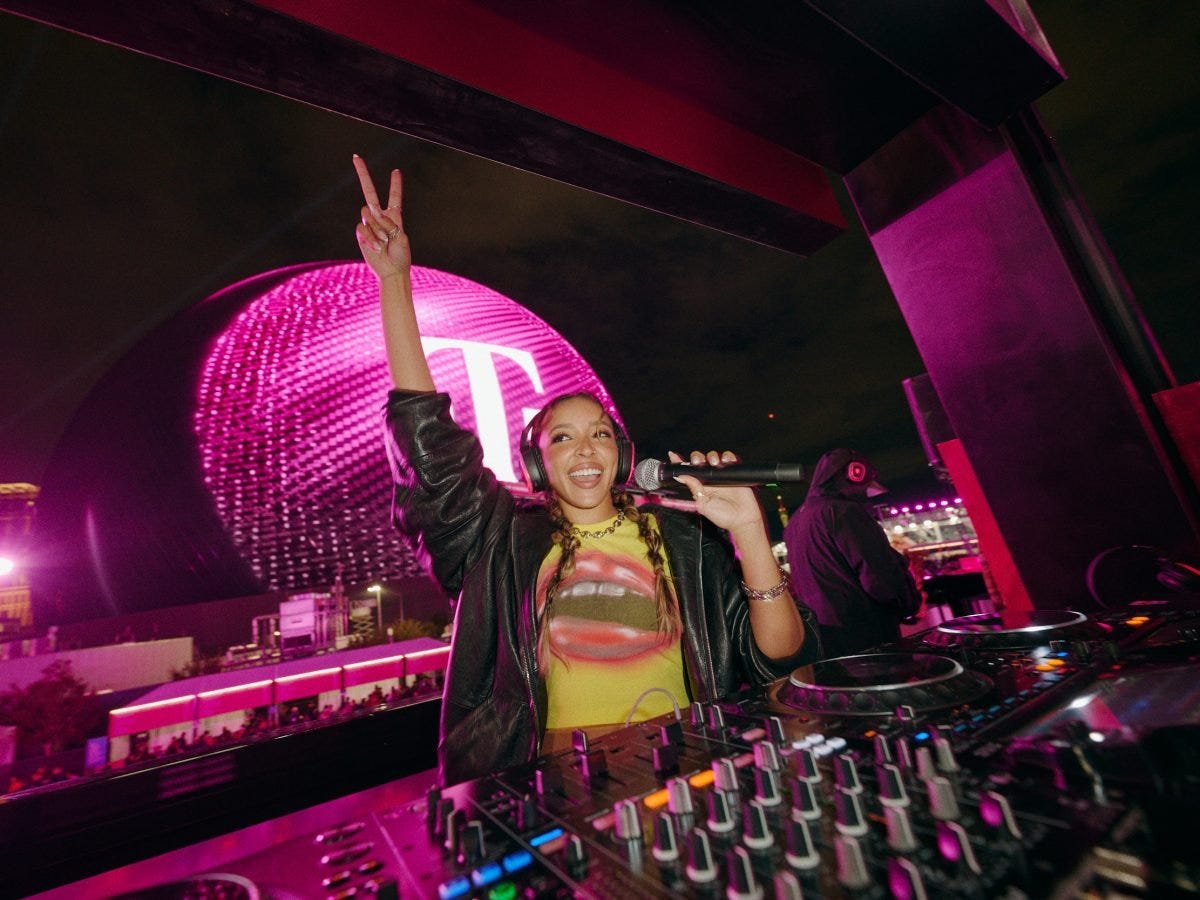
The Essence article “The Future of F1 Looks Like Us” captures the human dimension behind the data. Nina Meyers, a Forbes 30 Under 30 honoree, launched Full Throttle, a platform designed to open doors in motorsports for Black women, Americans, and women of color. Her work addresses not just fandom but pathways: driver development, STEM roles through HBCUs, and corporate partnerships aimed at systemic inclusion. “For decades, Formula 1 in the U.S. was coded as exclusive, expensive, and inaccessible,” Essence noted. “This year shattered that myth.”
Lewis Hamilton’s significance extends well beyond his seven championships. He remains the first and only Black driver in F1 history. His cultural influence operates on a different frequency than his on-track record: the fashion, the advocacy, the visibility. When Beyoncé attended the 2025 Las Vegas Grand Prix, wearing Louis Vuitton and driving a Ferrari, took a hot lap with Hamilton, and posted about it, that wasn’t a celebrity cameo. It was confirmation that F1 had entered a cultural orbit where the audience arriving through fashion, music, and identity is as large as the one arriving through motorsport.
As Girls United framed it, “The real story isn’t about celebrities dipping into the paddock. It’s about the fans who finally see themselves reflected in a sport where they were never expected to show up.”
Fashion and the Paddock
The paddock used to be a restricted industrial space. Now it functions as a stage.
The shift has commercial roots. LVMH’s 10-year global partnership, reportedly worth $150 million per season, brought Louis Vuitton, Moet Hennessy, and TAG Heuer into the F1 ecosystem. The “F1 75 Years in Motion” exhibit at Selfridges in London positioned racing as a luxury cultural artifact. Charlotte Tilbury became the first female-founded beauty brand to sponsor F1 Academy. Elemis became the first skincare partner of an F1 team.
“Motorcore,” a term coined in 2022, describes how motorsport aesthetics infiltrated mainstream fashion. People across the US started tracking down vintage Ferrari jackets. Chanel incorporated motorsport references into runway shows. Drivers became fashion magazine fixtures: Hamilton’s elaborate pre-race outfits, Daniel Ricciardo at the Met Gala, and Charles Leclerc’s modeling work for various fashion houses.
F1 offers what Colin Magazine described as “danger without consequence, luxury without access, drama without scripts, and speed without limits.” That combination maps perfectly onto what modern audiences, particularly younger audiences consuming content through social platforms, find aspirational.
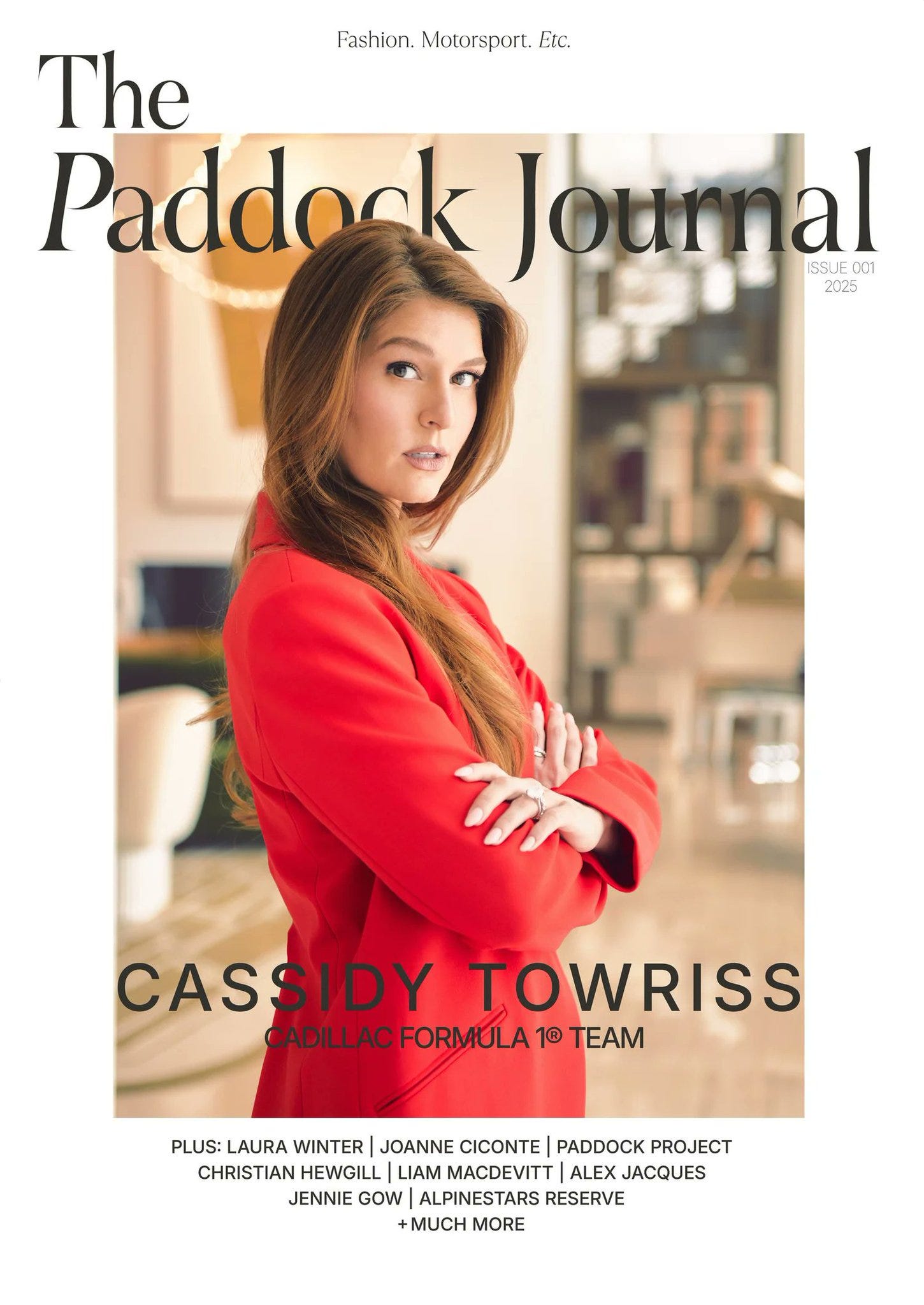
The commercial value follows the attention. A 35% surge in Earned Media Value for fashion brands associated with F1 was recorded in 2023 alone. Instagram delivered $314.7 million in total media value for F1. TikTok averaged $45,200 per post. The audience that fashion and luxury brands want (young, affluent, digitally native, globally distributed) is the audience F1 is now delivering.
The American Expansion
The US was F1’s single largest growth opportunity, and Liberty Media treated it accordingly.
Under Ecclestone, the country had at most one Grand Prix. Under Liberty, it has three: Austin (COTA), Miami (added in 2022, contract through 2041), and Las Vegas (launched in 2023). Liberty invested approximately $500 million directly into the Vegas event, including $240 million for land and $80 million for infrastructure. The LEGO Miami Grand Prix generated over 24 billion views, with all 20 drivers operating drivable LEGO cars during the parade lap.
The broadcasting trajectory captures the shift in a single line. ESPN’s original F1 rights deal under Ecclestone cost roughly $5 million per year. By 2023, the renewal was $75 to $90 million.
Apple’s 2026 deal came in at approximately $150 million per year. A 30x increase from the pre-2023 baseline.

US viewership doubled between 2018 and 2025. The American fanbase reached 52 million. 58% of US fans are now under 45. Domenicali noted: “Forty percent of our U.S. audience is female. The average age is 34. Very young. We need to connect with them.”
Cadillac’s entry adds an American constructor to the grid for the first time in decades. The team hired a creator-focused CMO, signaling that their strategy is as much about cultural positioning as it is about racing. Whether F1 can sustain this level of American attention or whether it’s riding a wave that will eventually plateau is the open question. Three US races, an American team, and an Apple broadcast deal represent a significant bet that the answer is the former.
The Races That Carry Weight
Not every Grand Prix means the same thing.
Monaco, Spa, Monza, Silverstone, Suzuka. These circuits carry a weight that newer additions to the calendar haven’t earned and may never earn. They represent 75 years of accumulated history, the mythology that made the sport worth caring about before Netflix and TikTok made it accessible.
The 75th anniversary celebration in Milan offered a window into what heritage looks like in practice: a dinner at Garage 21 with trophies and memorabilia, Jackie Stewart’s 1960s championship car, Michelin-starred food from Massimo Bottura, and Moet & Chandon (the brand behind the champagne shower tradition since the sport’s early decades). It was a gathering of the sport’s institutional memory, the kind of event that connects the present grid to something larger.
Monza fills the grandstands with tifosi who have supported Ferrari through every era. The atmosphere at Silverstone reflects a country that considers Formula 1 part of its national sporting identity. Suzuka’s figure-eight layout and its devoted Japanese fanbase give it a character no simulator or architect could replicate. Spa’s Eau Rouge corner is the kind of challenge that defines whether a driver belongs at the top level.
Newer races serve different purposes. Vegas is a commercial proof of concept. Miami is an entertainment spectacle. Saudi Arabia and Qatar are nation-branding exercises backed by sovereign capital. Madrid joins the 2026 calendar while Imola drops off. The tension between heritage and expansion is constant, and the calendar is where it’s most visible. F1 needs both: the historic circuits provide emotional legitimacy, and the new venues provide revenue growth and market access. Managing that balance, year after year, is one of the sport’s quiet ongoing challenges.
The Question Underneath
A Cambridge academic paper titled “Desiring Machines: Formula One as Cultural Performance” argued that F1 succeeds not by following the logic of sport but as a cultural performance for the transnational capitalist class: fast cars, jetsetting lifestyles, luxury goods, a fantasy of consumer life supplied by the international corporate elite.
That framework still holds. But the audience consuming the fantasy has changed entirely.
F1 is bigger, more diverse, more accessible, and more culturally embedded than at any point in its 75-year history. 827 million fans. 42% women. The fastest-growing demo is 18 to 34. Social media followers grew 512% in eight years. Attendance records fall annually. The F1 movie outgrossed every sports film ever made. Lewis Hamilton has more Instagram followers than Serena Williams.
The sport that Ecclestone built for old men with Rolexes is now being claimed by young women on TikTok, by Black fans building platforms like Full Throttle, by Americans who discovered the paddock through a Netflix show during a pandemic.
Growth at this scale changes what a thing is. The question F1 faces now is whether the culture that made it compelling in the first place, the engineering obsession, the driver mystique, the sheer physical danger of racing at 360 km/h, survives the commercial and demographic expansion that has made the sport more popular than ever. Whether heritage and access can coexist. Whether exclusivity and scale are actually compatible.
The sport’s oldest fans worry that F1 is becoming a lifestyle brand that happens to race cars. Its newest fans couldn’t care less about that distinction. They showed up, they stayed, and they’re spending. The paddock belongs to both audiences now, and the tension between them might be the most interesting story Formula 1 is telling.
Quite a good read