


A LinkedIn post caught my eye before the Chinese Grand Prix. Mark Thomas, managing director of S2M Consulting, a China-focused sports marketing consultancy that has operated in the country since 1999, laid out a contradiction that I couldn’t stop thinking about.
F1 had just announced revenue rising 14% to $3.87 billion in 2025. Shanghai was selling out tickets and hospitality as China’s expanding middle class and Gen Z caught the F1 bug.
Yet, as Thomas wrote, brand sponsorship from China has “slowed to a trickle,” with Lenovo standing “almost alone” as a major Chinese global F1 partner and no team on the grid currently carrying a major Chinese name. Thomas was at the first Chinese Grand Prix in 2004 and was part of the commercial gold rush that followed. His framing of “full grandstands, growing fanbase, empty sponsor pipeline” stuck with me, and I wanted to understand the structural reasons behind it.
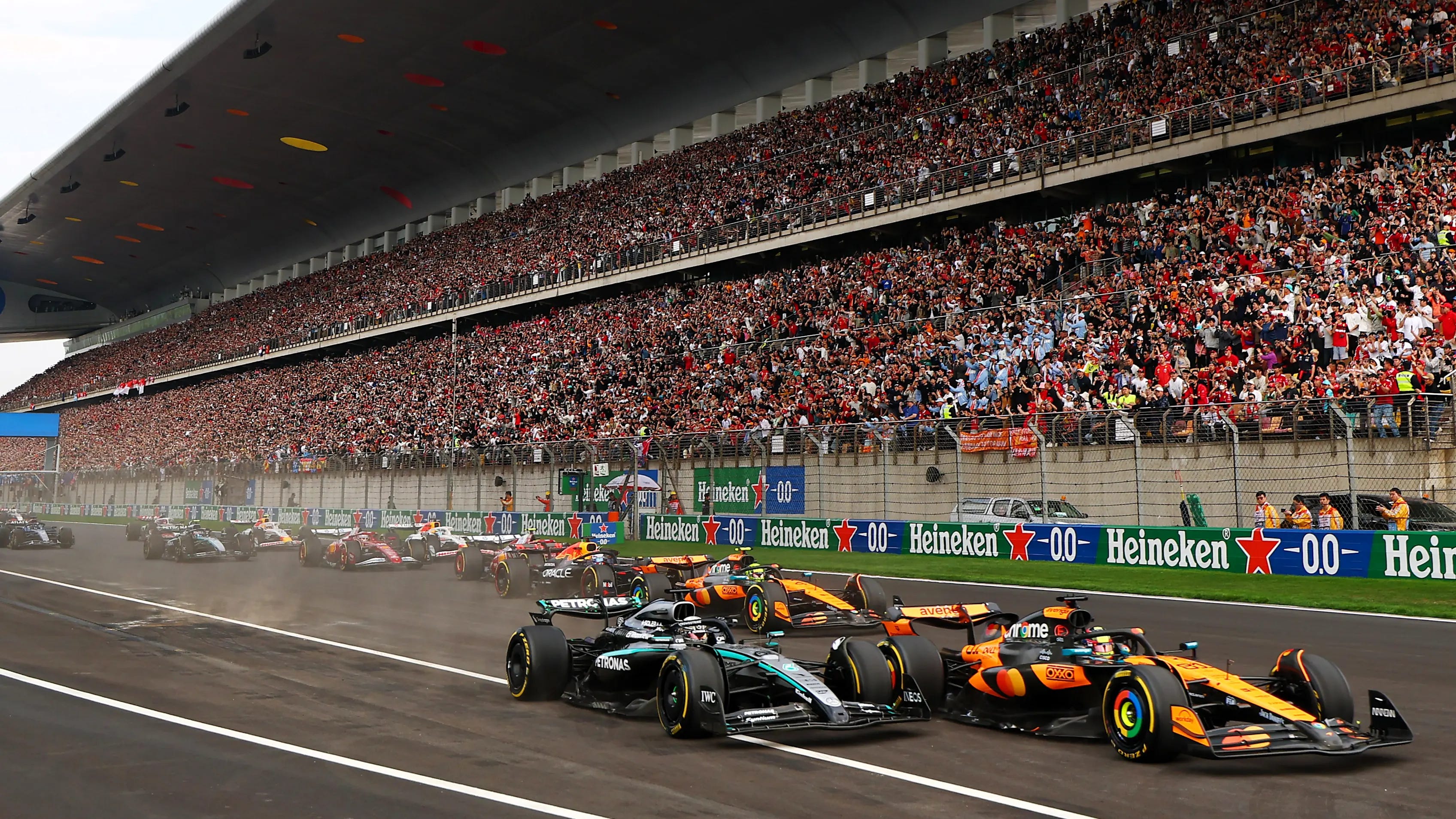
Then the race happened, and everything he described played out in real time. 230,000 people attended the 2026 Chinese Grand Prix. They packed Metro Line 11 in Ferrari red caps and McLaren papaya tees, carrying handmade banners, some with Labubu dolls dressed as their favorite drivers dangling from their backpacks. Lewis Hamilton, who has raced in Shanghai for two decades, said he had never seen crowds that large.
Tickets across every price tier, from ¥330 ($45) practice day passes to ¥42,800 ($5,860) premium packages, sold out, and gate revenue hit ¥190 million ($26 million), up 35% from last year. After the weekend, Thomas posted again, writing that sales records were smashed across sponsorship, ticketing, hospitality, merchandise, and concessions, with “literally not a free seat in the house.”
Where the Money Went Instead
China generates close to $20 trillion in annual GDP, and around 130 Chinese firms sit in the Fortune Global 500. Nielsen reports Chinese F1 fandom grew 39% year over year. Over half of fans in the country discovered the sport in the past four years, and the audience skews young with a 50/50 gender split, a demographic profile that should have every sponsorship broker in the paddock on a plane to Shanghai.
F1 generated $3.65 billion in total revenue in 2024, and its global partner roster has nearly tripled since 2020, from 12 to 31. LVMH signed a 10-year global deal. American Express, LEGO, Sony, and Santander all entered.
More than 110 U.S. brands now sponsor F1, more than double the figure from 2017, and forty-five percent of McLaren’s 57 sponsors are American. The world’s second-largest economy contributes one name to that roster, and the reason has far more to do with how F1 sells than with whether Chinese companies are buying.
Put the 2004 and 2026 numbers side by side, and the reversal becomes clear: two decades ago, the arrival of F1 in Shanghai triggered a wave of Chinese commercial interest that Thomas described as a gold rush with “some pretty hefty deals” getting signed across the paddock. The fanbase today dwarfs what existed then, the sport’s global revenue has multiplied several times over, and Chinese corporate presence in F1 has moved in the opposite direction.
Chinese Brands Are Choosing Different Global Sports
The idea that Chinese companies haven’t figured out international sports sponsorship is easy to believe if you only look at the F1 grid.
Look wider, and the picture changes fast.
Five Chinese companies, Ant Group, Hisense, AliExpress, Vivo, and BYD, served as official global sponsors of UEFA Euro 2024, accounting for a third of the tournament’s entire sponsor pool. Alibaba holds a top-tier Olympic partnership running through 2028. Hisense has been embedded in FIFA and UEFA cycles for the better part of a decade and reported a 274% year-over-year sales surge during the 2018 World Cup in Russia. BYD replaced Volkswagen as UEFA’s official vehicle supplier and, in February 2026, Stella Li traveled to Manchester to personally finalize a multi-year deal making BYD the official automotive partner of Manchester City, following an earlier partnership with Inter Milan.
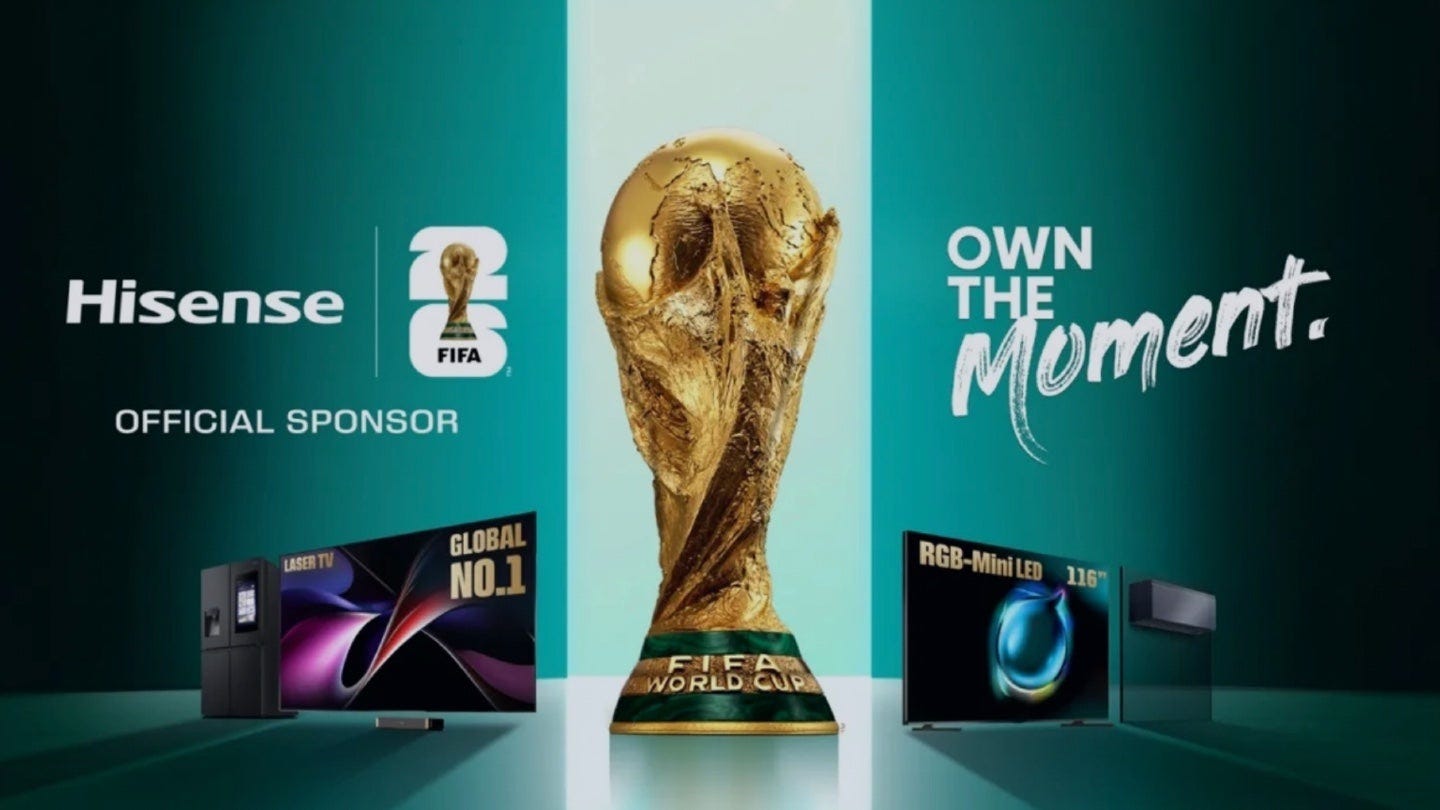
These are substantial commitments. The money exists. The appetite for global platforms exists. What Chinese companies have repeatedly and deliberately chosen are properties with massive single-event reach, concentrated activation windows, and straightforward ROI measurement. A month-long football tournament with 5 billion cumulative viewers and a fixed host market is a different proposition than a 24-race global calendar that requires year-round activation across 180+ broadcast territories. Thomas, who has watched this dynamic play out from Shanghai for more than two decades, identified the core tension on LinkedIn: F1’s commercial model remains “too Western-centric” while Chinese brands continue to prioritize domestic digital platforms, short-form media, and performance-driven spend.
Matthew Marsh, an F1 sponsorship broker covering Asia, told Autosport that Chinese company leadership approaches sponsorship like a commodity purchase, evaluating it the way they’d evaluate a shipment of steel, with a focus on measurable returns. The Apple model of building margin through brand association and long-term equity hasn’t taken hold in most Chinese boardrooms, and that framing clashes with how F1 partnerships actually function, which is largely through compounding brand presence over multiple seasons, hospitality relationships, and the soft power of being seen inside a global entertainment property week after week.
Jason Du, GM of global brand marketing at Join-Cheer Digital Group, which works directly with Chinese EV brands on overseas campaigns, told The Current that increased global marketing spend from Chinese companies is inevitable, given how saturated the domestic automotive market has become. The question was never whether the money would move outward. The question is which platforms capture it first, and F1 has been losing that race to football for years.
The Activation Gap in Shanghai
Look at the race week activation schedule in Shanghai during the 2026 Chinese Grand Prix. F1 teams sent their drivers all over the city to front brand events. Max Verstappen appeared at an ExxonMobil event alongside actor Daniel Wu. Charles Leclerc visited a PUMA store. Fernando Alonso showed up at the BOSS flagship in Jing’an. George Russell and Kimi Antonelli hosted an IWC Schaffhausen event at Taikoo Hui. Jiemian News, one of China’s most prominent business outlets, covered the full circuit of appearances, and every brand the drivers were activating for was Western.
The commercial infrastructure of F1 in China is designed to serve sponsors who already exist, all of whom are based outside the country. Nobody from the teams is building relationships with Chinese corporate leadership on Chinese terms, using Chinese commercial logic, through Chinese digital platforms.
F1 poured enormous energy into its American expansion, and Liberty Media invested years of strategic effort into understanding how American brands think, what American audiences consume, and how to build a commercial bridge between the two. That pipeline brought in more than 110 U.S. sponsors. No one has attempted anything comparable in China, and the difference shows in every race week activation schedule Shanghai produces.
F1’s Growth Engine Doesn’t Reach This Market
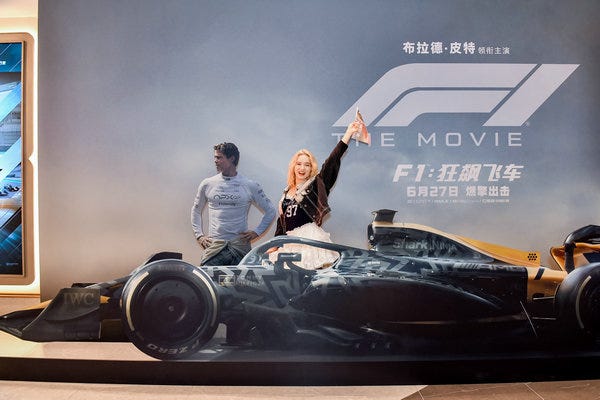
Drive to Survive is the single most effective fan-acquisition tool F1 has ever deployed, and Netflix penetration in China is zero. The show simply doesn’t exist in the market. The F1 movie starring Brad Pitt pulled ¥328 million ($44.9 million) at the Chinese box office, a solid number that still accounts for only a fraction of its global $633 million haul. Tencent signed a multi-year broadcast renewal through 2027 to carry every race, and CCTV has expanded coverage, but the storytelling pipeline that converted casual viewers into obsessive fans across the U.S. and Europe hasn’t been replicated on Douyin, Bilibili, Xiaohongshu, or any other Chinese platform.
Without a Chinese-language content ecosystem that builds emotional connection to drivers, teams, and paddock culture, fandom stays broad and shallow.
There is also no emotional anchor on the grid. Zhou Guanyu, the first full-time Chinese driver in F1, raced for Alfa Romeo and Sauber between 2022 and 2024, and when Frederic Vasseur signed him, he publicly dismissed the idea that the move was commercially motivated. He also later admitted to Autosport that tapping into the Chinese market had been “difficult” even with Zhou in the car. SenseTime and Yili both came on board during Zhou’s tenure, and both are gone now that he’s been reduced to a reserve role at the Cadillac F1 Team.
The Ground Is Moving Faster Than the Paddock
The most interesting commercial signal from the 2026 Chinese Grand Prix came entirely from outside the paddock. Taobao Instant Commerce, Alibaba’s on-demand delivery platform, became an official race partner through a sequence that F1’s commercial team should study. Last August, the company redesigned its delivery rider uniforms in orange and black, and Chinese internet users immediately spotted the resemblance to McLaren’s livery. The comparison went viral, the company leaned into the moment, and a partnership with the Chinese Grand Prix followed.
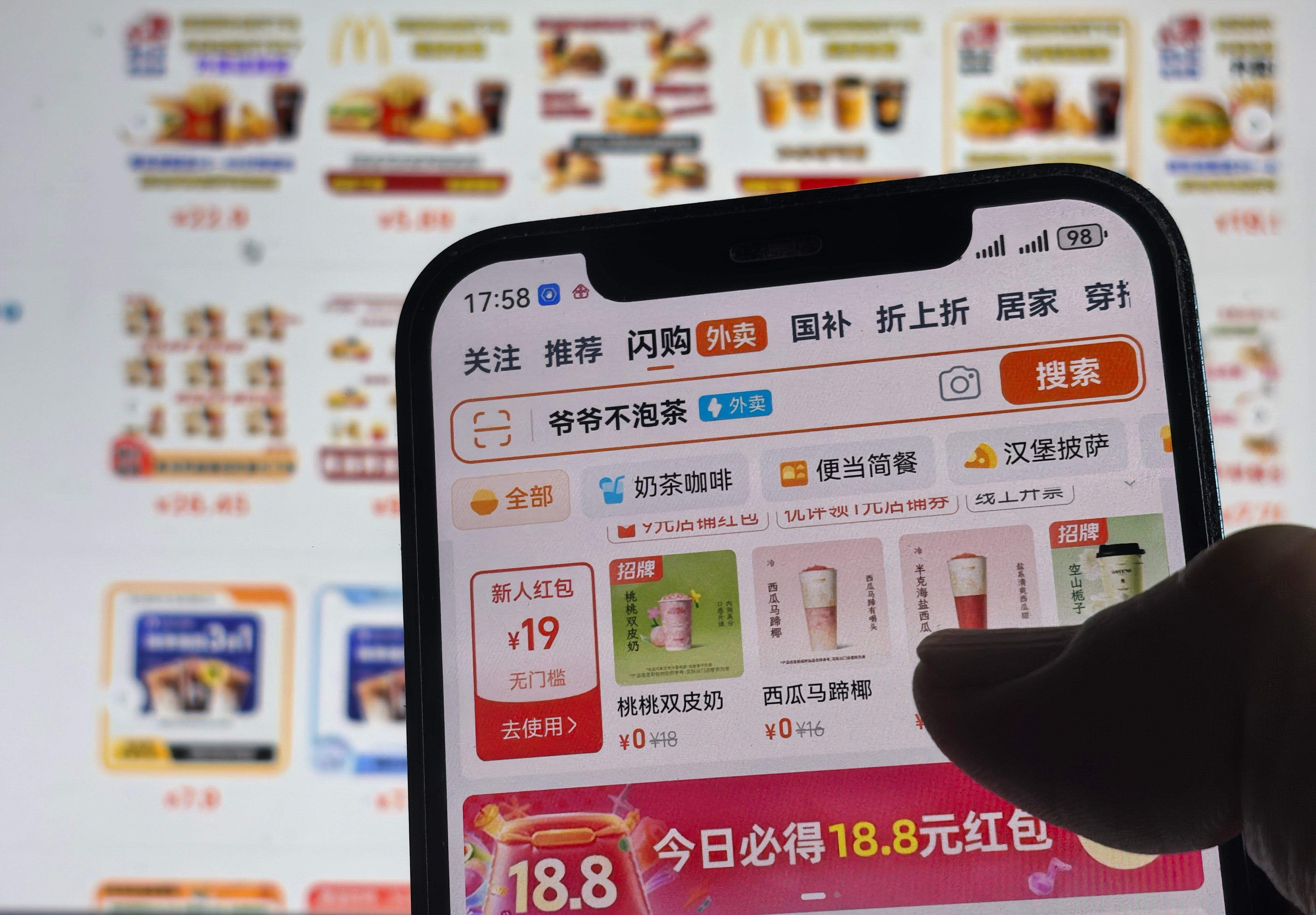
That deal was born of organic cultural momentum on Chinese social media, and it reveals how commercial energy actually moves in this market. Chinese consumers are ready to connect brands with the sport when the connection operates on their terms, through shareable identity, cultural resonance, and a logic that ties back to something measurable rather than abstract brand equity.
China Daily reported on a broader consumer shift that accelerated during COVID, away from conspicuous luxury consumption and toward health, lifestyle, and premium experiences. Their reporter described fans on Metro Line 11 wearing full team kits, carrying homemade signs, treating the race weekend as a destination event in a way that looks more like what F1 has cultivated in Austin and Miami than the corporate-hospitality model of a decade ago. F1 as a live experience fits that shift, and the commercial opportunity attached to it remains almost entirely untapped.
BYD Is Coming
Stella Li attended the Abu Dhabi Grand Prix last December and was in the Shanghai paddock last week. In 2025, she became the first woman and first representative of a Chinese brand to be named World Car Person of the Year. She is the person most directly responsible for BYD’s international expansion, and she is spending time in F1 paddocks.
BYD is already the largest electric vehicle seller in Europe by unit volume, operates in more than 110 countries, and has built a production facility in Hungary. Its sports sponsorship portfolio now spans UEFA Euro 2024, Manchester City, and Inter Milan. Huu-Hoi Tran, managing director and global VP at Capgemini Invent China, told The Current that Chinese EV brands like BYD have the superior product but need to integrate themselves into consumer consciousness in new regions, and Prof. Holger Görg of the Kiel Centre for Globalization told the South China Morning Post that sports sponsorship helps Chinese brands appear “less threatening” in European markets where they face persistent perception barriers around quality and market competition.
So far, BYD has deployed that strategy through football. Motorsport.com reported this month that the company is now actively assessing F1 entry options, from team acquisition to a 12th entry application to a title sponsorship modeled on what Alfa Romeo did with Sauber for six seasons. The Geely Group, which controls Lotus, Volvo, and Polestar, attempted to acquire a team two years ago and was priced out by the surge in F1 valuations, though a title sponsorship remains on their table.
What makes BYD’s entry feel inevitable rather than speculative is the convergence of several forces. The 2026 regulations shift F1 toward a 50/50 split between electric and combustion power, making the sport far more relevant to an EV manufacturer’s narrative.
The Chinese consumer base is already engaged. BYD has entered the growth phase where purely domestic brand investment hits diminishing returns. And behind BYD sit 10 to 20 more Chinese EV brands preparing to compete internationally, all of which will eventually need to differentiate against each other on something other than price and will run out of UEFA and FIFA inventory before they get there.
Revolut’s deal with Audi showed what a modern F1 partnership looks like when the partner embeds itself into the team’s operational infrastructure rather than buying logo space, and Toyota’s embedded approach with Haas offers another template built on lower risk, high learning, and room to scale. BYD is sophisticated enough to study both models and build something that aligns with Chinese commercial priorities rather than imitating a Western playbook designed for companies with a different relationship to brand equity.
The Call
F1 is running a global commercial operation that has cracked the U.S., consolidated Europe, and aggressively expanded into the Middle East, but it has not built the muscle to compete in China. The partnership model assumes sponsors already think in terms of long-term brand equity, that they want global category exclusivity across 180+ broadcast territories, and that they’re comfortable spending $30 to $70 million per year for a position on a car they can activate at 24 race weekends across five continents.
That model works for LVMH, HP, and Oracle, but it does not work for Chinese companies that operate primarily in domestic markets, prioritize measurable return on investment, and view marketing as performance-driven spend. Thomas laid out what the alternative looks like on LinkedIn: China-first commercial strategies, modular sponsorship models, localized digital and social solutions, and deeper integration with Chinese tech and commerce platforms. That list should be pinned to the wall of every team’s commercial office. Teams need on-the-ground leads in Shanghai and Shenzhen year-round, not executives who fly in for race week and leave, and F1 itself needs content creation pipelines in Mandarin that do what Drive to Survive did in English.
BYD will enter F1. When it does, it will open the door for a wave of Chinese EV brands behind it, just as Liberty Media’s American expansion turned a trickle of U.S. sponsors into a flood. The question is whether F1 will be ready to receive them with something more than the same pitch deck it uses in London and New York, or whether 230,000 fans will keep filling the grandstands while the commercial model stays a decade behind the audience it already has.
This is the kind of analysis we publish every week at Business of Speed, with a point of view on where the money is actually moving in motorsport. If you're not subscribed yet, you should be. We have a limited number of sponsorship slots available for the newsletter and podcast. Reach out at ciao@bizofspeed.com, and if you're a brand or rights holder looking at motorsport and want help making the investment work harder, that's the other side of what we do.
The Taobao/McLaren detail is the one that stays with me — a partnership born from a viral moment on Douyin rather than a pitch deck. That's the tell. Chinese commercial energy moves through cultural resonance and measurable conversion, not the brand equity compounding model that F1's sponsorship architecture is built around. I wrote about the same structural gap this week — the fans built the market, and the paddock is still flying in for race week and leaving with the freight. The BYD signal is the inflection point. The question is whether F1 adapts the model before someone else builds the infrastructure first. https://gearheadgranny.substack.com/p/the-receipt-221-million-fans-almost