



The withdrawal came on November 4, 2009, three days after the season finale.
“Our decision would not have changed even if we had a victory,” New President, Akio Toyoda, said.
Nearly two decades have passed since that moment, and now Toyota is back in Formula 1.
For the first time since walking away from the sport at the end of 2009, the Japanese manufacturer’s name will appear on the side of an F1 car. Specifically, the Haas car.
But this is not a full-blown works return, complete with a Toyota-badged engine and a megabudget factory operation. What’s happening here is a manufacturer dipping its toe back in after a long absence.
What Went Wrong Before
Toyota spent an estimated $2.7–3 billion across eight Formula 1 seasons (2002–2009) without ever winning a race, making it the most expensive failure in the sport's history.
The operation, based in Cologne, ran its own engine programme and had one of the biggest budgets on the grid. However, the results never came close to matching the investment. The cars were reliably midfield, occasionally flattered by a strong qualifying session or a chaotic race, but never genuine contenders.
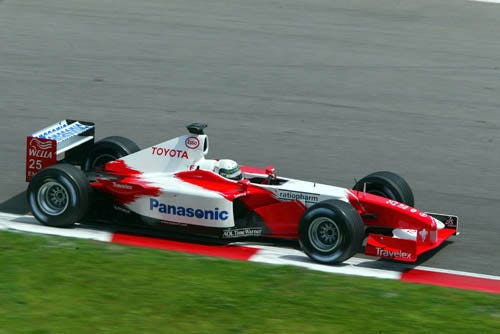
When the financial crisis hit in 2008, Toyota’s board pulled the plug. The logic was straightforward: billions spent, no championships, no victories, and limited marketing gain. For a company that prides itself on efficiency, it was a painful chapter. It left scars.
Motor Sport Magazine summarized it bluntly: “$3bn and not a single win.”
A return to the grid felt very unrealistic.
A Different Kind Of Return
Like most manufacturers eyeing a return, the pull back towards F1 for Toyota is driven by economics. The cost cap era has fundamentally changed the financial equation, making investment far less risky than before.
The contrast with the sport’s recent past is stark. When Toyota walked away, it was estimated to be spending close to $450 million, the highest budget on the grid, with precious little to show for it.
Sixteen years later, the landscape looks entirely different. Under the current regulations, a full works team running both the chassis and power unit programmes is limited to roughly $345 million in combined spending: $215 million under the chassis cost cap and $130 million under the separate power unit cap. That is a significant reduction from the uncapped era. Crucially, it also caps the financial risk. There is no longer a spending arms race to lose, which makes F1 investment far more predictable and easier to justify.
That justifies why the economics work. There is also a clear logic behind the team’s choice. Haas finished seventh in the 2024 Constructors’ Championship, their second-best season in history, before slipping to eighth in 2025 despite actually scoring more points. That tells you two things: Haas is getting better and would benefit significantly from a manufacturer’s technical support.
What does the arrangement look like?
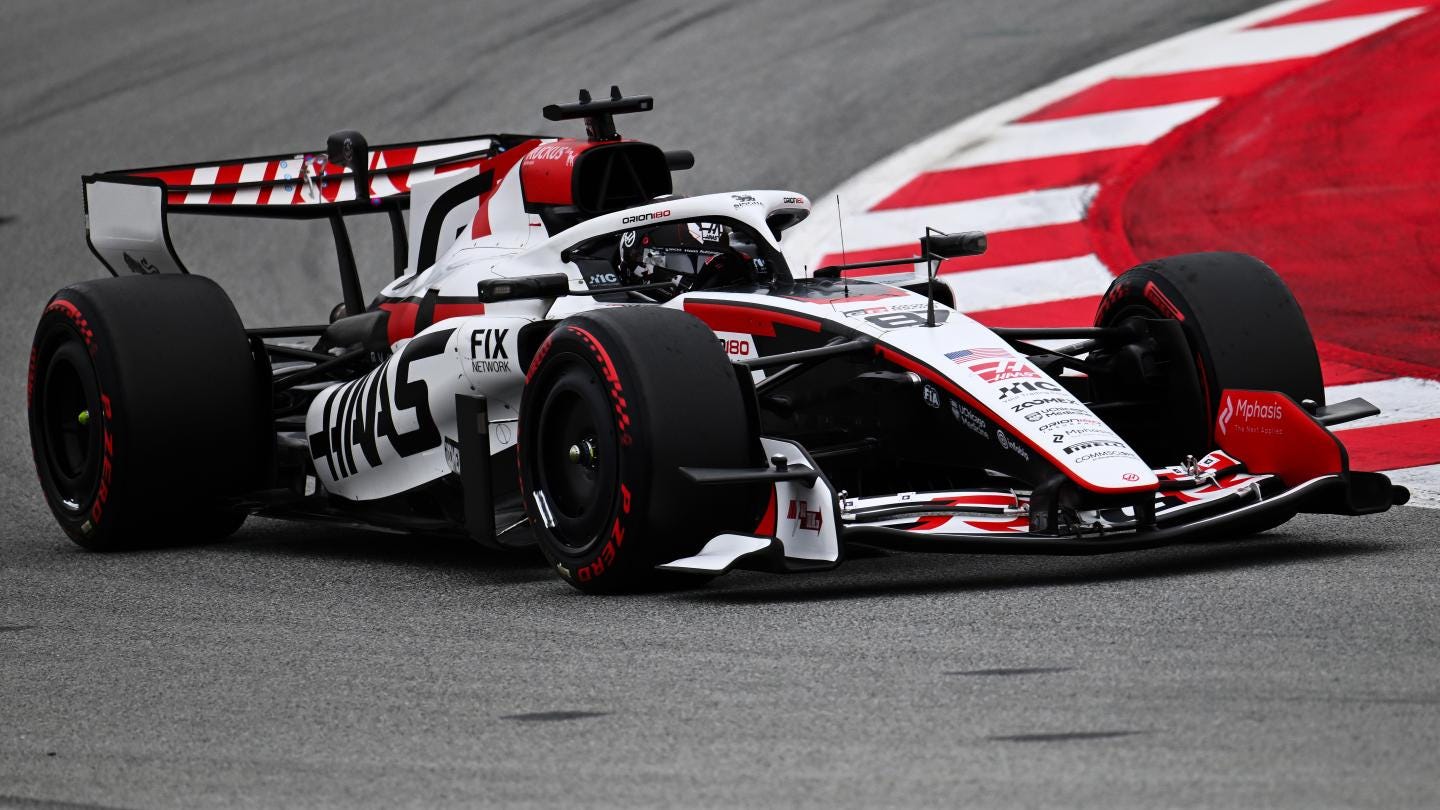
The relationship with Haas began as a technical tie-up, a low-key arrangement focused on engineering collaboration and knowledge sharing. Fast-forward to 2026, and it has become a full-title partnership, with Toyota Gazoo Racing branding displayed prominently on the car. But the keyword is partnership, not team entry.
This is what you might call an embedded approach. Toyota gains a presence on the grid, access to the F1 environment, and real-time operational learning, without the capital exposure of running its own constructor team. It’s the difference between renting a room in someone’s house and buying the whole building. The risk profile is completely different, and for a company still carrying institutional memory of the last attempt, that matters enormously.
It also suits Toyota’s broader motorsport philosophy under Gazoo Racing, which has increasingly favoured partnerships and talent development over standalone mega-programmes. The Le Mans programme works this way. The rally programme works this way. F1 is being brought into the same framework.
What is Toyota Changing At Haas
The partnership goes well beyond logo placement. Toyota has installed a new simulator at Haas’s Banbury base. There is also access to wind tunnels, shared engineering methodologies, and an exchange of personnel between the two organisations.
Then there is the driver pipeline. Toyota is establishing a formal development pathway that could feed drivers through its existing programme and into F1 via Haas. It already has Ryō Hirakawa, Ritomo Miyata, and Sho Tsuboi within the programme, all of whom have been given opportunities to test the Haas F1 car. This is a meaningful long-term investment and signals that Toyota is building infrastructure designed to last.
For Haas, the benefits are obvious. The team has always operated lean. Having a manufacturer-level partner contribute tools, people, and technical resources addresses several structural limitations at once.
The Limit of Toyota’s Involvement
Here is the important boundary. Toyota is not a registered power unit supplier for the 2026 regulations. Ferrari remains Haas’s engine partner, and there is no Toyota power unit in development for this rules cycle. That means the ceiling on this partnership is clearly defined. Toyota can contribute to the chassis, operational, and talent development sides of the operation, but the powertrain remains off the table.
This is a deliberate choice.
The 2026 power unit regulations represent the biggest technical reset in a decade: a near 50/50 split between electric and combustion power, sustainable fuels, and the removal of the MGU-H.
Every manufacturer, even the established ones, is essentially starting from scratch. Developing a new unit to meet those standards would cost hundreds of millions and take years. It would also require Toyota to commit to a level of involvement that contradicts the entire philosophy behind this re-entry.
What Would Pull Toyota Deeper
The obvious question is whether this is a stepping stone or an end state. The honest answer is that we do not know. But there is a realistic path that could draw them further in.
If the Haas partnership delivers tangible results, improved performance, successful driver development, and positive brand visibility, then the internal case for deeper investment strengthens. The next power unit cycle in 2030 could be a natural point at which to scale up their commitment.
There is also the ownership question. Gene Haas has been open that running an F1 team is not a long-term commitment for him. If Haas ever decided to sell, Toyota would already be embedded inside the operation. It would have institutional knowledge, established infrastructure, and existing relationships. That is a very different starting position from bidding cold.
But none of that is guaranteed. Toyota’s leadership will want proof of concept before increasing its exposure. That is the whole point of the embedded approach: learn first, commit later.
For now, Toyota is back in F1 on its own terms. Whether those terms evolve into something bigger depends entirely on what happens next.
More on Business of Speed


Thanks for sharing
The Toyota deal also addresses the fundamental vulnerability of Haas (other than Gene's utter dislike of the partnership side of the business). Dallara the chassis partner is quite a popular place these days. If the Dallara relationship ended Haas would be in trouble. The autoclaves at Cologne and a few Yen can handlle any disruption now.