


Remaining an independent source of motorsport business is what we strive for. If Business of Speed has provided you with useful insights this year, please consider subscribing.
On January 27, Formula 1 announced Standard Chartered as its Official Wealth Management and Corporate and Investment Banking Partner. Roberto Hoornweg, the bank’s corporate and investment banking CEO, said the deal reaches 19 of the 21 markets on the F1 calendar. Judy Hsu, who runs wealth and retail banking, said Standard Chartered would bring clients closer to the sport through exclusive experiences.
Standard Chartered is paying for a global meeting place.
A bank with a cross-border client base has a reason to gather people around a global sport that already spans their markets. The race supplies the setting. The bank supplies the relationships.
That is the greater commercial story underneath F1’s boom. We discussed it a bit on our live show, and wrote about Madrid’s hospitality options, which are creating outright business-first spaces at the race.
The sport has become relationship infrastructure. Audience growth makes the room more valuable, while emotional investment gives companies a warmer way to earn time with clients, investors, employees, and media. The sponsor is buying a reason to invite people somewhere they already want to be.
Fabricio Drumond made a related argument in The Race. A leader who turns on a race by choice is in a different mental posture from the same leader attending a sponsored industry conference. F1 reaches the business audience through the fan identity first.
The next question is what a company can do with the attention once it has earned the room.
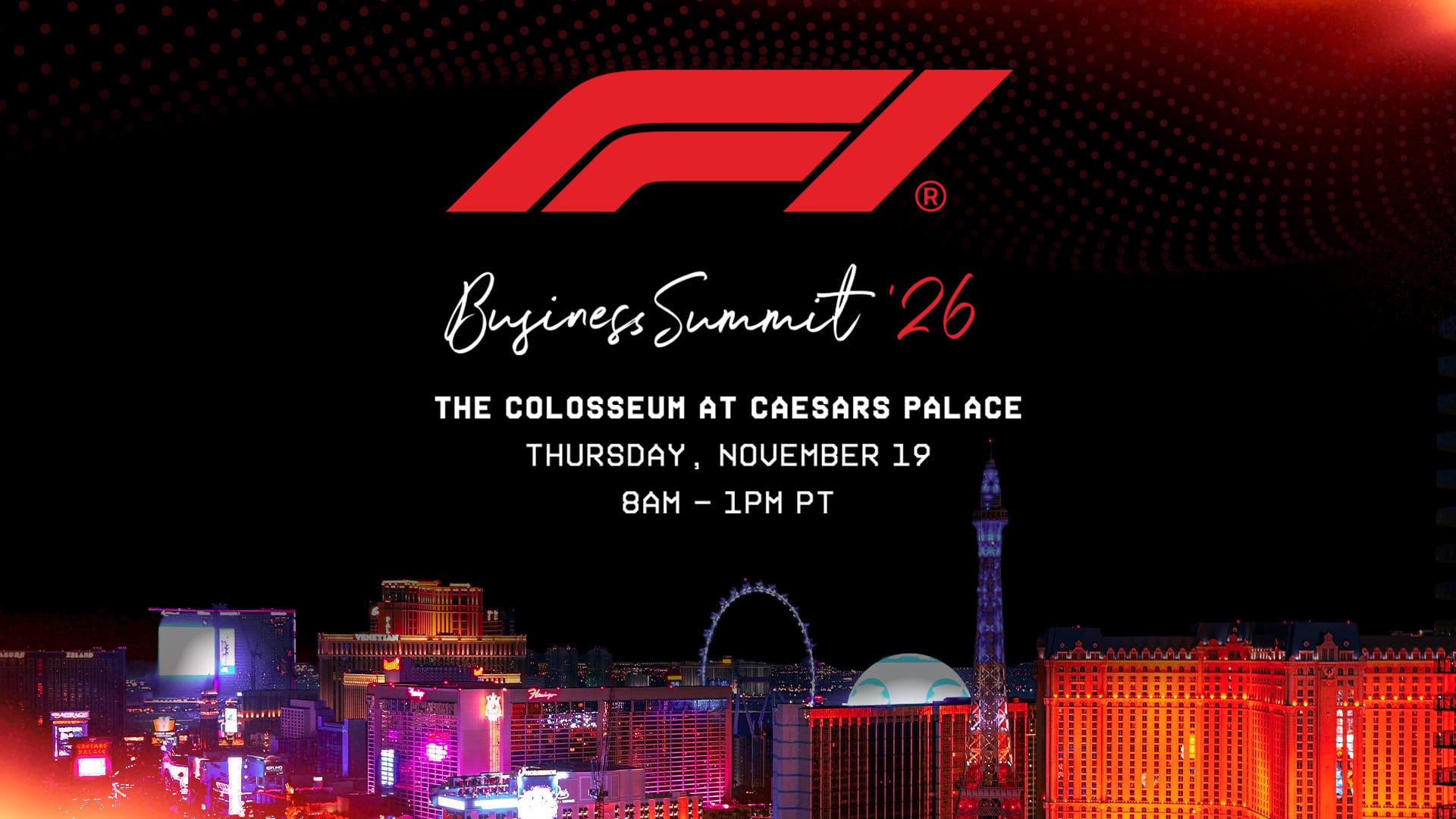
Formula 1 has begun answering that question publicly. In 2025, F1, Liberty Media, and CAA created the F1 Business Summit during Las Vegas Grand Prix week. The agenda put Derek Chang, Michael Rubin, Toto Wolff, Disney’s consumer-products chief, LEGO’s global marketing chief, and American Express’s chief marketing officer in the same commercial frame. The packages included access to the summit and the Paddock Club rooftop.
F1 built an agenda around a room full of business folks.
The summit matters because it turns an abstract audience claim into a physical product. A conference can put executives in a room. A Grand Prix can give them a reason to stay there, talk about something they care about, and bring a client who might decline a standard industry event.
This is where I believe the commercial mechanics become clear.
Liberty’s 2025 annual filing says most F1 sponsorship contracts run for three to five years, with payments often rising each year. The same filing describes a business built from race promotion, media rights, sponsorship, hospitality, licensing, and Paddock Club sales. F1 is selling the broadcast, the event, the data, the logo, and the room around the logo.
The room itself is the sticky part.
Liberty’s second-quarter 2026 results show the calendar’s power over the books. Revenue fell 38% to $764 million, while adjusted OIBDA fell 61% to $139 million. F1 held five races in the quarter, compared with nine in the same period a year earlier. Liberty said the decline was primarily due to the calendar difference, while increases in contractual fees and new and renewed sponsors offset some of the damage. Business of Speed covered the calendar distortion here.
F1’s financial results move with the number and timing of races, while the best partnerships run on a longer clock. A sponsor signs for the season, builds client plans around the calendar, and expects the relationship to compound across markets.
That makes hospitality the part of the product that connects the media asset to commercial accounts. A bank can use the race to host a founder, a sovereign investor, a family office, or a corporate treasury team. A technology company can bring a customer into the story of data, engineering, or energy. The meetings have built-in meaning and direction around a shared interest.
F1’s own audience research supports the emotional part of the argument. The 2025 Global Fan Survey drew more than 100,000 responses from self-identified, highly engaged fans in 186 countries. Ninety percent said they were emotionally invested in race outcomes, 61% engaged with F1 content daily, and 76% said sponsors enhance the F1 experience.
The relationship begins with speed and drama, then spreads into identity, habit, and cultural belonging.
Pinterest found the same movement from another direction. Searches for “Formula 1 aesthetic outfit” rose 483% in its Summer 2026 Trend Report, which analyzed behavior across more than 600 million monthly active users. We wrote about what that means for sponsors: F1 is entering ordinary life through clothing, food, beauty, and social rituals. That gives a brand more surfaces to work with, provided it brings a useful reason to be there.
A corporate bank has an obvious role in cross-border business and wealth. Standard Chartered’s footprint gives it a reason to host clients in multiple race markets. A software company with real expertise in protecting high-value data can explain the problem of securing telemetry and strategy systems. A brand that brings only a camera crew and a stack of talking points is borrowing relevance from the sport and spending heavily to prove it.
This is also where editorial credibility enters the model.
F1 can put a brand next to a race, a driver, or a summit. It cannot make the audience believe a weak idea. The company still has to contribute knowledge, access, a product that solves a problem, or a point of view that improves the conversation.
The commercial opportunities go one step further. F1 can become a place where those people exchange trust before they exchange business.
That sounds soft until you look at how expensive enterprise sales have become. A sponsorship that produces only impressions is easy to cut when budgets tighten. A partnership that helps a bank deepen five client relationships, gives a CEO a credible stage, and creates content that survives race week has more ways to renew. The value sits in the sequence of interactions, not one exposure report.
The risk is that F1 sells the room too aggressively. When every partner gets a panel, every panel becomes a sales pitch, and every hospitality suite becomes a branded waiting area, the emotional advantage disappears. Executives still know when they are being processed through an activation plan.
Here’s my POV: the fastest-growing F1 commercial inventory over the next two years will lie between sponsorship and business media, in summits, premium content, client experiences, and recurring gatherings built around real expertise.
As I've written and talked about ad nauseam, television exposure will remain the easiest number to print in headlines, but increasingly become the least interesting.
Business of Speed covers the business, technology, and lifestyle of racing: Formula 1, IndyCar, IMSA, WEC, NASCAR, and more. From Vincenzo Landino, entrepreneur and creator, featured in Bloomberg, TBPN, Yahoo! Finance, Forbes, Adweek, and Front Office Sports. You can find us on Instagram, Substack, and LinkedIn.


