

Business of Speed is heading into the summer with momentum: 77% subscriber growth since the beginning of the year; we’re now seeing over 100,000 visitors to the site per month, and our podcast has featured incredible guests including Tony Kanaan, Will Buxton, Marshall Pruett, and freaking Mario Andretti! That growth means more eyes on our partners.
We run our sponsorships like an F1 team. We have Title Sponsorship, Principal Partners, Official Partners, and Technical Partners. So there’s no shortage of ways to get involved. These are integrated partnerships, not just banner ads. If that’s interesting to you or someone in your network, please reach out to partnerships@bizofspeed.com
How Silverstone Saved Itself
On 11 July 2017, John Grant pulled the British Grand Prix out of its own contract. The BRDC chairman triggered a break clause that, left alone, would have made 2019 the last British Grand Prix at Silverstone. His reasoning went straight into the club’s filed accounts, signed by the directors: “unless a new contractual arrangement can be reached between Liberty Media and The BRDC, 2019 will be the last year that the British Grand Prix takes place at Silverstone.”
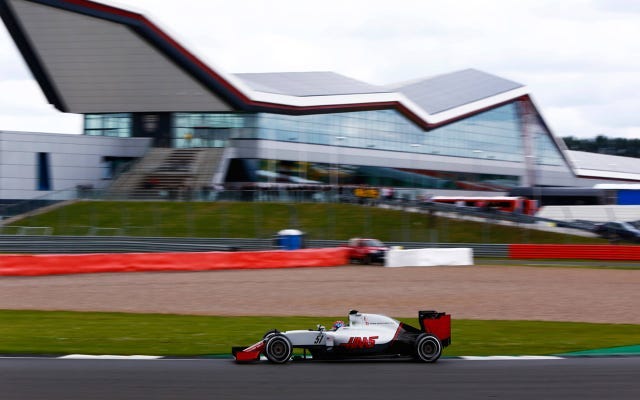
You see, Silverstone was losing money, and fast.
In December 2009, the club had signed a 17-year deal with Bernie Ecclestone carrying a 5% annual escalator. The fee compounded from about £11.5m (around $18m) in 2010 to £16.2m (around $21m) by 2017, on track to reach roughly £25m (around $33m) by 2026. Grant put the problem on the record: “the costs are more than the revenues. We generate a lot of revenue from this event, probably more than any other F1 race, but we still have substantial costs.”
Who owns Silverstone is what made the fee fatal. The BRDC is a private company limited by guarantee, company number 00257980, with no share capital and roughly 850 invitation-only members. There is no equity to issue and no shareholder to call for cash. When the hosting fee outran the gate, against operating costs that run far ahead of the fee for almost every promoter on the calendar, the club had no balance sheet deep enough to cover the gap.
Four years earlier, on 11 September 2013, the BRDC had granted MEPC a 999-year lease over the industrial estate and about 280 acres of development land for a single £32m (about $50m) premium. The circuit itself stayed out of it. The cash cleared the Lloyds and Northamptonshire County Council loans the club had taken on to build The Wing, the £27m (about $43m) pit and paddock complex, which opened in 2011.
The members took the £32m and gave up the land. How much they gave up showed in 2022, when CPP Investments paid £135m (about $170m) for half of that same estate, a valuation near £270m (about $335m). The club sold the property's future to keep the racetrack's present.
On 10 July 2019, Silverstone, the BRDC and Chase Carey ended a two-year standoff with a five-year reset covering 2020 to 2024. The change that counted was structural: the 5% compounding escalator was replaced by a flat fee. The headline number was never disclosed, and reporting still splits between roughly £13.5m and £20m a year (about $17m to $26m). Liberty had bought F1 in 2017 and wanted a strong British round, one that sat next to the team cluster in Motorsport Valley and in front of the biggest crowd on the schedule. Silverstone wanted a fee it could plan around. Both got it. In February 2024, Stefano Domenicali signed the extension that carries the race to 2034, described in the filings as an eleven-year contract and reported unofficially at near £30m a year (about $40m).
Fixing the fee capped the recurring cost. It did nothing for revenue.

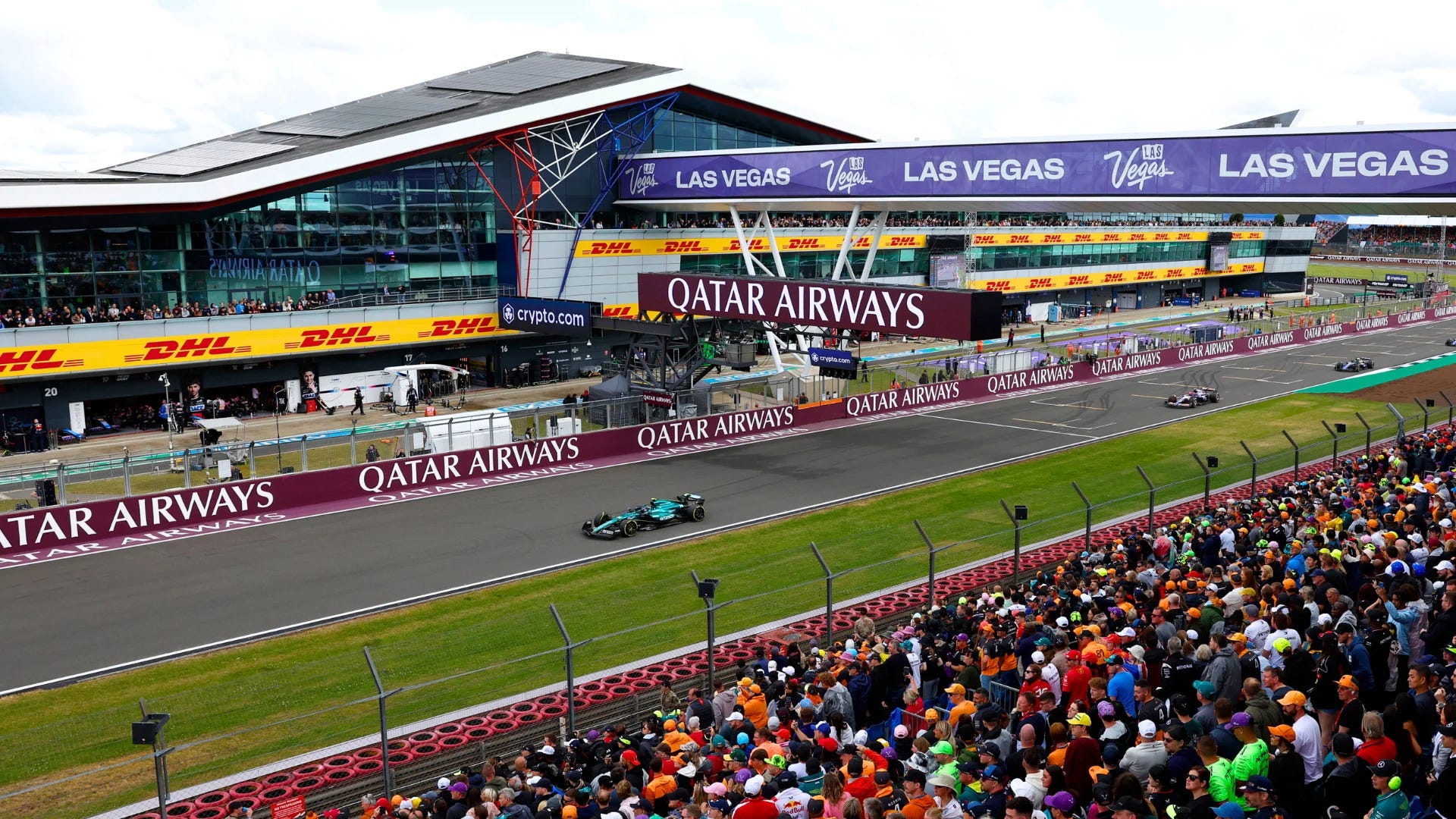
Stuart Pringle, who has run the circuit since 2017, named the old failure plainly: “There was a prolonged period of under-investment when we made no meaningful money out of our major events.” The fix turned one weekend into a calendar. The British Grand Prix became a four-day festival with concert stages and dynamic pricing. Weekend attendance climbed from 480,000 in 2023 to a record 500,000 in 2025, the biggest F1 weekend Britain had seen in three decades, and Silverstone says this year’s race, run the first weekend of July, is expecting a record 565,000 in attendance.
Around the race, the club stacked recurring income: Escapade Silverstone, sixty trackside residences with a gross development value near £90m (about $115m), sold out and opened in 2024; conferencing and corporate hospitality; driving experiences; a dense secondary calendar of MotoGP, ELMS, British GT and BTCC.
The museum is the one build that has not delivered. A £20m (about $26m) project part-funded by a £9.1m (about $12m) National Lottery Heritage Fund grant, it opened in 2019 on a business case projecting 436,500 visitors in year one. It has been running closer to 150,000.
Silverstone Circuits Limited, company 00882843, swung from a £1.484m loss (about $2m) in 2016 to a £626,000 profit (about $0.8m) in 2017, its first black ink after a run of losses. From there it compounds. Turnover rose from £53.5m (about $88m) at the 2014 trough to a record £104.4m (about $134m) in 2024. Pre-tax profit reached £14.1m (about $18m). Net worth moved from £10m of net liabilities (about $12m) at the end of 2016 to £37.7m of net assets (about $48m) at the end of 2024. Cash sat at £45.7m (about $58m), against £7,000 (about $9,000) at the bottom of the crisis.
COVID punched a hole in the middle of it, turnover crashing to £14.2m (about $18m) in 2020 behind closed doors, and the rebound came fast: £61.5m and a £7.3m profit (about $85m and $10m) by 2021. The whole thing runs on a float of money it does not yet own. £48.4m of deferred income (about $62m) from advance ticket sales is the largest single line on the balance sheet and the engine that funds the year. There is no meaningful drawn bank debt.
Is the Grand Prix profitable on its own, or carried by the estate?
The accounts say the race “generates more than half of the group’s annual revenue,” better than £52m (about $67m) of that £104.4m. The race carries the estate. The filings provide no separate event P&L, and the auditors identify the F1 contract and ticket sales as key risks, so the structure relies on one weekend in July. The old “the GP loses money” line traces back to Grant’s 2015 and 2016 figures of £2.8m and £4.8m (about $4.3m and $6.5m), management numbers that never appeared in the statutory accounts and described the cost base before the escalator was killed.
Turnaround or windfall? Both, in sequence. The £32m (about $50m) MEPC deal in 2013 was the tourniquet: debt cleared, land surrendered. The fee reset and the estate build are the repeatable parts; that's why the company now earns £14m a year (about $18m) instead of bleeding. Take away the land sale and the club still drowns in 2016. Take away the fee reset and the diversification and the £32m only buys a few years.
No single move saves it.
Most of the grid never pays for itself. F1 collected about $824m in promoter fees in 2025, roughly 27% of its revenue, and the large majority of those cheques are written or topped up by governments.
The Australian Grand Prix Corporation, a Victorian state body, needed A$102.3m in public funding (about $68m) to cover the 2024 race, with revenue of A$116.9m (about $77m) against expenditure of A$219.2m (about $145m). Record crowds, nine-figure subsidy. Singapore co-funds up to 60% of a roughly S$135m (about $104m) annual cost and books it as tourism marketing. Texas reimburses COTA through a state events fund whose own report concedes the impact is “not measurable.” The Gulf rounds in Bahrain, Saudi Arabia, Qatar and Abu Dhabi are state-owned outright.

Lord Mandelson set the British terms back in 2009: “I’m not in a position to use taxpayers’ money to bail out what would be a sort of commercial venture in a very cash-rich sport. I can't do that, especially during a recession, but [Ecclestone] has my backing in what he's trying to do.”
Silverstone is one of two races on the 2025 and 2026 calendar with no government support. The other, Zandvoort, leaves after 2026. From 2027, the BRDC is the last self-funded heritage promoter standing.
The contract runs to 2034. The land that would fund the next decade of building is already leased for 999 years, so the asset that financed the recovery cannot be sold again. The cash sits in the wrong pocket: £45.7m (about $58m) inside the operating company, while the land-holding parent club holds £136,000 (about $175,000) and answers to an unpaid volunteer board. New markets keep bidding for slots, Bangkok among them, each able to outpay a members’ club in Northamptonshire. And the commercial relationship leans on one man, Pringle, with no published succession plan.
The members’ club model survives this contract because Liberty wants the British Grand Prix and Silverstone finally learned to price it. By 2034 the fee will have moved again, the land will still be gone, and the club will face the choice it faced in 2016 when Jaguar Land Rover walked away: raise capital it cannot raise as a guarantee company, or sell the thing it exists to protect.


