


F1 just posted $3.87 billion in revenue for 2025.
Up 14% from the year prior. Operating income rose 28% to $ 632 million. The single largest financial year in the history of the sport.
These are Liberty Media’s Q4 2025 earnings numbers, and they confirm what the paddock has felt all season: the commercial side of Formula 1 is accelerating faster than the cars.
Where the money came from
The revenue breakdown tells you everything about how F1 has matured as a business.
Media rights accounted for 31% of total revenue. Race promotion fees brought in 27%. Sponsorship contributed 22%. The remaining 20% came from other commercial activities, including hospitality, licensing, and F1 TV subscriptions.
No single category dominates. Five years ago, media rights were the backbone of the entire operation. Now the revenue base is spread across multiple verticals, each growing independently. That kind of diversification insulates the business from any single contract negotiation going sideways.
When one revenue stream has a down year, three others pick up the slack. That used to be the aspiration. Now the numbers say it’s the reality.
The viewership numbers
Live viewership grew 21% year over year. Fan attendance across 24 races totaled 6.75 million.
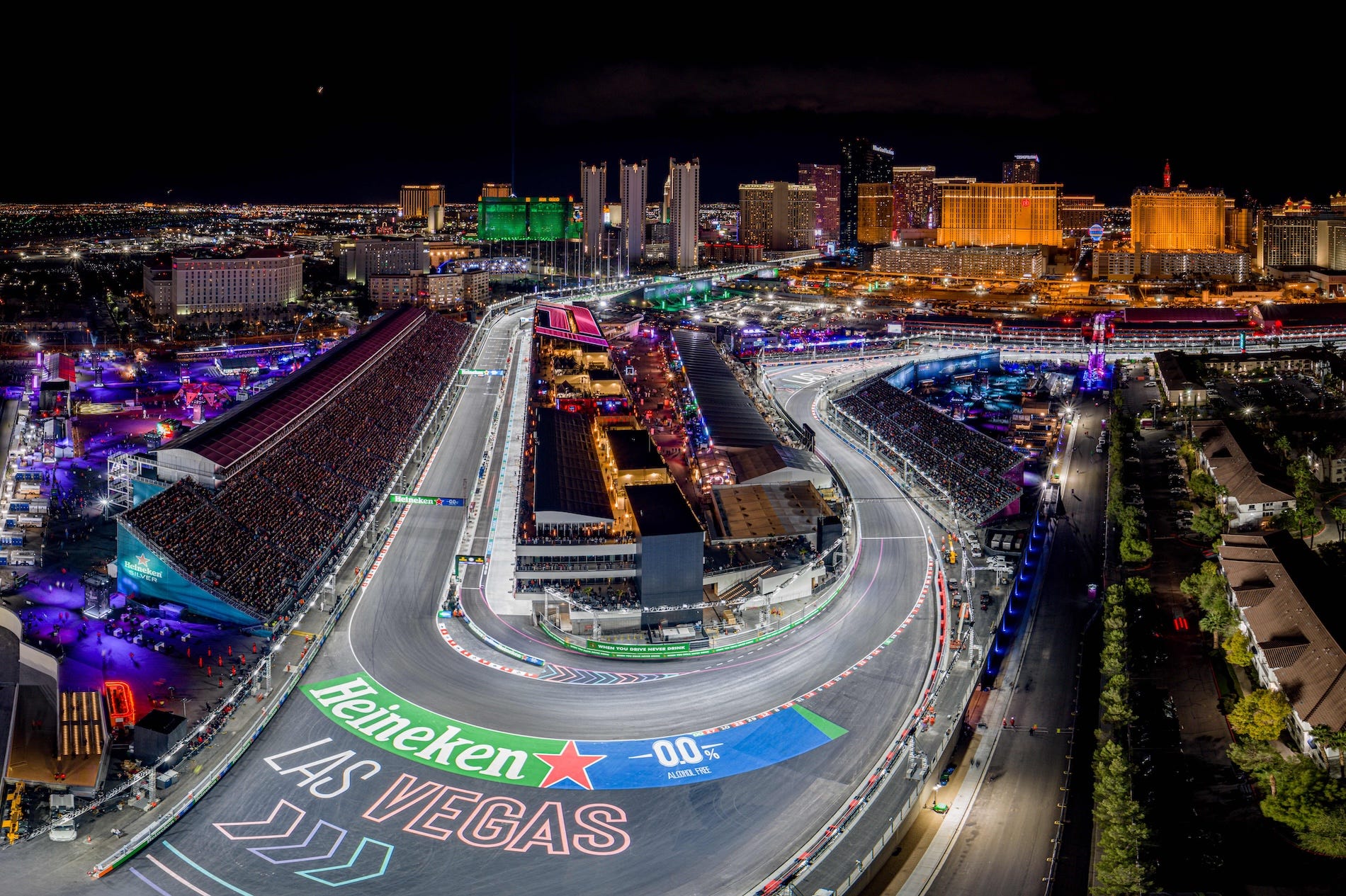
The Las Vegas Grand Prix is the standout case study. The race weekend drew over 300,000 fans and generated 1.8 billion social media impressions. In just its second full year, Vegas has established itself as one of the highest-profile weekends on the calendar.
For context: when Liberty Media first announced the Vegas race in 2022, the reaction was skeptical. Ticket prices were too high. The inaugural race in 2023 had mixed reviews. But the 2025 edition sold out, and the social footprint suggests the event is reaching well beyond the existing F1 fanbase.
That matters because the growth story for F1 is fundamentally about expanding its audience. The Netflix effect opened the door. The U.S. races in Miami, Austin, and Vegas are pulling in casual sports fans who had never watched a Grand Prix before. And those fans are spending money. On tickets, on merch, on hospitality packages that can run north of $10,000 a weekend.
The 18-to-34 demographic now represents the fastest-growing segment of F1 viewership. That age bracket is exactly what sponsors and broadcasters pay a premium to reach. And F1 is delivering it at a global scale.
The OIBDA story
Here is a number that flew under the radar: team payments as a percentage of OIBDA decreased from 61.5% to 59.7%.
Quick explainer. OIBDA stands for Operating Income Before Depreciation and Amortization. In plain terms, it measures how much cash the business generates from its core operations before accounting for factors such as equipment aging and long-term asset costs. Think of it as the money F1 actually makes from running the business, before accountants subtract the wear and tear on the stuff they own. It is the standard profitability metric Liberty Media uses across all of its properties.
The fact that team payments are shrinking as a share of OIBDA means the commercial engine is growing faster than the obligations F1 has to pay the teams. The Concorde Agreement, which governs the revenue split between F1 and the 10 teams, runs through 2030. So the percentages are locked. But as total revenue climbs, F1’s retained portion grows in absolute dollar terms.
This is the kind of structural advantage that compounds over time. Higher revenue, stable cost structure, expanding margins. And the teams have no mechanism to renegotiate until the current agreement expires.
What is in the pipeline
The forward-looking indicators are just as notable as the trailing numbers.
Standard Chartered recently signed on as a global partner. Barcelona extended its race contract through 2032. Portugal returns to the calendar in 2027.
And then there is 2026.
The upcoming season brings four major automotive manufacturers onto the grid. Cadillac enters as a new constructor. Audi takes over the Sauber operation. Honda returns as a works engine supplier. Ford partners with Red Bull Racing on power units.
That is four OEMs making significant financial commitments to compete in Formula 1. Each of those programs represents hundreds of millions in investment, engineering headcount, and brand activation spend flowing through the F1 ecosystem.
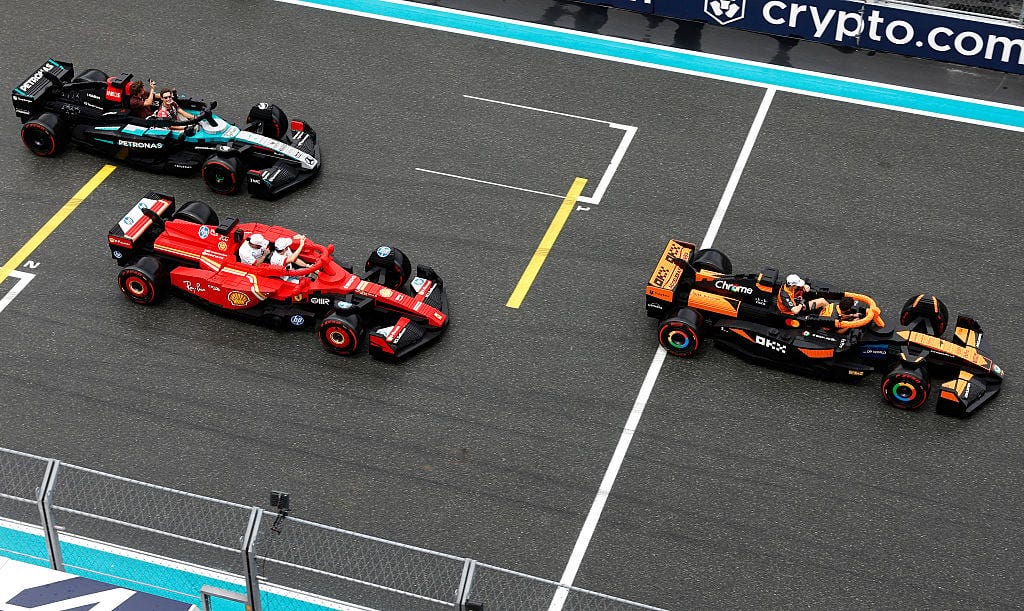
The manufacturer interest tells you something about how the auto industry views the series right now. With the shift to new power unit regulations in 2026 (which include a much larger electrical component), the sport has positioned itself as a relevant R&D platform for the broader automotive transition. That gives manufacturers a business case that goes beyond logos on the side of a car.
The bigger picture
When Liberty Media acquired Formula 1 from CVC Capital Partners in 2017, the series generated roughly $1.8 billion in annual revenue. Eight years later, that number has more than doubled.
The growth has come from multiple levers. New races in premium markets like Vegas, Miami, Qatar, and Saudi Arabia. Expanded media distribution deals across more than 180 territories. A growing sponsorship portfolio that now includes banks, tech companies, luxury brands, and crypto platforms. And a fanbase that skews younger than almost any other major global sport.
Liberty has also invested heavily in owned media. F1 TV, the direct-to-consumer streaming platform, continues to add subscribers. The official F1 social channels have crossed 100 million followers across platforms. The upcoming F1 film, produced with Apple, adds another vector for mainstream cultural reach.
All of this feeds into a cycle that reinforces itself. More fans attract more sponsors. More sponsors fund bigger events. Bigger events generate more media coverage and more fans. The 2025 financials suggest that the cycle is turning faster than at any point in the sport’s 75-year history.
What to watch next
The next Concorde Agreement negotiation will be the most consequential business event in the sport’s near future. Teams will push for a larger share of the growing revenue. F1 will counter that its investment in the commercial platform is what drove the growth in the first place.
The current numbers give F1 significant leverage in that conversation. When your commercial engine is scaling faster than your obligations, you are negotiating from a position of strength.
For now, the 2025 earnings tell a straightforward story. Revenue is up. Margins are expanding. The calendar is growing. The sponsor list is deepening. The audience keeps getting bigger.
The business of Formula 1 has never been in better shape.