

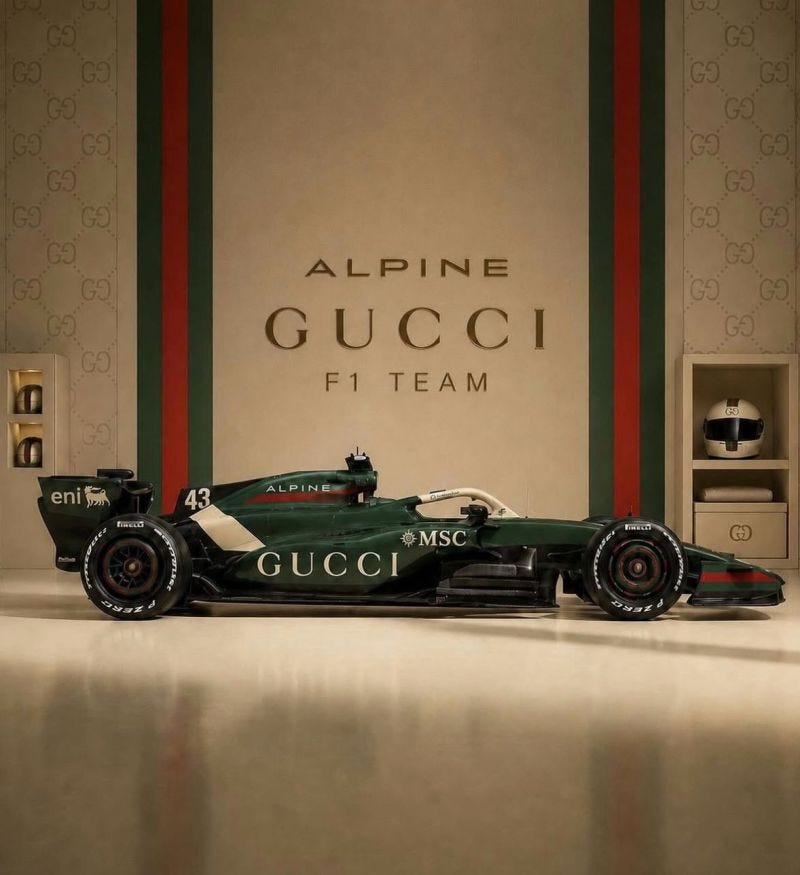
Gucci is entering Formula 1 as a title sponsor for the first time, taking over the Enstone-based Alpine team from 2027 in a multi-year deal reportedly worth $50-$60 million per season. Performance escalators push total contract value past $150 million. The team will race as Gucci Racing Alpine Formula One Team in Gucci colors, retaining the Mercedes power unit and the Pierre Gasly and Franco Colapinto driver pairing.
The deal lands at a complicated moment for the house. Gucci has now posted eleven consecutive quarters of organic sales declines. Q1 2026 revenue fell 14 percent on a reported basis, with Western Europe soft, China structurally weak, and the Middle East disrupted. Kering CEO Luca de Meo has installed Demna as creative director, reset the product architecture across the portfolio, and publicly described the work ahead as a multi-year reconstruction.
The F1 spend is part of that reconstruction. Gucci is buying 24 runways disguised as race weekends per year of paddock presence, broadcast distribution into 180+ territories, and direct exposure to one of the wealthiest, most aspirational audiences in global sport. As we covered in Conquering American Culture, the paddock has become the highest-yield luxury distribution surface money can buy at this tier. LVMH bought into the championship across multiple brands in 2024 for a reported $150M per year. Gucci just bought a single team for a third of that and got naming rights on top of that.
Against the cost of equivalent reach through paid media, runway activations, or brand ambassador rosters, the math is defensible. As an instrument for restoring cultural relevance to a brand mid-turnaround, F1 is one of the more efficient surfaces available at this price. That is the only frame under which a fashion CEO commits $150M+ to a team that has not finished higher than fourth in the constructors’ championship in over a decade.
The Briatore Factor
The deal was brokered by Flavio Briatore, Alpine’s executive advisor, and his counterpart was a man he had known for years. De Meo ran Renault Group when it owned Alpine, championed the team’s F1 entry, and only moved to Kering last year. Two operators who already knew the file, sitting on opposite sides of a deal that benefits both companies for different reasons.
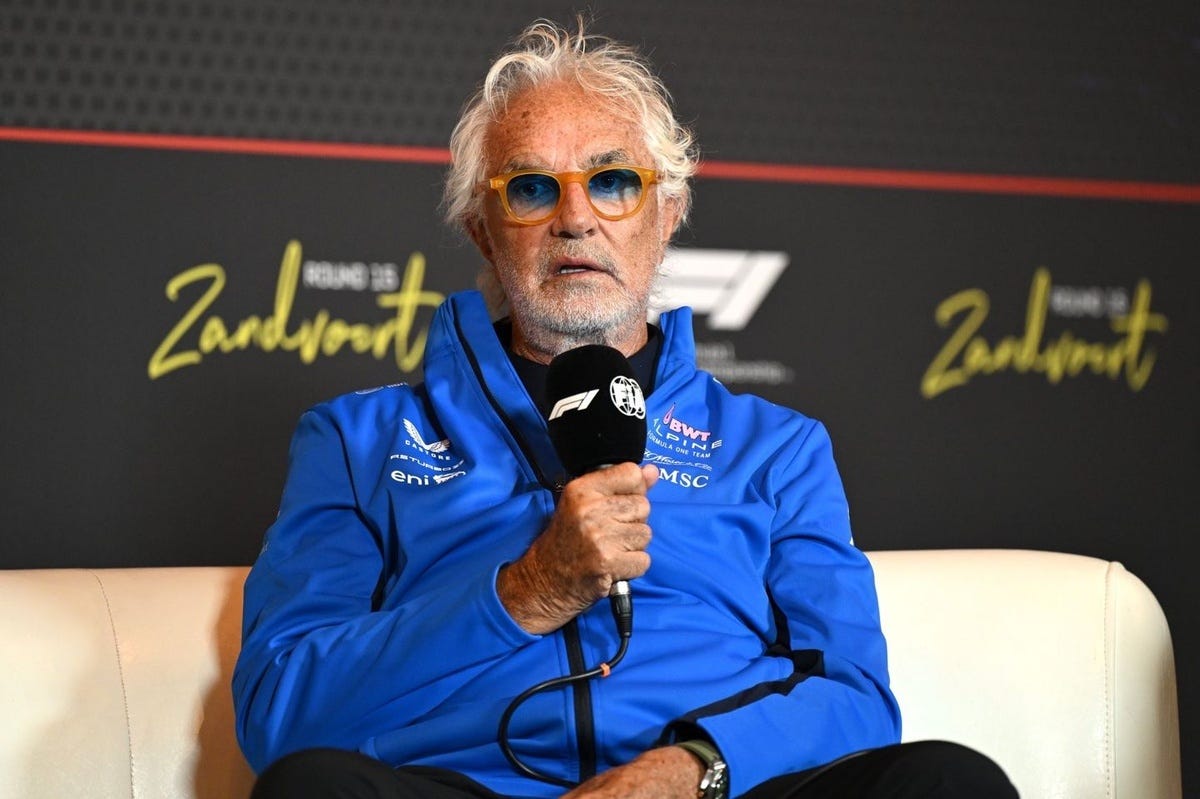
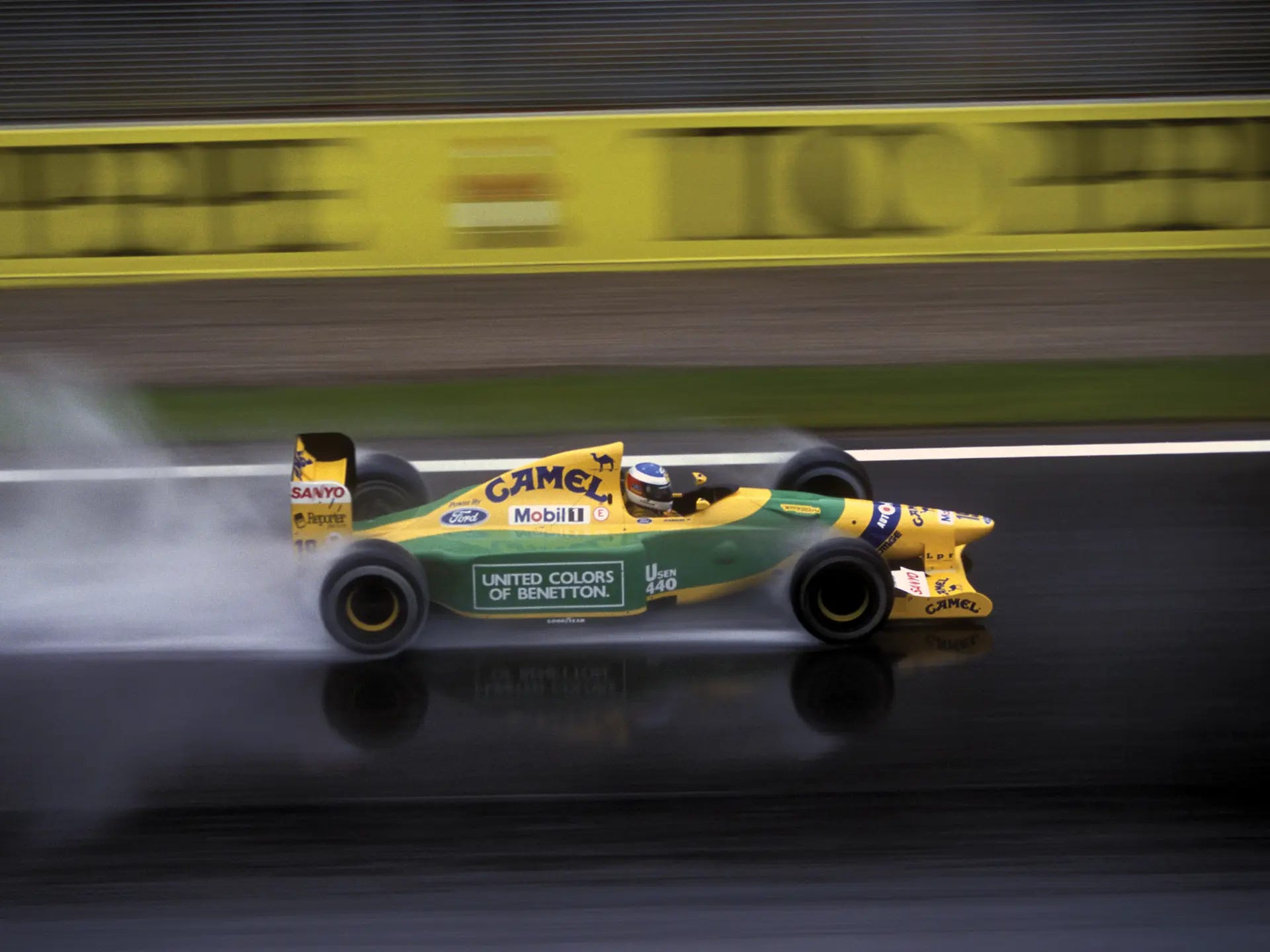
Briatore has run this play before. He took over Benetton F1 in 1989 and won back-to-back drivers’ championships with Michael Schumacher in 1994 and 1995. The Italian clothing brand on the side of the car spent fifteen years in Formula 1 and walked away with two titles, a generation of brand equity, and an outsized cultural footprint for a casual-wear company. Briatore has now built two of his most visible commercial chapters around the same template: an Italian clothing brand married to the Enstone factory. Gucci is buying the kind of championship-era brand association Benetton actually earned. Briatore is betting he can deliver it again.
Alpine Needs Stability
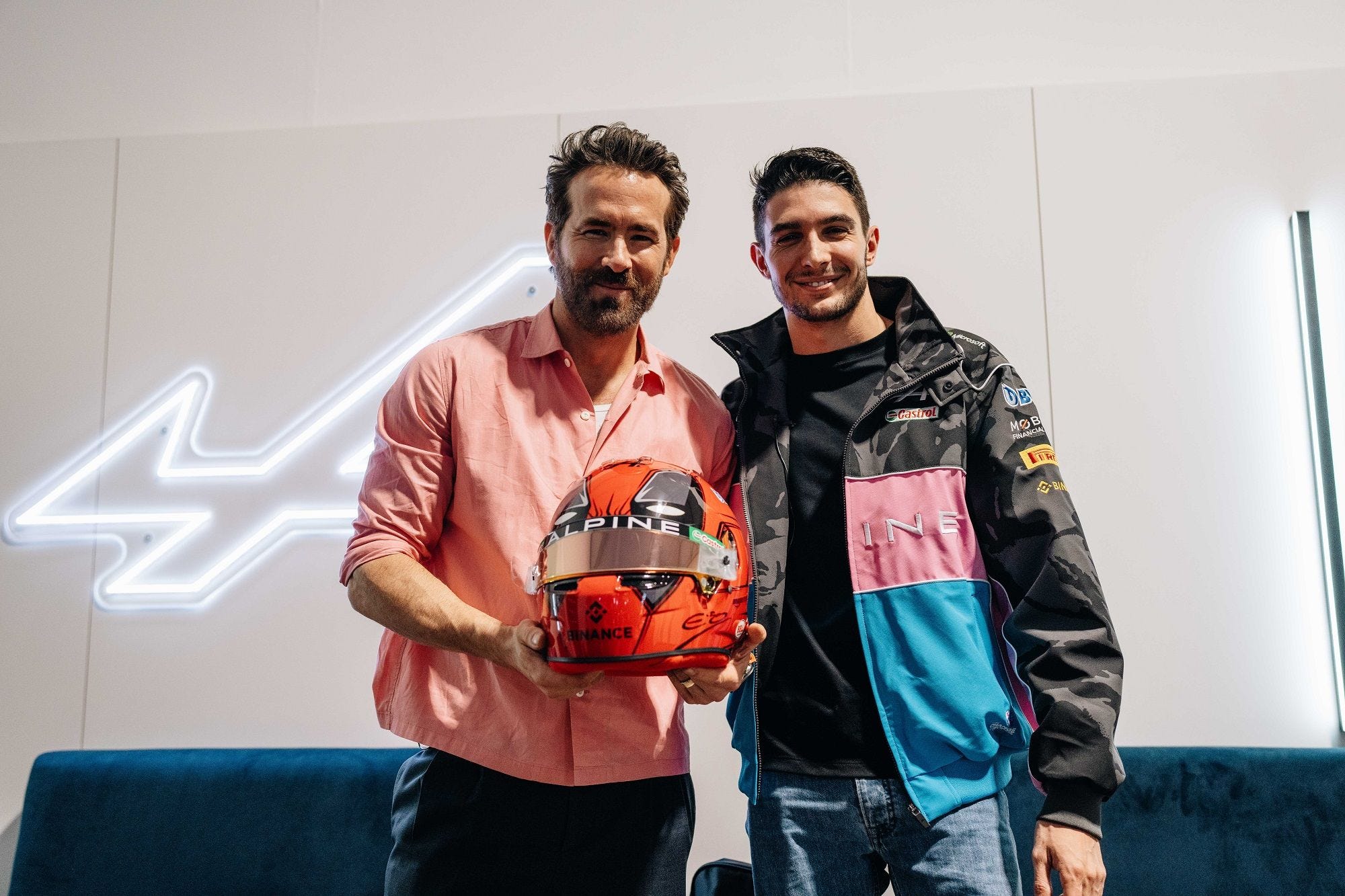
Alpine has spent the last two years on the open market in everything but name. Otro Capital, the American PE firm with Patrick Mahomes, Ryan Reynolds, Travis Kelce, Rob McElhenney, and Rory McIlroy among its LPs, paid roughly $233M for 24 percent of the team in 2023. As we laid out in the Toto Wolff dispatch, that stake is now valued at around $750M against a team enterprise value of approximately $3 billion. Multiple buyers have circled, including Wolff himself.
A signed luxury title sponsor at this price changes the conversation. Forward revenue is now visible through 2029. The brand association moves from water treatment to one of the most recognizable houses in luxury fashion. If the team converts the Mercedes power unit into a podium-capable car over the next two seasons, the valuation argument writes itself.
What It Means for the Grid
For the rest of the paddock, the implication is more immediate. Title sponsorship is open to more than just tech and oil. McLaren signed Mastercard for the 2026 season. Williams renewed and expanded with Atlassian. Cadillac is still in the market for a title sponsor. The comp set for every 2027, 2028, and 2029 deal in negotiation now includes Gucci Racing Alpine.
Two things follow. First, mid-tier teams negotiating their next title deal have a defensible upward floor. As we documented in the Fan Prix piece last summer, premium F1 title partnerships were priced between $30M and $70M per year.
Second, sponsorship at the very top of the grid (Mercedes, Red Bull, Ferrari, McLaren) becomes harder to discount. The luxury cohort has now demonstrated willingness to pay for a fifth-place team. The premium attached to a championship-contending team is, by definition, higher.
Two things I think are worth pointing out.
One: Gucci is not buying Alpine’s racing program. Gucci is buying access to the F1 audience for a brand mid-restructuring, on terms set by a CEO who knows the property because he used to run it. The F1 paddock has become the most reliable cultural distribution platform in luxury, and Kering needed one for the back half of de Meo’s reconstruction plan.
Two: Briatore has now built two of his most visible commercial chapters around the same template, an Italian clothing brand married to the Enstone race team. Benetton in the 1990s walked into Formula 1 as a casual-wear company and walked out with championships. Gucci in the 2020s is buying the same kind of brand association before the team has earned it. Briatore is betting he can deliver again. Given his record at this factory, the better question is whether anyone should bet against him.
Being a big F1 fan, and loving all the business that goes on behind the scenes, this was a great read