

Business of Speed follows the money behind racing, from sponsorship deals to team ownership and media rights. Become a paid subscriber for our deeper business analysis and join me in the subscriber chat to discuss the stories and questions shaping the sport.
At the Paley Center in New York on September 24, I moderated a conversation between F1 CEO Stefano Domenicali and Apple’s services chief Eddy Cue.
Cue told me about watching an F1 race and wondering why the broadcast hadn’t shown Kim Kardashian again after a shot before the start. He texted Stefano Domenicali to ask where she was. Stefano replied that they’d been looking for her, but she was inside.
So Eddy texted Kim directly and asked her to come outside where a camera could find her. She did.
My first thought was, “Damn, this guy can just pick up his phone and text Kim K?” My second was that Apple and F1 had the right guy to help make the sport bigger in America. He was thinking about viewers who might pay attention to racing because Kim was there, and he could do something about it.
Later, when I asked what kept younger and female audiences coming back, Eddy returned to that moment. “I told you the Kim story because it matters.”
I understand why it matters to Eddy, even though I don’t care for celebrity coverage during a race. When I sit down to watch, I want to follow the racing, and I struggle to see what a shot of a celebrity adds.
Someone who follows Kim has a different reason to look at the screen. Her presence can spark interest in F1 before they’ve learned enough about the sport to have a favorite driver.
The scale of that opportunity helps explain why Eddy reached for his phone. According to HypeAuditor’s October 10 figures, Kim had roughly 344 million Instagram followers, compared with 44.3 million for F1’s official account. That’s nearly eight times the follower count, with no guarantee that a follower sees a post or watches a race. If you’ve followed her for years, though, you already have a reason to notice where she goes and who she’s with.
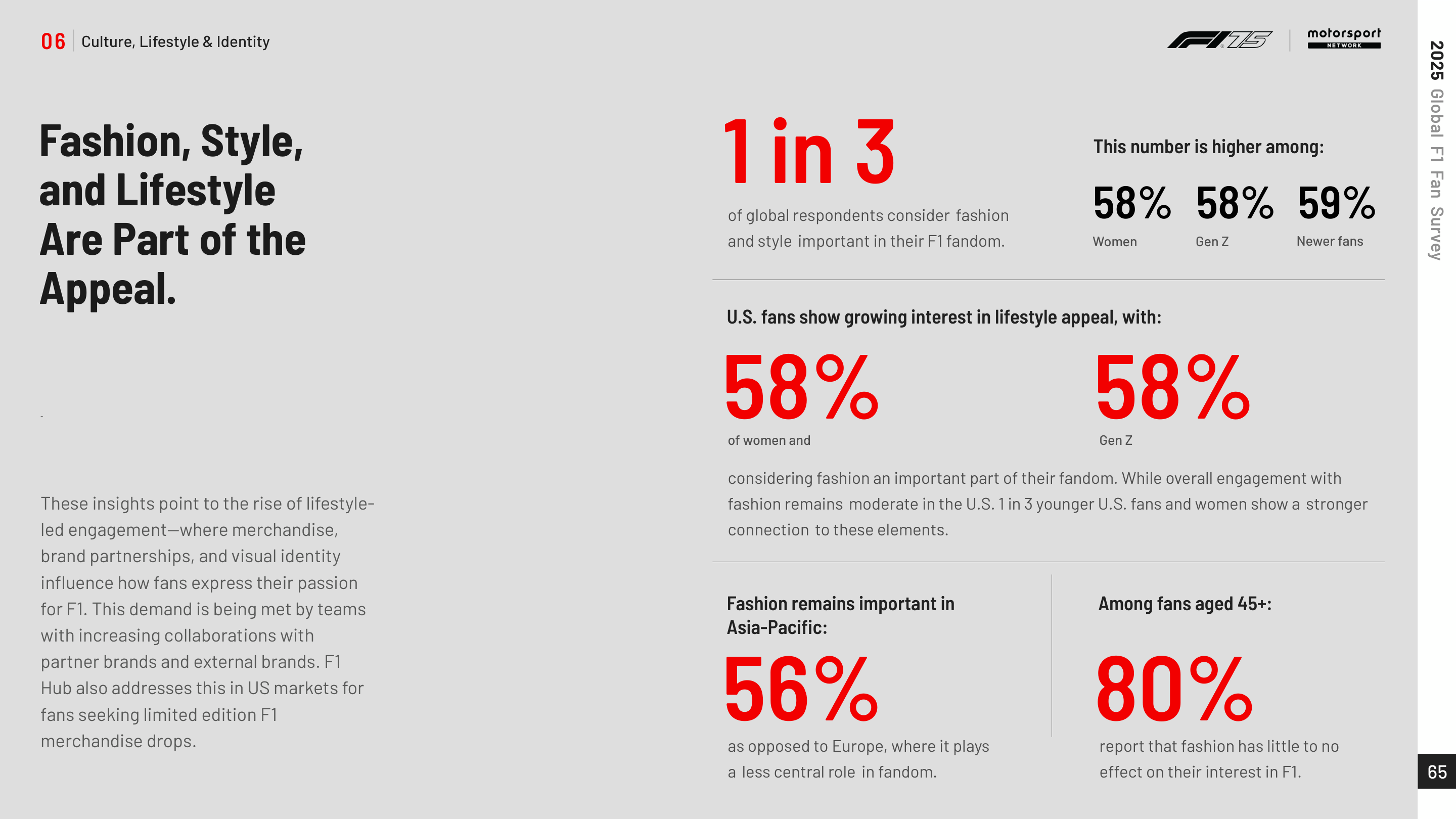
That interest can carry racing into coverage you’d read anyway, and fashion already matters to many newer fans. In the opt-in 2025 Global F1 Fan Survey, 59% of respondents who had followed F1 for five years or less said fashion and style were important to their fandom. Vogue’s Christian Allaire wrote about Kim’s Monaco appearance on June 7, leading with Lewis Hamilton’s second-place finish and Kimi Antonelli’s win in an article filed under Celebrity Style. A reader looking for what Kim wore encountered a Formula 1 result along the way.
The business Kim has built around that attention is why I think she’s brilliant. I have questions about how much of anyone’s private life should become something to sell, but I admire the discipline it takes to turn years of public scrutiny into a company you own a stake in.
SKIMS, which she co-founded with Jens Grede, raised $225 million at a $5 billion valuation in November 2025. At the time, the company said it expected more than $1 billion in net sales for 2025. Its expansion into sports gives that business a connection to the audiences F1 wants to reach: SKIMS became the official underwear partner of the NBA, WNBA and USA Basketball in 2023, and Nike and SKIMS introduced their first NikeSKIMS collection in September 2025, with Serena Williams and Sha’Carri Richardson appearing in the campaign alongside Kim.
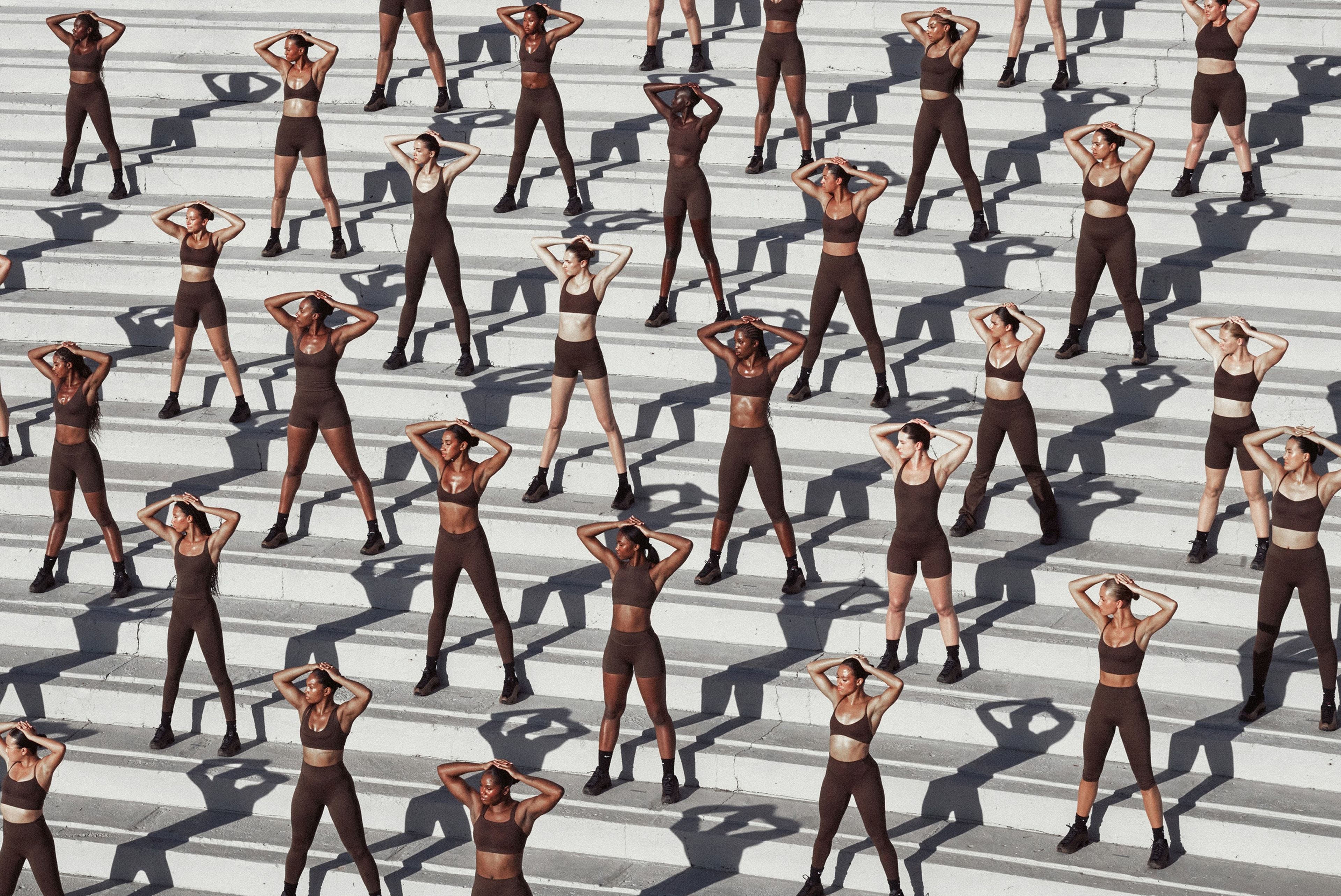
Those partnerships give SKIMS access to sports audiences. At a Grand Prix, Kim can shift attention elsewhere, bringing racing to the media that already cover her. Hamilton’s place in American celebrity culture gives that coverage a person to follow into the competition.
An existing interest can make an unfamiliar sport feel worth trying.
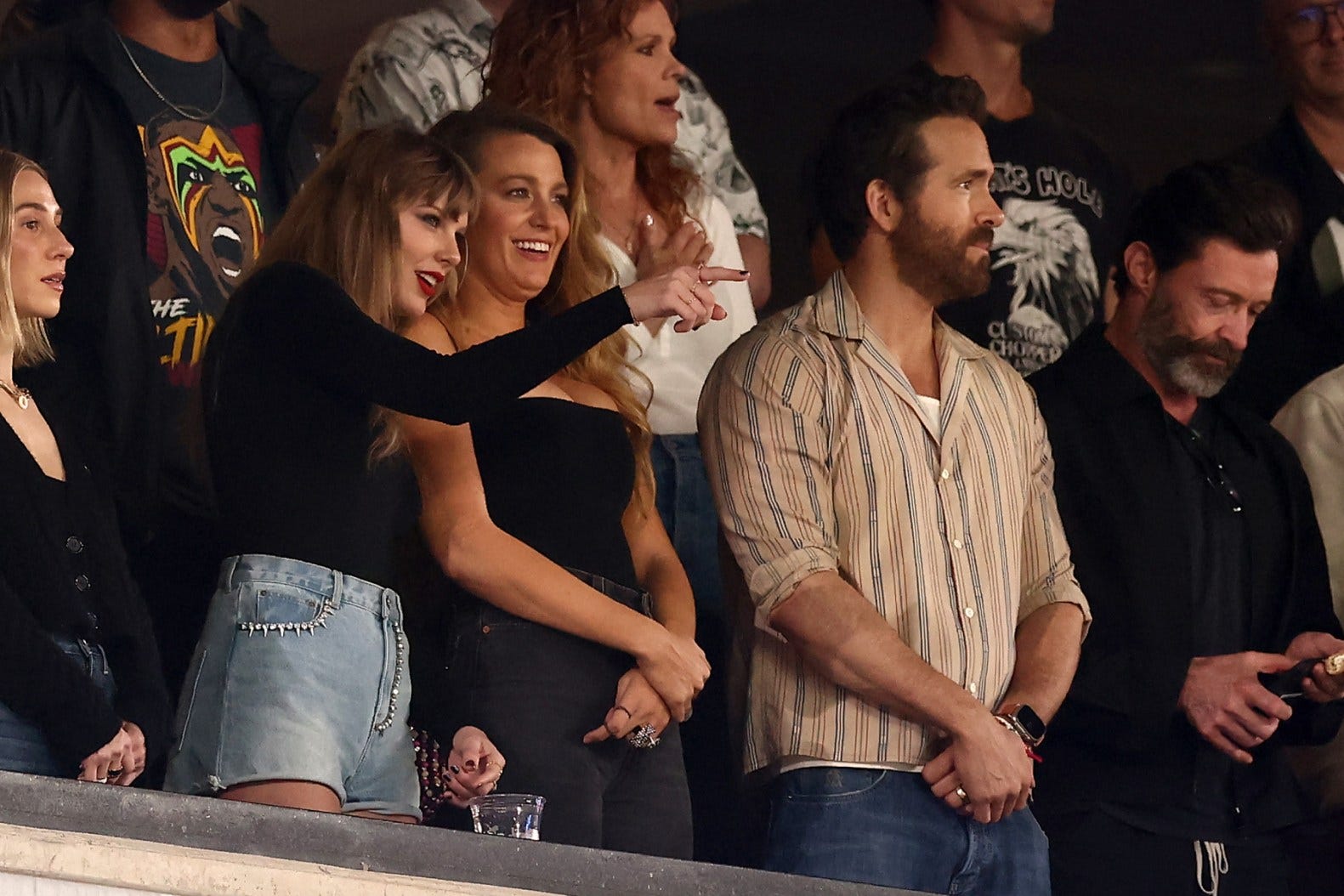
Eddy told me his daughters-in-law became Kansas City Chiefs fans because they were Swifties; they hadn’t watched the team before Taylor Swift’s connection gave them a reason to start.
With Swift at the October 1, 2023 Chiefs-Jets game, NBC’s preliminary figures put viewership among girls aged 12-17 53% above the average for the season’s first three Sunday Night Football weeks. Anecdotally, my female cousin, a massive tennis fan of Jannik Sinner, whom F1 brought on as a Friend of F1 in 2023, heard him talk about the series, which piqued her interest enough to start watching races.
What happens after that first race is the harder question, and that's what I asked Eddy to follow up on. When he talked about drivers as celebrities and their appeal to younger audiences, I asked whether it needed to go beyond their attractiveness. He agreed, pointing to their businesses and the ways they make a difference in people’s lives.
Stefano wants that interest to become part of everyday life in America, with people waking up curious about what’s happening in Formula 1. In our conversation, he described awareness and discussion as steps toward monetization. The Apple-F1 partnership gives Eddy a reason to care whether that curiosity turns into a subscription. Stefano gains an audience that broadcasters and commercial partners want to reach. Both men have a commercial reason to welcome Kim, though neither could provide data on how many people who first encounter F1 through her go on to watch races regularly.
For anyone who does tune in, the broadcast still has to make the racing worth following. Cutting to a celebrity during a fight for position interrupts the competition, including for the newcomer you’re hoping will come back.
Once someone’s curious about Hamilton, the coverage can help them understand what he’s doing in the car. Stefano had talked earlier about explaining the technology and human effort behind performance to people drawn in by other interests.
Everyone who loves F1 had to find a way into it.
Maybe it was going to the racetrack with your dad in the 70s watching Niki Lauda and James Hunt do battle.
Or it could have been 2020, locked down in your home, discovering a series on Netflix that captivated you enough to start going to races.
Stefano grew up in Imola, near Autodromo Dino Ferrari (renamed Autodromo Enzo e Dino Ferrari after Enzo’s death in 1988), where he got up close with the engineers, sparking his lifelong pursuit of motorsport.
Eddy found his through an AutoWeek article at the Coral Gables Library. He was a kid who liked cars and recognized Ferrari; learning that Ferrari raced gave him something to follow. He couldn’t watch the races on television, so he went back to the library every week to read the results.
My uncle took me karting and to a race track when I was a little boy, and showed me F1 on television. I was hooked immediately, and I’ve been following ever since. If a brief shot of Kim before the lights go out, or a mention in Vogue, does for someone today what my uncle did for me, I can live with sharing those few seconds.
Business of Speed covers the business, technology, and lifestyle of racing: Formula 1, IndyCar, IMSA, WEC, NASCAR, and more. From Vincenzo Landino, entrepreneur and creator, featured in Bloomberg, TBPN, Yahoo! Finance, Forbes, Adweek, and Front Office Sports. You can find us on Instagram, Substack, and LinkedIn.

