

Remaining an independent source of motorsport business is what we strive for. If Business of Speed has given you useful knowledge this year, please consider a subscription.
The short version of the case, for anyone who has only read the Lakers coverage, is as follows. Delaware Life and Clear Spring Life are annuity companies. People hand them money, often retirement savings, in exchange for a promise of payments years or decades from now, and the companies invest that money in the meantime. State regulators allow this on two conditions: report accurately what the money is invested in, and keep a cushion of extra capital in case the investments go bad. Both companies are part of Group 1001, the insurance group controlled by Mark Walter.
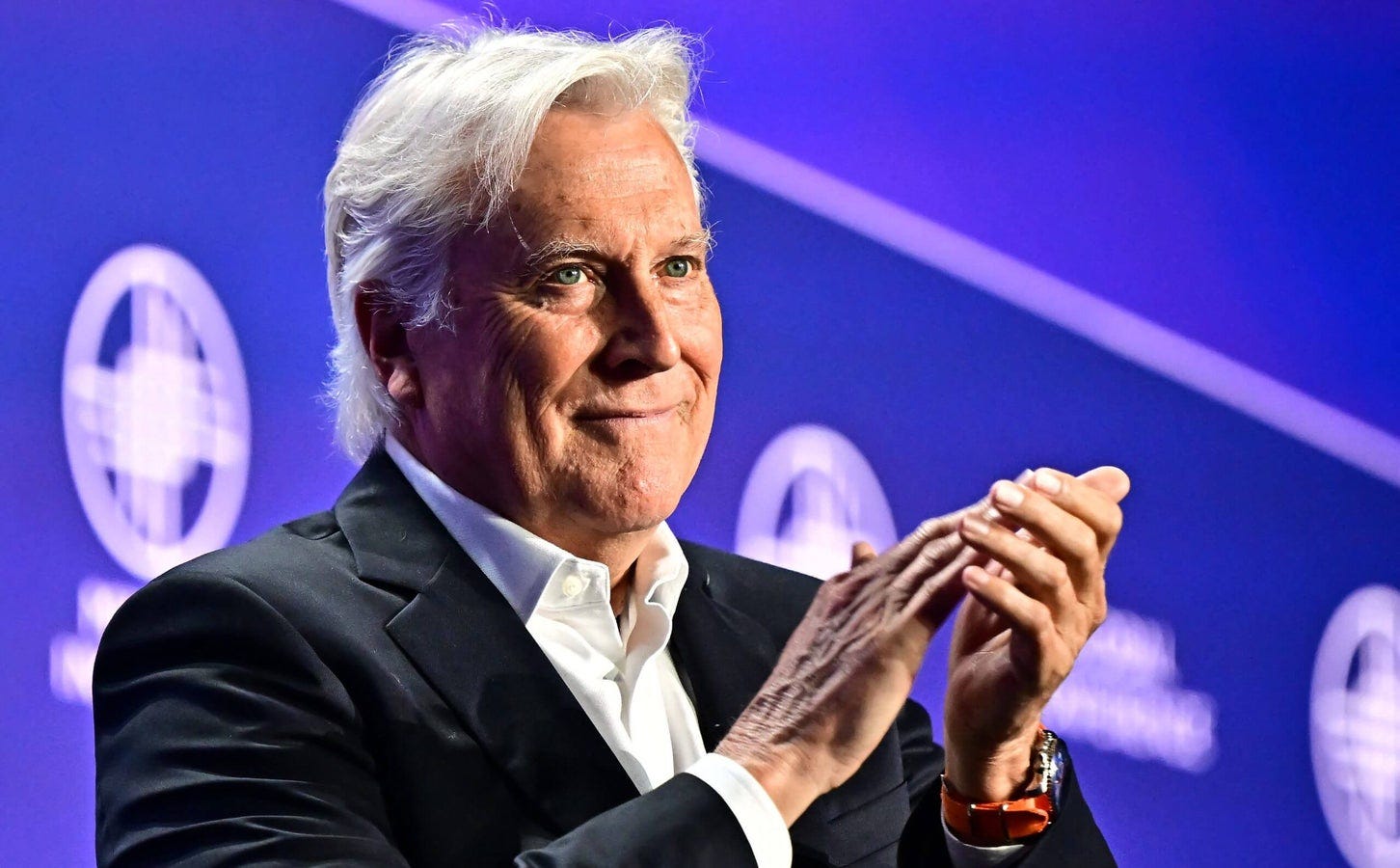
In February, a federal grand jury in Manhattan sent both companies subpoenas, a prosecutor’s formal demand for documents and usually the first public sign of a criminal investigation. In June, Delaware Life corrected its books. Roughly $17 billion of loans it had been reporting as made to outside borrowers were reclassified as loans to companies connected to its own owner, and the share of policyholders’ money tied up in the owner’s other businesses went from about 3 percent to 39 percent.
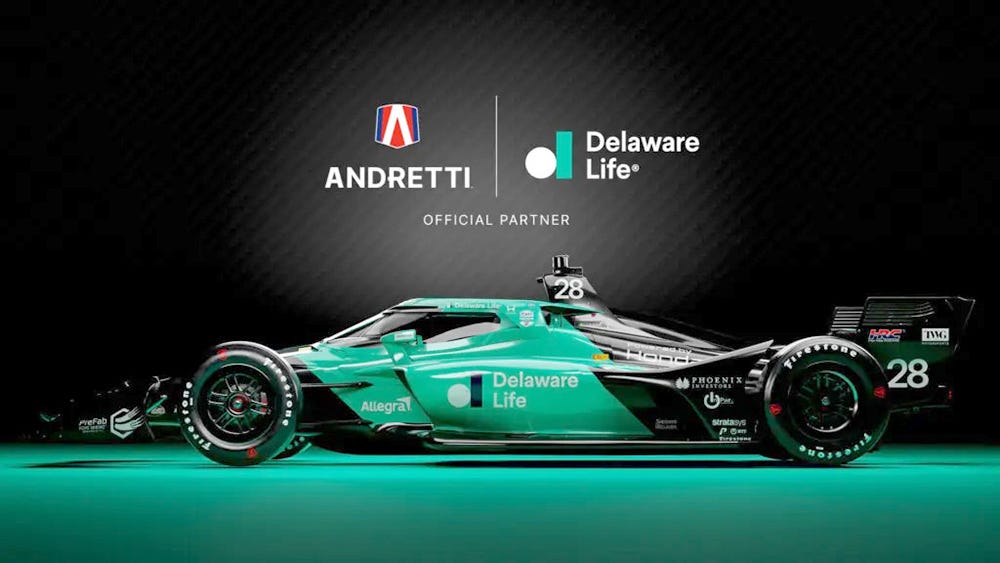
Delaware Life is the primary sponsor of Marcus Ericsson’s No. 28 Andretti Global Honda at all 18 IndyCar races this year. Delaware Life is also one of the two annuity companies inside Group 1001 that received a federal grand jury subpoena in February. Every insurer files a sworn financial statement on which named officers attest that the numbers are true, and the first officer named on Delaware Life’s June restatement, according to Nick Nemeth at Mispriced Assets, who read the filing, is Group 1001’s chief executive, Dan Towriss. Towriss is also the chief executive of TWG Motorsports, which owns Andretti Global outright, owns the Cadillac Formula 1 team in partnership with General Motors, and holds stakes in Wayne Taylor Racing, Spire Motorsports and Walkinshaw TWG Racing. The federal investigation into Mark Walter’s insurers reaches the race teams through that one person, and the exposure can be worked out team by team.
Lending to your owner’s other companies is legal. The rules require disclosure so a regulator can see how much of the promise to retirees depends on the performance of Walter’s other bets, and for years the filings said the exposure was small. Fitch said the corrected number was the highest of any North American life insurer it rates and put Delaware Life on watch for a downgrade; AM Best and S&P moved to negative outlook. Those grades matter because the agents and brokers who sell annuities use them to decide whose products to sell, so a downgrade slows the new money coming in. FBI agents had already taken Walter’s phone and laptop off his plane in Chicago last September.
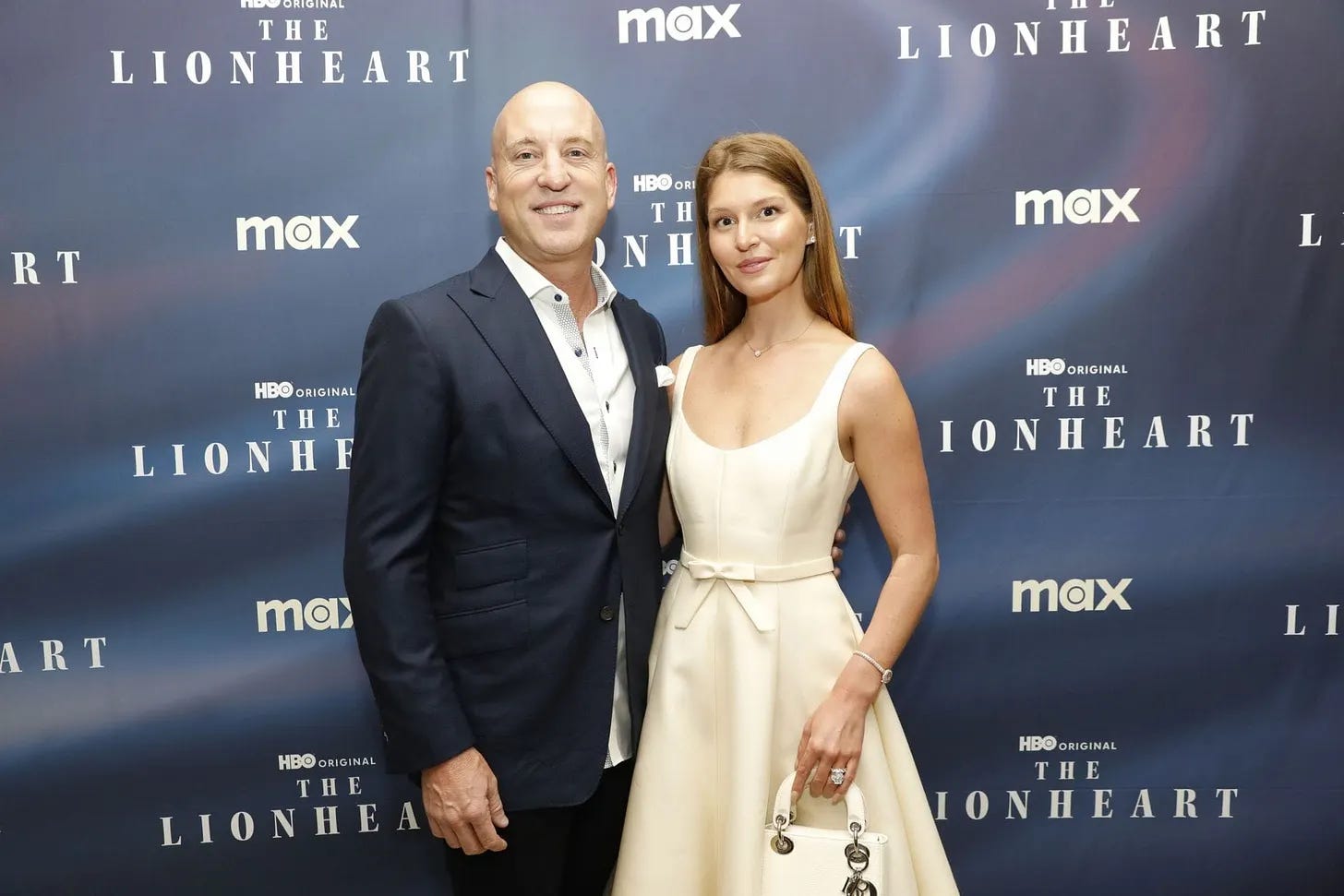
Then the deleveraging started, which is the finance term for selling assets and raising cash to pay down debt quickly. TWG has been offering lenders double-digit interest on short-term loans, with Walter’s 20 percent of Guggenheim Partners pledged as security, and the insurers told the market to expect roughly $8 billion of the owner-connected loans to come off the books, which TWG will have to find. The Lakers went to Josh Kushner and Bob Iger at $12.5 billion in a matter of days, and on Monday, The Guardian and AFP reported that Walter and Todd Boehly are considering selling their Chelsea shares to Clearlake at a £5 billion valuation.
The coverage follows the trophies, which is fair, since Walter owns them. Nemeth’s point on August 14 was that Walter has never held an insurance license or signed an annual statement; the licensed operator who swears the filings at Delaware Life and Clear Spring is Towriss, and Towriss is the man running the racing. BoS profiled him in March and mapped TWG Global in February, back when the interesting question was how an actuary from Muncie got a team onto the F1 grid. Nobody has charged anyone with anything, and TWG’s line, given to Bloomberg in July, is that “Mark Walter and TWG have always acted in good faith” and that they are cooperating.
The question I keep getting from readers is: What does this do to the race teams?
The Money
The No. 28 is one of several places the group sponsors itself. Will Power’s No. 26 carries “TWG.” TWG AI, the group’s in-house artificial intelligence unit, is the primary partner of Andretti’s Formula E entry and the Official AI Partner of the Cadillac F1 car. Gainbridge, the Group 1001 annuity brand, has been the presenting sponsor of the Indianapolis 500 since 2019 and extended in November, and Group 1001 itself took a primary on Daniel Suárez’s Spire Chevrolet.
The pattern predates TWG, and it works like this. Gainbridge went on Zach Veach’s Andretti car full time in 2018 as a sponsor. Towriss became a co-owner of Andretti Global in 2022, with an investment that RACER reported matched or exceeded the roughly $250 million the team had raised that year. Walter’s TWG bought the team outright in November 2024 after Michael Andretti stepped back. Group 1001 brands started sponsoring Spire in 2023, and Towriss bought into that team in 2024, taking T.J. Puchyr’s shares while Jeff Dickerson kept the majority. (Puchyr has since bought Rick Ware Racing to build a team of his own)
Sponsoring first and buying later is a common way to build a portfolio, and it also means that a real slice of the sponsorship revenue from these teams is money the group pays itself. In-house money is the most fragile kind, because it lasts exactly as long as the parent decides to keep spending it, and the parent here is an insurer whose cushion has thinned. AM Best said the reclassification produced a “material decrease” in Group 1001’s risk-adjusted capital, which is the agency’s measure of that cushion against the riskiness of the investments. Every dollar an insurer spends on a race car is a dollar not sitting in the cushion, and the cushion is what regulators, rating agencies, and now prosecutors are staring at.
There is a second-order point, and I will label it as inference: a payment from a regulated insurer to a race team its own affiliate owns is a related-party transaction, a deal between companies with the same owner, and that is the exact category of transaction everyone is now reading line by line. Nobody has suggested the sponsorships are improper.
Cadillac F1
About $1 billion was spent before they even showed up to the first race. That’s on top of the $450 million anti-dilution fee, which was Formula 1’s price of admission. Mark Reuss, GM’s president, said last August, “We have invested heavily, between TWG and General Motors.” GM’s own engine arrives in 2029; until then, the team buys Ferrari power. On track, zero points through Hungary, nine retirements between Sergio Perez and Valtteri Bottas.
Just last week, Towriss replaced team principal Graeme Lowdon with Marcin Budkowski, telling reporters the next day, “It was my decision, it wasn’t a mutual decision,” and describing it as the start of the team’s next phase. No reporting connects that change to the investigation, and nothing here suggests it does. It belongs in this piece for two reasons: it shows who is making the calls at Cadillac, and a team with no points and a new boss is a weaker negotiating partner for GM if the ownership is ever restructured. GM leadership approved the appointment.
Cadillac F1’s website lists ten official partners, one of which is TWG AI, and no title sponsor. Tyler Epp, who ran the Miami Grand Prix, is now selling that inventory against a news cycle that includes the words “grand jury.” The Super Bowl launch remains the best thing about the season.
For the purpose of this piece, however, ownership mechanics matter more than the lap times. Formula 1 rejected Andretti in January 2024 and admitted the same project ten months later when GM put its name and a future engine on it. F1’s tie is to GM. Under the commercial agreement every team signs with F1 (the Concorde Agreement), a team cannot change controlling owners without F1’s consent, so if TWG ever needs to sell down, the buyer F1 would likely wave through in an afternoon is GM.
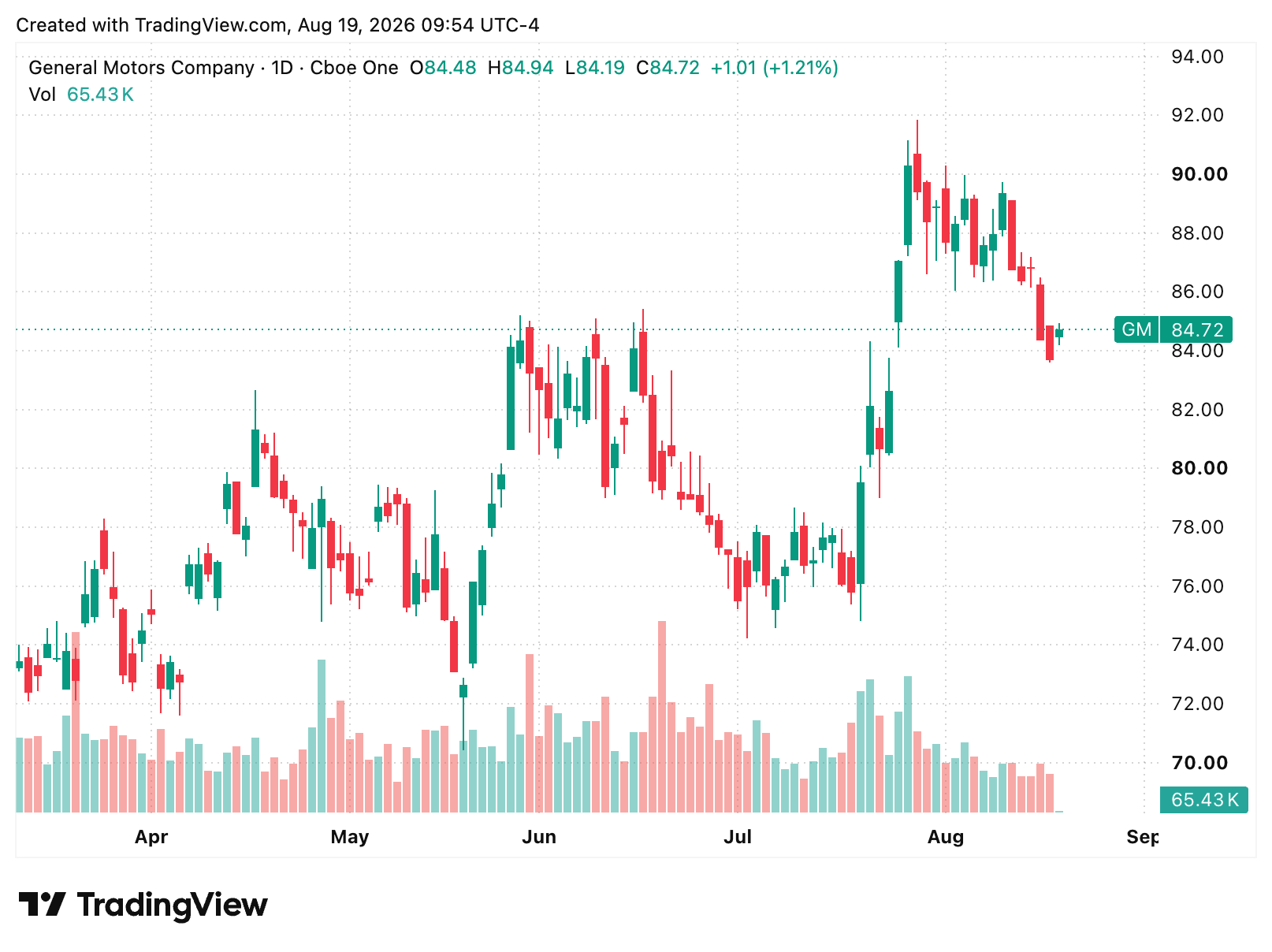
Sportico did not assign a valuation to Cadillac in its November list of team valuations. The most comparable team on the grid is the other American team, Haas, valued at $1.68 billion.
Andretti Global
Andretti is the sentimental core and the awkward one. The Fishers building was announced in 2022 as Andretti Global’s $200 million campus; after Michael Andretti stepped back in September 2024, the campus became the F1 team’s, and the IndyCar, Indy NXT, and Formula E operations moved into 245,783 leased square feet on Georgetown Road. On track, the year is good. Kyle Kirkwood is second in the standings behind Alex Palou. Will Power took a podium at Portland, and Ron Ruzewski came over from Penske to run the shop. Sam’s Club, on Kirkwood’s No. 27, is an outside sponsor. The Delaware Life and TWG names on the other two cars come from inside the group.
One name from the buildings belongs on the watch list. Bradford Allen, the Chicago commercial real estate firm that is the master developer of the Fishers headquarters and arranged the Georgetown Road lease, is one of four companies the Wall Street Journal reported on August 16 that prosecutors are focused on as go-betweens, firms that sat between Walter’s insurers and other companies he controls when loans were made. That is an adjacency. No filing links either building to the loans, the financing of the Fishers project has never been reported, and Bradford Allen has not been accused of anything. But it is on the list of things a reporter would ask about.
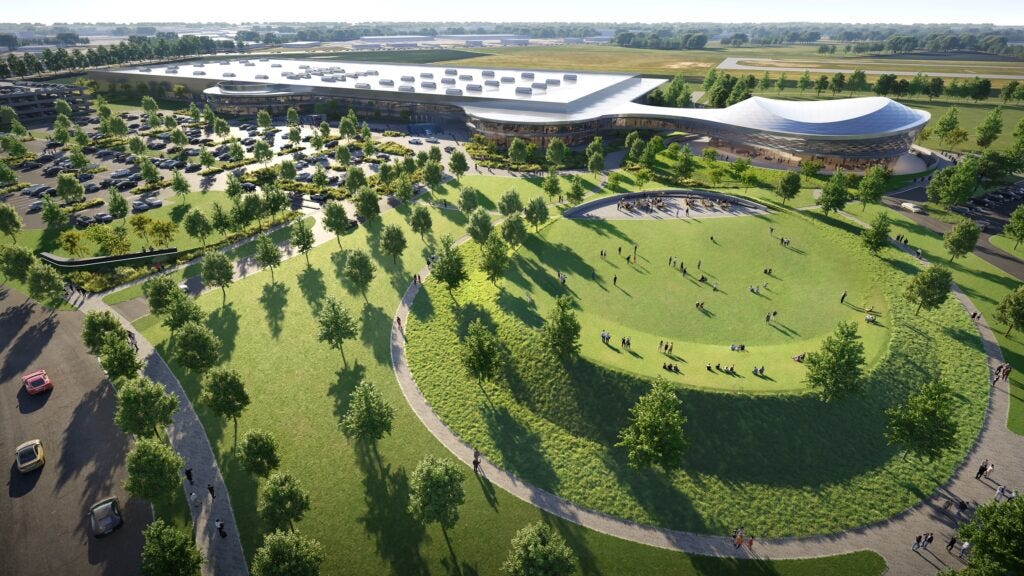
The asset question is new. IndyCar’s charter system arrived in 2025 and gave established teams something like a franchise: three per team, which includes a guaranteed starting spot and a share of the series’ money that can be bought and sold with the series’ approval.
In February, Doug Boles told Honda and Chevrolet that they would receive transferable charters of their own starting in 2028. IndyCar is turning entries into paper that can be valued and sold when an owner needs to raise cash. Roger Penske and Mark Miles, who would have to approve any transfer, carry their own exposure to this group, since Gainbridge’s name is on the 500 through the multiyear extension Miles signed in November. Neither Penske nor Miles wants a distressed Andretti sale, and neither wants a presenting sponsor in the news for the wrong reasons in May.
Spire Motorsports
Spire is the cleanest position in the group and the smallest, a minority share in a team Dickerson owns most of and runs.
The team holds three Cup Series charters, NASCAR’s version of a franchise. Charters can be bought and sold, and the prices became public in last year’s antitrust lawsuit, so the comparables run from the $40 million Spire itself paid Live Fast in 2023, to the roughly $45 million Legacy Motor Club was reported to have paid Rick Ware, to the $100 million some team executives were floating in December. On those numbers, the three charters alone are worth $150 million to $300 million before you count the drivers, the trucks, or the shop. The sponsor list is solid, with Spectrum, Chili’s, Freeway Insurance, and Zeigler paying their way, and Group 1001’s brands are down to a single primary on the No. 7 in 2026 from Gainbridge and Delaware Life primaries in 2024.
Wayne Taylor Racing and Walkinshaw TWG
Wayne Taylor Racing is Cadillac’s factory team in IMSA’s top prototype class. Taylor split from Andretti after 2024, told Sportscar365 in January 2025, “I’m now partnered with TWG, with Dan Towriss and them,” and said Reuss, Jim Campbell, and Rory Harvey wanted the Wayne Taylor name on the program. The team won at Road America on August 2, ending a long drought. The dollars are small next to F1, the exposure is GM’s again, and the resolution is obvious. Taylor and GM can carry the program with or without TWG’s check, and GM will want distance from any headline that says otherwise.
Walkinshaw TWG Racing is the team Toyota chose to develop and race its official car in its first Supercars season, the GR Supra, with Chaz Mostert and Ryan Wood driving. Zak Brown and United Autosports sold their share in 2025. Walkinshaw and TWG bought it, and Scott O’Donnell’s ODFI joined in March, so it is a three-way table with Towriss as one of three directors, and TWG’s percentage remains undisclosed. Toyota’s Australian arm did not sign up for a debut season shadowed by a Manhattan grand jury, and Toyota is the most reputation-sensitive manufacturer in the sport. Expect the ownership lines to be redrawn without press releases if this drags.
The Logic
Now put the five in the order a banker would untangle for an over-borrowed client. TWG’s need is measured in billions and is near-term: short-term loans coming due within a year, an $8 billion promise to regulators and rating agencies to shrink owner-connected lending, an NBA owners’ vote on the Lakers sale still to come, and a Chelsea stake in play.
Race teams consume cash. Cadillac was spending a reported $30 million a month before it turned a wheel, and F1’s cost cap is $215 million this year, excluding items such as driver salaries and marketing. Race teams are also slow to sell, because every one of them needs someone’s permission to change hands, F1’s or NASCAR’s or IndyCar’s, and in two cases a manufacturer’s.
Assets that need permission draw fewer bidders, and bidders who know the seller is under pressure bid low. So the sequence writes itself. Easy to sell and famous first (the Lakers, done). Minority stakes second (Chelsea, in talks). Loans against what he still owns third (the Guggenheim stake). Operating businesses last. Motorsport is where TWG’s brand story lives, which puts it at the back of the queue, but the queue is moving quickly.
My POV
GM ends up owning more of the Cadillac F1 team than it does today within 18 months, either by buying TWG down or through step-in rights, which we assume GM’s lawyers wrote into the 2024 agreement. F1 would approve it in a week because F1 wanted GM in the first place.
The Spire stake is the racing position most likely to be sold if TWG needs to show a regulator some cash, and the first call goes to Dickerson, who already owns the rest of it. Andretti stays in the group, but the house sponsors come off. WTR and Walkinshaw are rounding errors financially, so GM and Toyota each get closer to the paperwork than they are today.
Investigations end without charges all the time, and this one might as well. If it does not, and the charging documents touch the filings, every series with a TWG entry goes under immediate scrutiny.
Business of Speed covers the business, technology, and lifestyle of racing: Formula 1, IndyCar, IMSA, WEC, NASCAR, and more. From Vincenzo Landino, entrepreneur and creator featured in Bloomberg, TBPN, Yahoo! Finance, Forbes, Adweek, and Front Office Sports. You can find us on Instagram, Substack, and LinkedIn.