

Every Monday, we publish a series called CAPITAL MOVES—a look into the off-track investments of individuals involved in the world of racing. Be sure to check out previous editions.
There’s a certain kind of power in staying. But an even rarer kind, in leaving.
Growing up, my mother used to tell me: “no raspes fiesta”. It’s a Colombian idiom for ‘don’t be the last one to leave the party.’
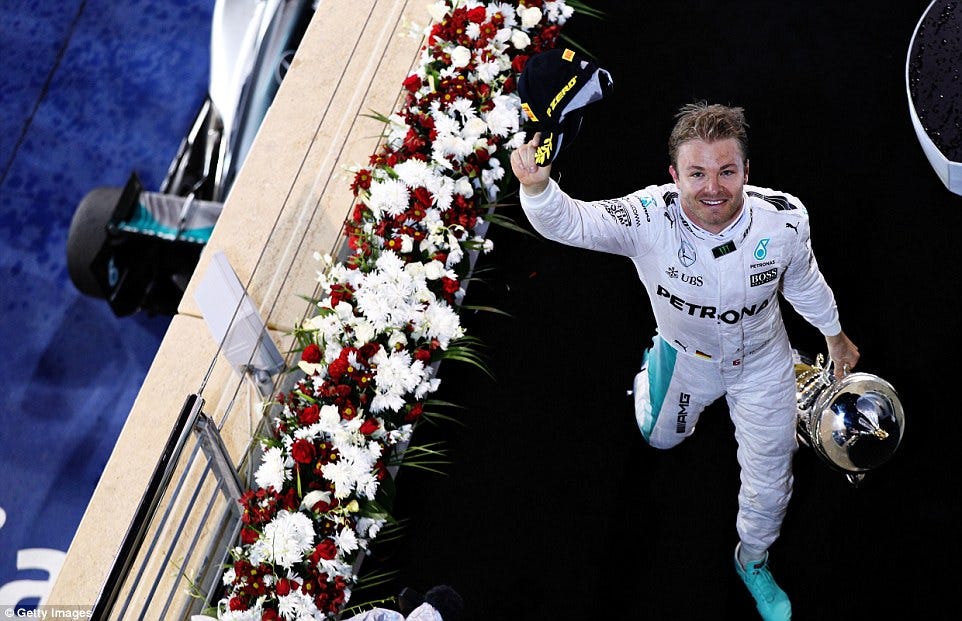
Nico Rosberg’s most consequential professional decision did not involve a steering wheel. It involved knowing when to leave the party.
Five days after winning the 2016 Formula 1 World Championship, Rosberg announced his retirement. The speed of the decision sent a shock wave through the global motorsport community. It seemed like a prank. Implausible.
With time, we learned the decision was anything but reckless.
To win the 2016 World Drivers’ Championship and defeat his former best friend-turned-fiercest adversary, Lewis Hamilton, Nico adopted an extreme, monastic lifestyle. He optimized every single variable in his life and has spoken candidly about the toll this took on him, how he emptied his “physical, emotional, and psychological tanks” in the process.
He now knew what it would take to beat Lewis…
…in equal machinery…
…by a mere 5 points…
…at the last race of the season.
He had no desire to repeat that process year after year.
While champions are expected to compound their success, Nico did the opposite. He stopped racing when the balance sheet was pristine and firmly in his favor.
A Childhood Inside the System
Rosberg was born in Wiesbaden, West Germany, in 1985 and raised largely in Monaco, a country whose economy (let’s be honest) is governed by engineered incentives.
His life was international from the outset, and he grew up fluent in German, English, French, Spanish, and Italian.
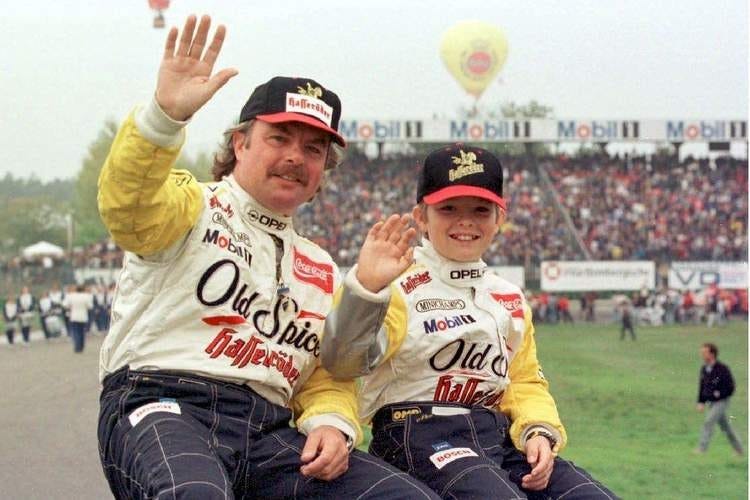
Racing is in Nico’s blood. His father, Finnish racing driver Keke Rosberg, won the 1982 Formula 1 World Championship while driving for Williams. Rosberg did not grow up chasing access. He grew up in high circles; he was around race cars and race tracks from birth.
He was a very intelligent, academically inclined kid. When he finished high school, he was offered a place to study aeronautical engineering at Imperial College London. He declined in order to pursue his dream of racing in Formula 1. It’s well-documented that he achieved the highest score ever on Williams’ engineering aptitude test, an assessment they gave prospective drivers at the time that focused on technical understanding. This speaks to his unusually deep engineering literacy, especially for someone of his age and experience.
Rosberg entered Formula 1 in 2006 with Williams. He marked his debut at the Bahrain Grand Prix by recording the fastest lap, becoming the youngest driver (20) to do so.


In 2010, he moved to Mercedes and became teammates with one of his closest friends, Lewis Hamilton. They had spent the entirety of their teenage years karting against each other, travelling, sharing hotel rooms, playing video games, and going on Rosberg family holidays. (F1 teammates?! Childhood dream unlocked!)
That relationship slowly soured. Then it ended. In 2016, he finally beat Lewis (a three-time World Champion at the time) and achieved his dream of winning the WDC. He abruptly retired five days later…at 31.
As noted, he is of high-intelligence and has an analytical mind, so he likely surmised rather swiftly that every additional year in F1 would cost him more than it yielded.
That instinct, knowing when marginal returns turn negative, has since become the defining principle of his investment strategy.
Allocating Capital
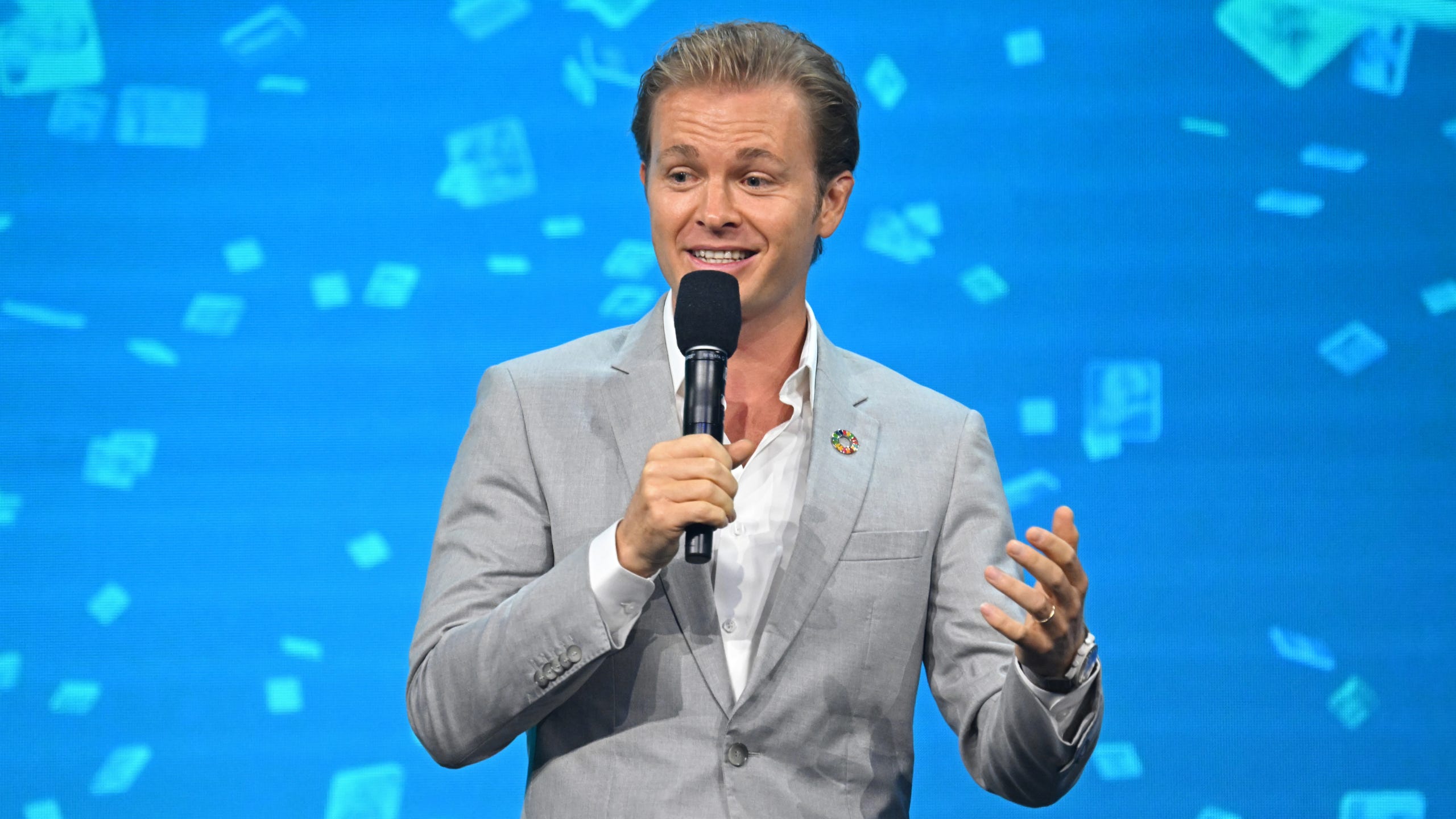
What followed Rosberg’s retirement was not a lazy drift into brand deals or honorary hyped-up roles, but the methodical construction of a capital platform. Rosberg did more than just invest.
Rosberg Ventures, the investment firm he founded in 2016, began as a vehicle to manage personal capital. It was a natural first step for someone with his analytical temperament to take his own financial future seriously. Over the past decade, it has matured into a fully institutional venture platform. In January 2026, Rosberg announced the close of a third fund at $100 million, oversubscribed 1.4 times, with allocations deliberately capped to protect long-term performance. (In layman’s terms: He turned money away.)
Total assets under management now exceed $200 million, and at that scale, it is a capital platform with sufficient continuity and access to operate independently of its founder’s profile.
The firm’s mandate is intentionally restrained. Rosberg Ventures operates primarily as a fund-of-funds and selective co-investment platform, allocating capital to top-tier global venture managers while retaining the flexibility to invest directly alongside them in breakout companies identified from within that portfolio. The objective: optimize exposure, diversify manager risk, and compress downside.
Equally important is who the platform serves. Rosberg Ventures acts as a bridge for European family offices, high-net-worth individuals, and industrial capital seeking disciplined access to venture markets without building internal teams. Rosberg’s credibility and network serve as non-financial leverage, unlocking allocations and access that capital alone cannot secure.
ClickHouse
One of the most telling direct investments by Rosberg Ventures is ClickHouse, a real-time analytics database that sits deep within modern data infrastructure. Rosberg Ventures is named as a ClickHouse investor in multiple reports, and ClickHouse’s own financing disclosures list Rosberg among new backers.
ClickHouse wasn’t born in a venture studio, the way so many of its peers were and still are. It was created inside Yandex, built to solve a very specific engineering problem: how to run analytical queries on vast, constantly updating datasets without pre-aggregating everything into oblivion. The system was in production as early as 2012, before being open-sourced in 2016. Essentially, the product was stress-tested at an industrial scale before it ever became a company.
The commercial vehicle came later. ClickHouse, Inc. was formed in 2021 to formalize and monetize what the open-source community had already validated. By October 2025, the company extended its Series C financing, and it was in that round that Rosberg Ventures made its entrance, participating alongside a cohort of new institutional backers.
The valuation story took off. ClickHouse was reported to be valued at $6.35 billion in May 2025. By January 2026, after a $400 million Series D led by Dragoneer, with participation from Bessemer, Index, Khosla, Lightspeed, and others. It catapulted to $15 billion. More than double, in under a year.
Ivy
We see the same structural logic in Rosberg’s involvement with Ivy, a payments infrastructure company founded in Munich in 2021.
Ivy provides a single API that enables instant, account-to-account bank payments, allowing merchants and platforms to bypass traditional card networks entirely and settle funds directly between bank accounts in real time. Rather than competing for consumer loyalty in an already crowded fintech market, Ivy positions itself upstream by embedding in the regulated payment rails that underpin commerce itself.
Card networks routinely charge merchants north of 2% per transaction, with settlement delays measured in days. Ivy’s model, built on open-banking frameworks, enables near-instant settlement at materially lower cost, improving merchant cash flow and reducing dependence on intermediaries whose fees persist regardless of whether the merchant can negotiate them. Once integrated, this kind of infrastructure is operationally sticky. It is not very common for someone to rip out a payment rail because a competitor offers a slightly better API. It’s not worth the headache!
In July 2023, Ivy raised a €7 million seed round led by Creandum. Nico first backed the company, then personally invested as an angel alongside some prominent fintech founders and operators. Five weeks later, the company closed a $20 million Series A led by Valar Ventures, at a valuation in the $80–90 million range. The speed of that sequencing, seed to Series A in barely over a month, was a clear signal.
This was not a company that needed to convince investors.
Surely not someone as savvy as Nico.

Formula E
In 2018, two years after hanging up his helmet, Rosberg became a shareholder in Formula E, the all-electric single-seater racing series that had debuted in Beijing just four years earlier. At the time, Formula E was still a championship that the mainstream motorsport world regarded with considerable skepticism: too slow, too niche, too politically correct. The conventional wisdom among the F1 establishment was that it would struggle to survive.
Rosberg saw something different. He saw a sport structurally aligned with where energy, mobility, and urban infrastructure were all heading simultaneously. Formula E races in city centers by design, on temporary street circuits in the middle of major metropolitan areas, rather than in the remote, purpose-built cathedrals of speed that F1 typically has called home for decades.
It was a deliberate strategy from the beginning to make electric racing directly visible to the populations most likely to be buying electric vehicles. As Rosberg himself put it, “it goes to the people.”
There was also a personal element. On the night he announced his F1 retirement, he received an offer to drive in Formula E (which, guess what? He declined.) When he attended the 2018 Berlin E-Prix, he didn’t just watch. He put on a race suit and became the first person to drive the GEN2 car publicly, on the streets of his home country, around the iconic Tempelhof Airport circuit.
He has since remained a committed advocate for the series, as an engaged minority shareholder, and the series itself has continued its ascent. By mid-2024, Liberty Global, which had held a minority stake alongside Rosberg and a group of other investors, had acquired Warner Bros. Discovery’s shareholding, taking a controlling 65% position in Formula E Holdings, with the remaining 35% held by minority shareholders, including Rosberg.
Formula E’s CEO Jeff Dodds, at the time of that transaction, described the overall investor portfolio as worth over $3 billion and growing.
SpaceX and Lyft
Rosberg Ventures’ exposure to SpaceX and Lyft didn’t come through conventional venture rounds, but via special-purpose vehicles.
SPVs let investors take part in hard-to-access, late-stage private companies without reshaping the main fund or concentrating risk where investors didn’t expect it. In practice, they’re a way to participate when getting a seat at the table is the hardest part, and in the case of SpaceX, that table is about as exclusive as it gets.
SpaceX has raised approximately $11.9 billion across 31 funding rounds from over 240 investors. And yet, meaningful allocations have grown progressively harder to access as the valuation has gone from $33 billion in 2019 to $350 billion by late 2024, and an estimated $800 billion by the end of 2025. A lesson in what happens when you hold the infrastructure of a category and refuse to go public. The fact that Rosberg Ventures secured any position at all says something, not about luck, but about the quality of the platform’s network.
However, Lyft is a different kind of bet. And that’s probably precisely the point. It posted nearly $5.8 billion in revenue for 2024, up 31% year-on-year, and delivered its first full year of GAAP profitability, with record gross bookings of $16.1 billion and 44 million annual riders.
A company that spent so many years absorbing the ‘pandemic pain’ and the long shadow of Uber, quietly emerging on the other side with real operating leverage. The global rideshare market is projected to reach $210 billion by 2029. Lyft doesn’t need to win the war outright to capture a very meaningful slice of that pie. And to a wise investor, a nice slice is plenty.
Fuse Energy
There is a version of sustainable investing that is essentially marketing. The kids call it greenwashing. A logo on a pitch deck, a panel appearance at Davos, a portfolio page with a random green leaf icon.
Rosberg Ventures is very much not doing that version.
The firm’s investment in Fuse Energy, an early bet that has since grown into one of the most remarkable energy companies in Europe, makes the distinction clear. Fuse was founded in London in 2022 by Alan Chang and Charles Orr, two former Revolut executives who decided that the energy sector was broken in the same way fintech had been broken a decade earlier: fragmented, expensive, and oh-so-ripe for vertical integration.
Their thesis was bold. Rather than building another retail energy brand that simply resells power at a margin, Fuse set out to own the entire stack: from utility-scale renewable generation (think: solar, wind, batteries) through in-house trading that places power onto the grid at the optimal second, all the way to direct consumer and business supply. The ambition was not to be a greener version of a legacy utility. It was to make energy abundant and cheap in a world where AI data centers are becoming the new heavy industry.
Rosberg came in early, before the trajectory was clear to most. His thesis, in very Nico fashion, was precise: Fuse was reinvesting 100% of its profits into building more renewable capacity. As he wrote at the time, that kind of capital discipline, aligned with a genuine environmental mission, was exactly what he looked for.
The numbers since have been difficult to ignore. By mid-2025, Fuse had reached $90 million in annualized revenue. By Q3 2025, it was growing at 8x year-on-year. By December 2025, it had crossed $400 million ARR, turned cash flow positive, and was supplying power to more than 200,000 households across the UK, before its third birthday!
In July 2025, Balderton Capital led a round that valued the company at north of $1 billion, officially granting it unicorn status. Five months later, in December 2025, Rosberg Ventures participated in Fuse’s Series B alongside Balderton, Lowercarbon, Ribbit Capital, Lakestar, Accel, and others, a round that pushed the valuation to $5 billion.
In under three years, Fuse had gone from a founding round to a $5 billion company. Game. Set. Match.
Back to Monaco
There’s a photo that doesn’t exist, but should. Nico Rosberg, a few days after the most important victory of his life, sitting somewhere in Monte Carlo, not celebrating, but thinking.
He knows.
He’s decided.
“No raspes fiesta.”
What she understood, and what Rosberg has spent the decade since his retirement proving, is that the most powerful move available to anyone, in racing, in capital, in life, is the voluntary exit.
To leave while the room still wants you. To close the chapter before it closes you.

Really solid playbook for athletes preparing for their time after sport and building a strategy of success after that.