

Every Monday, we publish a series called CAPITAL MOVES—a look into the off-track investments of individuals involved in the racing world. Be sure to check out previous editions.
We all know athletes who treat investing as an extension of fame.
But when you’re a GOAT, it’s more like an extension of authority.
Such is the life of Lewis Hamilton.
There’s a quote from Act 2, Scene 1 of Shakespeare’s The Tempest: ‘What’s past is prologue’.
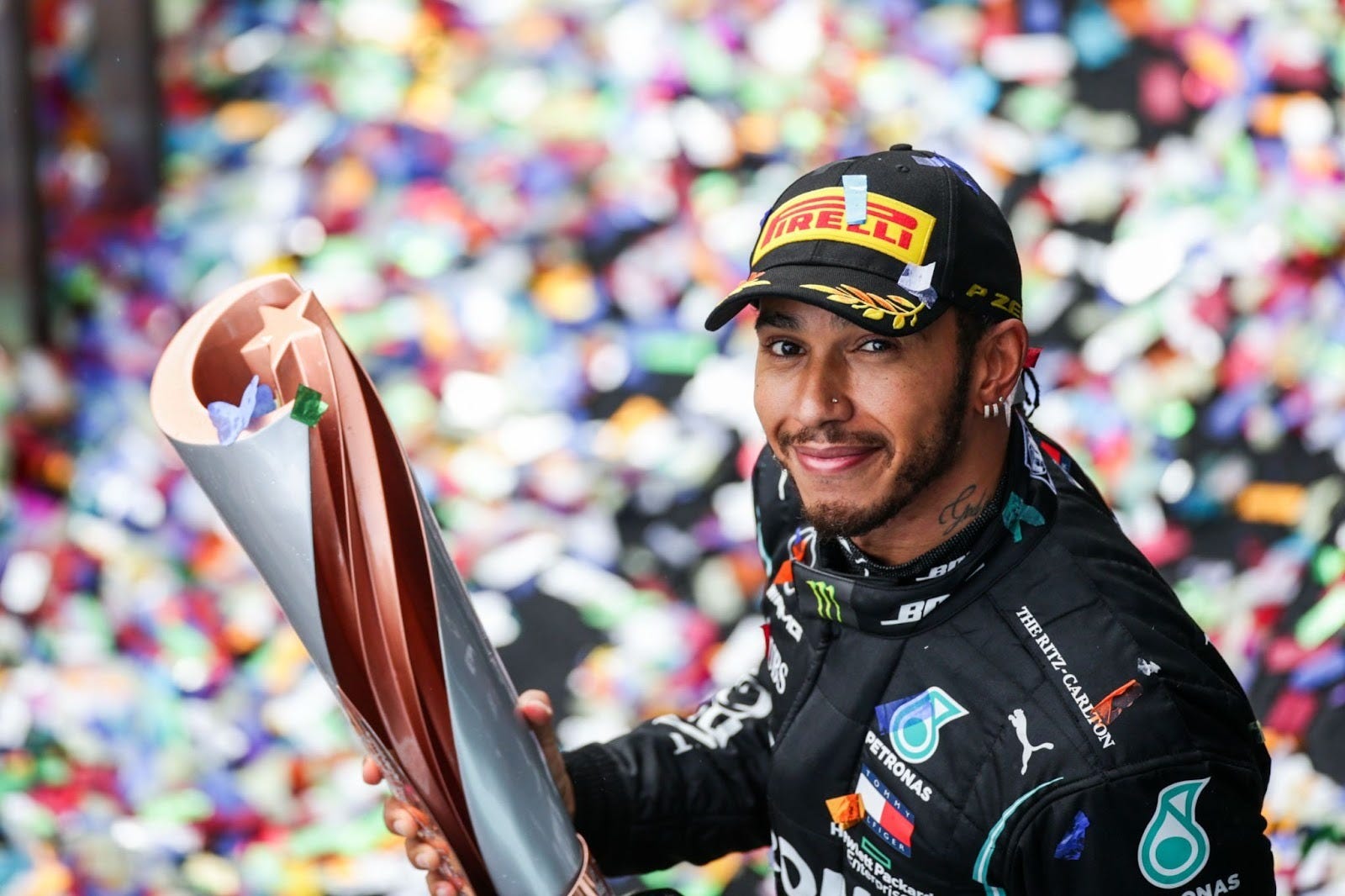
It evokes this romantic-but-grounded idea that everything that has happened to us shapes our present and prepares us for future opportunities. To me, Hamilton’s decisions away from Formula 1 reveal something very deliberate and thoroughly informed by his past: a long-term effort to ensure relevance, agency, and authority.
So let’s start in the past with a childhood where a future in racing was anything but guaranteed.
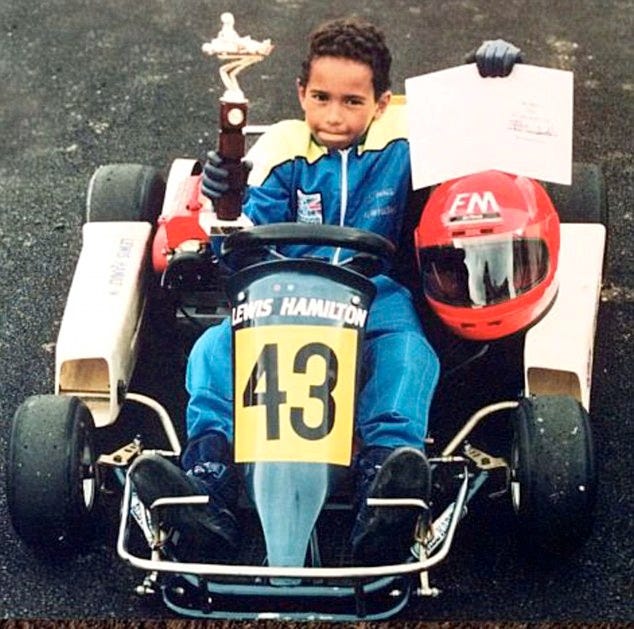
Hamilton grew up in Stevenage, a working-class town about 50km north of London, on a council estate, in a sport historically dominated by families with generational wealth. It is well-documented that his father, Anthony, worked up to four jobs simultaneously to keep Lewis’s kart on track and his dreams alive. Double glazing salesman. Dishwasher. Putting up signs for estate agents. Anthony remortgaged the family house multiple times and reportedly never bought himself new clothes. Everything went into racing.
Money was tight. It wouldn’t be unreasonable to suggest that a sense of precarity shaped Lewis from an early age. Especially when compounded with the pressure of being visibly different from every other karter on track. Hamilton has spoken openly about being bullied, and about mental health struggles that began in his early teens. Those years matter because they explain a throughline that still defines him: Lewis Hamilton does not like being dependent on anyone.
The financial pressure only eased in 1998, when McLaren-Mercedes signed 13-year-old Lewis to its Young Driver Support Programme. He was the youngest driver the team had ever backed. That moment taught him a lesson about institutional gatekeeping that, I think, he has never forgotten.
When he entered Formula 1 in 2007, he learned how power works. Who controls platforms. Who owns narratives. It’s obvious from everything he does that Lewis was paying attention from Day 1. And what he built on that track has given him more than money.
That holistic understanding was formalized with Lewis Hamilton Ventures, the holding company that governs his activities beyond racing. Formerly known as Project 44, the rebrand in September 2025 was not just cosmetic. Hamilton installed a full C-suite, including a COO, CFO, and Chief Legal Officer, signaling that this is not a vanity vehicle but an operating company. Lewis is building, owning, and directing the platforms through which his influence travels.
And this man knows a thing or two about vehicles.
In August 2022, Hamilton joined the Walton-Penner ownership group of the Denver Broncos, acquiring a minority stake in one of the most valuable franchises in global sport. The purchase price—$4.65 billion—set an NFL record for a North American sports franchise.
Hamilton’s fellow limited partners? Mellody Hobson, co-CEO of Ariel Investments and chair of the Starbucks board, and Condoleezza Rice, the former U.S. Secretary of State.
Not exactly a casual dinner party.
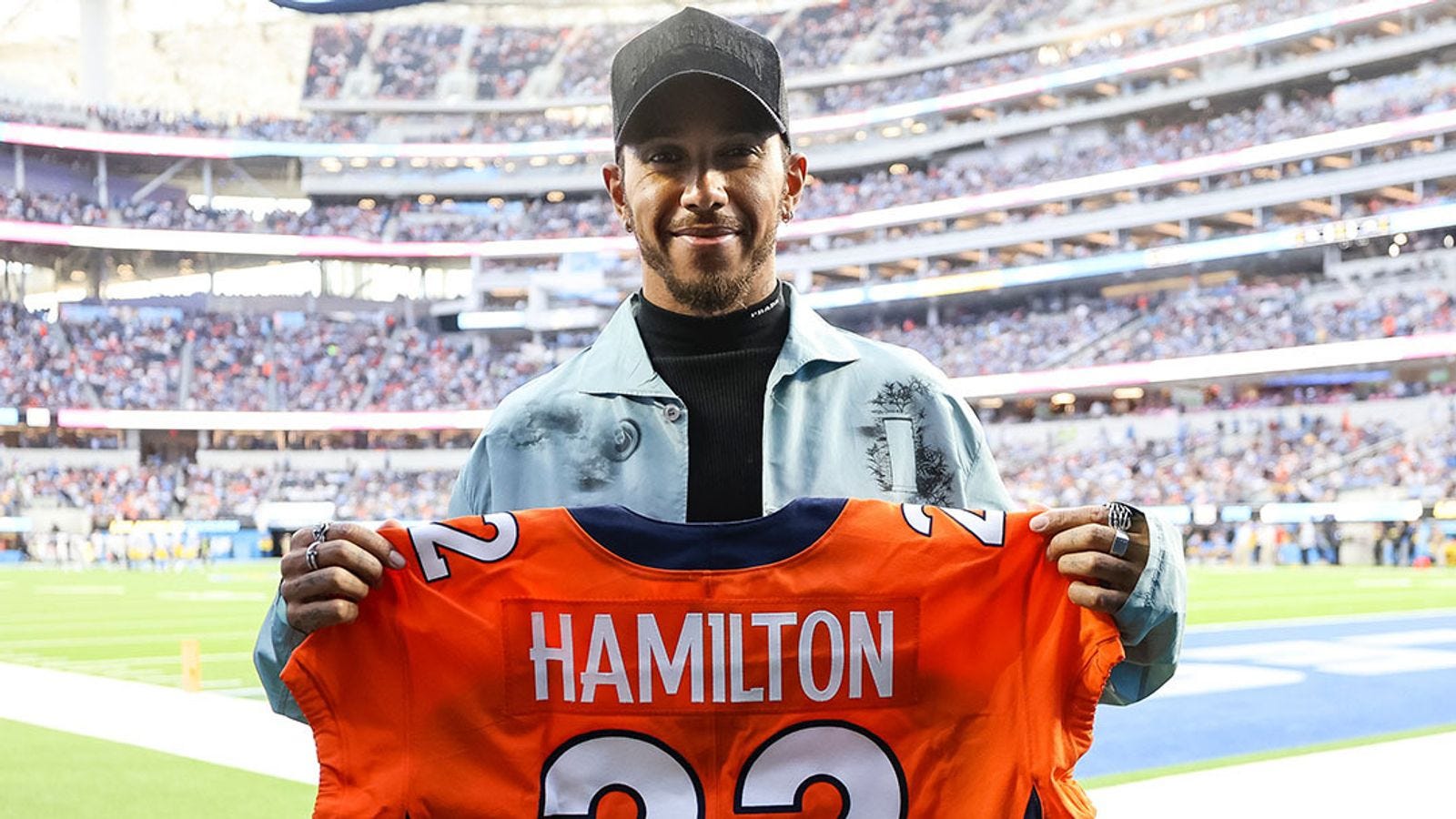
NFL ownership is gated. Given the league’s men’s club aura, I think Hamilton placed himself in an asset class that does not rely on his personal public adulation or on-track performance to hold value. The Broncos were valued at $4.65 billion in 2022. Forbes now puts that figure at $6.8 billion. The asset appreciates whether Hamilton wins another race or not. That’s the point.
Then there is the consumer side of his investing, where he is deliberately disciplined.
In October 2023, Hamilton co-founded Almave, a non-alcoholic blue agave spirit conceived as a tequila alternative, alongside Ivan Saldana, master distiller and co-founder of Casa Lumbre Spirits. It is, reportedly, the world’s first distilled non-alcoholic blue agave spirit.
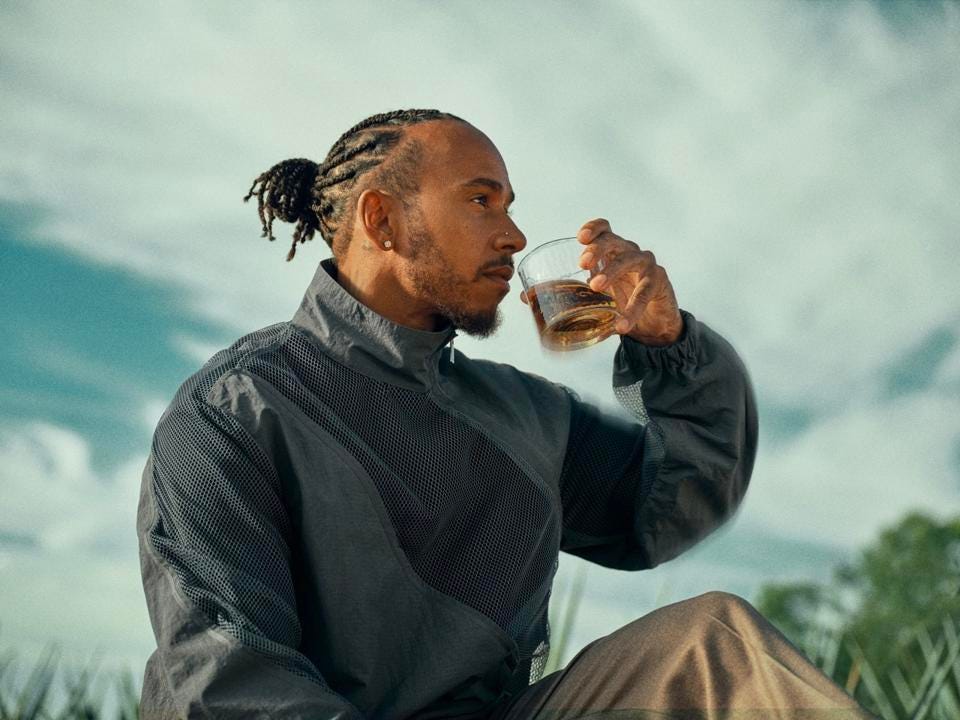
Roughly one year later, Pernod Ricard, the world’s second-largest wine and spirits company, with annual net sales exceeding €11 billion and a portfolio of over 240 premium brands across 160 countries, acquired a minority stake.
Pernod Ricard doesn’t partner lightly, and it wouldn’t buy into a concept that can’t scale.
Almave was named “Best Non-Alc Spirit Brand” at the 2025 Rolling Stone Spirit Awards and has since expanded into Target stores across the U.S. It has crossed that elusive line from lifestyle idea to legitimate global product, with Hamilton remaining involved as a founder, not just a face.
In October 2024, Hamilton became an investor in Bramble, a vet-formulated, plant-based fresh food company for dogs founded by Amanda Rolat. (The company is named after a vegan border collie who lived to 25 years old, a detail that, honestly, deserves its own article.)
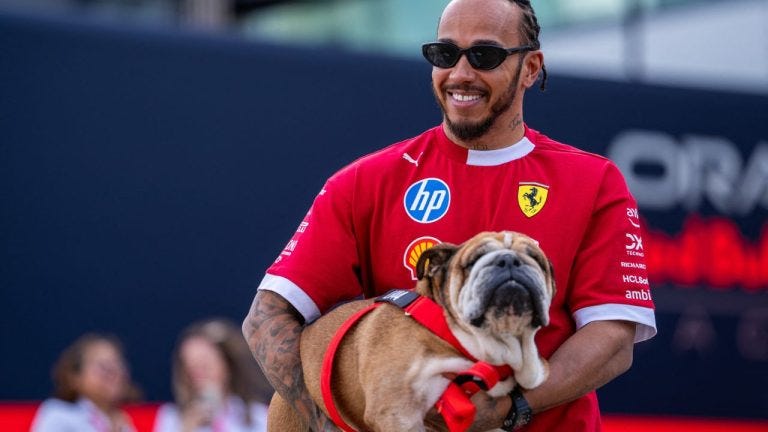
On the surface, it seems like a much quieter addition to his portfolio. But it’s entirely consistent with who he is: a dog lover and a plant-based eater.
Hamilton transitioned his own bulldog, Roscoe, to a plant-based diet in 2020 and saw significant health improvements. Bramble subsequently named Roscoe its “Chief Taste Officer.” This is a way of life he’s spoken about publicly for years.
This man is a pioneer. Hamilton does not enter an investment space just because the attention is loud. He’s also positioned himself at the forefront of how sport is packaged and consumed.
But wait, there’s more.
Hamilton is a confirmed investor in TMRW Sports, the sports-media and technology venture founded by Tiger Woods, Rory McIlroy, and former NBC Sports executive Mike McCarley.
TMRW’s flagship product, TGL is a tech-infused, 3-on-3 indoor golf league that plays inside a custom-built arena in Palm Beach Gardens, Florida, with matches broadcast on ESPN.

The venture reached a $500 million valuation during its Series A round, and its investor roster reads like a who’s who of elite sport: Steph Curry, Serena Williams, Sidney Crosby, and fellow F1 drivers Lando Norris, Carlos Sainz, and Alex Albon, among others. What’s most interesting to me is the audience: TGL’s viewership skews 12 years younger than the PGA Tour’s traditional demographic, with 42% falling in the 18-49 bracket.
This investment signals a bet on infrastructure endemic to the future of how we consume sports.
And finally…there’s storytelling.
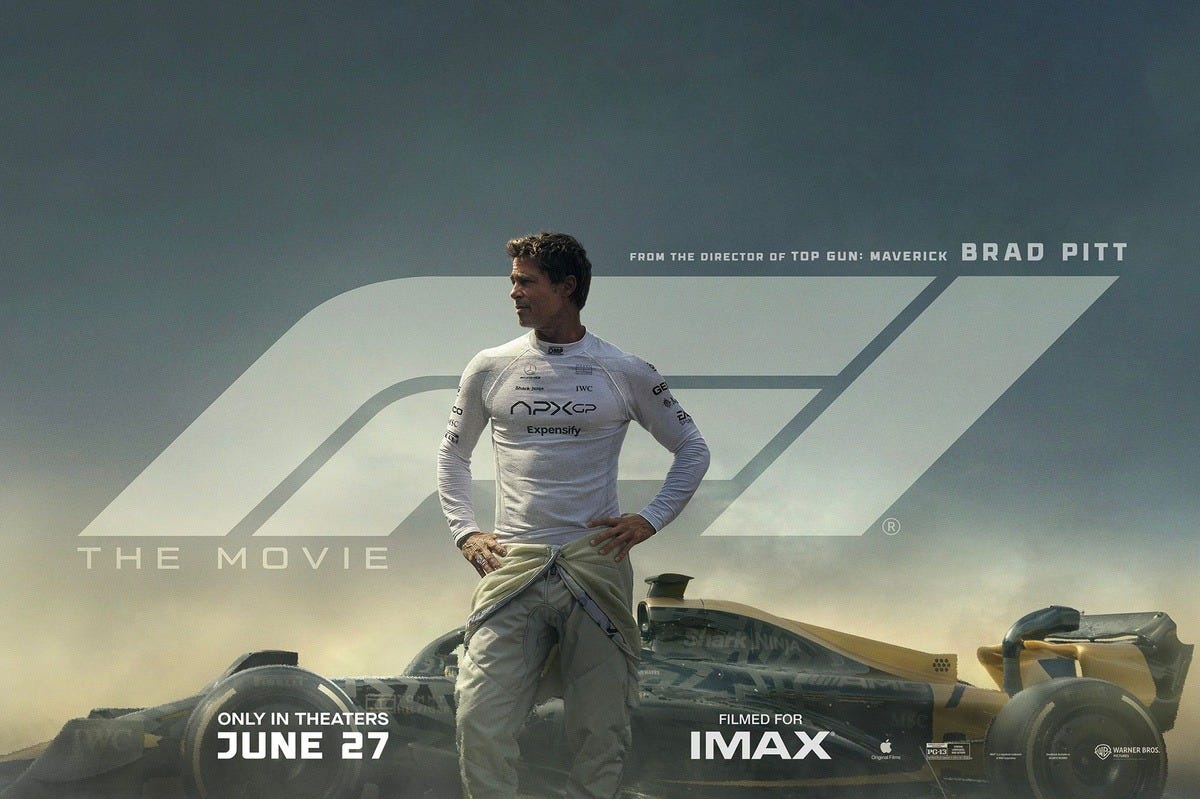
Through Dawn Apollo Films, Hamilton has positioned himself on the ownership side of culture. The company was a producing partner on the Apple Original Films feature F1, a racing drama directed by Joseph Kosinski, starring Brad Pitt, and scored by Hans Zimmer.
Hamilton helped bring Pitt on board and served as a producer, ensuring the sport he’d spent his life in was rendered with the authenticity it deserved. The result? $633 million at the global box office. The highest-grossing sports film of all time and the highest-grossing film of Brad Pitt’s career. Nominations for four Academy Awards in 2026, including Best Picture, Best Sound, Best Visual Effects, and Best Editing. Oh, and there’s a sequel is already in discussion.
As Lewis has matured, he has creative-directed his story and brand, and shown us the kind of exemplary man he aims to be on and off the track. Dawn Apollo sees Hamilton stepping into a world where narrative, tone, and perspective carry real commercial and cultural weight…and can reach millions of viewers around the world. Hamilton’s role as a producer underscores that he isn’t interested in being framed by stories.
There’s one more throughline worth naming: Mission 44, the charitable foundation Hamilton launched in 2021 with a personal pledge of £20 million. It’s focused on driving inclusion and diversity in education and STEM careers for young people.
His Ferrari contract reportedly includes provisions directing a portion of his salary toward the foundation. The kid from Stevenage who was told he didn’t belong is now funding the pipeline for kids who hear the same thing.
Hamilton’s current investments point to a man who grew up understanding how fragile opportunities can be. He seems to have decided early on that he would never allow his future to hinge on a single institution or contract. He invests in ownership. In control. In platforms that persist. (Past is prologue, remember?)
His estimated net worth now sits in the range of $450–500 million, and his Ferrari contract ensures the income side of the ledger is still very much active.
Formula 1 may have made Lewis Hamilton rich and famous. But everything he’s building now suggests he’s far more interested in being unavoidable…part of the zeitgeist.


