

We strive to remain an independent source of motorsport business. If Business of Speed has provided you with useful insights this year, please consider subscribing.
When I posted my reel about Sergio Pérez and Cadillac, I noticed a surge in comments from Mexico. About 24 hours after it went up, the video had over 46,000 views.
What interests me about Checo’s business is how much of it survives a change of employer. His supporters have followed him through teams based thousands of miles from Guadalajara, through seasons when he could win and seasons when the race became an argument about whether he deserved the seat.
Red Bull’s decision to release him left him without an F1 seat for 2025. The team had extended his contract six months before announcing his departure.
Heineken renewed with him anyway.
Checo’s commercial career has enough history now to survive a period when his racing career can’t deliver a new victory. That’s an advantage built over more than two decades, with help from a family and a powerful patron, by a driver whose supporters recognize something of their country in him.
The people who first financed Checo’s departure from Mexico still run the business. So is the place he left.
Before the fame
Checo’s father, Antonio Pérez Garibay, represented Mexican driver Adrián Fernández, and in 1996 he invited Carlos Slim Domit to watch Fernández at the Michigan 500, beginning a relationship that would eventually help send Antonio’s younger son overseas.
José Antonio Cortés reconstructed that history for ESPN in 2021. Escudería Telmex’s development program provided the car and racing season, Slim Domit explained, while young drivers learned to find other sponsors for travel and living expenses. Antonio recalled sleeping with Checo in a rental car and eating McDonald’s when they hadn’t secured that additional money.
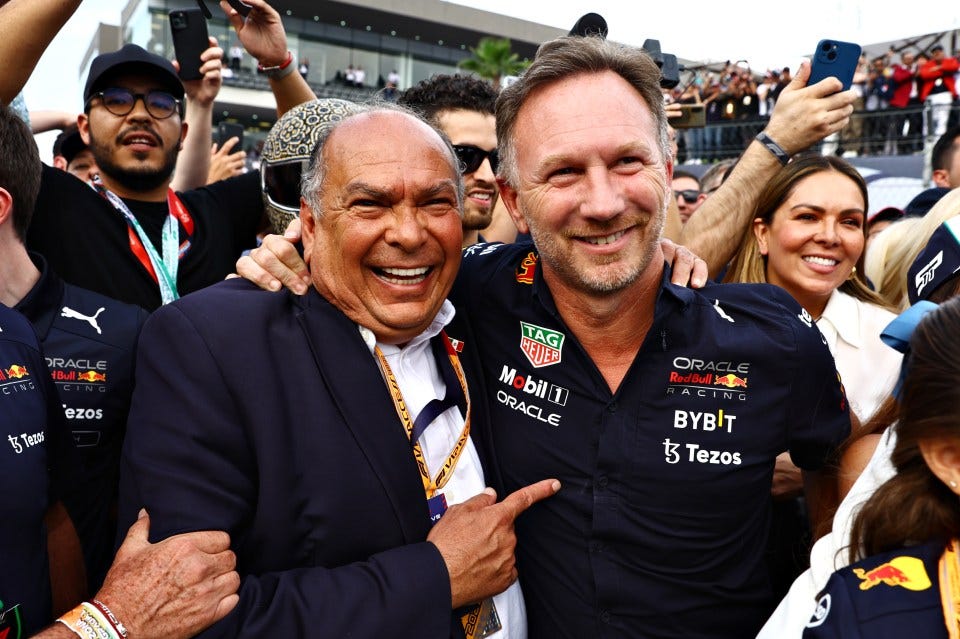
The Slim name can make the rest of the story disappear. If you’ve heard Checo described as a driver backed by a billionaire, it’s easy to skip to the money and miss the young man learning how to ask for it.
Checo’s account of pursuing Europe is wonderfully impatient. In a 2022 Players’ Tribune essay, he recalled getting up at 3 a.m. in Mexico to call teams, using a translated script and telling them he had a sponsor before he’d secured the funding, until his mother saw the phone bill and blocked calls to Europe.
Günther Unterreitmeier’s offer of an affordable Formula BMW seat in Germany gave him something to take to Carlos. He left at 15. At first, he lived alone in a village hotel, speaking little English and no German; later, he moved above Unterreitmeier’s restaurant, where helping in the kitchen kept him company.
I like the phone bill in that story. A boy tries to get a European team to take him seriously, and his mother finds out what the attempt costs.
Slim Domit, son of Carlos Slim Helú, backed Checo long-term through the junior categories and into Formula 1, and McLaren’s announcement of Pérez’s signing in September 2012 included Checo thanking him for support that began when he was 14.
He’d reached Sauber in 2011 and earned three podiums in his second season. McLaren’s new hire had become desirable through his results. The years of financing had produced someone capable of making the next move.
The Country Worth Losing a Deal For
Pérez arrived after roughly 30 years without a Mexican driver in Formula 1.
For supporters who’d waited to see a Mexican return, Checo’s progress gave them someone of their own to follow in a sport run largely from Europe, where the junior teams he’d been calling had once seemed so far away.
Then came Hawkers.
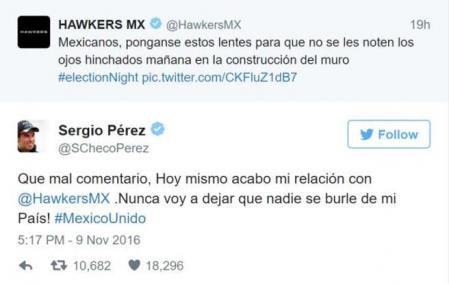
In November 2016, after Donald Trump’s election, the sunglasses company’s Mexican Twitter account posted a joke about Mexicans crying and building the proposed border wall, even as production was getting underway on about 20,000 glasses carrying the name of a Mexican driver it had only recently signed.
He terminated the relationship.
“I will never let anyone laugh at my country,” he wrote. Reuters reported that he learned about the tweet after landing in São Paulo and finding angry messages from fans. Hawkers apologized and deleted it. Pérez still walked away.
That’s a revealing decision for a driver so often discussed in terms of the money he brought with him.
In the same Players’ Tribune essay, Pérez described returning to Guadalajara whenever he could, to see family and old friends.
PATRÓN’s 2022 campaign with him traveled from the Jalisco highlands to Guadalajara, pairing Pérez’s pride in his country with the roots of a tequila that’s owned by Bacardi and made in the Mexican state where its new ambassador was born.
Surviving Red Bull
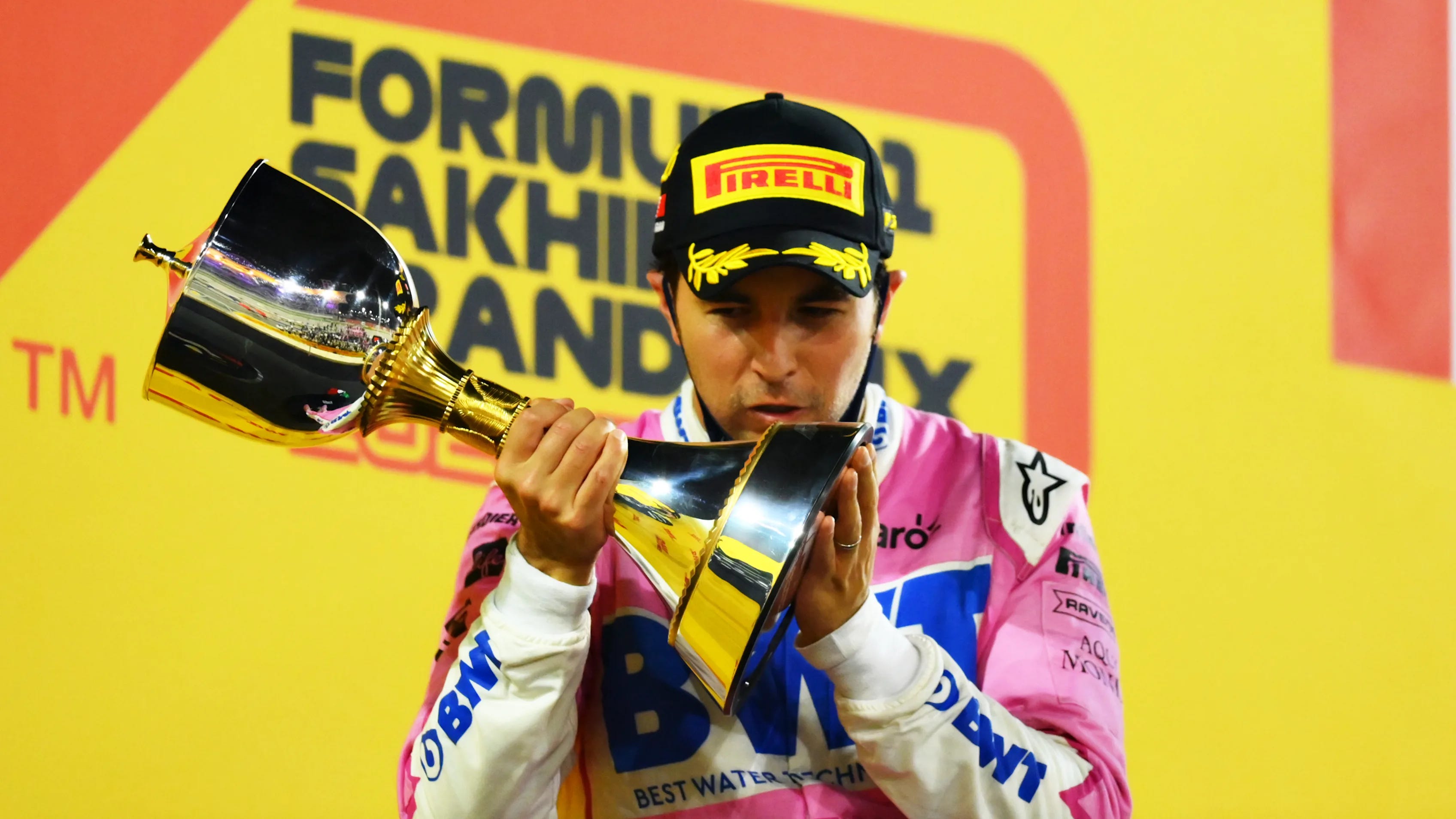
Checo’s first Grand Prix win came at Sakhir in 2020, when his place in F1 was already in jeopardy because Racing Point had announced he’d leave despite a contract running through 2022, and Red Bull’s offer gave him another chance.
Verstappen’s new teammate had a car capable of winning and far harsher scrutiny. The business grew. Forbes estimated his 2023 salary and bonuses at $26 million, before tax and fees, excluding endorsements.
Then the results deteriorated. Pérez finished eighth in the 2024 championship, and Red Bull announced his departure that December. Mexico’s affection and Slim’s backing couldn’t preserve the seat.
He’d lost the weekly television appearances that came with Red Bull’s race seat. Cadillac hadn’t announced him when Heineken México renewed his Heineken 0.0 ambassadorship on March 28, 2025, putting him on billboards in Mexico City and Guadalajara to promote designated driving while he was spending Sundays outside an F1 cockpit.
Getting a Stake
Kavak offered Checo a stake.
In February 2021, as he prepared for his first Red Bull season, the used-car company’s chief executive, Carlos García Ottati, welcomed him into a business pursuing expansion across Latin America. Kavak’s announcement called him a partner and shareholder. The welcome event was in Guadalajara.
Biofarma’s account of the more recent SP Humania project puts Pérez on the other side of the approach. Juan Pedro Luna, business development manager at the Guadalajara laboratory manufacturing the supplement line, said Checo and his team came to it around 2025 with an idea for a brand that could outlast Formula 1.
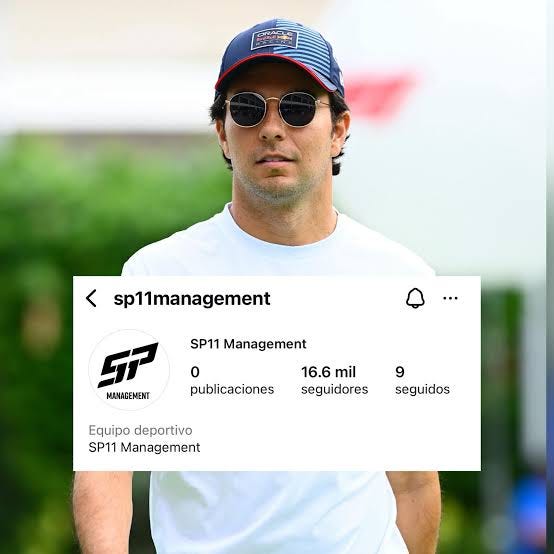
He has also co-founded SP11 Management with Khalil Beschir, offering athlete management and commercial support that draw on the business that’s surrounded Pérez since his first calls to Europe.
He’s trying to build interests he can keep working on after an F1 team has stopped paying him. He started building his experience bringing people into a project before he had a famous face to contribute.
Borrowing Checo
The affection has buyers outside consumer brands. Jalisco’s government has paid to use Pérez’s image to promote his home state.
El Informador reported a combined public sponsorship pool worth roughly $1.4 million in 2023, or 25 million pesos at that year’s average exchange rate. NTR Guadalajara’s 2024 state agreement report identified two hours reserved for recording promotional material, time used for a 30-second spot in which Checo promoted Governor Enrique Alfaro’s government report.
Checo’s sister Paola signed the reported 2024 agreement as his representative. The family remains involved in the business, decades after his father helped create the relationship with Slim Domit.
Cadillac’s use of that history is already on film. General Motors’ January 2026 LYRIQ-V commercial put Pérez behind the wheel in Guadalajara for the vehicle’s Mexican launch, an American manufacturer’s choice of Checo’s hometown to introduce a road car with its new F1 driver.
Telcel, Infinitum, and Claro also joined Cadillac. The network that helped finance Checo’s departure from Mexico was present for his arrival at a new team, with its own contracts whose duration isn’t established by the driver’s extension through 2029.
Cadillac gets an experienced driver whose relationship with supporters predates the team’s first race. It’s already used him to introduce a road car in Mexico.
Pérez has said the deal through 2029 will be his last Formula 1 contract. He’s approaching a final race, followed by a much longer period in which he’ll have to decide what to do with the name he’s spent all those years building.
Business of Speed covers the business, technology, and lifestyle of racing: Formula 1, IndyCar, IMSA, WEC, NASCAR, and more. From Vincenzo Landino, entrepreneur and creator, featured in Bloomberg, TBPN, Yahoo! Finance, Forbes, Adweek, and Front Office Sports. Find us on Instagram, Substack, and LinkedIn.


