

We strive to remain an independent source of motorsport business. If Business of Speed has provided you with useful insights this year, please consider subscribing.
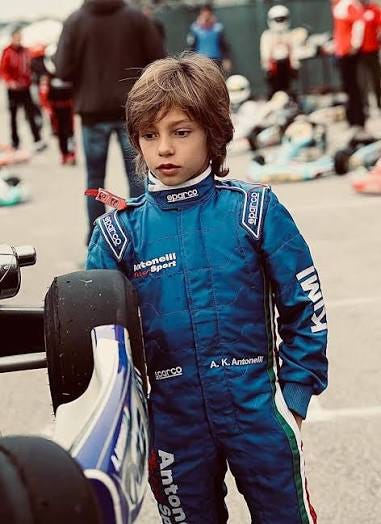
At the kart track in Migliaro, the Barbi family kept an autograph from the years when Andrea Kimi Antonelli still needed help deciding what to write. Nicola Barbi, whose father, Mario, built the circuit, remembers the boy turning to his father. “Dad, what should I write?” He settled on a short message addressed to the track itself, affectionate and careful. He had been coming there since he was seven.
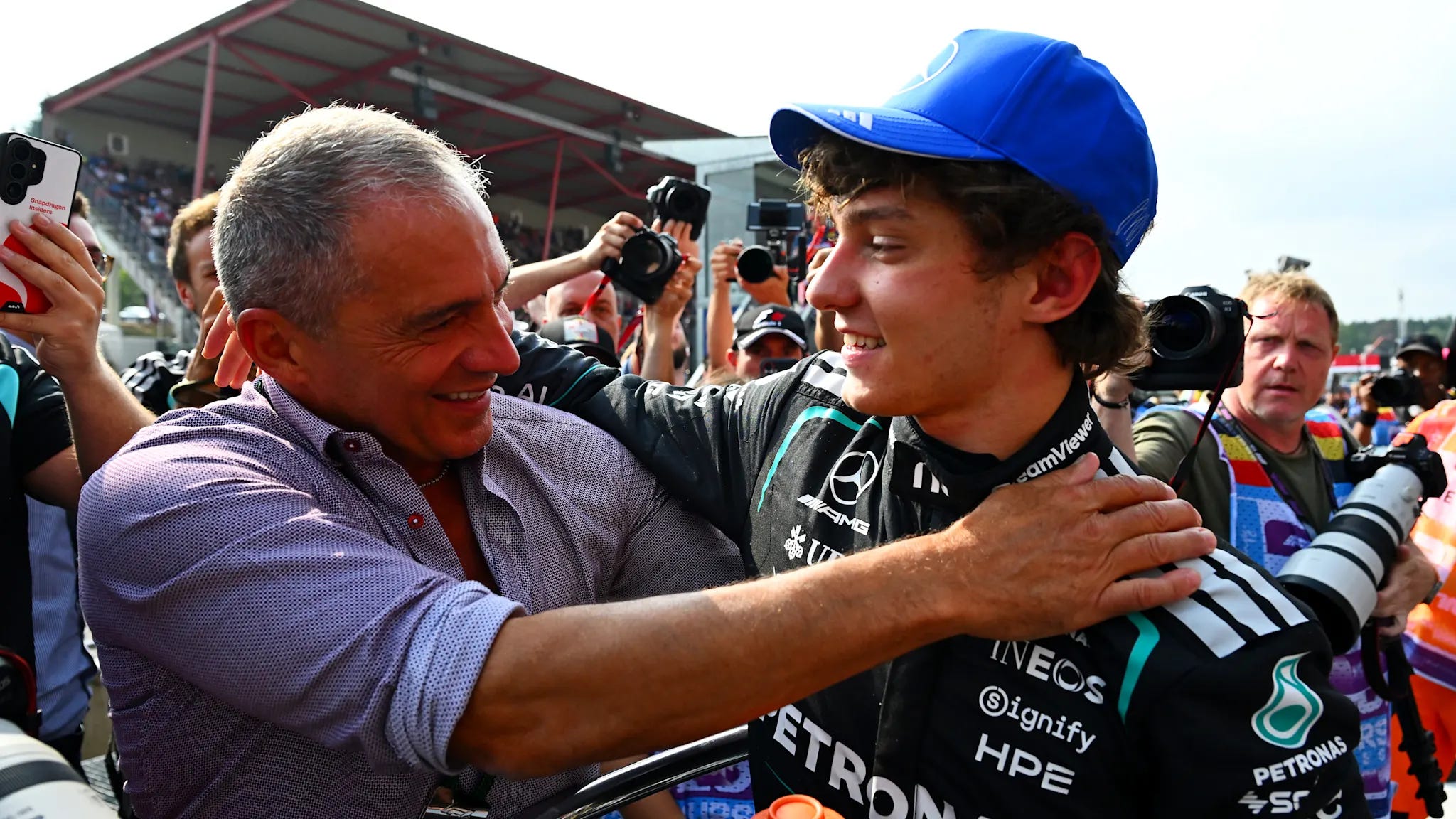
After he reached Formula 1, he kept returning. Barbi told the story to La Nuova Ferrara once Antonelli had won his first Grand Prix.
Today, the same driver is twenty years old, and he goes into the United States Grand Prix with his first chance to clinch the title.
The championship math is simple: If he wins in Austin, and George Russell finishes ninth or lower, and Lewis Hamilton finishes fifth or lower, Andrea Kimi Antonelli becomes Formula 1’s youngest world champion. Sebastian Vettel was twenty-three when he set the mark that still stands. The last driver’s champion to race under the Italian flag was Alberto Ascari, in 1953.
Antonelli was born in Bologna on 25 August 2006 and grew up in Casalecchio di Reno. Racing was already coded in his DNA. His father, Marco, competed and later ran Antonelli Motorsport. His grandfather, Giordano, ran a workshop at Croce di Casalecchio. Regional Rai reporters followed the child’s first steps in karting back to that workshop.
At two, he sat in a kart and found he couldn't reach the pedal. Around five, he drove alone for the first time at Forlì, in a small kart called Delfino. In his own telling, it was very, very slow. On weekends they watched Formula 1 at home. On other weekends they went to circuits because Marco worked there.
Kimi’s interest grew.
By seven, he had also learned that Formula 1 kept its youngest visitors outside the paddock. At Hockenheim in 2014, while Marco raced in the Porsche Supercup, his father hid him inside a stack of tires and wheeled the stack in on a trolley. Years later, Antonelli described the hour he spent looking around once a friend of his father’s found him a proper pass.
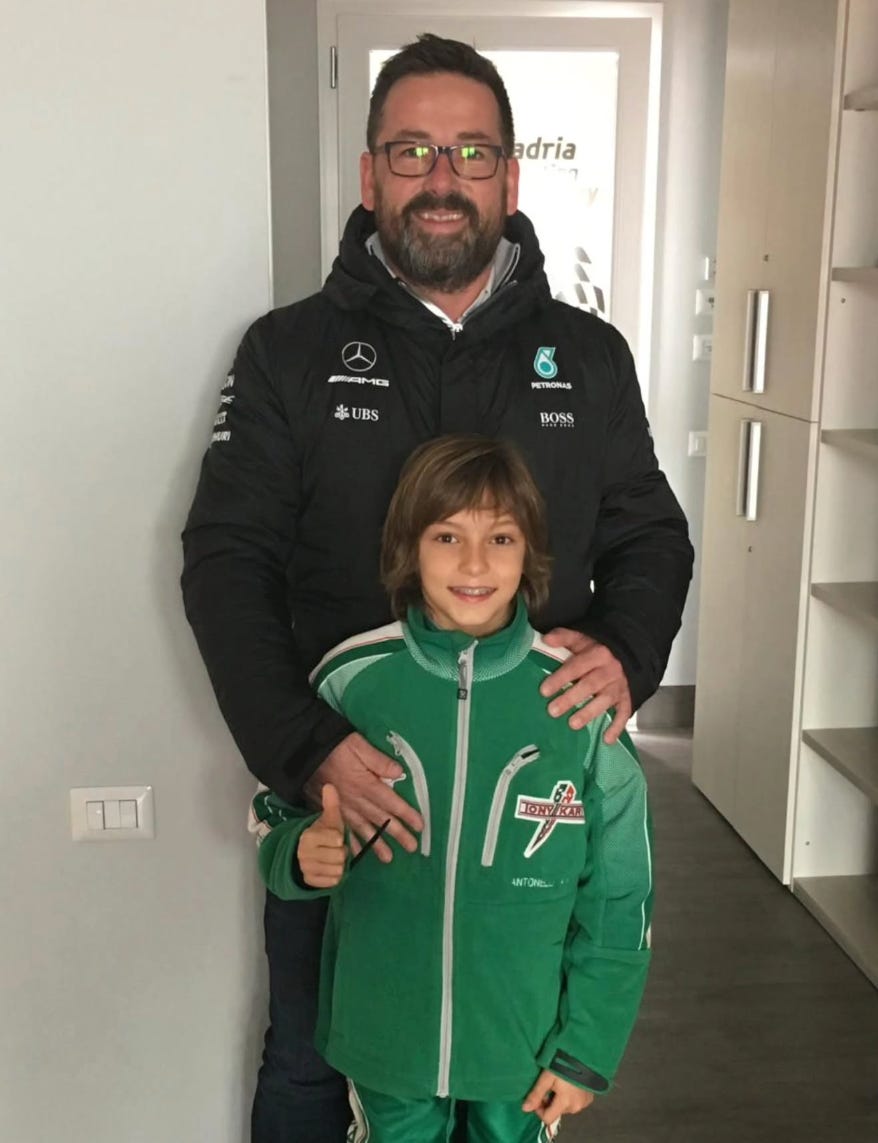
Gwen Lagrue, then leading Mercedes’ young-driver program, first watched him in 2017. Antonelli was not winning every race. Lagrue watched how the boy treated his equipment and how he behaved after a bad race. The first agreement came in 2018. He joined the junior program in April 2019, at 12. Even after the results arrived, Lagrue kept handling questions unrelated to lap time. Antonelli liked to please people. He still needed to learn the moment to stop. “Sometimes we need to teach him to say no,” Lagrue said.
In Emilia-Romagna, racing is also a way of making a living. Ferrari, Lamborghini, Ducati, and Dallara are factories and employers, and people travel to see them. The region calls itself Motor Valley and invites visitors into that history.
At the Dallara Academy in Varano de’ Melegari, university students spend a year learning to design racing cars. Giordano’s workshop and Marco’s team operated at a different scale inside the same working landscape. A child could watch adults earn a living doing what he wanted. He lived roughly half an hour from Imola. When Formula 1 returned there in 2025, he brought his school class into the paddock.
The path from that landscape to a Formula 1 championship still crossed borders. Mercedes invested. PREMA took him through the junior categories. In 2022, he won the Italian and German Formula 4 titles. In 2023, he won Formula Regional championships in the Middle East and Europe. He moved straight into Formula 2 in 2024, skipping the FIA Formula 3 championship, and won at Silverstone and Budapest. Mercedes selected him to replace Lewis Hamilton.
“Ho pianto tanto”
In his first official Formula 1 practice session, at Monza in August 2024, he crashed. He had been eighteen for five days. He said the impact was around 52g. He apologized to the team and to Russell, whose car he had been driving, and said he had pushed too hard for the conditions. Through stretches of his first full season, the confidence he had carried from the junior categories left him.
In a Sportweek interview before this season, he described losing his feel for the car and starting to doubt himself. “Ho pianto tanto,” he said. I cried a lot. He wondered whether he could manage the environment. The team helped him recover. By the time he told the story, he could treat the months as something that had made him better. While they were happening, he had no sense of how quickly the picture would change.
In June 2025, he finished third in Canada, his first podium, then returned to studying for his final exams. Mercedes let him take the trophy home. He set it in the living room and walked past it every day. His mother Veronica had wanted him to finish school. He did, at the Gaetano Salvemini technical institute in Casalecchio.
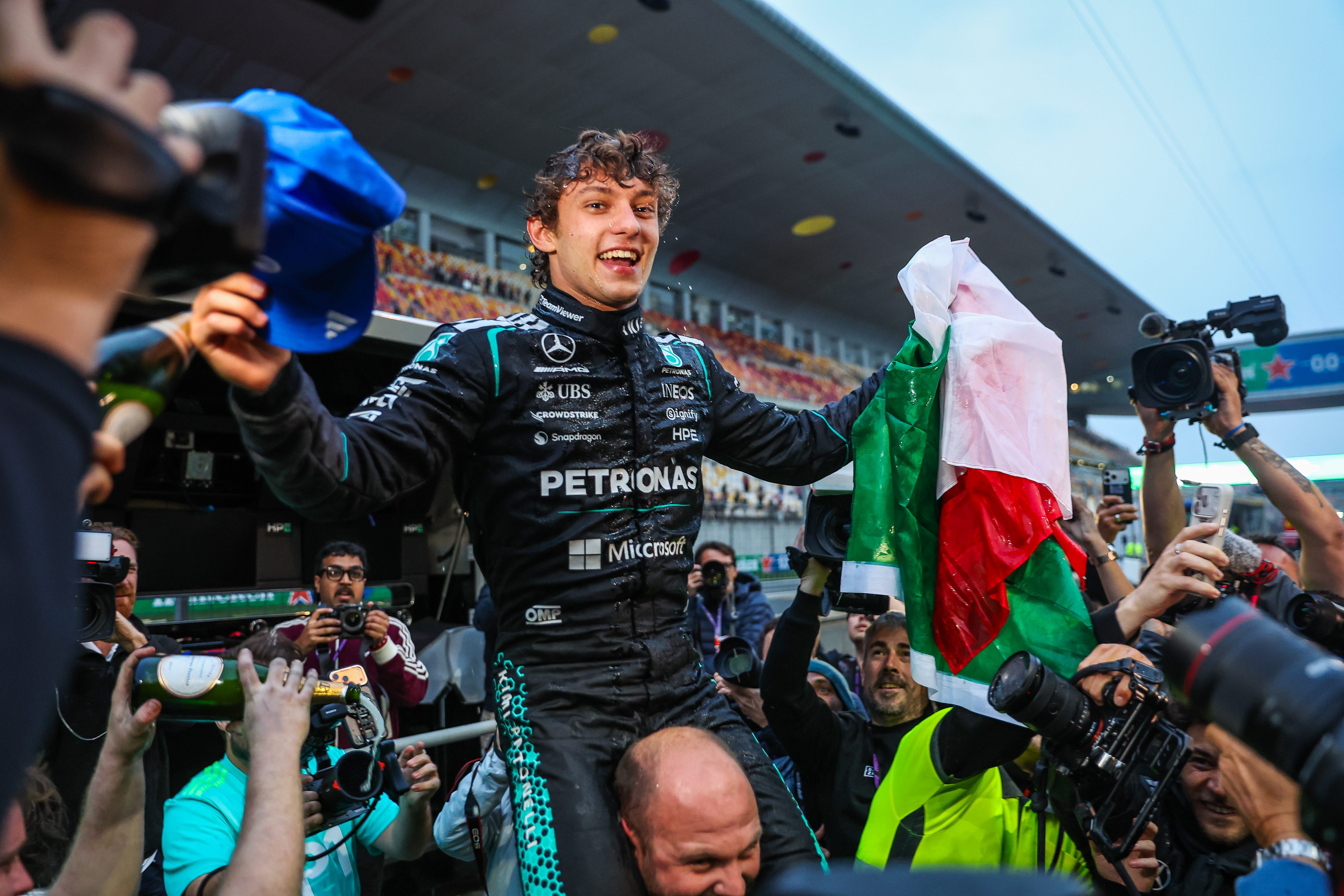
Alessandra Regina, his business-economics teacher, later remembered a morning when he arrived straight from the airport after a race. His classmates were taking a test. He asked her to explain the material he had missed. When she first asked the class to introduce themselves, he said he wanted to bring Italy back to the top in Formula 1. He had already begun to carry some of that weight.
Italy opened the World Championship with little reason to expect a long absence. Nino Farina won Alfa Romeo’s first title in 1950. Alberto Ascari won for Ferrari in 1952 and 1953. Italians took three of the first four championships. Italian-American Mario Andretti, born in Montona when it still belonged to Italy, became world champion in 1978, albeit for the United States. Michele Alboreto led the 1985 championship after nine rounds before a run of mechanical failures ended the challenge. Riccardo Patrese finished second in 1992, the year Nigel Mansell dominated. Jarno Trulli won Monaco in 2004. Giancarlo Fisichella won in Malaysia on 19 March 2006. Antonelli was born that August. When Antonelli won in China this March, Fisichella noted that the new winner had not yet been born when Fisichella himself last won. Nearly twenty years separated the two.
Italian motorsport produced other successes across those years. Ferrari gave its supporters championships, victories and drivers they loved. The Italian anthem still played for the constructor. For many fans Maranello remained a place to belong every Sunday, even in seasons when an Italian driver was unlikely to win. Before this year’s Italian Grand Prix, ANSA described a father and son walking through the park at Monza in Ferrari shirts and Mercedes caps. Two days later Antonelli won from nineteenth on the grid. At the same circuit where his first practice session had ended against the barriers, he became the first Italian driver to win the Italian Grand Prix since Ludovico Scarfiotti in 1966. Ferrari supporters stood beneath a Mercedes-led podium.
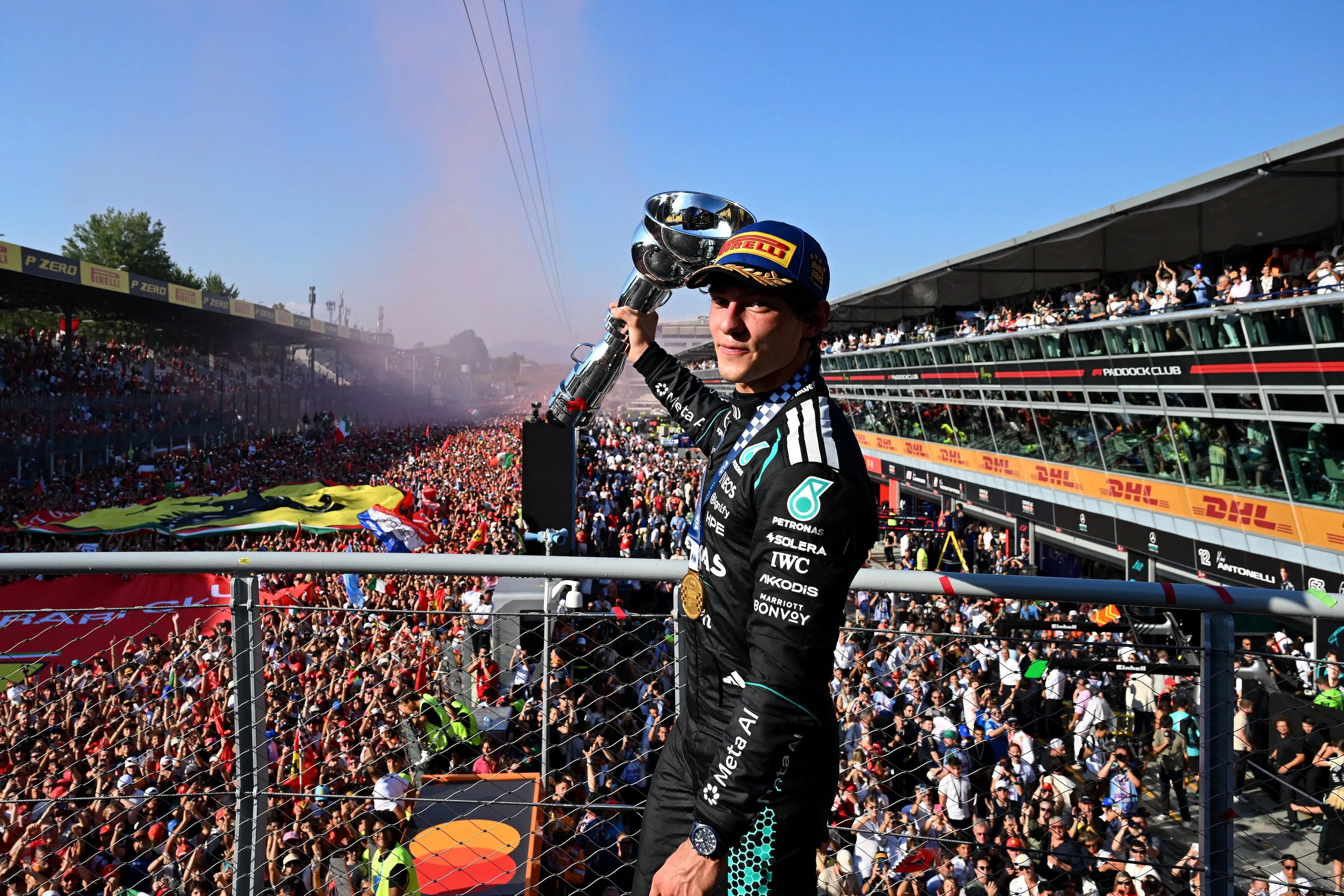
Giusto Ferronato, writing for Gazzetta, spoke to Dario, a 20-year-old from Rome, at his first Grand Prix with his father, Fabrizio. Both wore Ferrari gear. Dario had found someone his own age to follow. He had felt Antonelli’s victory as strongly as a Ferrari win. Asked whether he might buy a Mercedes shirt, he drew a line. He could manage a cap, he said.
After his first home Grand Prix at Imola in 2025, Antonelli returned to the kart track at Fiscaglia. Rai showed him helping another driver whose kart had broken down. He was back among people doing the ordinary work he had done for years. For Motor Valley, a champion from Casalecchio would put a familiar face on a place more often defined by the machines it builds. The teachers and kart-track owners who have celebrated him watched the change up close. They can recognize pieces of their own lives in his, even as his carries him farther away.
He arrives in Austin with eight victories and fourteen podiums from seventeen Grands Prix, a season that has made the title possible in only his second year. He still has to secure it. The exact combination needed today may push the championship to Mexico or Vegas.
On Thursday he said he and his engineer, Peter Bonnington, had agreed to “just have fun.” He also said the job was unfinished.
In May 2024, before his son had raced in Formula 1, Fanpage asked Marco Antonelli whether he felt prouder when people called his son a fantastic driver or a wonderful person. “Without any doubt,” he said, “when they tell me he’s a wonderful person.”
Business of Speed covers the business, technology, and lifestyle of racing: Formula 1, IndyCar, IMSA, WEC, NASCAR, and more. From Vincenzo Landino, entrepreneur and creator, featured in Bloomberg, TBPN, Yahoo! Finance, Forbes, Adweek, and Front Office Sports. Find us on Instagram, Substack, and LinkedIn.


Thank you so much, what a wonderful story!
Italy has waited so long for a World Champion, Kimi is generational!