

Business of Speed is heading into Q2 with momentum: 80% subscriber growth since the beginning of the year, we’re now seeing over 100,000 visitors to the site per month, and our podcast guests have included Tony Kanaan, Will Buxton, Marshall Pruett, and freaking Mario Andretti! That growth means more eyes on our partners.
Right now, we have one sponsorship spot available for Q2 across the newsletter and full BoS ecosystem, and two remaining for Q3. These are integrated partnerships, not banner ads. If that’s interesting to you or someone in your network, please reach out to partnerships@bizofspeed.com
The Omologato Story
At the 2022 24 Hours of Le Mans, Shami Kalra heard someone calling his name from across the grid.
He turned to find Richard Mille walking toward him. Mille, whose watches retail in the six- and seven-figure range. Whose brand sponsors McLaren and Ferrari. Whose name gets dropped in rap songs as shorthand for extreme wealth.
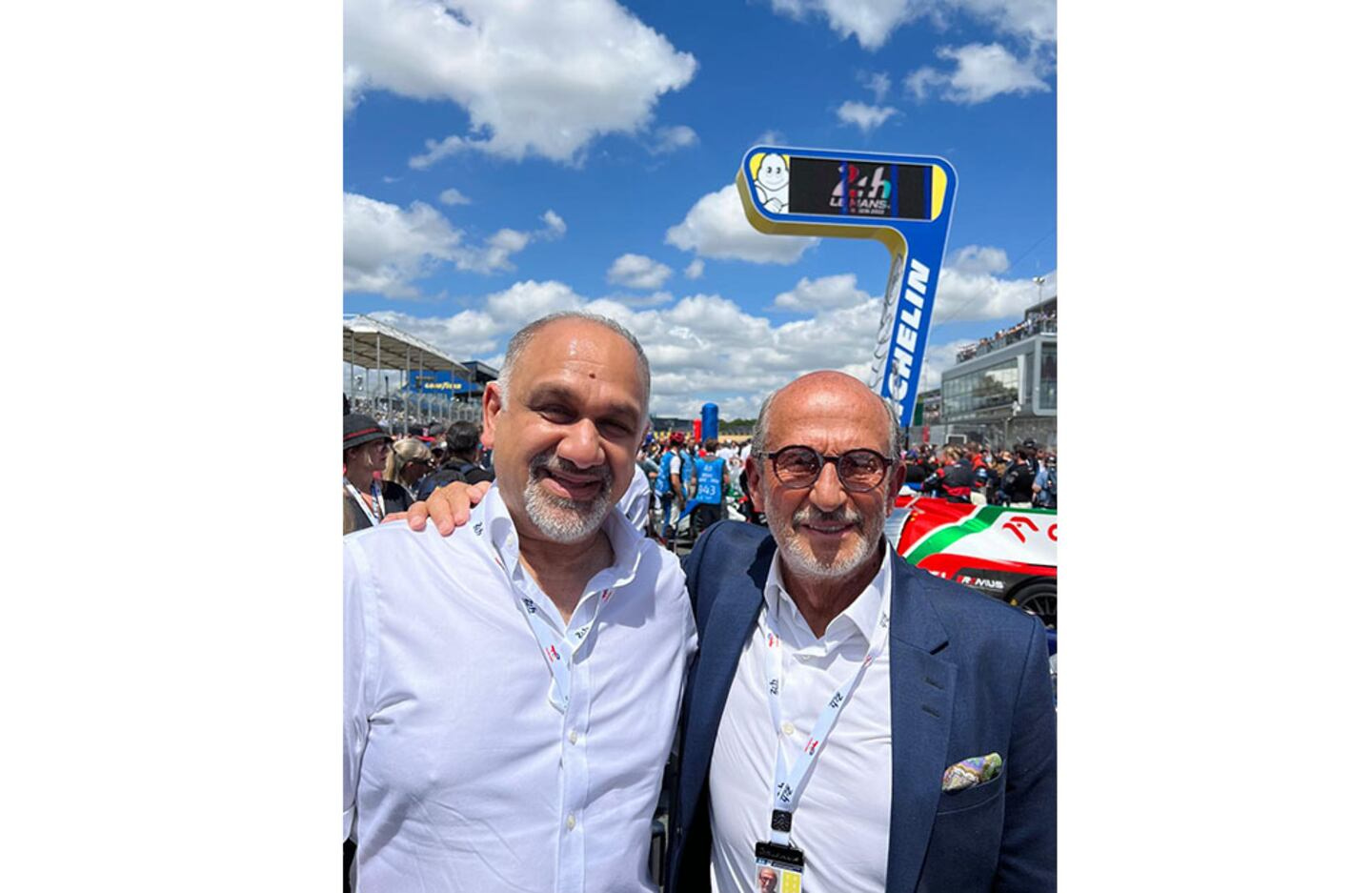
Kalra’s most expensive watch sells for just over $1,000.
“I went, no way, you don’t know who I am,” Kalra recalled. His wife was standing next to him. “He said, ‘Shami, everyone knows who you are.’”
They spoke for fifteen minutes about racing. Mille told him to keep going, that his passion was obvious, that he saw it everywhere. For Kalra, the encounter validated something he’d been building for nearly a decade: a watch brand called Omologato that occupies a part of the market most luxury houses refuse to acknowledge exists.
A shared language
The bond between watchmaking and racing dates back to before Formula 1.
In 1916, Heuer introduced the Mikrograph, the first stopwatch accurate to 1/100th of a second. It became the official timer of the Olympic Games throughout the 1920s, but its real home was the racetrack, where fractions of a second determined winners.
By the 1960s, the relationship had become cultural. Jack Heuer, the company’s chairman and a devoted racing fan, developed the Carrera (named after the Carrera Panamericana, a notoriously deadly Mexican road race) and the Monaco (which Steve McQueen wore in the 1971 film Le Mans). In 1969, Heuer released the Caliber 11, the first automatic chronograph movement. These weren’t accessories. They were instruments developed alongside the sport.
Rolex followed a parallel path. The Cosmograph Daytona, named after Daytona International Speedway and introduced in 1963, became one of the most collected watches in history. Paul Newman’s personal Daytona sold at auction for $17.8 million in 2017.
The connection runs deeper than sponsorship contracts. Watchmaking and racing are both built on precision engineering, marginal gains, and the obsessive measurement of time. They speak the same language.
The Six-Figure Grid
That language now comes at a premium.
TAG Heuer returned as Formula 1’s official timekeeper in 2025 as part of an LVMH deal reportedly worth $150 million annually. Richard Mille sponsors both Ferrari and McLaren. IWC partners with Mercedes. Breitling joined Aston Martin for 2026. Tudor, Rolex’s sibling brand, backs Racing Bulls.
Nearly every team on the grid carries a watch partner, and the cheapest TAG Heuer F1 model starts around $1,700. Richard Mille’s prices begin in the six figures. The watch-racing relationship has scaled with F1’s commercial growth, but the fans who fill grandstands and wake up at odd hours to watch qualifying have been largely priced out of the category.
Shami Kalra knows this because he lived it.
£9.61
In 1999 (or 2000, he can’t remember), Kalra saved $500 over three months to take his son to the British Grand Prix. When they arrived at Silverstone, reality set in. Twenty dollars for a hamburger. VIP ropes separating fans from tented areas displaying $7,000 watches. A sport built by mechanics and dreamers had become a velvet-rope operation.
Kalra had been making watches since 1993, spending 25 years in corporate design building timepieces for automotive brands and racing teams as a supplier. The work was steady and anonymous. By 2015, he was burned out and disillusioned, with £9.61 in his bank account.
One Friday night, after an argument with his wife, he sat in his study and opened Photoshop. He started laying motorsport liveries on watch faces. Papaya orange. British Racing Green. Grid patterns pulled from the iconography he’d loved since his father took him to Donington Park at age 15 to watch V8 GT racing.
He thought: I’d buy that.
He registered a domain, built a site on Shopify’s 30-day free trial, and called his Japanese supplier, a relationship stretching back two decades. On Tuesday, the site went live. By Thursday, he’d sold $1,000 worth of watches. Within 30 days, he hit $50,000.
He named the brand Omologato, from the Italian “omologato,” meaning homologated. Ready to race.
What’s in the dial
Omologato’s product line now spans more than 30 designs, priced from £99 to roughly $1,000. The entry-level Tifosi collection starts at $120 and is built specifically for younger fans to participate.
What separates the brand from the wave of “racing-inspired” watches flooding the market is the specificity of its storytelling. The 722 marks the 7th hour and 22nd minute on its dial: the exact moment Sir Stirling Moss started the 1955 Mille Miglia. The Laguna Seca features a dial offset by 45 degrees, a nod to the track’s famous Corkscrew corner. The Can-Am collection uses papaya-orange markers that reference the McLaren liveries that dominated Group 7 racing.
Then there’s the carbon.
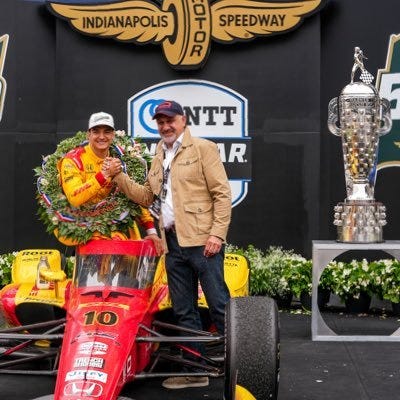
When four-time IndyCar champion Alex Palou won the 109th Indianapolis 500 with Chip Ganassi Racing, Omologato released a limited chronograph with dial inserts made from the actual carbon fiber of Palou’s championship-winning car. Five hundred pieces. $1,012.88 each. A similar piece was made for NASCAR legend Jimmie Johnson, incorporating carbon from the car he drove at the 2025 Coca-Cola 600.
“Lots of watch brands put out their own watch and say, ‘This is a racing watch,’” Kalra said on the Business of Speed podcast. “Why is it a racing watch? Because you put stripes on there? That doesn’t mean it’s a racing watch. It just means it’s a watch with a couple of stripes. The authenticity is what matters.”
The business of sincerity
Omologato posted an 83% gross profit margin in 2023. Revenue jumped 46% in Q1 2024. The brand ranks among the top five most profitable British watch companies and sells in over 200 stores worldwide, with the United States as its largest market.
The company is 100% independently owned. No investors, no parent company, no board to appease. Kalra has been approached twice by potential acquirers and turned them both down.
A significant portion of Omologato’s profits is reinvested in racing. The company sponsors young karters, funds up-and-coming drivers, and pays for its partnerships through a combination of rights fees, value-in-kind, and B2B deal facilitation. Kalra acts as a connector in the paddock, brokering arrangements between partners that extend beyond logo placement. In late 2024, the company had approximately 30 B2B deals in progress.
This reinvestment is so aggressive that UK tax authorities launched an eight-week investigation in 2023, suspicious of the numbers. They found nothing wrong. Instead, they wrote Kalra a letter expressing surprise at the level of profit being given away.
“I have now framed that letter in my office,” Kalra said, “because it certifies that I am a nut case.”
From British Leyland to the Indy 500 podium
Kalra’s parents emigrated from India to England in 1965. His father’s first job was washing cars at a British Leyland dealership.
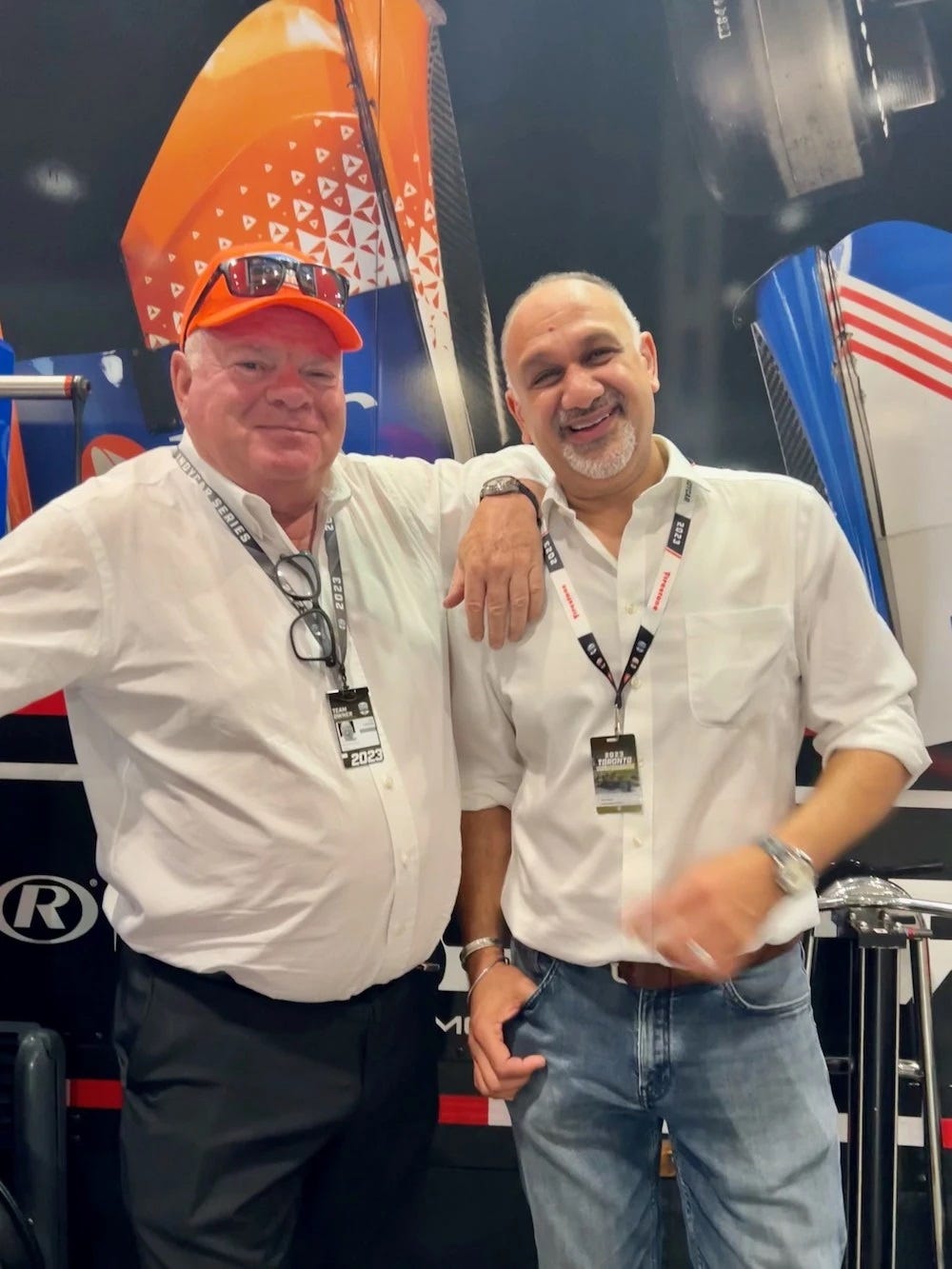
In 2025, their son became the first person of Indian descent to stand on the podium during an Indy 500 winner’s ceremony. Omologato sponsors Chip Ganassi Racing, and when Palou crossed the finish line, Kalra was there. He told Ganassi he felt like a fraud standing up there.
Ganassi’s response: “Your logo’s on the car. You’re an effing winner.”
The partnership list now includes IndyCar teams, NASCAR drivers, Formula E, the British Superbike Championship, Trans Am, SVRA, and circuits like Monza, Imola, and Watkins Glen. The brand has served as the official timing partner for F4 U.S. and FR Americas, designing custom timepieces for championship winners in both series.
Precision at every price
Jack Heuer didn’t build the Carrera so it could sit behind glass at a concession tent. The watch was designed to be worn at speed, read at a glance, and trusted under pressure. It was for the paddock, not the gift shop.
Kalra operates from the same instinct, just at a different price point. His watches carry race-used carbon fiber, dial engravings pulled from actual track layouts, and movement references that only make sense if you know the history. The fans buying them are the same people who sit in general admission and argue about tire strategies on the 364 days a year between the big races.
At Le Mans, Richard Mille saw that. The man whose watches cost more than most cars recognized something in Kalra’s work that transcends price.
The watches are affordable, but the stories they tell are priceless.
Vincenzo Landino proudly owns two Omologato timepieces. The Omologato Jim Bamber #1 Alonso Webber watch is a limited-edition (25 units) motorsport watch celebrating Mark Webber's 2013 Singapore Grand Prix ride on Fernando Alonso's car, and the Omologato Panamericana Oslo Edition is a limited-run motorsport chronograph set to arrive in April 2026, with only 50 units made.