

Every Monday, we publish a series called CAPITAL MOVES, a look into the off-track investments of individuals involved in the world of racing. Be sure to check out previous editions.
“Always dream and shoot higher than you know you can do. Do not bother just to be better than your contemporaries or predecessors. Try to be better than yourself.” — William Faulkner, The Paris Review, 1956
Roger Penske, founder and chairman of Penske Corporation, has built the most successful motorsport operation in American racing history, a truck leasing empire, and one of the largest automotive retail groups on Earth, by holding everything he touches to a standard that most people find exhausting just to observe.
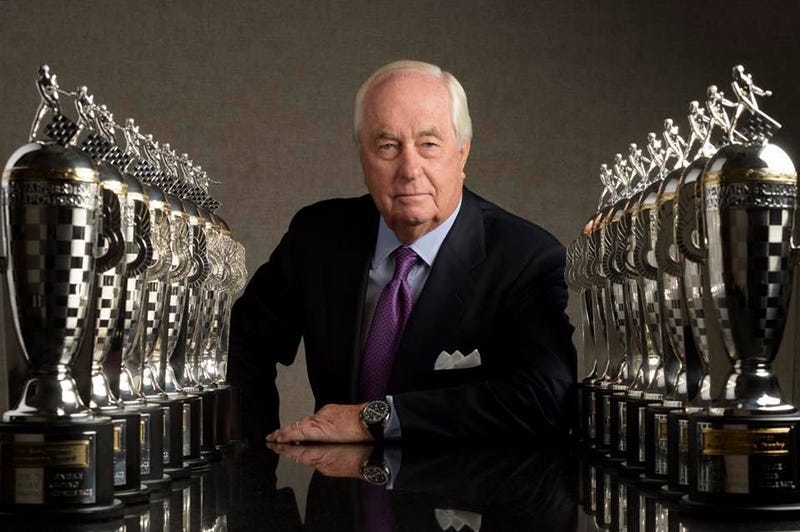
The word everyone uses about him isn’t “genius.” It’s not “visionary.” It’s “standards.” “Penske Perfect” is a term widely known across the motorsport community. It means the cars are prepared to a degree that borders on compulsive, the pit stops are rehearsed to the second, and the culture tolerates nothing less than winning. And it’s paid off. As of publication, Penske has more than 660 wins, over 700 pole positions, and 47 championships across IndyCar, NASCAR, and IMSA.
Roger Penske is the kind of man who pressure-washes the pit lane. The man who once, on the morning of a race, personally walked the garage floor, checking that every tool was in its exact designated position. The man whose teams’ transporters are cleaner than most operating rooms. That compulsion (to make everything around him operate at maximum efficiency, maximum presentation, maximum performance) is not a personality quirk. It is the entire system. It has been the entire system for sixty years. And it has made him a billionaire many times over.
Shaker Heights
Roger Penske was born on February 20, 1937, in Shaker Heights, Ohio, one of America's most affluent suburbs. His father, Jay, spent thirty years at a metal distributorship, eventually becoming its vice president and general manager. His mother, Martha, ran the household.
“My parents were a great team,” Penske has said. “They taught me to be truthful and to help others. We didn’t have a lot, but my parents always shared with others.”
The pact in the Penske household was simple. “Usually my parents would pay half for my extras, and I would work to pay the other half,” Penske has recounted. “That pact between us taught me patience. There was no instant gratification. I believe the way I was raised served me well throughout my life.”
His father’s motto, passed down and eventually plastered across the culture of every company Penske would ever build, was three words: effort equals results. It sounds simple. Which is exactly why it works.
When he was eleven years old, his father sent him to summer camp at Culver Military Academy in Indiana. “Overall, that experience at Culver was terrific. You worked with people from different parts of the world at Culver. I would say it was a great foundation for me to have discipline, to understand you had to work to get to the front.” He was sent there, not as punishment, but because his father saw something in him and wanted to sharpen it.
As a teenager, he bought old cars, repaired them, and sold them for profit. Perhaps this was the beginning of a system.
When Penske was fourteen, his father took him to Indianapolis. “I knew immediately that the race track was a place where I wanted to be. I told my father that day I wanted to be a racecar driver.”
It was 1951. Sixty-eight years later, he would own the track.
Driver of the Year, F1 and Retirement…all by 28.
Penske graduated from Shaker Heights High School in 1955 and enrolled at Lehigh University in Pennsylvania, where he studied business administration, pledged Phi Gamma Delta, and continued racing on the side. He spent three summers working in an Alcoa aluminum plant during college, and joined the company as a sales engineer when he graduated in 1959.
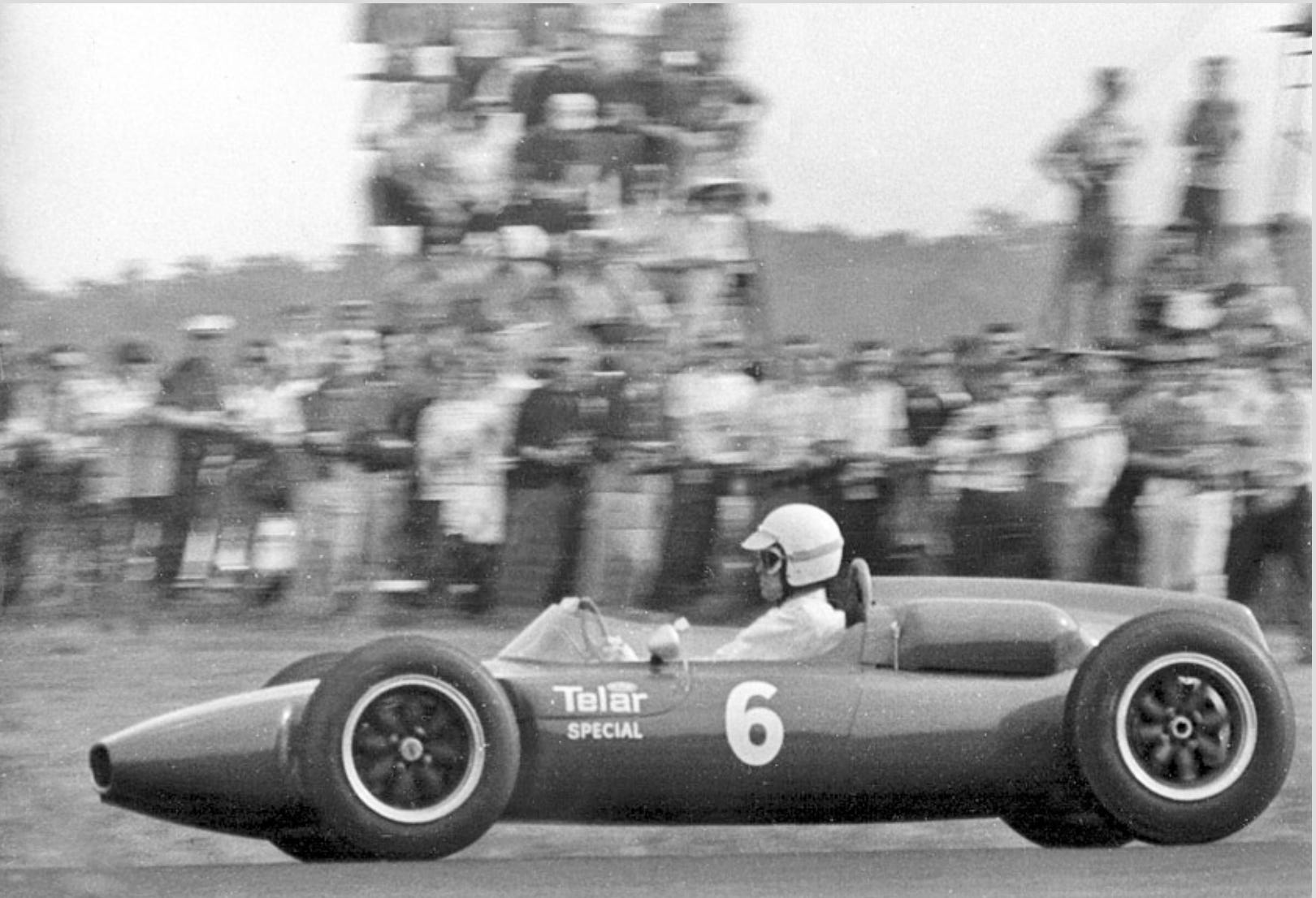
He was a genuinely accomplished racing driver. Sports Illustrated named him its SCCA Driver of the Year in 1961. The following year, both the New York Times and the Los Angeles Times named him North American Driver of the Year. He competed at Le Mans, Sebring, and Daytona. He made two Formula One Grand Prix starts, in 1961 and 1962, both at the United States Grand Prix in Watkins Glen. He won a NASCAR race at Riverside in 1963, as well as the Pacific Grand Prix, a sports car race at Laguna Seca, in 1964.
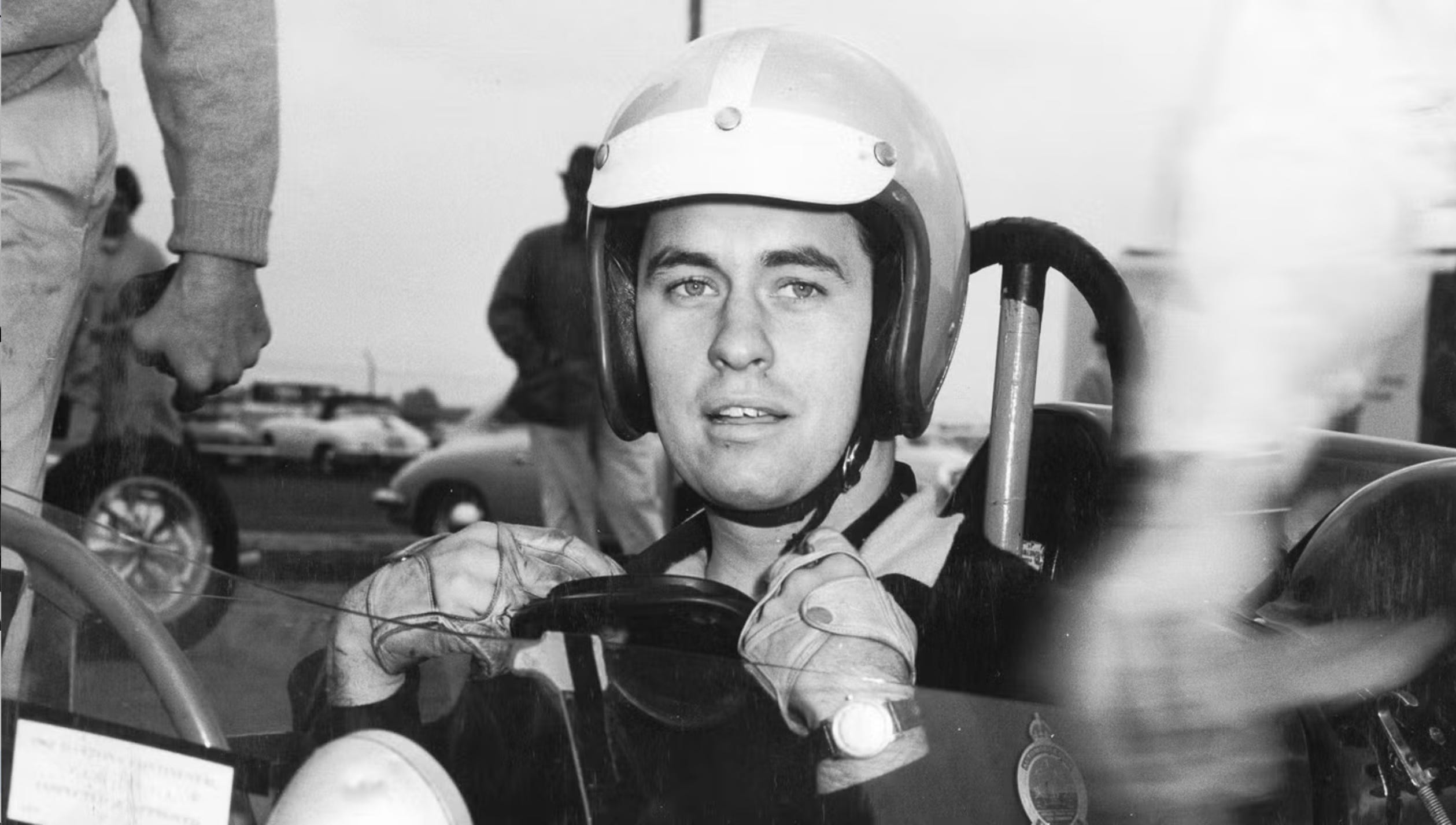
But even at the height of his driving career, Penske was already thinking like an owner rather than a driver. “I don’t want to be known as a race driver,” he told a reporter a full year before he retired from driving. In hindsight, it was a statement of intent.
He understood his ceiling. He was talented enough to compete at the highest levels of American motorsport. But he wasn’t talented enough to be the best in the world. And being anything other than the best in the world was not something he was prepared to accept. So he made a different calculation: if he could not be the fastest driver in the car, he would build the organization that put the fastest drivers in the fastest cars.
In 1963, at age 26, he left Alcoa to become general manager of a Chevrolet franchise in Philadelphia. By 1965, he had borrowed $50,000 from his father and bought it outright. He retired from driving that same year. He was 28.
The Dealership and The Standard
How he managed that Chevrolet dealership became a template for the future.
Penske did not simply run the dealership. He transformed it. He applied the same logic to a car showroom that he would later apply to a race garage: every surface clean, every process documented, every employee clear on exactly what was expected of them and exactly how performance would be measured. The dealership became, almost immediately, one of the top-performing Chevrolet franchises in the country.
This was not accidental. Penske has spoken about the realization, arriving early in his business life, that most organizations underperform not because of bad people but because of undefined standards. When you define the standard precisely and hold everyone in the building accountable to it, including yourself (especially yourself), the results follow. It is not a complicated philosophy. Very few people have the discipline to execute it day after day for six decades.
His nickname “The Captain” did not come from motorsport as many might assume. It came from his employees. It is a title of respect, but it also speaks to Penske’s precision. Captains run tight ships, captains set the heading, and captains do not tolerate drift. It is the most accurate single word anyone has ever applied to Roger Penske.
The dealership became the cornerstone. Through it, Penske met the people, understood the systems, and developed the appetite that would take him far beyond a single franchise in Philadelphia. He renamed it Roger Penske Chevrolet, secured a National Car Rental franchise for the Philadelphia market, and when National eventually bought him out, he took those proceeds and pointed them at his next move.
The Captain and The Engineer
In 1966, Penske returned to racing, this time from the other side of the pit wall. Team Penske made its debut at the 24 Hours of Daytona with an obsolete Chevrolet Corvette Grand Sport. The result was inauspicious. But it didn’t matter, because that same year, Penske hired a driver named Mark Donohue.
Donohue was a Brown University engineering graduate: precise, methodical, quiet with his hands and loud with his data. He could drive a race car to its absolute limit and then come back to the garage and explain, in technical detail, exactly what the car needed to go faster. He was the perfect driver for Roger Penske.
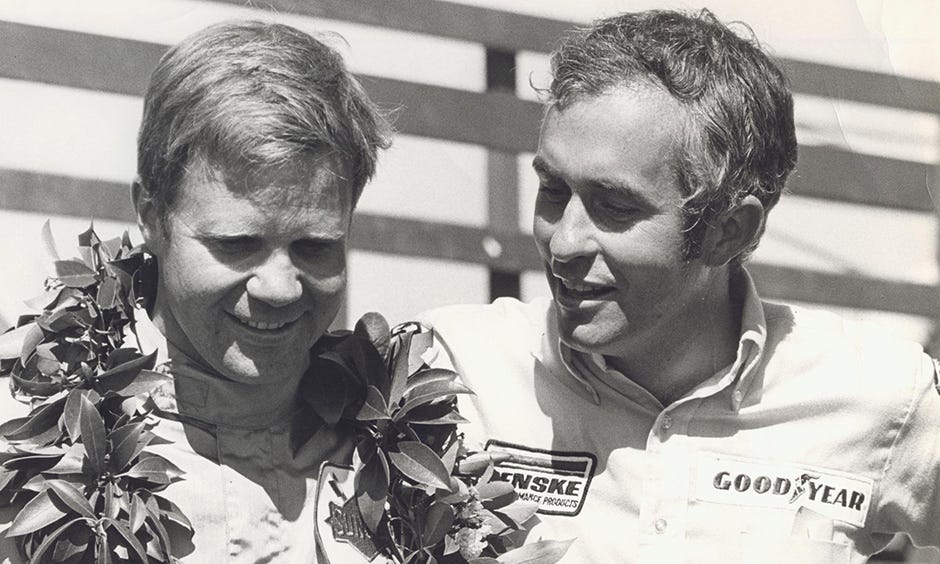
Together, they dominated. Trans-Am racing in Camaros and Javelins. Can-Am in the fearsome Porsche 917-10 and 917-30 turbocharged cars. Machines so powerful that they effectively killed Can-Am as a competitive series. Wherever they went, they won. And wherever they won, they did it in Penske’s immaculate Sunoco blue livery, with cars that looked as good as they were fast, because in Penske’s world, those two things were never separate.
In 1972, they arrived at Indianapolis. They won.
It was Penske’s first Indianapolis 500 victory as an owner. As of March 2026, he has won twenty. No one in the history of the race has won more.
In 1974, having largely run out of things to conquer in American racing, Penske created Penske Cars Ltd. in Poole, England, and set his sights on Formula One. Then, in August 1975, tragedy arrived without warning. At the Austrian Grand Prix at the Österreichring, Donohue’s car suffered a tire failure during a warm-up lap and crashed. He walked away from the accident but complained of a worsening headache and collapsed. He died the following day, August 19, 1975, from a cerebral haemorrhage. He was only 38 years old.
Penske announced Donohue’s death himself. He stayed in Formula One for one more season, with John Watson as his driver. Watson won the 1976 Austrian Grand Prix, at the same circuit, one year after Donohue’s fatal crash, in a Penske-Ford PC4. It is the last F1 win to date for an American-licensed constructor.
Penske has spoken rarely and carefully about losing Donohue. Donohue wasn’t simply his driver. He was his collaborator, his friend, and in many ways the walking proof that Penske’s entire philosophy worked: that standards, preparation, and precision could beat raw talent alone.
I hope my dad is looking down at me and this group and saying,
‘Son, you did a good job.’
The Truck That Built The Empire
In 1969, the same year he was winning races with Donohue, Penske made a move that most people outside his inner circle did not fully understand at the time. The proceeds from the National Car Rental buyout (figures undisclosed) became the seed capital to purchase a small truck rental and leasing business serving eastern Pennsylvania, with just three locations. Once acquired, he folded it into the newly incorporated Penske Corporation.
Truck leasing is not glamorous. But it is the type of business that generates cash flow, year after year, with the kind of reliability that racing never can. Penske understood this. Racing was where he publicly applied his standards. Truck leasing was where those standards printed money quietly.
Penske Truck Leasing grew steadily, then grew dramatically. By 1981, Penske Corporation was reporting revenues of $254 million. By 1988, it had crossed $2 billion. The same logic that governed the dealership and the race team governed the truck business: define the standard, hire people who can meet it, hold them to it, and let the results compound.
In May 1999, Penske took control of United Automotive Group, a struggling automotive retail group founded in 1990. He eventually renamed it Penske Automotive Group. He applied his signature standard, and the company began to grow. In 2024, Penske Automotive Group, traded on the New York Stock Exchange, posted annual revenues of $30.46 billion, making it one of the largest automotive retail operations in the world.
Today, Penske Corporation spans truck leasing, logistics, automotive retail, motorsport, and speedway ownership. It employs more than 70,000 people across 3,200 locations worldwide. Forbes’ 2026 World’s Billionaires List places his net worth at approximately $6.4 billion.
The $50,000 borrowed from his father in 1965 was far from just a loan. It became the compounding machine that has been running without interruption for 60 years.
The Numbers
Here is what that standard has actually produced.
Penske Automotive Group, the publicly listed automotive retail business, posted $30.46 billion in revenue in 2024, with net income of $919 million and EBITDA of $1.49 billion. That is a single division of a larger private empire. In 2024 alone, PAG completed acquisitions representing approximately $2.1 billion in estimated annualized revenue, meaning even at this scale, the compounding machine is still running.
Penske Truck Leasing, operated through a partnership between Penske Corporation, Penske Automotive Group, and Mitsui & Co. of Tokyo, runs a fleet of more than 450,000 vehicles from nearly 1,480 locations globally and generated $198 million in equity earnings for PAG alone in 2024. Penske Corporation as a whole manages revenues that industry estimates place above $40 billion annually when all entities are consolidated.
Team Penske, the racing operation, has recorded over 660 victories, over 700 pole positions, and close to 50 championships across IndyCar, NASCAR, and IMSA. Twenty Indianapolis 500 victories. Three Daytona 500 victories. Four overall wins at the Rolex 24 in Daytona. Three overall wins at the Sebring 12 Hours. It is the most successful motorsport team in American racing history, and it has never been a vanity project or a labour of love that tolerates losses. It is a business run to the same standard as everything else.
Penske has been inducted into seven motorsport and automotive halls of fame (a detail that, honestly, deserves its own article):
Motorsports Hall of Fame of America (1995)
International Motorsports Hall of Fame (1998)
Indianapolis Motor Speedway Hall of Fame (2002)
Automotive Hall of Fame (2015)
SCCA Hall of Fame (2016)
NASCAR Hall of Fame (2019)
Trans-Am Series Hall of Fame (2025)
The Speedway
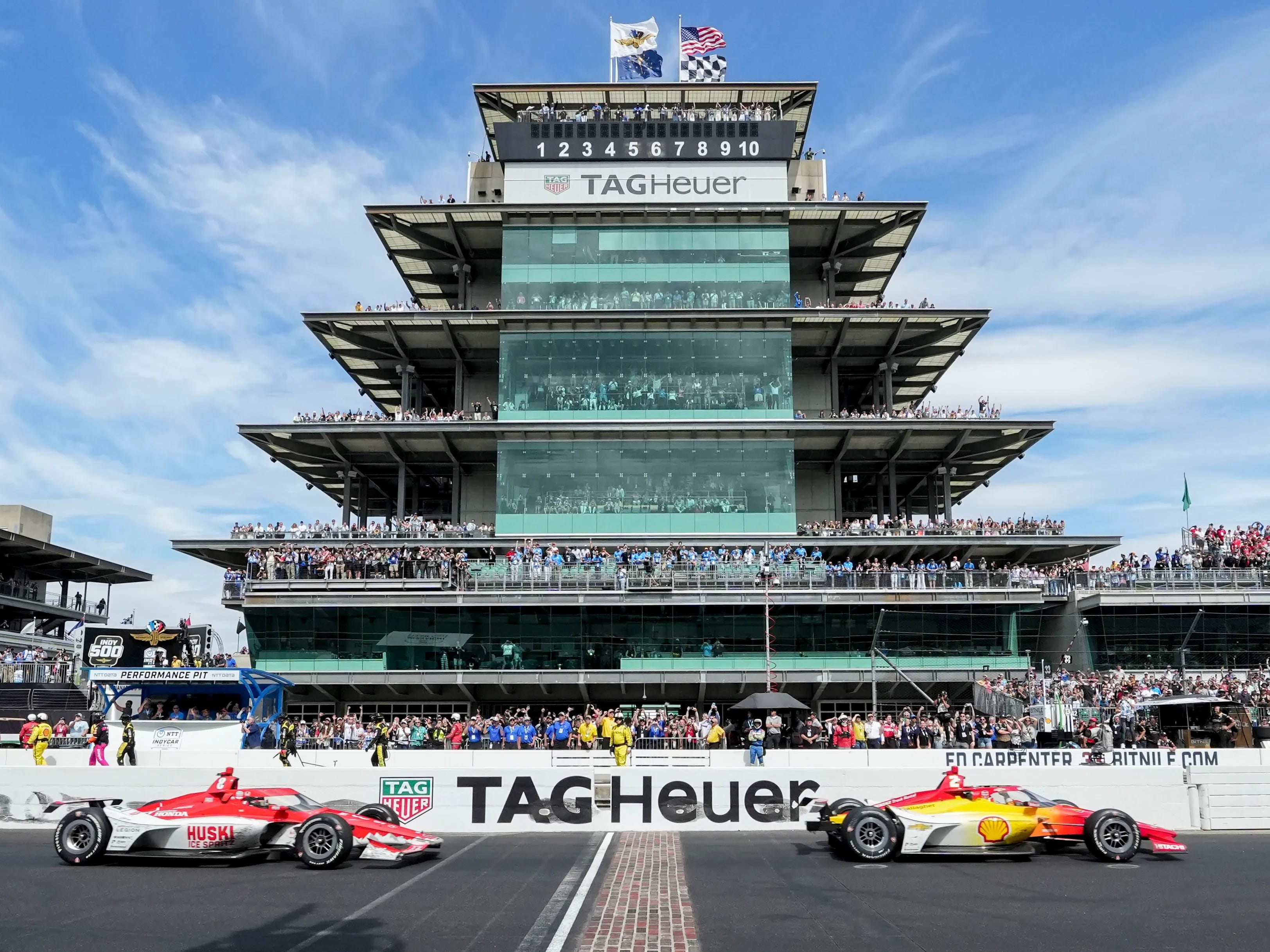
On November 4, 2019, Roger Penske became the fourth owner of the Indianapolis Motor Speedway in its 110-year history. He purchased it, along with the IndyCar Series and IMS Productions, from the Hulman family, who had held it since 1945. The official price was never publicly disclosed. People familiar with the transaction told the Associated Press that discussions involved offers of between $250 million and $300 million for the package, with a promise of additional capital improvements to the Speedway. The deal, from first conversation to closing, took roughly six weeks.
Since taking over, Penske has committed more than $30 million in capital improvements to the Speedway: new video screens, additions at Turns 3 and 4, and a series of infrastructure upgrades that have modernized one of sport’s most iconic venues.


The investment is already paying back. In July 2025, Fox Corporation purchased one-third of Penske Entertainment, the holding entity that contains both IndyCar and IMS, in a transaction valued by the Wall Street Journal at approximately $130 million.
The implied math is straightforward: one-third at $130 million puts the full Penske Entertainment entity at approximately $390 million. He bought the package for somewhere between $250 million and $300 million, poured more than $30 million into improvements, and has already recouped a substantial portion of his investment while retaining two-thirds of the asset. The Captain bought the track. Then he ran it like a business.
The full-circle quality of the IMS purchase is almost too neat to be real. The fourteen-year-old boy who sat in those stands in 1951 and told his father he wanted to be a race-car driver. The young man who competed at Le Mans, Sebring, and Daytona, but never raced in Indianapolis. The team owner who won the Indy 500 twenty times. And finally, in his eighty-third year, the man who bought the place itself.
“I hope my dad is looking down at me and this group and saying, ‘Son, you did a good job,’” Penske said after the purchase was announced.
What Standards Build
In 2017, days after his driver, Josef Newgarden, won the IndyCar championship at Sonoma Raceway, Penske underwent a kidney transplant at the Mayo Clinic in Rochester, Minnesota. The kidney came from his son, Greg. He kept the procedure entirely private and was back at the racetrack roughly 10 days after surgery. He did not announce it until 2019, when it came up incidentally during a press session. When asked about the recovery, his answer was characteristically Penske: he described being encouraged to stand up and walk to the window the same day. He was in his son’s room the next morning.
Kidney transplant. Ten days. Back on track.
The man does not know another gear.
Roger Penske’s success in business comes down to one thing: he applies the same standard to everything, and he never stops applying it. No exceptions. No fatigue. None of the quiet compromises that accumulate in most organizations over time and, without anyone quite noticing, become the ceiling.
Penske has never accepted a ceiling. He assessed his own talent honestly at 28 and pivoted before most would have. He took a single dealership and made it a model. He built a racing operation that has been winning for six decades. He compounded a $50,000 loan into a $6 billion fortune. And at 83, ten days after a kidney transplant, he was back at the race track.
At 89, he is still The Captain.
Jay Penske’s motto was three words. His son has spent sixty years making them true.
Effort equals results.
Check the pit lane. Check the garage floor. Check the transporter. Check the record books.
It’s all there.

