

The barriers have been up for weeks.
Twenty-one kilometers of steel Armco. Twenty thousand square meters of wire fencing. Tonnes of grandstand material, all bolted onto streets that residents drove to work in January and will drive to work again in July. Today is Saturday. Hundreds of yachts are settled into Port Hercules. The Ritz-Carlton has docked its 623-foot vessel, the Evrima, in the harbor with its 149 cabins, a private chef rotation, a full spa operation, and suites running from $10,000 to over $100,000 for the weekend.
On Sunday, the cars go. On Sunday evening at 6:00 PM, the barriers start coming down. By Monday morning, most of the roads will be open.
Monaco will have run its race, earned its fee, and returned to being what it actually is: a 2.1-square-kilometer principality with a €10.3 billion GDP, zero income tax, zero wealth tax, zero capital gains, zero property levy, and twelve Formula 1 drivers who chose to live here for reasons that have nothing to do with the Mediterranean light.
A Cigarette Man Needed a Permit
The story starts in 1925, with paperwork.
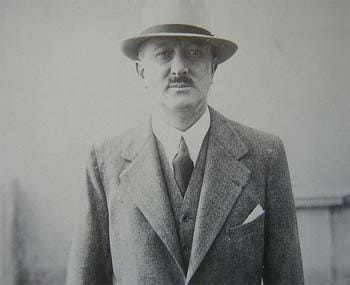
Antony Noghès ran the tobacco monopoly for the Grimaldi family, which gave him standing in Monaco without giving him ambitions beyond it. By 1925, he wanted to transform the Automobile Club de Monaco from a regional motoring curiosity into a recognized national body under the AIACR. This is the organization that would become the FIA. The requirement for national club status was to host an international racing event wholly within your territory.
Monaco is 2.1 square kilometers.
Noghès spent three years routing a circuit through the only streets that existed, working with Monaco’s most celebrated driver, Louis Chiron, to thread it past the harbor, up past the casino, down to the sea, through a tunnel under the Fairmont Hotel site, and back around. The Société des Bains de Mer, Monaco’s casino company with the Grimaldi family as majority stakeholders, underwrote the first race. Sixteen invited drivers appeared on April 14, 1929, racing for 100,000 French francs (~$4,000 USD at the time).
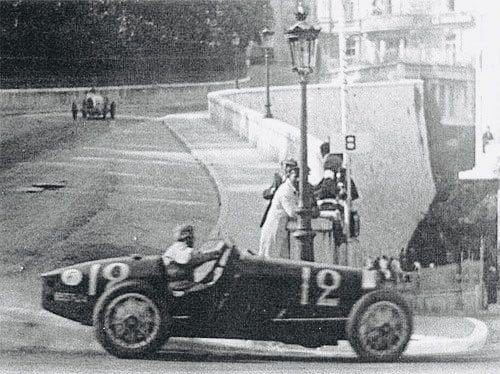
William Grover-Williams won in a Bugatti T35B, beating Rudolf Caracciola by a margin that the records have measured and history has since ignored. He would go on to win the French Grand Prix twice. He would later be recruited by the British Special Operations Executive during the Second World War, code-named Sebastian, running a resistance network outside Paris alongside two fellow racing drivers. The Nazis captured him in August 1943 and executed him at Sachsenhausen concentration camp in March 1945. He was forty-two years old and posthumously recommended for the Order of the British Empire.
The Greek Who Tried to Own It
By 1953, Aristotle Onassis had decided he wanted Monaco.
He had done this before, wanting something large and acquiring it through methods that were not quite transparent. Through Panamanian shell companies, Onassis accumulated shares in the Société des Bains de Mer until he held 52% of the company that controlled Monaco’s casino, its hotels, and its cultural infrastructure. Prince Rainier III had initially welcomed the investment. Monaco needed capital. Onassis had capital.
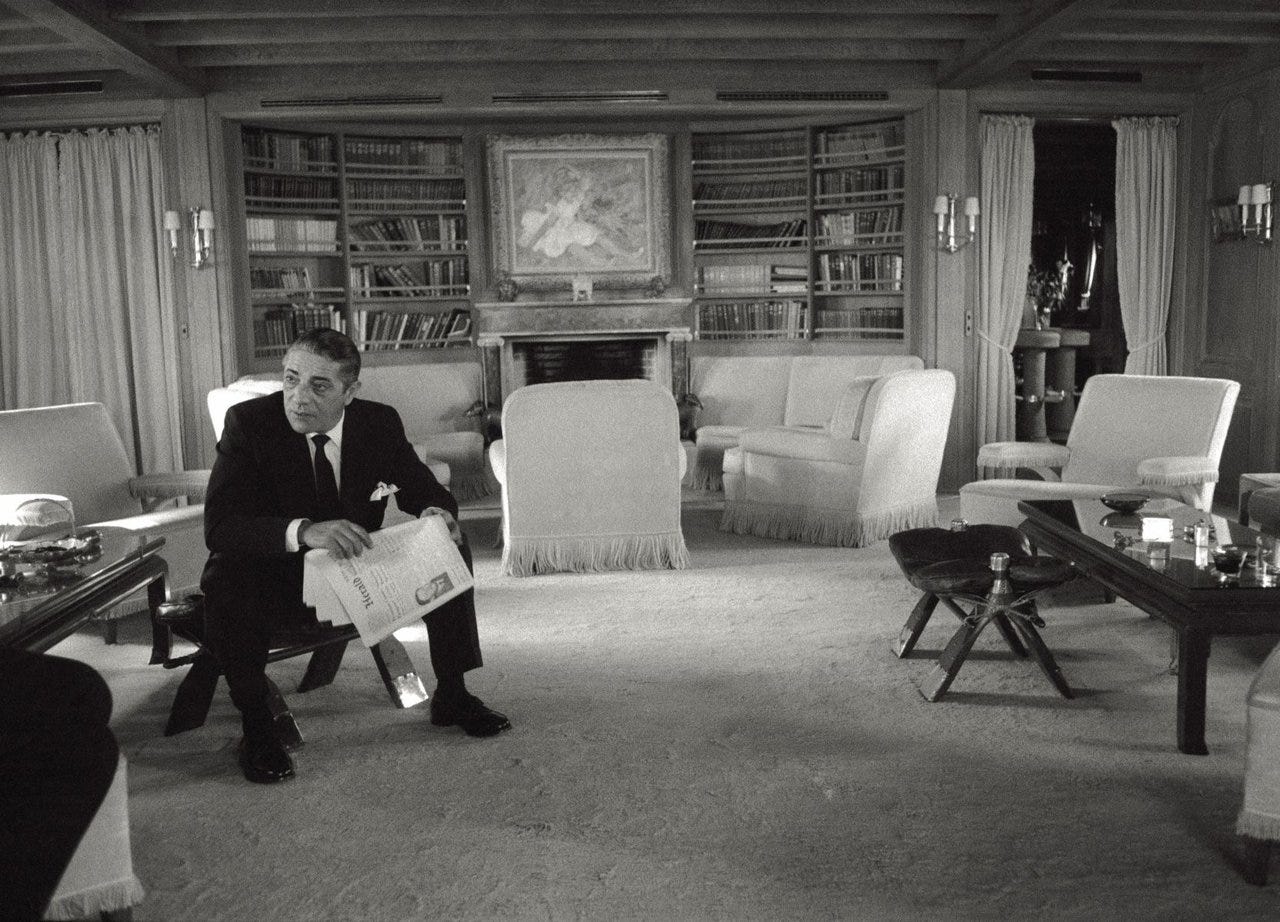
Their relationship deteriorated as Onassis’s vision for the principality collided with Rainier’s. Onassis wanted Monaco to remain an exclusive enclave for a small clientele of the supremely wealthy, the kind of place where 200-foot yachts anchored and nothing was built for anyone who couldn’t afford them. Rainier wanted broader tourism, more construction, and a modern state rather than a private club for the rich. Onassis, in essence, saw Monaco as an asset to be managed for returns. Rainier saw it as a country to be governed.
In June 1966, Rainier approved the creation of 600,000 new SBM shares to be permanently held by the state. Onassis’s stake collapsed from 52% to under a third overnight. He challenged the dilution in Monaco’s Supreme Court and lost in March 1967. He sold his holdings to the state for $9.5 million and left.
The Grimaldis had ruled Monaco since 1297 by disguising themselves as monks and talking their way past gate guards. Diluting a Greek shipping magnate through share creation was, historically speaking, a relatively conventional defense. They currently hold 59.47% of SBM. The company reports annual revenues of €768 million with a record €110M profit. Interesting note: the Grimaldis are the oldest ruling house in Europe.
The Wedding That Changed the Value of Everything
“To save Monaco and tourism, there is only one solution: a marriage between the prince and Marilyn Monroe or Grace Kelly.”
Through the 1940s and early 1950s, Monaco’s glamour was a regional thing. The European casino destination, with its beautiful coastline, is the sort of place wealthy French and Italians went when they wanted to gamble in clement weather. The Grimaldis were royalty in a principality most people couldn’t locate precisely on a map. Prince Rainier III understood that Monaco needed something it could not manufacture domestically.
Then he met Grace Kelly in Monaco in May 1955, while Kelly was at Cannes.
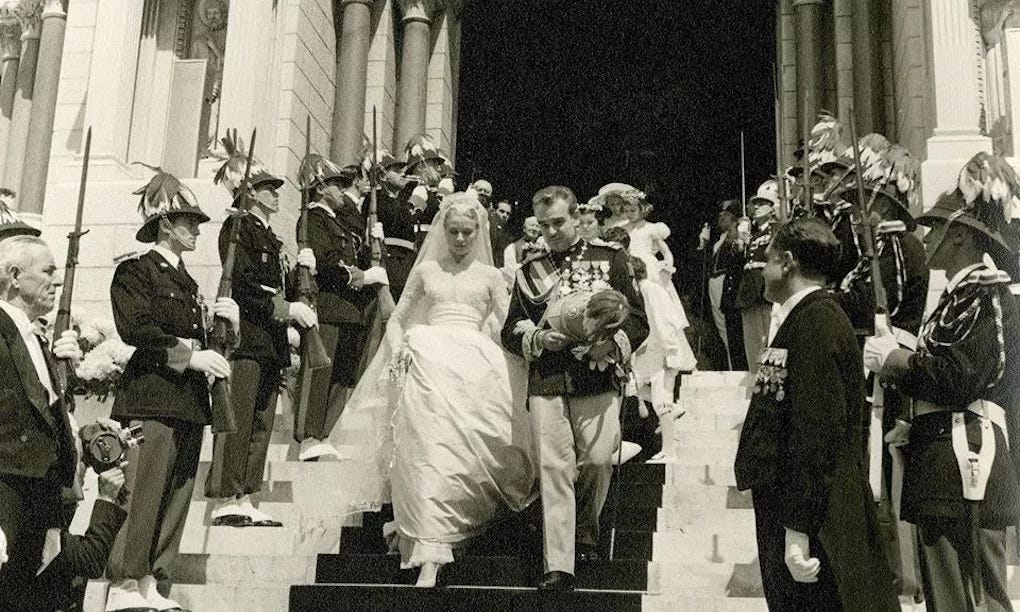
On April 18 and 19, 1956, Kelly, an American film star and Academy Award winner, twenty-six years old, married Rainier in two ceremonies broadcast live to over 30 million television viewers across nine countries via Eurovision. It was the first royal wedding ever televised. She wore 100 yards of silk net, 125-year-old rose-point lace, and thousands of tiny pearls, assembled by MGM’s costume designer Helen Rose, in a gown the studio donated because the publicity value of Grace Kelly becoming a princess was beyond what any conventional marketing budget could achieve. Kelly retired from acting permanently to do it.
Monaco’s tourism numbers climbed in the years that followed. The Grand Prix, which had run as part of the F1 World Championship since 1950, now existed inside a completely different cultural frame. Photographers who came to Monaco for the race weekend came for the race; they stayed, increasingly, for everything else. The paddock and the harbor and the terraces and the helicopters and the people who arrived on them acquired meaning that the circuit itself couldn’t generate alone.
The race became the Monaco race. That distinction, which sounds superficial, is worth approximately €10 billion in annual GDP today.
De Gaulle’s Blockade and the Tax Trap
The tax code that draws Formula 1 drivers to this square mile came out of a confrontation, not a gift.
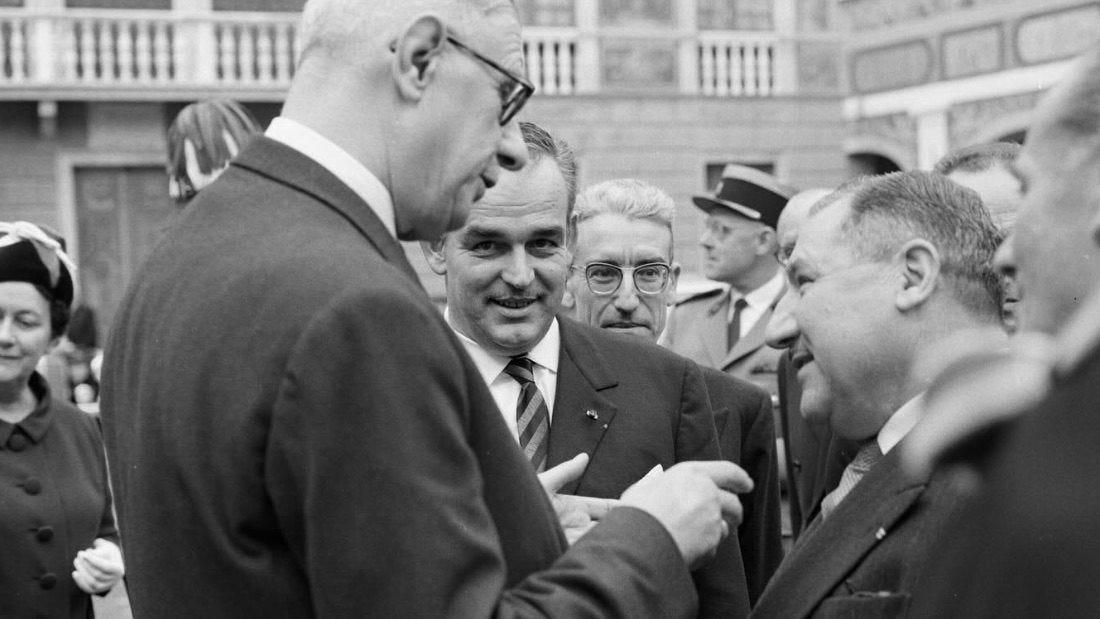
Monaco’s zero-income-tax regime for residents predates Formula 1 as a concept. What it created, through the mid-20th century, was a steady migration of wealthy French citizens moving a short distance over the border to escape the French Republic’s tax apparatus. By the early 1960s, de Gaulle’s government was watching French capital drain toward the Riviera and had run out of patience.
In 1962, France imposed a customs blockade on Monaco. Border controls were in place on every road in and out of the principality. Monaco, which France surrounds entirely and defends by treaty, had approximately zero leverage.
The principality capitulated. On May 18, 1963, the Franco-Monegasque tax convention was signed under conditions that were, diplomatically, as close to compulsion as sovereign negotiations get.
The provision that still runs today: French nationals residing in Monaco are taxed on their worldwide income exactly as if they had never left France. Unless they established Monaco residence before October 13, 1962, and have remained continuously since. That grandfather clause is now sixty-three years old. The people it protected are mostly dead. What remains is a hard boundary that splits the paddock cleanly.
Pierre Gasly was born in Rouen. Esteban Ocon was born in Normandy. Both hold French passports. Both pay French taxes regardless of their address. The treaty de Gaulle forced on Monaco in 1963 is the reason you will not find their names on the resident list, and why the tax arithmetic that drives eleven other drivers to the same square mile simply does not apply to them.
The Colony
12 of the twenty-two drivers on the 2026 grid are Monaco residents. Charles Leclerc was born here in 1997.
Max Verstappen’s reported salary from Red Bull sits in the range of €60-70 million annually before sponsorship. For a driver at that earnings level, the UK income tax liability in a single year would approach £25 million. Over a ten-year career peak, choosing Monaco over London is a decision I venture could be worth somewhere in the range of £200 million in accumulated net wealth. The €500,000 minimum bank deposit required to establish Monaco residency, which remains in your account, accruing interest, represents less than 1% of that figure.
The 183-day minimum stay requirement is the only genuine constraint, and the Formula 1 calendar mostly satisfies it for you. F1 drivers travel more than 75,000 miles per year across 24 race weekends. Between travel days, testing, sponsor commitments, and factory visits, being physically present in Monaco for the remaining calendar nights requires no particular sacrifice.
Nice Côte d’Azur Airport is under 15 road miles away. Seven minutes by helicopter from Fontvieille. For people who commute between Bahrain, Melbourne, Silverstone, Singapore, and Las Vegas in a single season, seven minutes to one of the best-connected airports in southern Europe is just another day in the life.
Then Monaco requires written government permission for all professional photography in public spaces. In a principality where one-third of the residents are millionaires, that law has cultural weight that money cannot replicate elsewhere. Verstappen is not a celebrity in Monaco. He is a neighbor. The principality’s structural disinterest in fame is the most expensive private amenity on offer, and it costs nothing on top of the bank deposit.
The Mystique
The circuit is, by any rational modern assessment, unsuitable for Formula 1 cars.
The Circuit de Monaco runs 3.337 kilometers through streets that have not seen a meaningful change in layout since the 1986 harbor chicane was added. The cars have changed. And while the 2026 chassis regulations are far better than their predecessors, these cars are still too big for streets like Monaco.
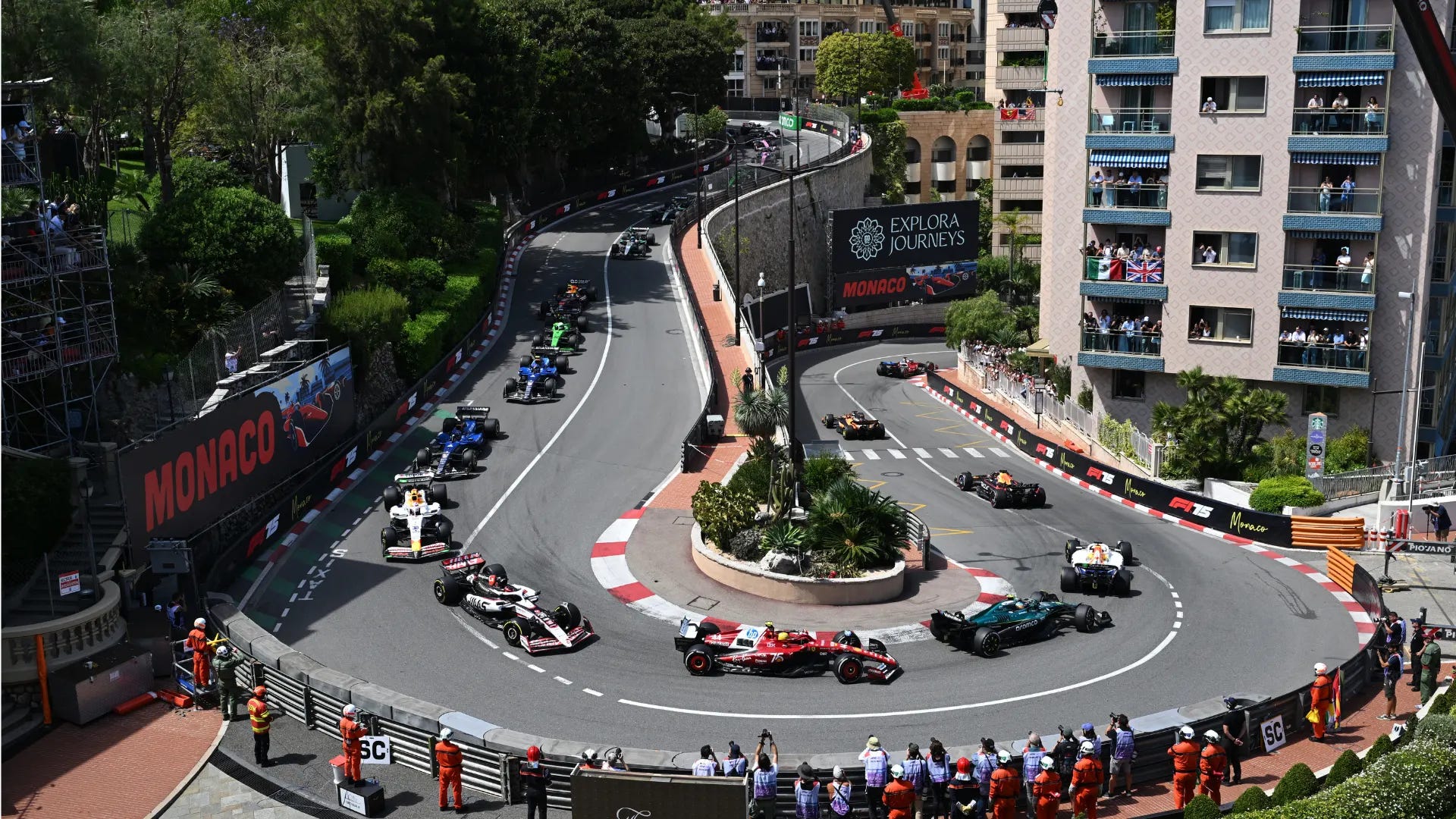
Drivers enter the section under the Fairmont Hotel at approximately 280 kilometers per hour. They go from full Mediterranean sunlight to complete darkness in a fraction of a second. They are still adjusting when they come out the other side, back into daylight, at the track’s fastest point, with the chicane brake zone arriving less than a second later. Every driver who has described it in detail has said the same thing: there is nothing else like it in world motorsport. The sensory whiplash at those speeds, on a public road tunnel, is genuinely unlike anything the sport produces anywhere else.
And then there is the racing, which is almost entirely absent. In 2024, the top ten in qualifying finished the race in exactly that order. In 2025, the FIA mandated two pit stops per driver. Lando Norris won. The mandatory two-stop rule was subsequently withdrawn. What will 2026 bring? We’re about to find out.
None of it matters, though. 250,000+ people attend over the weekend, a record set in 2024. Hundreds of yachts fill the harbor. Every hotel room within five kilometers exceeds the cost-per-night figures most people encounter once in a lifetime, if at all.
The impossibility of real racing here is the point. The mystique requires the constriction. A Monaco where drivers could actually follow each other through the tunnel and attack into the chicane would be a different event entirely. The tension between modern machinery and ancient streets is what the broadcast sells. We’ve covered how street circuits generally interact with F1’s commercial strategy, and Monaco is the original. It’s the one every subsequent attempt is auditioning against.
What the Machine Produces
Monaco pays Formula One Management $20 million annually to host this race. Before the contract extension signed late last year, which runs through 2035 and reportedly doubled the fee to approximately $40 million, it was the lowest sanctioning fee on the entire calendar. And even at $40 million, it would still be the lowest fee.
Liberty Media accepted the discount for the same reason every smart negotiator accepts a below-market price: they were buying something the money couldn’t fully capture.
The direct economics of race weekend are staggering regardless. Monaco’s statistics office has estimated the Grand Prix contributes over €100 million to the local economy over four race days. Hotels run at 96.7% occupancy. A sea view room at the Fairmont runs €25,000 for the weekend. A terrace suite at the Hôtel Hermitage exceeds €48,000. As we’ve written before, the real hospitality margins in Formula 1 operate well above the Paddock Club tier, and Monaco is where that hierarchy becomes most visible.
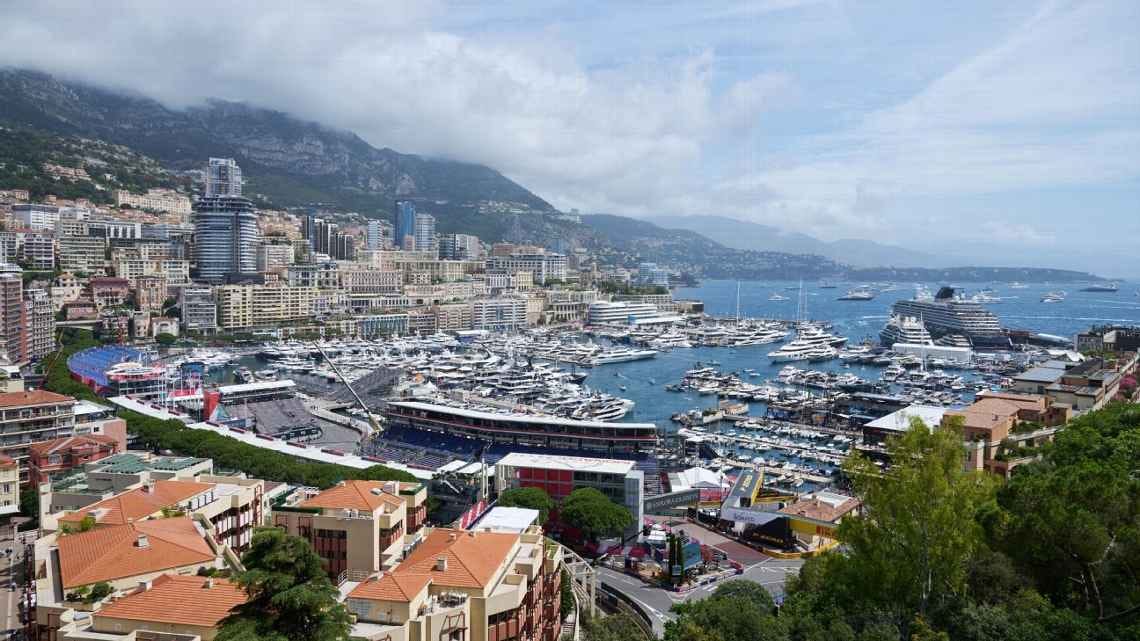
A prime trackside mooring for a 50-to-59 meter superyacht costs €110,135 for the week in 2026, up 47% from €74,737 in 2019. A master suite cabin aboard one of the hundred or so yachts costs between €24,000 and €42,000 per person for the weekend, with private chef and maid service included. The Ritz-Carlton’s Evrima, at 623 feet and 149 cabins, represents the hotel industry’s recognition that Port Hercules during race week is a category that justifies sailing an entire floating hotel to Monaco once per year. Somebody running an Owner’s Suite at $100,000 is not watching the race. They are watching who else is in the harbor. The race is the reason the harbor looks the way it does.
Liberty Media will keep Monaco on the calendar as long as the Automobile Club de Monaco signs contracts, and the ACM will sign contracts until Formula 1 gives them a reason not to.
The race’s commercial identity has no substitute. When Drive to Survive transformed F1 from a European niche into a global cultural event between 2019 and 2023, Monaco was the episode that required the least explanation to new audiences. Every new fan who encountered the sport through Netflix encountered Monaco first in terms of cultural legibility, even if Silverstone, COTA, or Suzuka gave them better racing.
Liberty understands it’s running a luxury lifestyle brand, and Monaco is the original proof of concept for its authenticity. Vegas is aspirational. Miami is new. Monaco is the thing both of those venues are trying to be adjacent to.
You cannot manufacture ninety-seven years of continuous history by offering a better fee structure.
Love this!