

Business of Speed’s momentum continues: 85% subscriber growth since the beginning of the summer; we’re now seeing over 120,000 visitors to the site per month, and our podcast has featured incredible guests including Tony Kanaan, Will Buxton, Alwin Springer, Marshall Pruett, and freaking Mario Andretti! That growth means more eyes on our partners.
We run our sponsorships like an F1 team, so there’s no shortage of ways to get involved. (btw, we’re still looking for the right Title Partner!) These are integrated partnerships, not just banner ads. If that’s interesting to you or someone in your network, please reach out to partnerships@bizofspeed.com
The Athlete’s Second Career Starts on LinkedIn
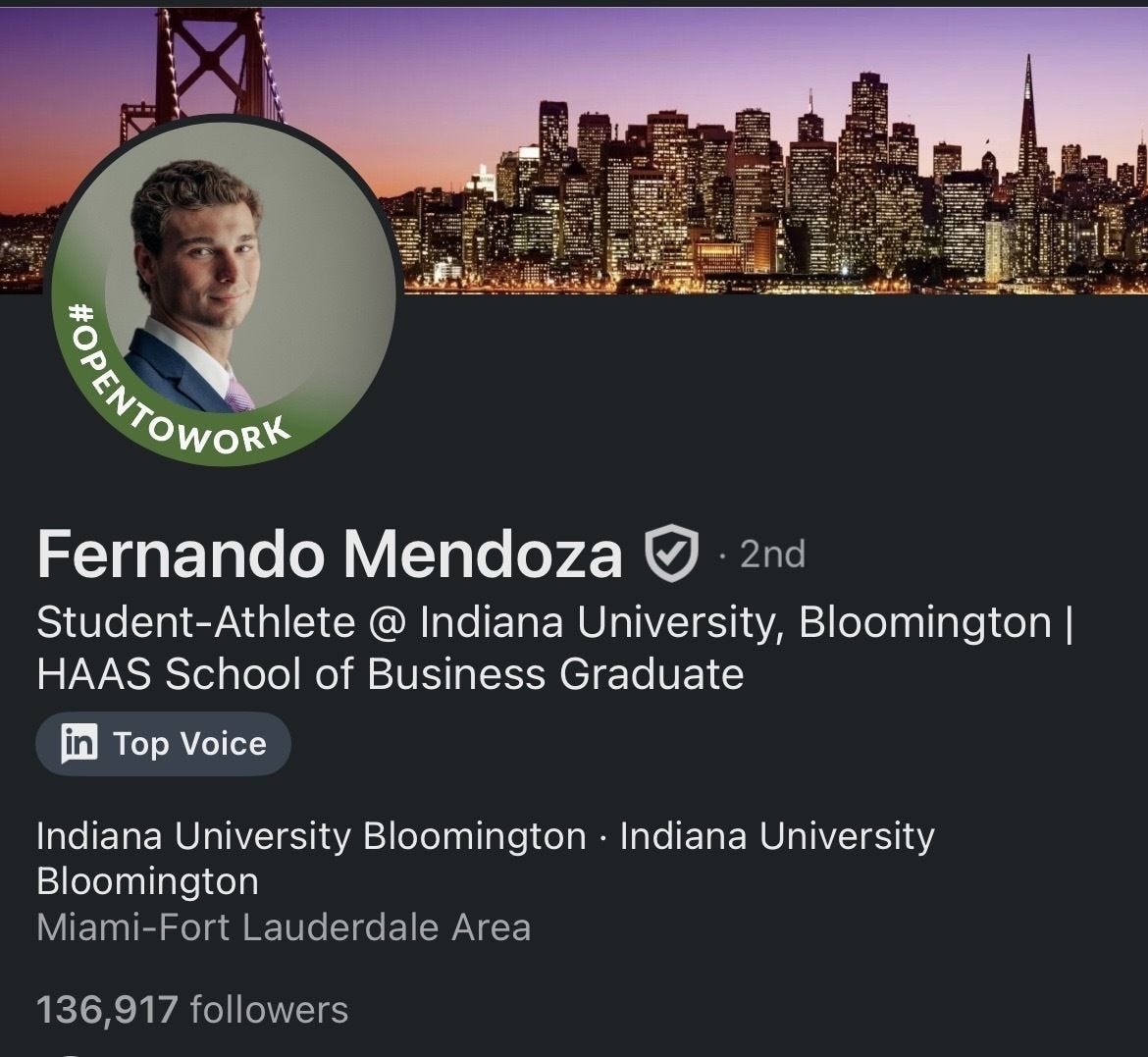
Fernando Mendoza spent the winter before the 2026 NFL Draft building his professional future on LinkedIn, right down to the “Open to Work” banner.
In April, the Las Vegas Raiders made the Indiana quarterback the first overall pick, and the banner stopped reading as a bit. LinkedIn had already named him a Top Voice. He is twenty-one; he staged his own arrival on the platform your compliance team uses to post about webinars, and the market answered with the richest job in the sport. That is the shape of the modern athlete. The career gets built in public, and more of it gets built here.
Two things are true at once, and together they explain the migration. The professional athlete has become an operator who starts the second career before the first one ends, holding equity, making investments, and running a personal business while still on the roster. And LinkedIn is where that operator meets the buyer. The platform says the number of pro athletes on it is up 31% since 2021, and the company has spent two years feeding the run, standing up an editorial desk, handing out Top Voice badges, and pushing athletes toward the top of its fastest-growing categories. Laura Lorenzetti, who runs LinkedIn’s global editorial, gives everyone who asks the same reason: an athlete’s first career is their sport, and it will not be their last.
I have spent a decade watching brands decide where motorsport money goes, and I wrote the first version of this argument long before the athletes arrived. In 2015, I argued that live video would come for the broadcast model because the direct pipe from a person to their audience was going to matter more than the institution standing in the middle. In 2022, writing for #paid, I said the modern World Cup fan experience was already being built by creators entertaining and educating for free, an argument I extended this year when DAZN hired 48 creators to cover the World Cup.
A sponsorship is a business-to-business sale dressed in a replica kit. The executive who approves an F1 title deal worth thirty to seventy million dollars a season, or the fifty to sixty million a year Gucci is reportedly paying to put its name on Alpine, is a chief marketing officer or an investor who spends the workday in that feed, already thinking in the vocabulary of return and audience. An athlete posting there makes the commercial case in the room, unpaid, to precisely the right crowd.
The behavior is everywhere once you look for it. Tracy McGrady posts about his minority stake in the Buffalo Bills and his job as chief innovation officer at a basketball-tech startup. Jalen Brunson, this year’s NBA Finals MVP, posts about his equity in the Just Salad chain. DeAndre Hopkins writes up the checks he has put into Beyond Meat and Olipop. Spencer Jones, a 24-year-old on the Denver Nuggets, posts twice a week to more than 23,000, keeps a private database of the founders and investors he meets on the road, and closed his first startup investment because one of them read his posts. Between games he has toured Shield AI and Boston Dynamics. None of these men waited for retirement to become businesspeople, and every one of them is doing the becoming in public.
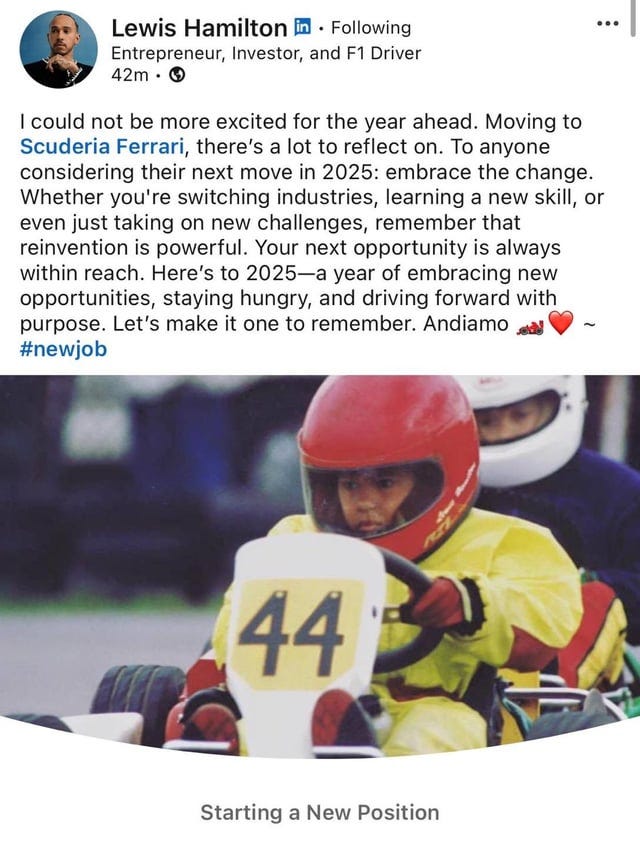
Racing runs the same play. Lewis Hamilton broke his move from Mercedes to Ferrari on LinkedIn, updating his headline to “entrepreneur, investor and F1 driver,” posting a photo of himself as a boy in a red helmet, and pointing the announcement at the audience he now wants funding Lewis Hamilton Ventures.
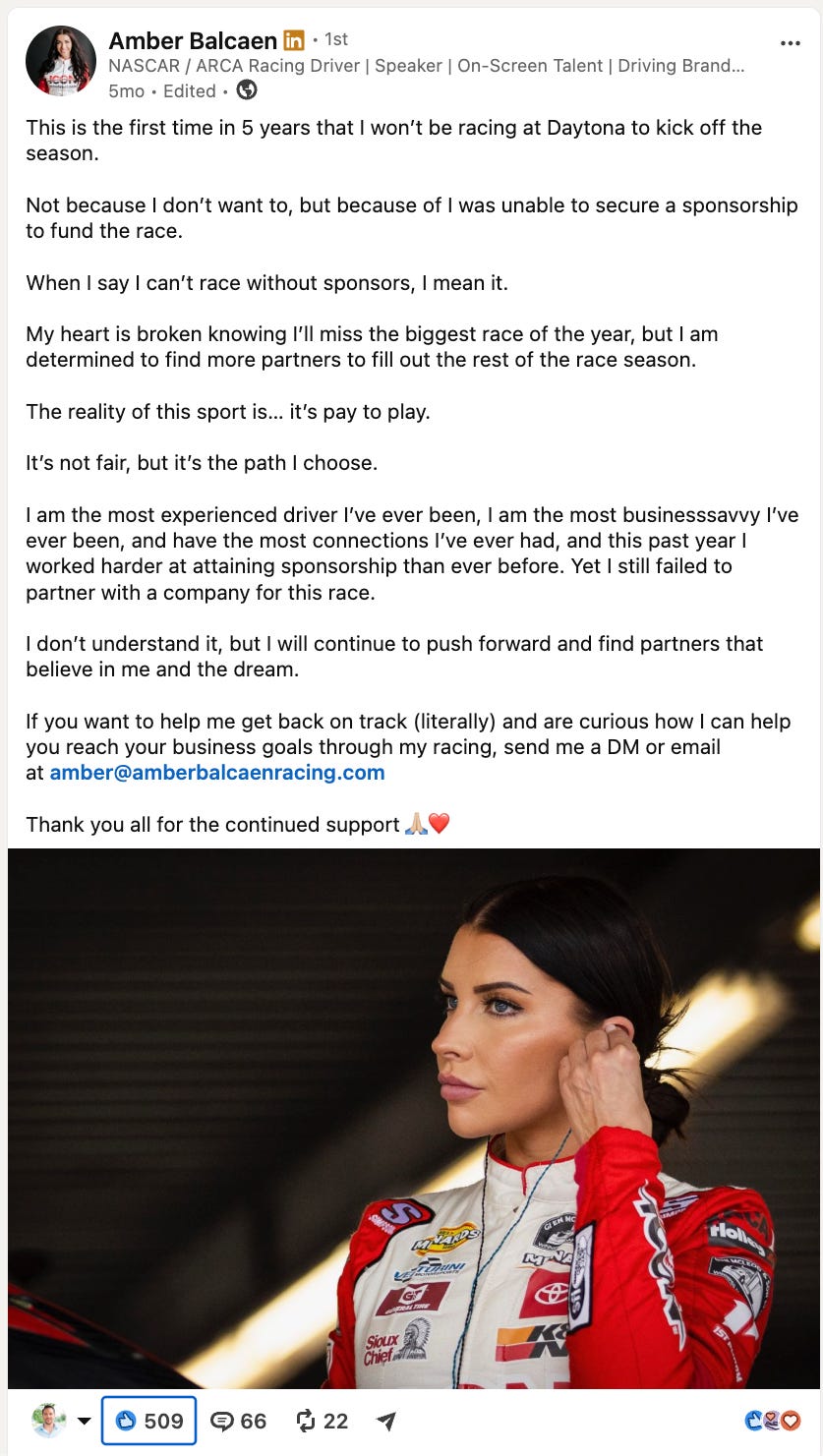
Lando Norris lists a McLaren seat up top and the company he built beneath it, Quadrant, the lifestyle and gaming brand he grew and sold a majority stake in during 2025. Daniel Ricciardo publishes native LinkedIn articles about resetting his goals and building things, with enough conviction that Ford chief executive Jim Farley shows up in his comments. And the most instructive account on the grid belongs to a driver most fans could not pick out of a lineup. Amber Balcaen races NASCAR’s feeder ranks without a blue-chip backer; her headline reads “NASCAR / ARCA Racing Driver | Speaker,” and when she could not raise the money to fund a Daytona season opener, she said so on LinkedIn, in plain figures, and got answered by marketers and founders who move money into race cars for a living. She is building in public, like any founder these days, and it’s working. A driver with a fraction of Hamilton’s reach can still land in front of the person with the budget, which is the whole point.
Stone Garrett was an outfielder who got released by the Marlins organization. A former Marlins video coordinator sent him a LinkedIn note wishing him luck, Garrett wrote back to ask whether any club needed an outfielder, and that thread became a tryout, a Diamondbacks contract, and four seasons in the major leagues. His own account of it is that without LinkedIn, none of it happens. A message on the boring professional network put a man back in the big leagues. Every athlete building a presence there is playing for some version of that outcome, whether the prize is a roster spot, an investor, or a sponsor.
The executives are in it too, and they treat the account as reputation infrastructure. Zak Brown runs his McLaren Racing story on LinkedIn as a working leadership diary: the under-funded early years, the operating lessons, the climb to a title team, and the book about how it happened. James Vowles has turned the Williams rebuild into a running narrative that recruits engineers, reassures partners, and frames a team principal as a business mind who happens to work in a garage. What they are building is a channel that talks straight to talent, partners, and capital, from driver to principal, and the ones using it well are compounding an attention advantage most of the paddock is still leaving on the table.
Here’s my thought, and I am glad to be wrong about the details. The athletes who win the next decade on this platform are the ones documenting real work, the funding gaps, the founder meetings, and the blunt replies that change a career, because that is what compounds into trust, and trust is what converts. The accounts that outsource the whole thing to an agency and post milestone graphics will keep wondering why the platform did nothing for them, and the gap between the two groups widens every quarter. LinkedIn spent years as the place professionals parked a resume. It turned into the place the modern athlete builds the next business while the whole industry watches. The ones treating it as a stage for the real work are going to own the room.