


We strive to remain an independent source of motorsport business. If Business of Speed has provided you with useful insights this year, please consider subscribing.
For most of my life, I found Italy in Formula 1 by looking for the red cars.
By the time I was old enough to explain why, Ferrari was already mine. Maranello was a place on a map, and somewhere I belonged, even from a distance. The attachment came first. Understanding it took longer.
Then Michael Schumacher arrived and made that inheritance feel glorious.
I lived through the years when he and Ferrari seemed to possess Sunday afternoons. A German driver became the center of our Italian sporting lives, and we loved him with an intensity that left little room for questions about nationality. Schumacher belonged to Ferrari. Ferrari belonged to us.
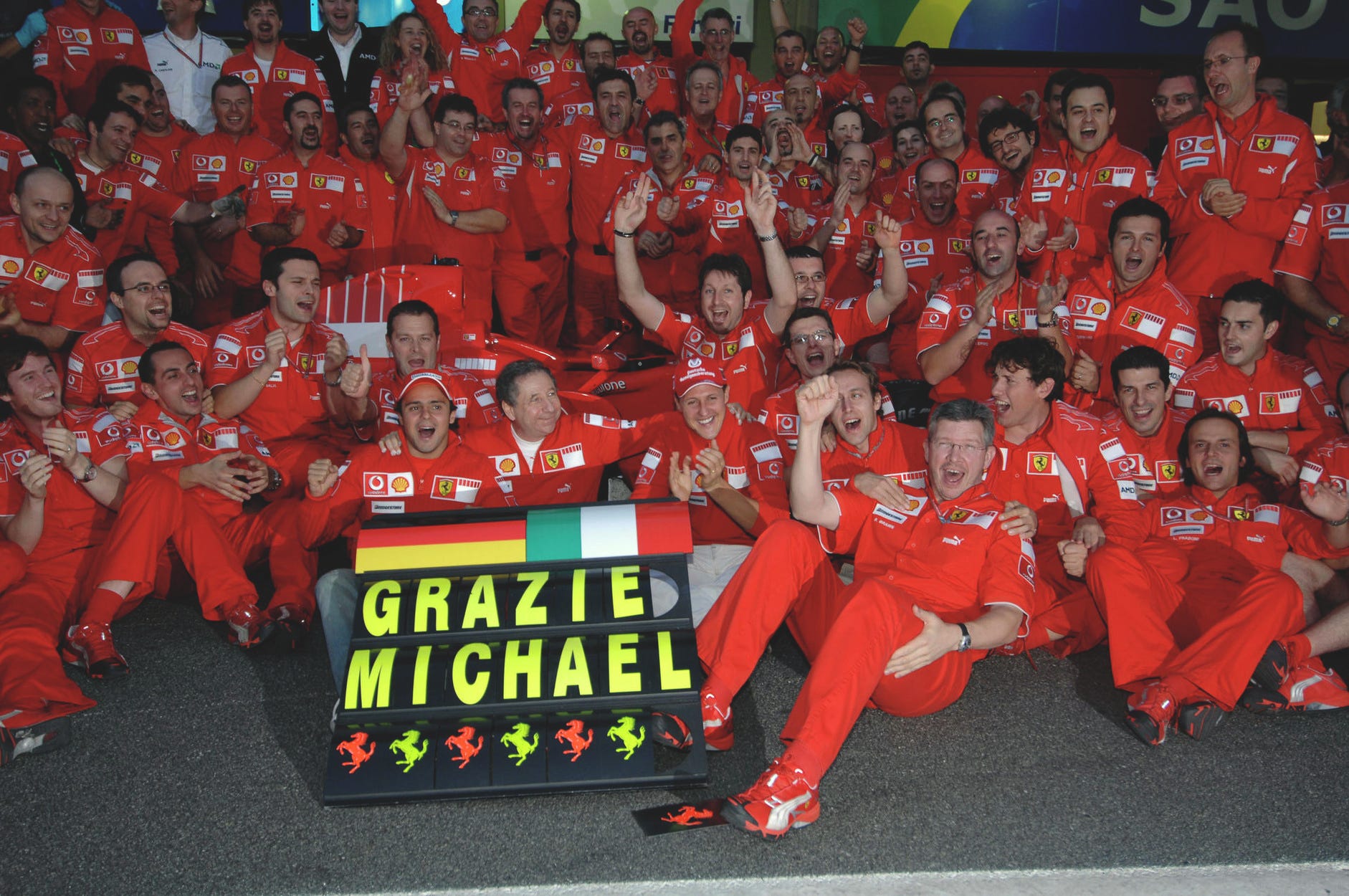
I would take every one of those Sundays again.
Through it all, an Italian world champion remained something I knew from history. Alberto Ascari’s last title came in 1953, in a Ferrari. I could learn what it meant and look at the photographs. Having my own memory was another matter. Ascari belonged to an Italy I would only ever know through other people’s stories.
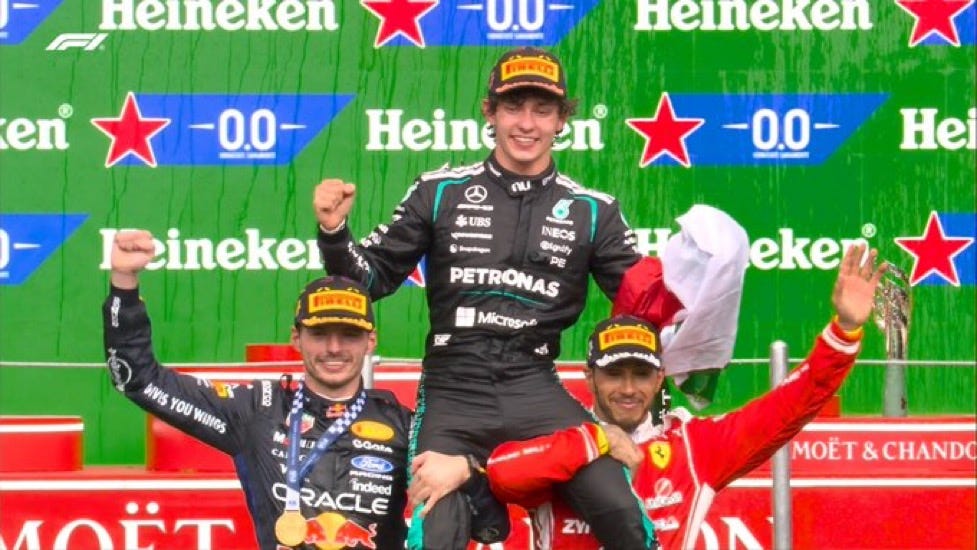
And now Andrea Kimi Antonelli, twenty years old, has finished third in Mexico and become Formula 1's youngest world champion, and the first to win the title under the Italian flag since Ascari.
I have followed this sport for most of my life, and I am still trying to get used to that sentence.
That he did it in a Mercedes is the kind of joke only Formula 1 could play on me.
He comes from Bologna, from the same Emilia-Romagna where we built so much of our racing identity. His grandfather had a workshop. His father raced and ran a team. Before the world knew his name, he grew up around adults who worked on cars, in a part of Italy where getting into racing could start with watching what your family did for a living.

I recognize something of home in that story, in how close a family can be to their work and how a child can grow up wanting to be part of it.
Being Italian-American can make sport feel unusually personal.
Italy shapes how I understand myself, and some days a result gives that feeling somewhere to go. I know it sounds irrational to take pride in something another person has achieved thousands of miles away. I have been doing it all my life.
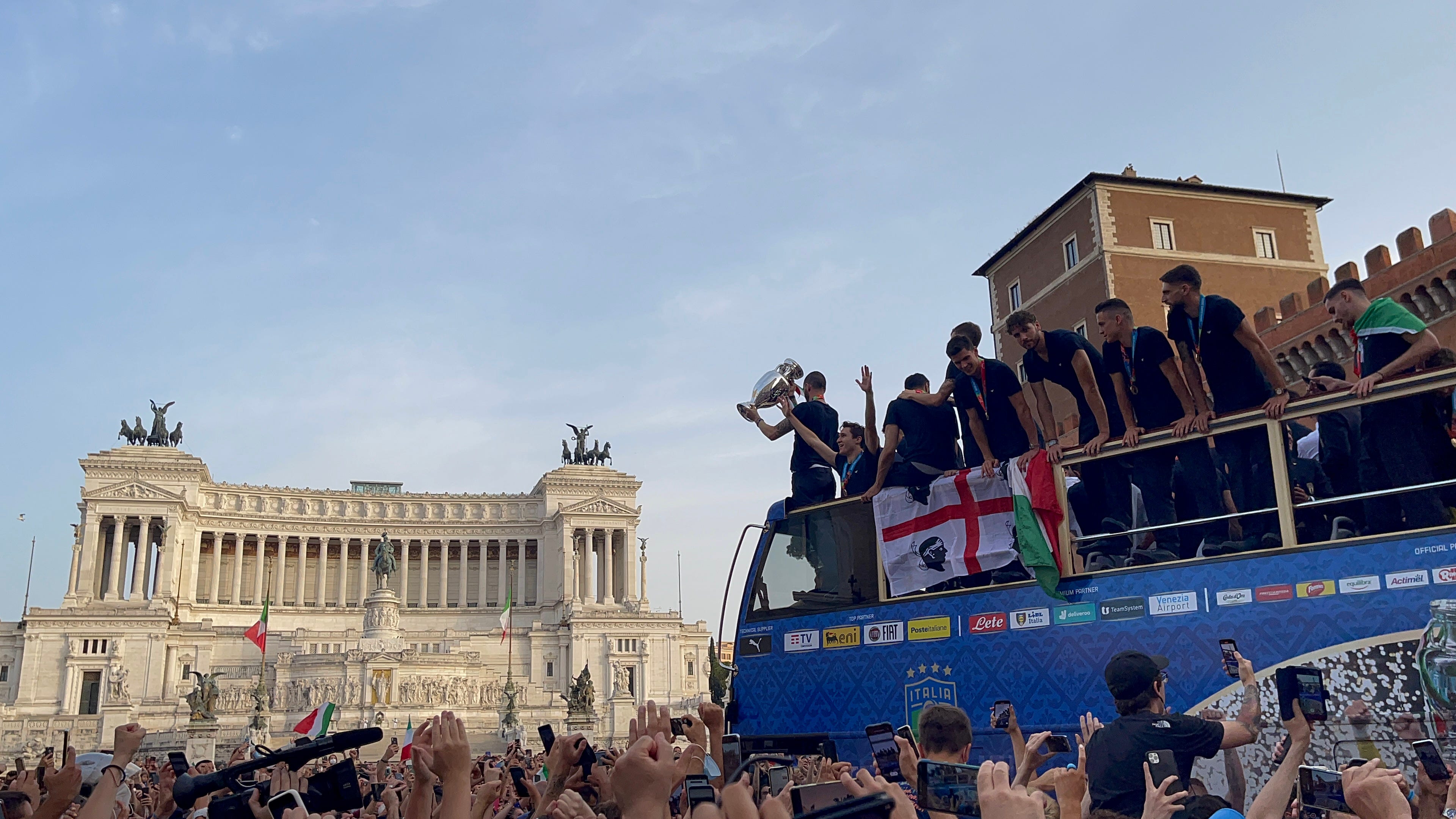
Italian football has made that pride harder to enjoy lately. Even the joy of Wembley in 2021 now sits among three World Cups we failed to reach. We have had far too much practice talking about what Italy used to be.
I feel that weariness. I am tired of needing an old match or an old name to explain why I believe so deeply in the country. So yes, this championship feels like vindication. There is pleasure in having something new to point to, in being able to say that an Italian is the best in the world at this, today, and then sit with the happiness of it.
The more I think about Kimi, though, the more I return to what makes him seem his age.
At Monza in 2024, he crashed within minutes of his first official Formula 1 practice session. He had barely turned eighteen. He apologized over the radio, and Toto Wolff answered, “Kimi, all good. All good, Kimi.”
It is easy to revisit that afternoon now, with a championship secured, and give it a reassuring place in the story. He had to live through it without knowing how things would turn out.
The following year, he took his first Formula 1 podium in Canada and went straight back to studying for his school exams. Mercedes let him take the trophy home. He put it in the living room and kept walking past it.
I love that detail. He described how seeing it there helped him realize what had happened.
In Mexico, after becoming world champion, he still couldn't find the words. “I’m speechless. I’m trying to process what has just happened.”
I hope he gets time to do that.
Plenty of people will be ready to tell him what this means for Italy, how long we waited, and how many people needed it. I am one of them. I have brought my own years of watching and hoping for his championship, along with an affection he will probably never know about.
He should get to enjoy being a young man who made his family proud. We can celebrate the end of seventy-three years without asking him to carry them for the rest of his career.
As for me, I find myself looking for his car now with the same instinct that has always drawn my eye to the Ferraris. His race matters to me before I have worked out what his result might cost them.
Ferrari is in my blood, but so is Andrea Kimi Antonelli.
Grazie, Kimi.
Business of Speed covers the business, technology, and lifestyle of racing: Formula 1, IndyCar, IMSA, WEC, NASCAR, and more. From Vincenzo Landino, entrepreneur, creator, and proud Italian-American, featured in Bloomberg, TBPN, Yahoo! Finance, Forbes, Adweek, and Front Office Sports. Find us on Instagram, Substack, and LinkedIn.
Ast last an Italiam champion!
The first time I saw Grand Prix cars was in 1956, when Stirling Moss and Jean Behra travelled to Melbourne - Albert Park - and I saw my first red Italian racing cars. Maseratis!
I hope one day Kimi will drive Ferraris, and that by then they will ave sorted out their support function for the pit crew and drivers!.