

Business of Speed is heading into the summer with momentum: 77% subscriber growth since the beginning of the year; we’re now seeing over 100,000 visitors to the site per month, and our podcast has featured incredible guests including Tony Kanaan, Will Buxton, Marshall Pruett, and freaking Mario Andretti! That growth means more eyes on our partners.
We run our sponsorships like an F1 team. We have Title Sponsorship, Principal Partners, Official Partners, and Technical Partners. So there’s no shortage of ways to get involved. These are integrated partnerships, not just banner ads. If that’s interesting to you or someone in your network, please reach out to partnerships@bizofspeed.com
I was supposed to be in West Sussex right now, watching a 1,000-horsepower electric prototype climb a narrow driveway at close to 150mph, chasing a record that didn’t exist four years ago.
Of course, life always has other plans. But the question I received more than I can count when I was talking to non-motorsport folks about the event was always the same.
What is Goodwood?
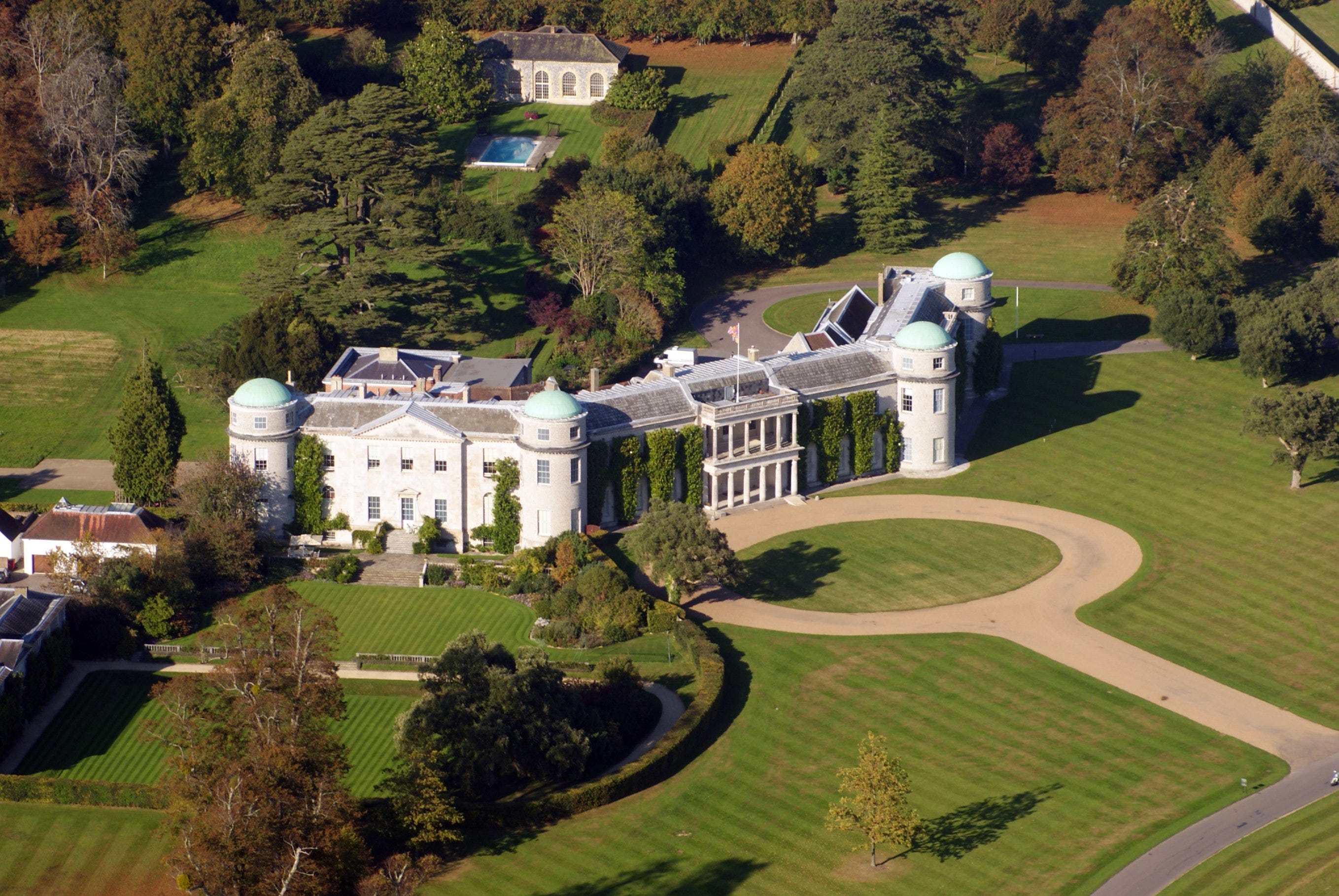
Goodwood Festival of Speed is a four-day motorsport festival held every July on the grounds of Goodwood House, built around a 1.16-mile hillclimb rather than a conventional circuit, and it now draws more than 200,000 people across the weekend.
The estate behind it is 11,000 acres in the South Downs, seat of the Dukes of Richmond since 1697, when the 1st Duke, an illegitimate son of Charles II by his French mistress Louise de Kéroualle, bought the Jacobean house he’d been visiting since he was seventeen. The Festival is the best-known thing to come off that estate today, but it’s just one of more than twenty-five businesses now running on it, alongside horse racing, two golf courses, an aerodrome and one of Europe’s largest organic farms. Nearly all of it traces back to a planning application that got turned down in the early 1990s.
RAF Westhampnett
Start with the circuit. The Festival of Speed only exists because of what happened to it.
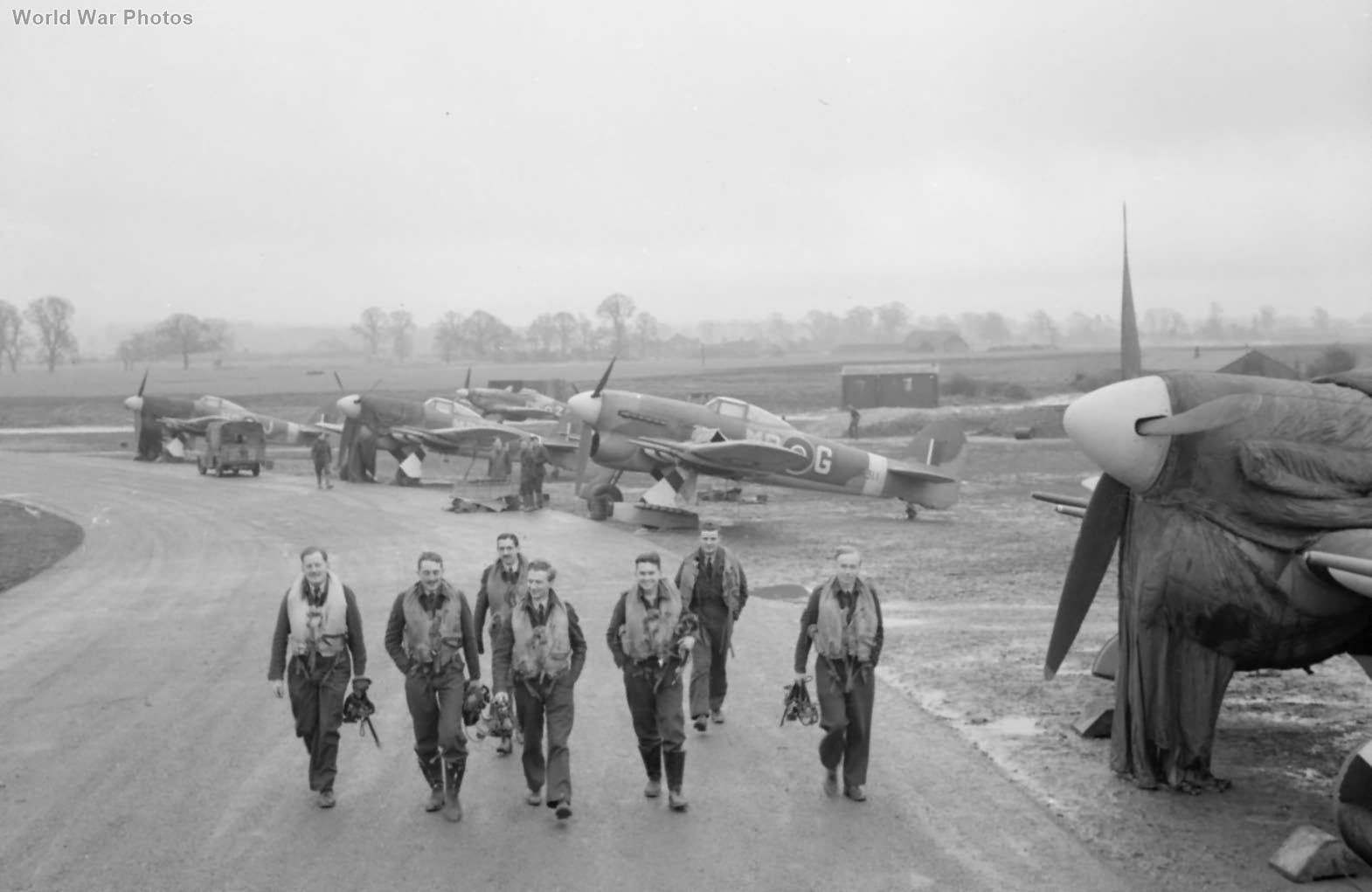
Goodwood Motor Circuit sits on the perimeter track of RAF Westhampnett, a Battle of Britain fighter station from which Douglas Bader flew his last sortie before he was shot down and captured. When the war ended, the 9th Duke of Richmond, an amateur racer known to everyone as Freddie March, turned the old airfield into a race track. March had won the Brooklands Double 12 in 1930 and designed car and aircraft bodies for a living. The circuit opened on September 18, 1948, with March himself driving a Bristol 400 around it. Eighty-five drivers and more than 15,000 spectators turned up. Britain hadn’t seen a motor race organized at that scale since Brooklands shut for the war nine years earlier.
Goodwood ran competitive racing for eighteen years. Cars got faster every season, and by the mid-1960s Freddie March had grown uneasy about exactly how fast. The last competitive meeting ran on July 2, 1966, and the circuit closed to racing that August. It remained in use as a test track and, eventually, as a venue for track days, but wheel-to-wheel racing didn’t return for 32 years.
In 1936, Freddie March had already run a private hillclimb up the Goodwood House driveway, for the Lancia Car Club, and won it himself in a Lancia Augusta March Special. His grandson doesn’t appear to have remembered that when he went looking for a way back into motorsport almost sixty years later.
The Stalling Tactic
Charles Gordon-Lennox, then Earl of March, began managing Goodwood in 1994, though he’d been living at the house and working on his plan for at least a year before the formal handover from his father. What he actually wanted was to reopen the circuit. The planning permission never came.
So he tried something smaller, and on paper much odder: invite people to bring historic racing cars and drive them up his own driveway, timed, in front of his house.
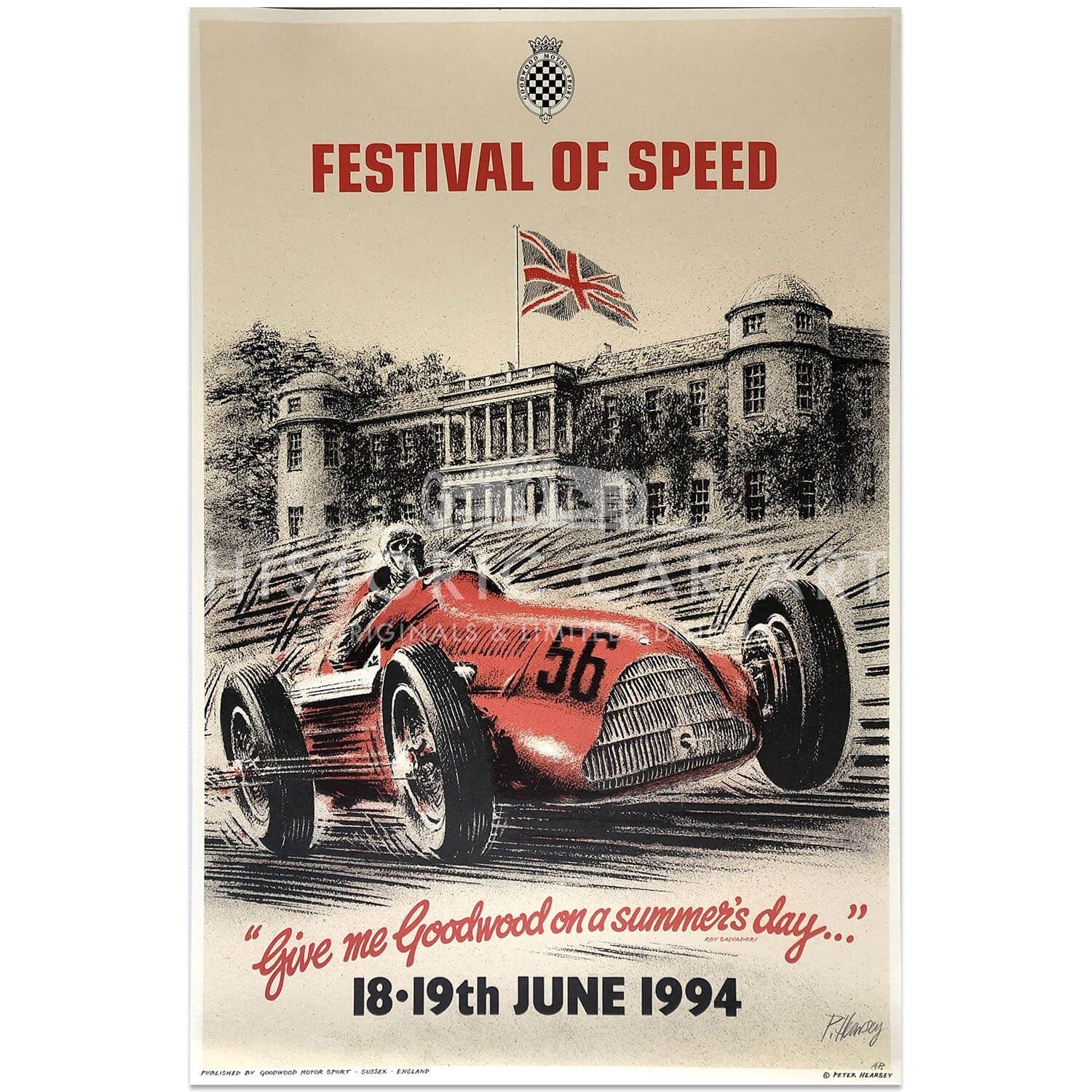
Andrew Frankel, then a young reporter at Autocar, drove down to interview him about it in the spring of 1993 and came away thinking the whole plan was faintly ridiculous. The road was narrow. It had no motorsport history that anyone could point to. Hillclimbing was a niche sport within a niche sport, and half the stately homes in England already ran some version of a car show on their lawns. March himself guessed 2,000 to 3,000 people might show up.
On Sunday, June 20, 1993, roughly 25,000 did, about ten times what he’d expected, though even that number is an estimate. As March told Frankel years later, “hardly any of them paid to get in.” The whole event ran a single day. There were 101 car entries and 32 motorcycles. The only sculpture on the lawn was an Aston Martin DB7 propped on a plinth, nothing like the towering Gerry Judah steel structures that now define the Festival’s look every summer. Sally Mason-Styrron drove a Ferrari 166 MM Barchetta up the hill first. Ron Dennis and Ken Tyrrell, then running McLaren and Tyrrell, ate off paper plates from the self-service canteen, sitting on the steps of Goodwood House.
It wasn’t all charming. In practice that same weekend, vintage motorcyclist Chas Guy was killed when his Vincent developed a steering wobble and threw him into a tree. Motorcycles haven’t been timed at the event since.
March later called the whole thing a stalling tactic: a way to reintroduce motorsport gently while he kept pushing to reopen the circuit properly. The stalling tactic outgrew the plan behind it. By 1998, Goodwood had given up on returning contemporary racing to the circuit and instead reopened it that September for the Goodwood Revival, a three-day meeting restricted to cars and bikes that could plausibly have raced there between 1948 and 1966, the only major event in the world staged entirely in period dress. A second circuit meeting, the Members’ Meeting, followed in 2014, covering cars from after 1966 that the Revival’s rules leave out. Silverstone, England’s other great post-war motor racing venue, spent the following three decades fighting just to keep a single Grand Prix weekend solvent. Goodwood spent them turning one rejected planning application into three separate events: a hillclimb that never needed the circuit at all, and two more meetings once the circuit itself finally reopened.
Molecomb
The hill itself climbs 1.16 miles past Goodwood House, and its defining feature is Molecomb, a tight right-hander that arrives without warning after a blind brow. Andrew Frankel, who has covered the event since that first year, put it better than most: Molecomb’s hay bales, he wrote, “have surely collected a far greater number of motor sporting heroes” than Montreal’s Wall of Champions ever has.
The hillclimb record has moved fast over the last decade. Nick Heidfeld set the timed shootout mark in 1999 at 41.6 seconds in a modified McLaren MP4/13, a car whose team is now worth more than Ferrari by some measures. Romain Dumas broke 40 seconds for the first time in 2018, running 39.90 unofficially in Volkswagen’s electric ID.R prototype. Then, in 2022, Max Chilton, a former F1 and IndyCar driver, took McMurtry Automotive’s Spéirling, a sub-1,000kg fan car that generates more than 4,400 pounds of downforce even standing still, up the hill in 39.08 seconds before over 150,000 spectators. It beat both marks at once. It was the first fan car to compete in sanctioned motorsport since 1978, and it has never lost.

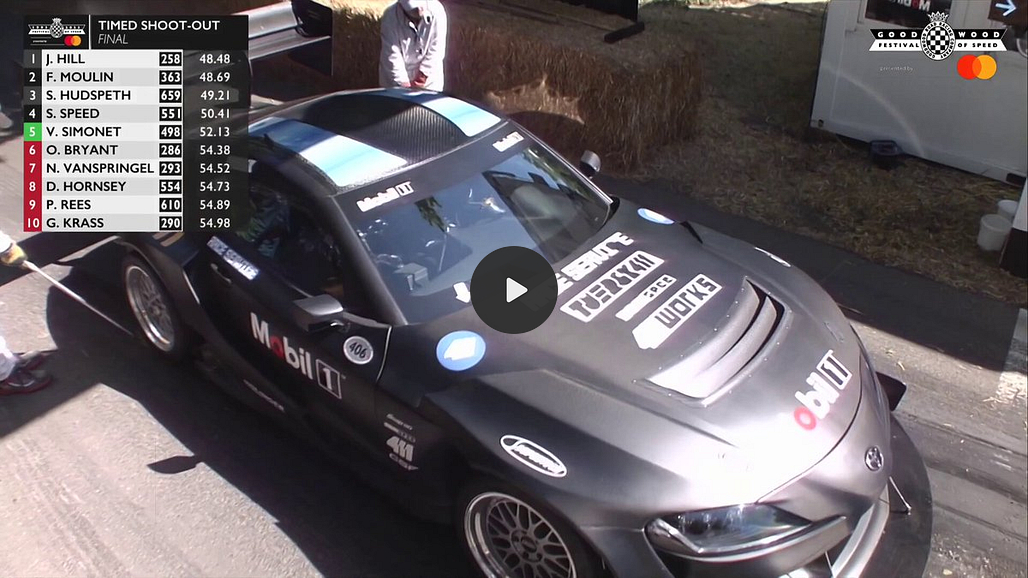
None of this is risk-free theater. In 2000, driver John Dawson-Damer lost control of his Lotus 63 and crashed into the finish-line gantry, killing himself and marshal Andrew Carpenter, and severely injuring a second marshal, Steve Tarrant, who lost a leg in the accident. A loose tire struck spectators in 2023, though no one was seriously injured. After an unticketed crowd of 158,000 showed up in 2003, Goodwood switched to advance-ticket-only admission and has capped daily attendance at 150,000 ever since, one of the few motorsport events anywhere that deliberately limits its own crowd instead of chasing a bigger one.
What Manufacturers Pay For
The Geneva International Motor Show once pulled 600,000 visitors and 120 exhibitors into 120,000 square meters of exhibition space over an eleven-day run. It canceled its 2020 edition when COVID hit, never recovered afterward, and was effectively wound down as a Swiss event, unable to compete with the shows in Paris and Munich. Frankfurt’s IAA relocated to Munich after its 2019 edition, following years of shrinking exhibitor lists. Goodwood has no exhibition hall at all. It has a lawn, a hill and four days in July, and this year that’s enough to host the world debut of BYD’s Denza Z electric supercar, the production debut of the manual-transmission Hennessey Venom F5-M, a bespoke Rolls-Royce Phantom Regatta, Alpine’s electric A110 FUTURE concept, and Ford firing up its new Le Mans hypercar in public for the first time. Manufacturers keep choosing a hillclimb over a convention center because Goodwood sells noise, smell and direct access to the people who actually buy their cars, rather than a static stand wedged between a coffee kiosk and a rival’s booth.
The clearest evidence of what that access is worth sits a few hundred yards from the hill itself. BMW’s relationship with Goodwood, built over years of Festival of Speed participation, eventually led the company to put its Rolls-Royce production line on the estate: a 22,500-square-meter, Nicholas Grimshaw-designed factory that cost £60 million (about $78 million) to build, employs 800 people, and is landscaped with 400,000 trees so it can’t be seen from the road. Few relationships that start at a car show end with a permanent factory built a few hundred yards from where the cars were parked.
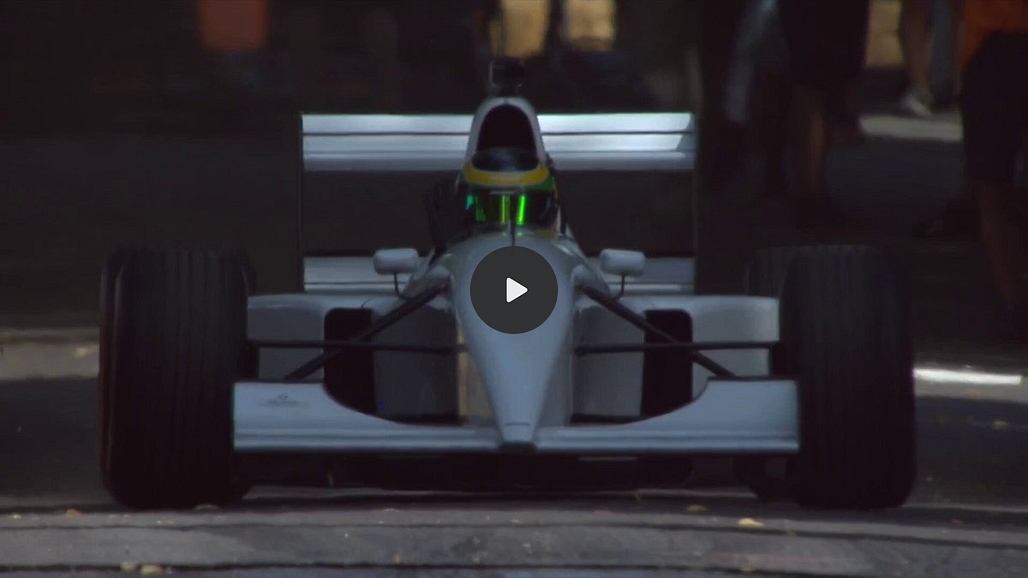
Gene Haas has driven his own team’s VF-23 up the hill himself, one of a growing list of F1 owners and principals who treat Goodwood as a place to show up in person rather than send a car and a hospitality tent. Red Bull, McLaren, Sauber, Williams and Haas are regulars. The Goodwood Revival, the historic-only meeting held every September, brought together a collection of cars and bikes worth roughly £1 billion in 2025 alone, a figure that says as much about what Goodwood does to classic car values as it does about what collectors already owned before they arrived.
The money underneath all of it is real, if only partly visible. The Duke of Richmond has described Goodwood's finances as those of "a little conglomerate," a group of small, connected businesses that only work together because they share one address and, in his words, because "we're passionate about all of them."
By his own account, estate turnover climbed from around $10.4 million (£8 million) when he took over to more than $78 million (£60 million) within about two decades of active diversification. The Goodwood Estate Company reported $119 million (£91.5 million) in revenue for 2016 and $177 million (£135.9 million) for 2023, though pre-tax profit that year fell to $4.4 million (£3.4 million) from $11.2 million (£8.6 million) as inflation pushed up costs and the group deliberately spent an extra $2.6 million (£2 million) on building repairs. Hospitality packages for the Festival itself start at $765, or roughly £589.
None of these filings break the Festival of Speed out as its own line item. Goodwood Road Racing Company Limited, the entity that actually runs it, bundles motor racing, horse racing, motorcycle events and aviation into one set of accounts, the same kind of disclosure gap that makes it hard to say what any single race weekend is worth on its own anywhere on the calendar.
On Its Own Level
Adam Waterworth became Goodwood’s group chief executive in October 2024, promoted after 14 years in the business, taking over from Chris Woodgate, who had run it for 7 years. The Duke of Richmond, who became the 11th Duke when his father died in September 2017 at 87, remained chairman. Management now runs two layers deep at a business that turns 33 this summer, which matters more to its odds of survival than any single hillclimb record.
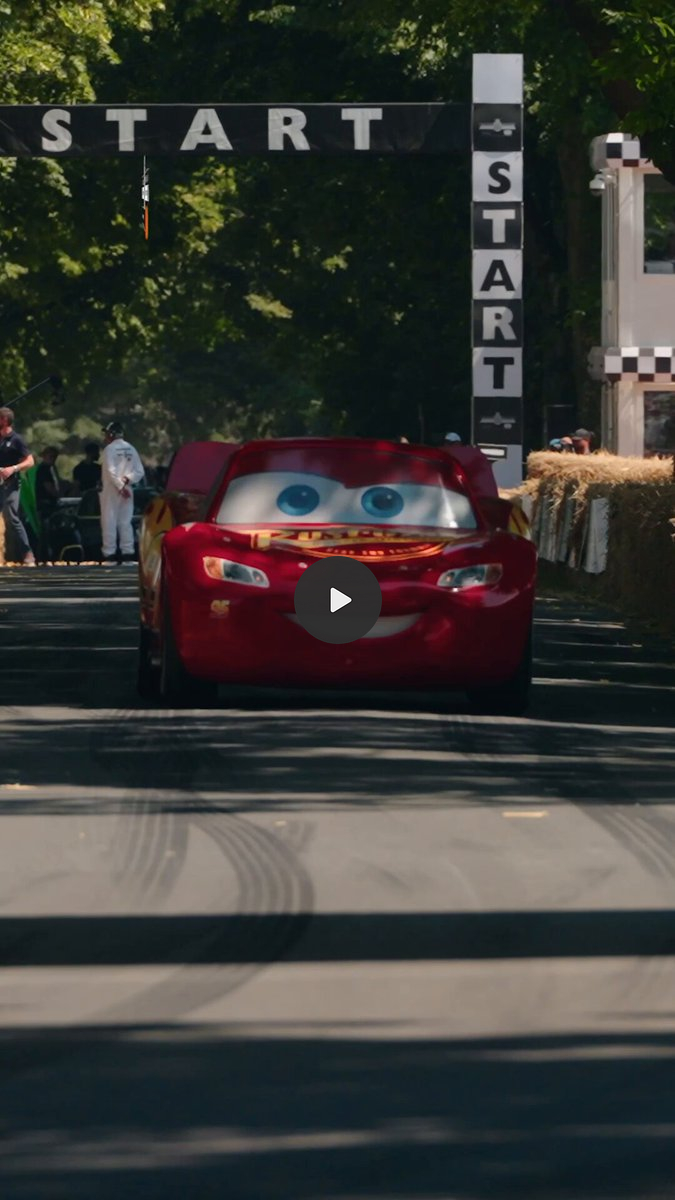
No rival festival is coming for Goodwood. Nobody else owns 11,000 acres, a house Charles II’s son bought in 1697, and three decades of goodwill with every car manufacturer on the planet. What Goodwood has to manage instead is its own arithmetic: 150,000 people a day, sold out months in advance, hospitality packages that start around $765 and climb fast from there. Demand for one driveway in West Sussex will keep outrunning what that driveway can physically hold, and sooner or later that forces a choice between raising prices further, expanding the footprint, or telling some share of next July’s applicants they’re not getting in. Thirty-three years of history suggests which way the Duke leans: toward keeping the thing scarce, because scarcity is what built everything else on the estate. My bet is he holds that line rather than widen the gates.