


This Sunday dispatch brought to you by Omologato UK

This newsletter is made possible through the support of our subscribers and our partners. When you support our partners, you’re supporting independent media like Business of Speed. We recently had Omologato founder, Shami Kalra, on the podcast. Use partner code BOS10 on your Omologato purchase to let them know we sent you.
Imagine: it’s late-afternoon sun cutting through the Ardennes. A 2.4-liter turbocharged V8 hits full power out of Eau Rouge, and the sound reaches the grandstands a full beat before the car does. That guttural, chest-rattling scream that makes 120,000 people go quiet for half a second, then very loud. The fuel burning through those eight cylinders is 100% carbon-neutral, synthesized from non-food biomass and municipal waste.
This scenario is a real engineering proposal gaining traction inside F1’s manufacturer working group right now. While the paddock digests the controversial 2026 regulations and the April calendar break stretches on, the conversation that matters has already moved past this season’s power units. Multiple manufacturers are pushing a 2.4-liter turbo V8 running fully sustainable fuel as the next regulation framework. Stefano Domenicali is on the record supporting it. The engineering case is strong. The politics are messy. And the timeline keeps shifting.
Where Things Stand with 2026
The current regulations are locked. A 1.6-liter V6 turbo hybrid, MGU-H deleted, roughly 50/50 power split between internal combustion and electric output, running 100% advanced sustainable fuels from race one. Aramco developed those fuels from non-food biomass and renewable feedstocks as part of F1’s net-zero 2030 commitment. The fuel chemistry works. Drop-in compatibility is genuine, per Formula1.com’s technical documentation. No engine redesign required.
The hybrid architecture is where the trouble lives. Pre-season testing surfaced behaviors that made drivers uncomfortable: super-clipping, which electronically curtails power to protect battery state; energy recovery sequencing through fast corners that disrupts the car’s feel; and a layer of software management that pushes decisions away from the cockpit. Max Verstappen publicly said what several others had said in engineering debriefs. The 2026 package addresses sustainability while creating a racing product that concerns the people who actually have to drive the cars.
What’s on the Table
Reporting from AMuS and The Race through April 2026 has put enough detail on the record to take this seriously.
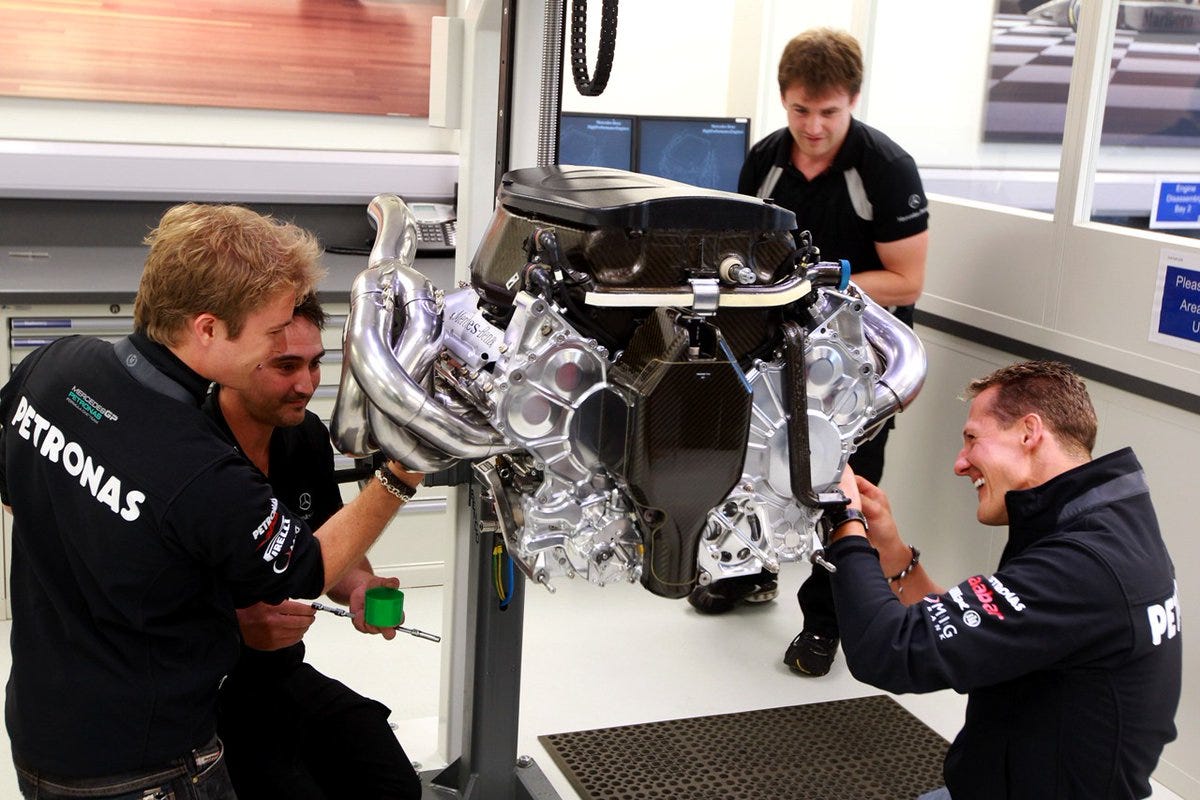
The configuration gaining the most support: a 2.4-liter turbocharged V8 running 100% sustainable fuel, with a simplified hybrid component contributing between 10 and 30 percent of total power output, roughly 220 to 240 kilowatts. That’s a deliberate reduction from the 2026 architecture, where electric power handles nearly half the output. The design goals are specific: cheaper to develop, lighter to package, louder at full rev, and more reliable across a race distance. A naturally aspirated version remains in discussion, but the turbo V8 has the stronger coalition behind it.
The timeline has already moved twice. Early conversations targeted 2029, limiting the 2026 framework to just three seasons. That window closed when the engine summit was postponed. Consensus is now forming around 2031, though 2030 stays alive if this year’s racing product underdelivers badly enough to accelerate the political calendar.
Domenicali told The Race in August 2025: “Sustainable fuel, [and] a V8, I think, is great. And hybridization is, I do believe, the next step of the future.” Fan polling backs him up. An 86% approval rate for a V8 or V10 paired with sustainable fuel is about as close to a mandate as this sport’s audience ever delivers. That kind of consensus gives the commercial side powerful ammunition in negotiations with reluctant manufacturers.
What This Changes
Sound is the headline, and it matters more than the engineering community wants to admit. The 2.4-liter V8 turbo at high revs produces a visceral frequency the current V6 hybrids simply cannot generate. Fans have been saying this for a decade. Attendance and broadcast engagement both correlate with on-track spectacle, and acoustics are a bigger component of spectacle than any technical white paper will acknowledge.
The business case runs deeper. A simplified powertrain lowers development costs, lowers the barrier to entry for new engine suppliers, creates more competition on the grid, and generates more commercial value across the entire F1 commercial ecosystem. The MGU-H deletion in 2026 was already a step in this direction. A KERS-style hybrid in a V8 framework goes further. More manufacturers, more diversity, more sponsorship inventory, more deals.
Driver agency recovers, too. When battery management software handles less of the power delivery equation, throttle application, and braking precision carry more weight. That produces a more watchable race and a more marketable champion.
The risks are real. Audi structured its entire F1 entry around the 2026 hybrid architecture, matching Volkswagen’s electrification narrative. Rewriting the power unit regulations within five years forces Audi to either defend billions in sunk costs or publicly pivot its corporate story. Honda faces a version of the same problem. And F1 itself carries scars from rushed regulatory packages. The 2026 rules were themselves a response to the complexity and cost problems of the hybrid era. Repeating that cycle would be a governance failure, and the sport’s credibility with manufacturers would take years to rebuild.
What Happens Next
No final decision exists. The signal to watch is whether Honda and Audi soften their opposition before the end of this year. If both hold firm through 2026, the 2030 window effectively closes, and 2031 becomes the default.
The 2026 racing season is the other variable. If the on-track product confirms what pre-season testing hinted at, political will for an earlier reset builds fast. If the cars produce great racing despite the software-heavy architecture, urgency fades.
Here’s where I land: the V8 happens. The timeline falls to 2031, with an outside chance of moving to 2030 if this season disappoints. The bigger question is whether Audi’s participation survives the transition. We’re watching the early stages of the next engine war form in real time. We can only hope this quiet phase of F1 engines ends soon.
IMSA’s Record-Breaking Sebring Weekend
The 74th Mobil 1 Twelve Hours of Sebring drew over 115,000 fans across four days, March 18 through 21, shattering the event’s all-time attendance record. This follows a record-breaking Rolex 24 at Daytona in January, and the trajectory is accelerating in a way that deserves attention from anyone tracking where motorsport audiences are actually showing up.
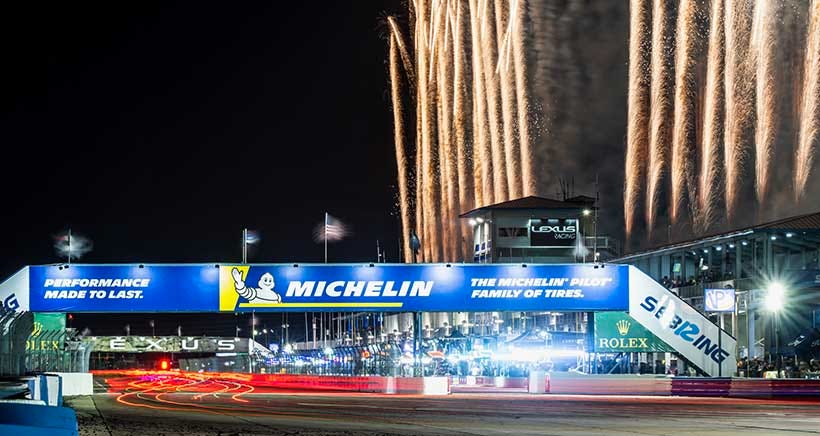
On the bumpy concrete of Sebring International Raceway, Roger Penske’s Porsche Penske Motorsport squad locked out the top two positions in the GTP class. Porsche’s 20th overall Sebring victory, executed over twelve hours with the kind of clean strategy that reminded everyone why Penske bought into prototype racing this aggressively.
IMSA shares a weekend with IndyCar at Long Beach coming up next. If that event continues this attendance curve, the growth story around U.S. sports car racing moves from promising to undeniable. Great racing, sustainable fuel programs, and fan-first event production. Full grandstands. F1’s future engine planners would be wise to study why.
This Sunday dispatch brought to you by Omologato UK
This newsletter is made possible through the support of our subscribers and our partners. When you support our partners, you’re supporting independent media like Business of Speed. We recently had Omologato founder, Shami Kalra, on the podcast. Use partner code BOS10 on your Omologato purchase to let them know we sent you.