

Every week, we publish a series called CAPITAL MOVES, a look into the off-track investments of individuals involved in the world of racing. Be sure to check out previous editions.
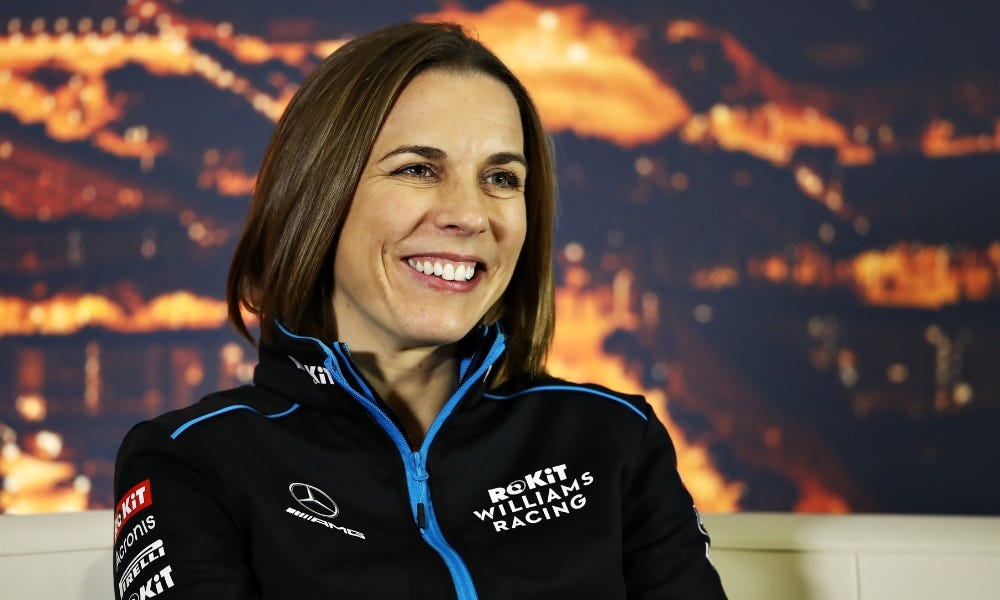
“Character—the willingness to accept responsibility for one’s own life—is the source from which self-respect springs.” Joan Didion wrote that in Vogue in August 1961, in an essay she’d later retitle “On Self-Respect,” about self-respect that had nothing to do with motorsport, debt, or inheritance. It’s still the cleanest way to describe what Claire Williams did between 2011 and 2020.
Williams Racing needed capital she didn’t have, so in August 2020 Claire Williams put her name on the document that ended 43 years of family ownership, in public, as the face of the decision, so the cars, the factory and the workforce could keep racing on someone else’s money.
The Investor Relations Officer
Williams Grand Prix Engineering was always a family story.
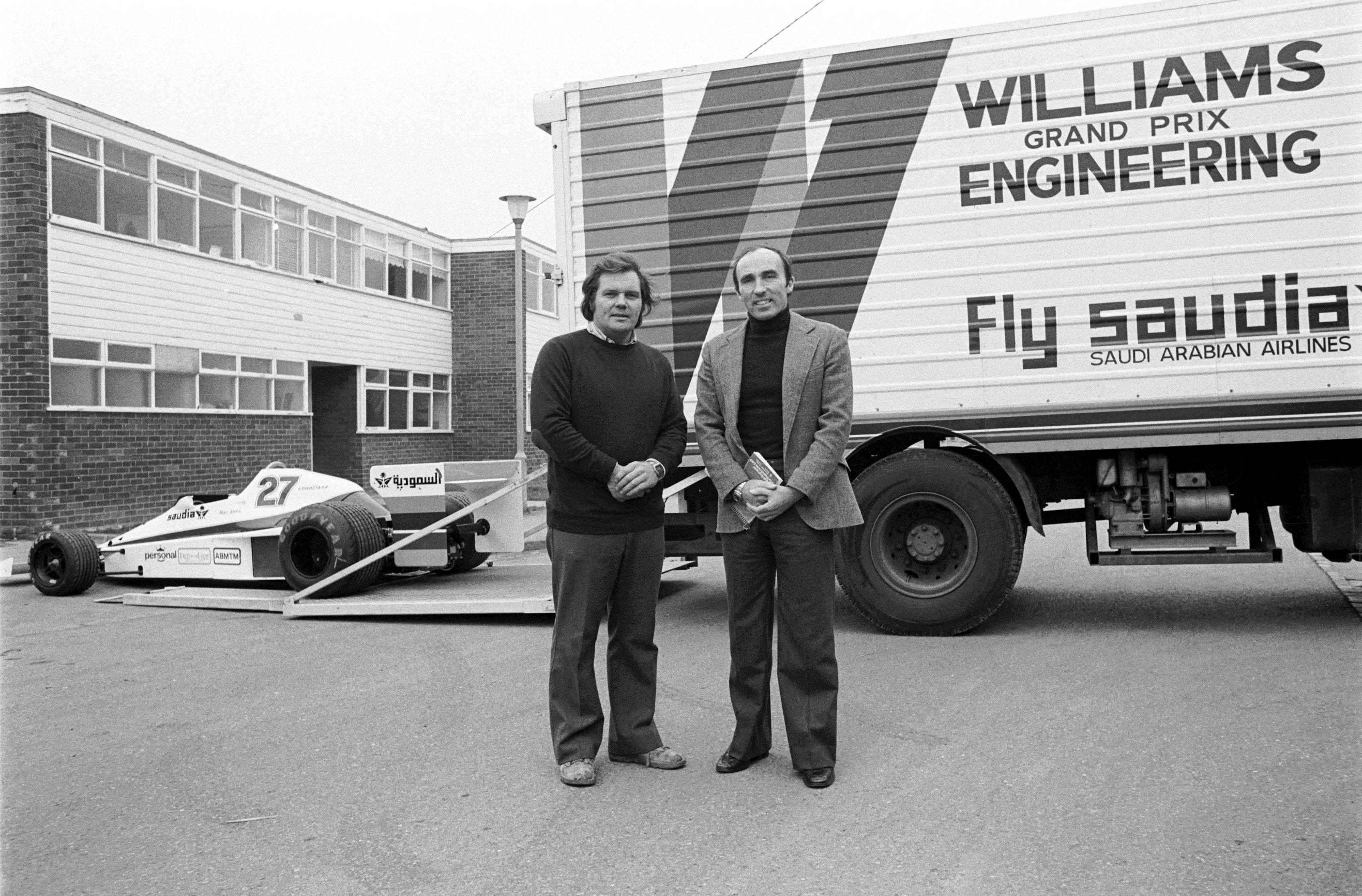
Frank Williams founded it with Patrick Head in 1977, and Head ran engineering, first as technical director, later alongside Adrian Newey as chief designer, through the run of championship cars that carried Nigel Mansell, Alain Prost, Damon Hill and Jacques Villeneuve to titles.
The pair funded the team with prize money, sponsorship prepayments, and loans from friends. By the time Claire joined the team’s press office in 2002, Williams had already won seven drivers’ championships and nine constructors’ titles, a run it hasn’t matched since.
She wasn’t building something from nothing. She inherited the job of running something people already loved, a piece of motorsport history three generations of fans had grown up on. She took the job just as the sport turned hard against any team without a manufacturer or a billionaire behind it.
The first real capital-markets decision with her name on it came on March 2, 2011, when Williams Grand Prix Holdings listed on the Frankfurt Stock Exchange’s Entry Standard segment. It was the first Formula 1 team in history to go public. The offering floated up to 27.39% of the company’s shares in an indicative range of €24 to €29 each, roughly $33 to $40 at the time. Claire Williams was the company’s named Investor Relations officer on the filing, the actual contact listed on the regulatory announcement.
Frank Williams kept majority control. Patrick Head, who’d held stock since the late 1970s, sold most of his in the float, dropping from 27% to about 6%. Toto Wolff, who’d bought roughly 15% of the team in 2009 and taken a board seat, held onto his shares. He wouldn’t move to Mercedes for another two years. The bet underneath all of it was that public capital markets, not just sponsorship and prize money, could fund a Formula 1 team’s survival. No other team on the grid has tried it, before or since.
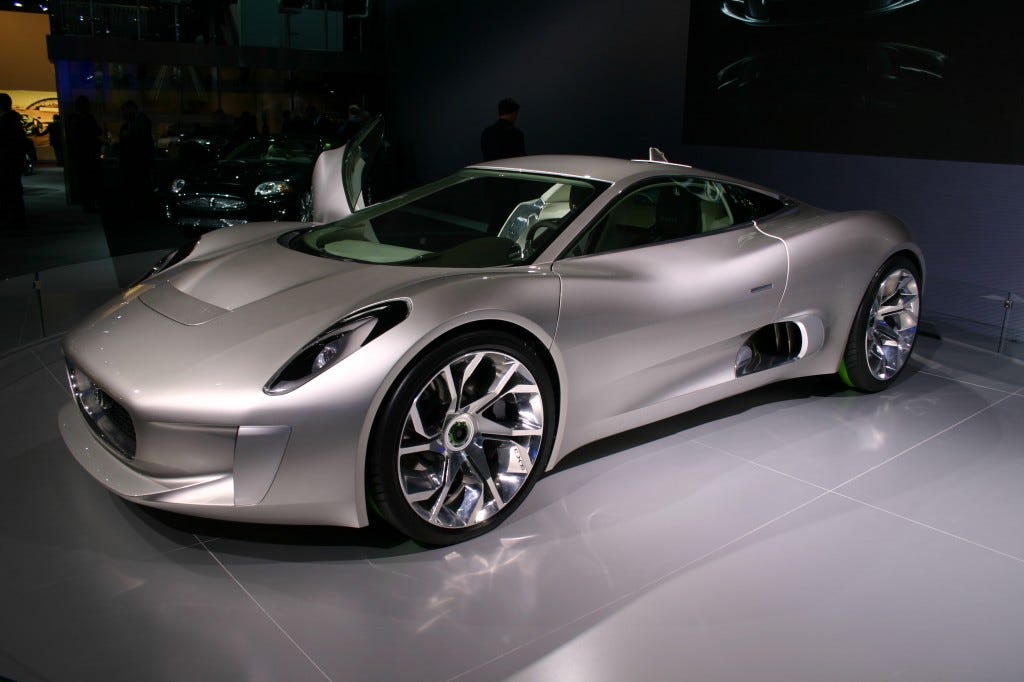
For a few years, the bet looked sound. Williams signed a technology partnership with Jaguar Land Rover to co-engineer the C-X75, a hybrid hypercar planned for a run of 250 units, and brought on Petroleos de Venezuela as a sponsor. Williams Advanced Engineering, the commercial spin-off applying F1 technology to automotive, aerospace, marine and healthcare clients, grew into a real second business, eventually employing more than 300 people across over 40 projects. The C-X75 never reached a single customer. It was canceled before production began.
In March 2012, Frank Williams stepped down from the board, though he kept the Team Principal title, stayed on full-time, and remained the majority shareholder. His daughter took his old board seat that April, as director of communications and marketing. On March 27, 2013, she was appointed deputy team principal, the de facto head of one of the grid’s most storied teams and one of only two women ever to run a Formula 1 team.
Outrunning the Car
The commercial side outran the car for a while. Claire negotiated a multi-year sponsorship with Unilever’s Rexona brand and, in 2014, brought in Martini as title sponsor through the end of 2018, a deal industry sources put at $15 million a year. Neither Williams nor Martini’s parent, Bacardi, ever confirmed the number. The team backed it up on track. A new Mercedes engine deal in 2014 pushed Williams to third in the constructors’ championship that year, and again in 2015, its best finish since 2003.
Then the car and the numbers collapsed together. Williams finished last in the constructors’ standings in both 2018 and 2019, scoring one point across the entire 2019 season. The company’s own annual report called it back-to-back last-place finishes, the worst run in the team’s history.
The racing side of the business felt it just as hard. Formula One segment revenue, the team’s own racing operation, not the group total that folds in Advanced Engineering, fell from $174.5 million (£130.7 million) in 2018 to $121.9 million (£95.4 million) in 2019. Segment EBITDA went from $21.4 million in the black to $12.9 million in the red. Group EBITDA, the number that actually reached the board, swung from a $17.2 million profit to a $16.6 million loss. Williams Grand Prix Holdings still closed the year with a $24.5 million net profit on paper, only because selling 75% of Advanced Engineering a week before New Year’s booked a one-time $45.8 million gain that covered the trading loss underneath it. A team that had gone public in 2011 to raise growth capital couldn’t fund its own competitiveness, and needed an asset sale just to keep the balance sheet presentable.
Triage
On December 24, 2019, CEO Mike O’Driscoll sold 75% of Advanced Engineering, the group’s most viable commercial asset, to EMK Capital, keeping a 25% stake for Williams. The price was never officially disclosed. One deal-tracking database later put it at roughly £47.7 million. The point wasn’t the number. It was freeing up cash for a racing team that couldn’t fund itself anymore.
The scale of what that sale gave up became clear two years later. In January 2022, EMK Capital and Williams Grand Prix Engineering together sold the rest of Advanced Engineering, including the 25% Williams had kept, to the Australian mining company Fortescue for $223 million (£164 million). By then Dorilton Capital had owned Williams Grand Prix Engineering, and everything still sitting inside it, for a year and a half. The family that built the business was already gone. None of the 2022 windfall touched them.
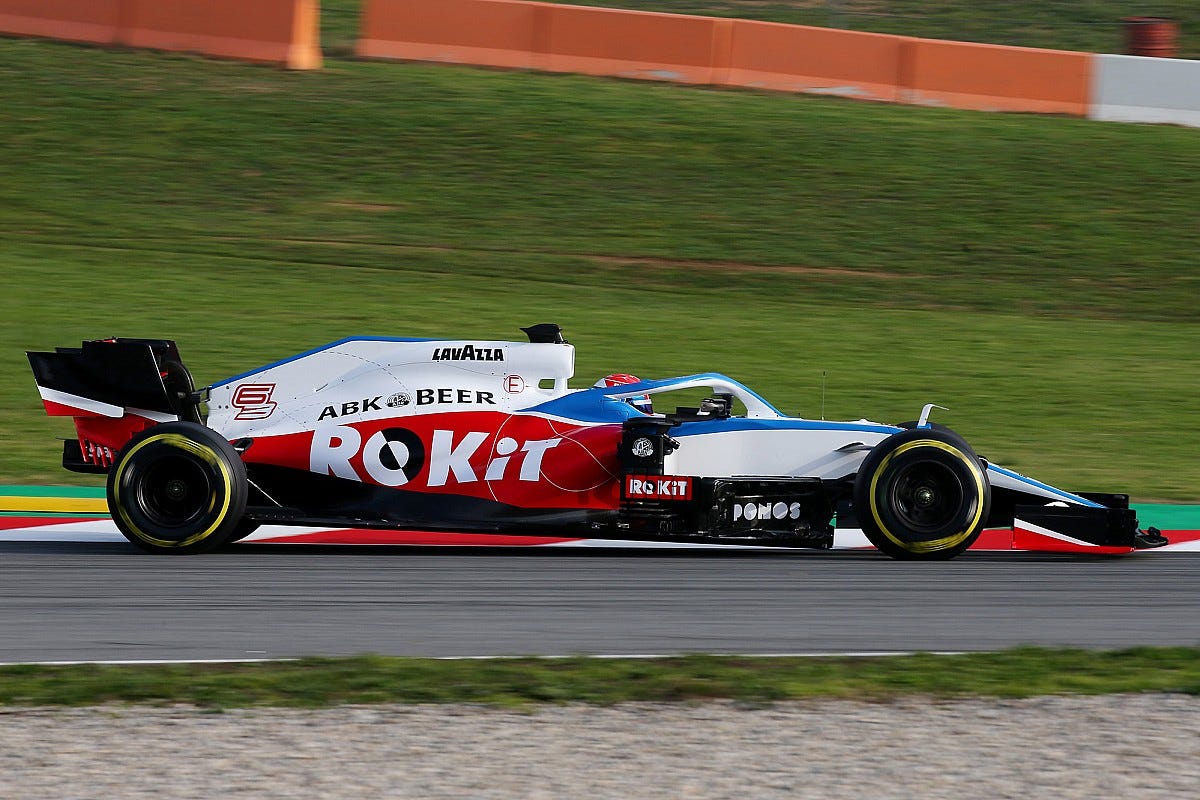
Then came ROKiT. Jonathan Kendrick and John Paul DeJoria, the American billionaire behind Paul Mitchell hair care and Patrón Tequila, founded it in 2018 out of Pacific Palisades, California, selling budget smartphones, Bavarian beer, tequila and telemedicine bundles under one roof, a genuinely strange business to be putting its name on a Formula 1 car.
The fit showed. ROKiT signed on as Williams’ title sponsor in January 2019 at roughly £13.5 million a year, about $17.2 million, then extended the deal that July to run through 2023. When COVID threatened to gut the 2020 calendar, ROKiT offered to pay a reduced fee. Williams, already carrying roughly $11.5 million (£9 million) in trade debtors and deferred income tied to ROKiT’s 2020 sponsorship and mid-negotiation with prospective buyers, couldn’t absorb another shortfall. Williams terminated the contract in May 2020. It cost the team its only title sponsor. Williams would race without one for the next five years, until Atlassian signed on for 2026.
Williams took ROKiT to the London Court of International Arbitration and won: a final award of £26.2 million plus a flat $1 million, worth about $35.7 million when the tribunal ruled in October 2021. A US federal court confirmed the same award in December 2022, by which point the pound had cratered against the dollar after the UK’s gilt crisis that September, and the same £26.2 million converted to just $33.25 million. The debt hadn’t shrunk. The currency had.
ROKiT countersued for $149 million in April 2023, in Florida federal court, alleging Williams had fraudulently oversold the 2019 car’s competitiveness, including the hiring of technical director Paddy Lowe, to get the sponsorship signed in the first place. The suit named Claire Williams personally, alongside former CEO Mike O’Driscoll and CFO Doug Lafferty. Williams called it spurious and pointed to the arbitration win.
By then the team was running on borrowed time in a literal sense. Michael Latifi, the Canadian food magnate whose son Nicholas drove for the team, extended $45 million in loans through his Ontario company, Latrus Racing, secured against collateral appraised at roughly $62 million: the team’s headquarters, its race entry, and a fleet of more than a hundred historic F1 cars dating back to 1978. In default, Latifi would have owned everything Frank Williams had built, historic cars and all.
With COVID gutting 2020’s commercial rights income on top of everything else, Williams announced a formal strategic review in May 2020, the low-key corporate term for what everyone in the paddock knew meant: we are for sale.
August 21, 2020
Dorilton Capital acquired Williams Grand Prix Engineering for $179.5 million (€152 million). Dorilton is a New York-based private investment firm co-founded in 2009 by Matthew Savage, a 22-year Rothschild veteran who advised on M&A and restructuring in London and New York, and Darren Fultz, who spent years in Rothschild’s corporate finance practice before founding the firm with him.
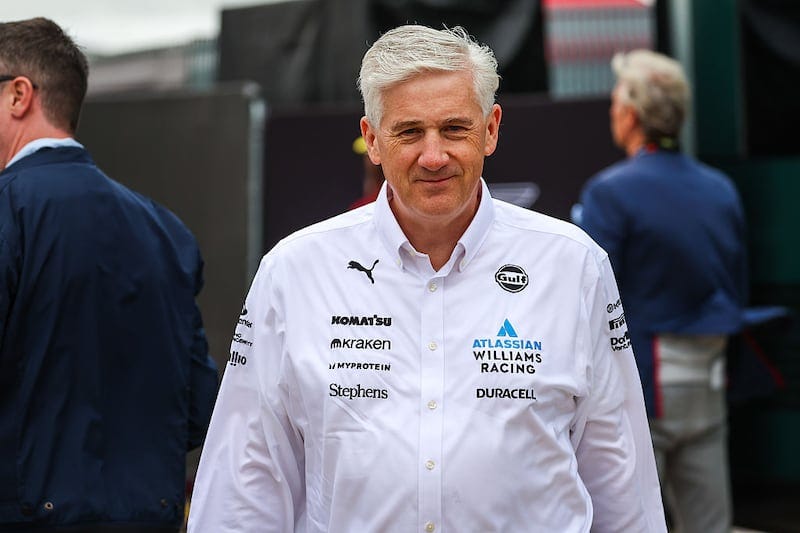
Dorilton operates as a family office, deploying the founders’ own capital instead of managing outside money. No investment committee, no pressure to flip the asset on somebody else’s timeline. At a smaller scale, it looked like the patient ownership Williams itself once represented, not the quick-flip private equity that had circled the F1 paddock for years.
After debts were settled, Williams Grand Prix Holdings had about $132 million (€112 million) left to return to shareholders. Frank Williams held a 52% stake at the time of the sale. The roughly $47 million gap between what Dorilton paid and what shareholders actually received is the cost of the debt the family had piled up keeping the team alive through 2018 and 2019.
A company valuable enough to list on a public exchange in 2011 sold nine years later for a fraction of what it would soon be worth again.
Under Dorilton, with hundreds of millions of dollars invested, Williams’ value has moved into a different universe. Sportico put it at $2.14 billion in November 2025, then at $2.08 billion in a follow-up piece months later. Forbes had it at $2.5 billion on $245 million in revenue around the same time. The exact number depends on who’s counting, but every count lands multiples above what Dorilton paid, in the same stretch of valuations that has McLaren trading places with Ferrari for most valuable team on the grid. The team enters the 2026 season, its 49th, rebranded as the Atlassian Williams F1 Team, having sold naming rights to the Australian software company in what Williams called the biggest commercial partnership in its history, part of the same wave of tech and fintech sponsors remaking F1’s paddock. Call it $2 billion or $2.5 billion: it’s roughly eleven to fourteen times the $179.5 million Dorilton paid five years earlier. Claire Williams has since said the house her father built could fetch $2 to $3 billion in today’s market. She wasn’t wrong.
Claire, Capital & Consequence
Neither of the following numbers comes from a financial filing, a probate record, or anything sworn. They’re the only public estimates that exist, from celebrity-wealth trackers with no disclosed sourcing, so treat them as directional, not exact. Claire Williams’s personal net worth is put at somewhere between $15 million and $20 million, built mostly from salary and consulting income rather than any windfall from the sale. Frank Williams’s estate was estimated at around $200 million when he died in November 2021, the accumulation of four decades as majority owner. She never got an equity payday. He had one for most of his life. That gap, even allowing for how soft both numbers are, says something true about who absorbed the cost of keeping Williams alive and who got to walk away from it decades earlier with the money already banked.
Eleven weeks after stepping down, on November 24, 2020, she incorporated Claire Williams Consulting. She now advises brands entering Formula 1, speaks on the corporate circuit, and serves as global brand ambassador for Fortescue Zero, the renamed remnant of Williams Advanced Engineering, the division the company sold to survive 2019. She’s also back on screen, returning as an analyst for Drive to Survive’s seventh season.
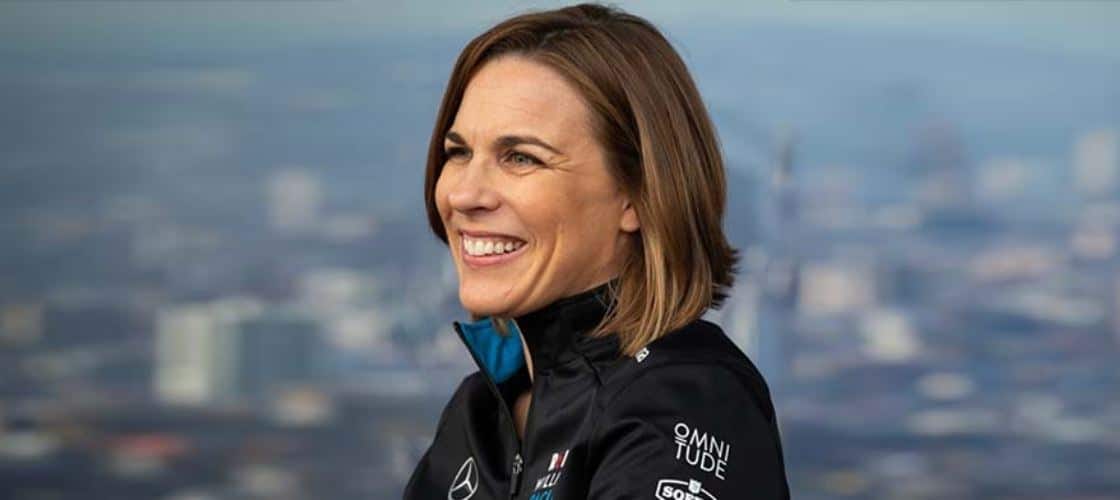
She holds an OBE, awarded in 2016 for services to Formula One, and serves as Vice President of the Spinal Injuries Association, the charity that supported her father after the 1986 road accident that left him paralyzed for the last 35 years of his life.
In a March 25, 2026 interview with City AM, she didn’t rule out a run for Parliament someday, calling politics something she’s “always been interested in” and might “pursue as a career.” Asked about ever owning a piece of Formula 1 again, she didn’t hedge as much: “If I could wave a magic wand and have Williams back and run it as our family team again, then that would probably be my biggest dream. I would love to do that. I don’t have the money, and I don’t know if anyone is going to bet their dollars on me.”
The team her father built is worth somewhere between $2 billion and $2.5 billion today. Claire Williams put her name on the statement that ended her family’s ownership of it for $179.5 million, a fraction of that, because the alternative was watching it die under the family’s own name. Didion wrote that self-respect springs from the willingness to accept responsibility for one’s own life. Claire Williams accepted responsibility for one of the costliest, most public decisions in the sport’s business history. By that measure, she came out of it with more than most people who made far more money off Formula 1 ever will.

