

Picture this.
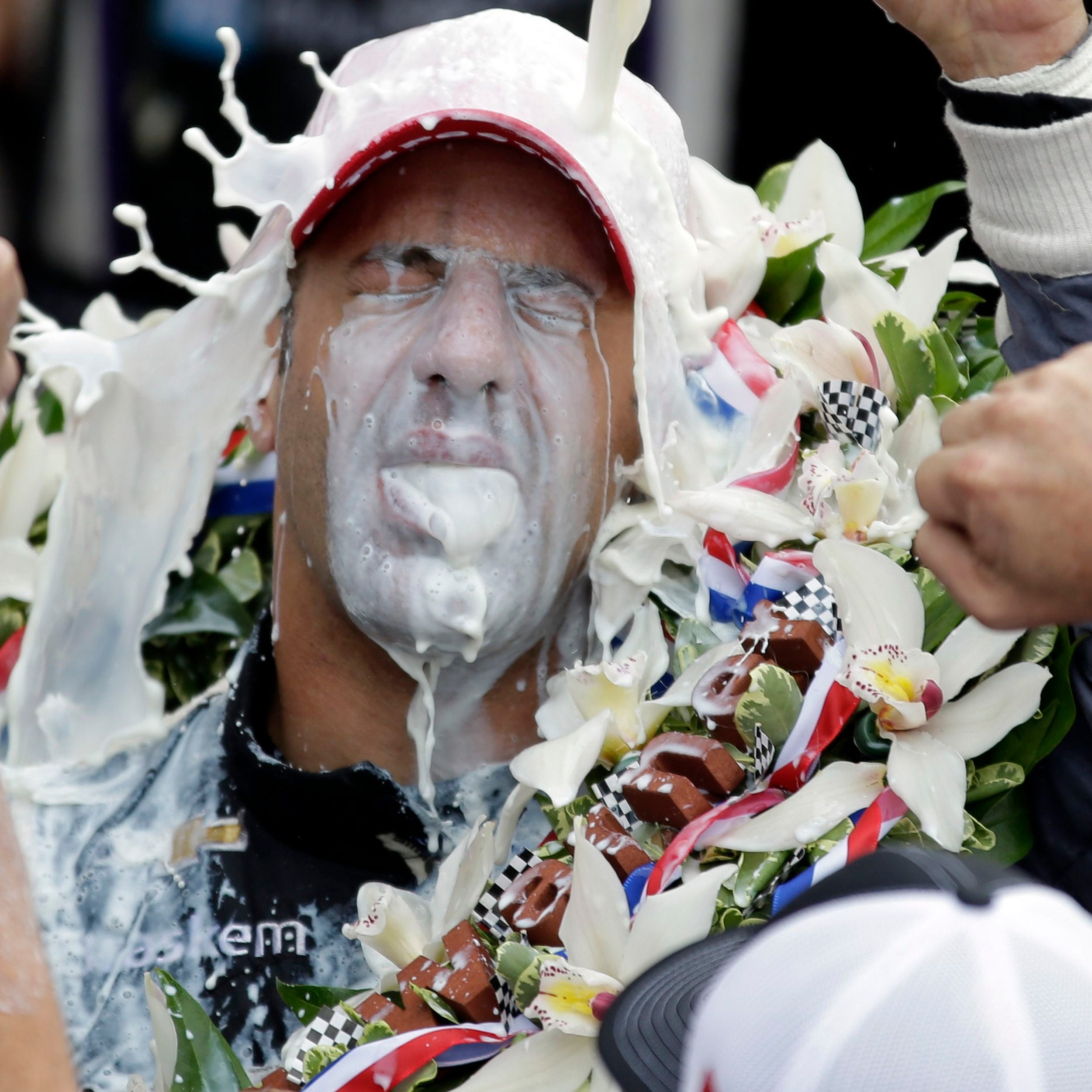
A man has just driven five hundred miles in a circle at speeds that crest 230 miles an hour, strapped into a carbon-fiber missile that costs more than your house, in front of three hundred thousand people who have been drinking since dawn. He is soaked. His ears are ringing. His heart is doing something his cardiologist would not approve of.
And before the trophy, before the check, before he kisses the bricks, somebody hands him a glass bottle of cold milk.
Cold, white, served in a glass like it’s 1955.
He tips it back like a six-year-old who just finished mowing an imaginary lawn, lets it run white down his chin, and then dumps the rest over his own head. Whole, probably.
I need you to sit with how strange this is.
In 1936, a driver named Louis Meyer won his third 500 and asked for a glass of buttermilk, because his mother swore there was nothing better on a hot day. Mothers are like that. A photographer caught him gulping it down. A dairy executive saw the picture, smelled an opportunity the way dairy executives apparently do, and offered to put a bottle in the winner’s hands every year after.
That’s the whole origin of the most sacred ritual in American motorsport. A guy was thirsty, and his mom had opinions.
It got serious, the way these things do. Today, before the race, every driver fills out a card declaring a preference: whole, two percent, or fat-free. The American Dairy Association of Indiana keeps it on file like a sommelier’s note. Somewhere in Indianapolis sits a refrigerated cooler holding thirty-three little glass bottles, one for every car on the grid, each labeled, each a small act of faith that its driver might be the one to drink it. Thirty-two of them go home untouched. It’s the only prize at the Speedway you can’t earn ahead of time.
You want to know how much it matters? Ask Emerson Fittipaldi.
In 1993, Fittipaldi won, climbed out, and, being the proud owner of a Brazilian orange grove, reached for orange juice instead. He took a long, deliberate, businesslike sip of OJ on national television, in the cathedral of milk. He had broken no rule. The orange juice was arguably the smarter drink. And none of it saved him, because he had treated the milk as a beverage, and the milk stopped being a beverage in 1936.
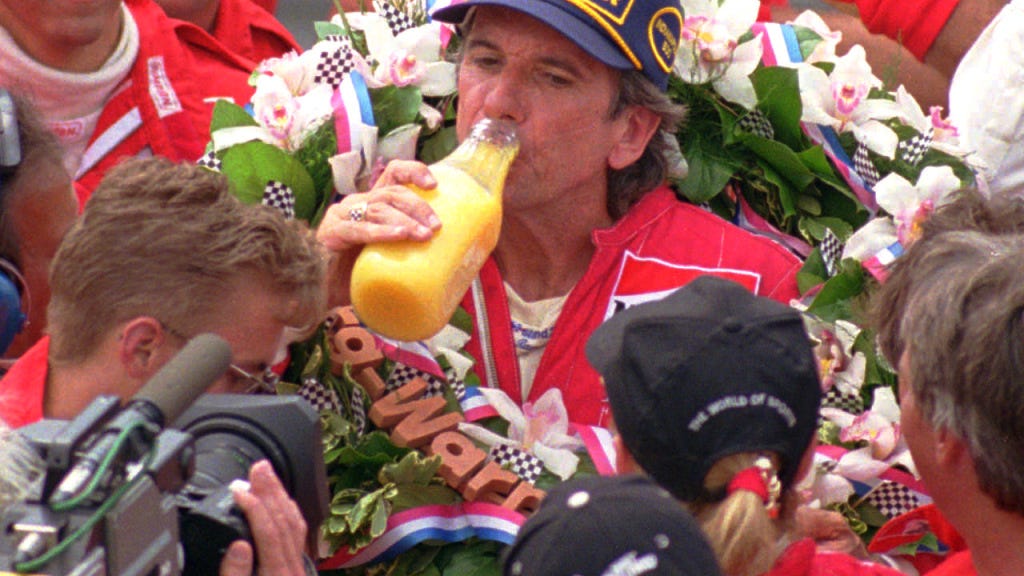
They booed him. Hard.
Here is a sport that worships the future. Everything about the Indianapolis 500 is built to chase it: aerodynamics shaved by the millimeter, telemetry by the terabyte, the relentless forward lean of a machine engineered to beat the version of itself that ran last year. And at the climax of the whole spectacle, at the highest moment of triumph, the fastest people on earth reach for the most wholesome, least cool, most grandmotherly thing imaginable.
That’s the secret about rituals. They were never supposed to make sense. A ritual is a thing we agree to keep doing until it starts to mean something, and then keep doing because it does.
Every family has one. The dish nobody actually likes, but no holiday survives without. The toast in a language that half the table can’t speak. Milk is what Indianapolis built instead. It looks ridiculous to the tourist and means the world to the people inside the fence. You drink it because the champions before you drank it, and because someday a kid who isn’t born yet will drink it and think of you.
So when the fastest man alive lifts that bottle, he’s swallowing ninety years of it. Louis Meyer is in there. So is his mother. So is every winner who tipped the same cold glass to the same blinding Indiana sky.
The fastest men in the world spend their whole lives chasing the future.
And the moment they finally catch it, they taste history.