


We strive to remain an independent source of motorsport business. If Business of Speed has provided you with useful insights this year, please consider subscribing.

This article is brought to you by T-Mobile for Business. I’m in Las Vegas this week working with them at the Las Vegas Grand Prix.
The most important technology at the Las Vegas Grand Prix is the one you’re not supposed to notice. It runs on city streets, so there’s no stadium and no network already waiting there. For a few days, one has to be assembled around the Strip, strong enough to carry more than 300,000 fans across race weekend, according to LVGP event data. T-Mobile for Business helps power it. Inside the company, they call this work “the race before the race.”
A useful question to ask of any technology is what it does to the things around it. A race car shows you speed. The network under this race shows you something about how the city reorganizes itself when everything has to be connected at once.
Racing Through a City
Jason Schnellbacher, on T-Mobile’s Network Technology Strategy team, described his job as supporting “an entire city transformed into a racetrack.”
That statement is also the challenge.
Fans, TV crews, vendors, staff, and first responders are all on the same network at the same moment, and none of them think of themselves as network users.
“It’s high stress, high stakes,” he said. “As our CTO John Saw likes to say, there’s no safety net. This is for real.”
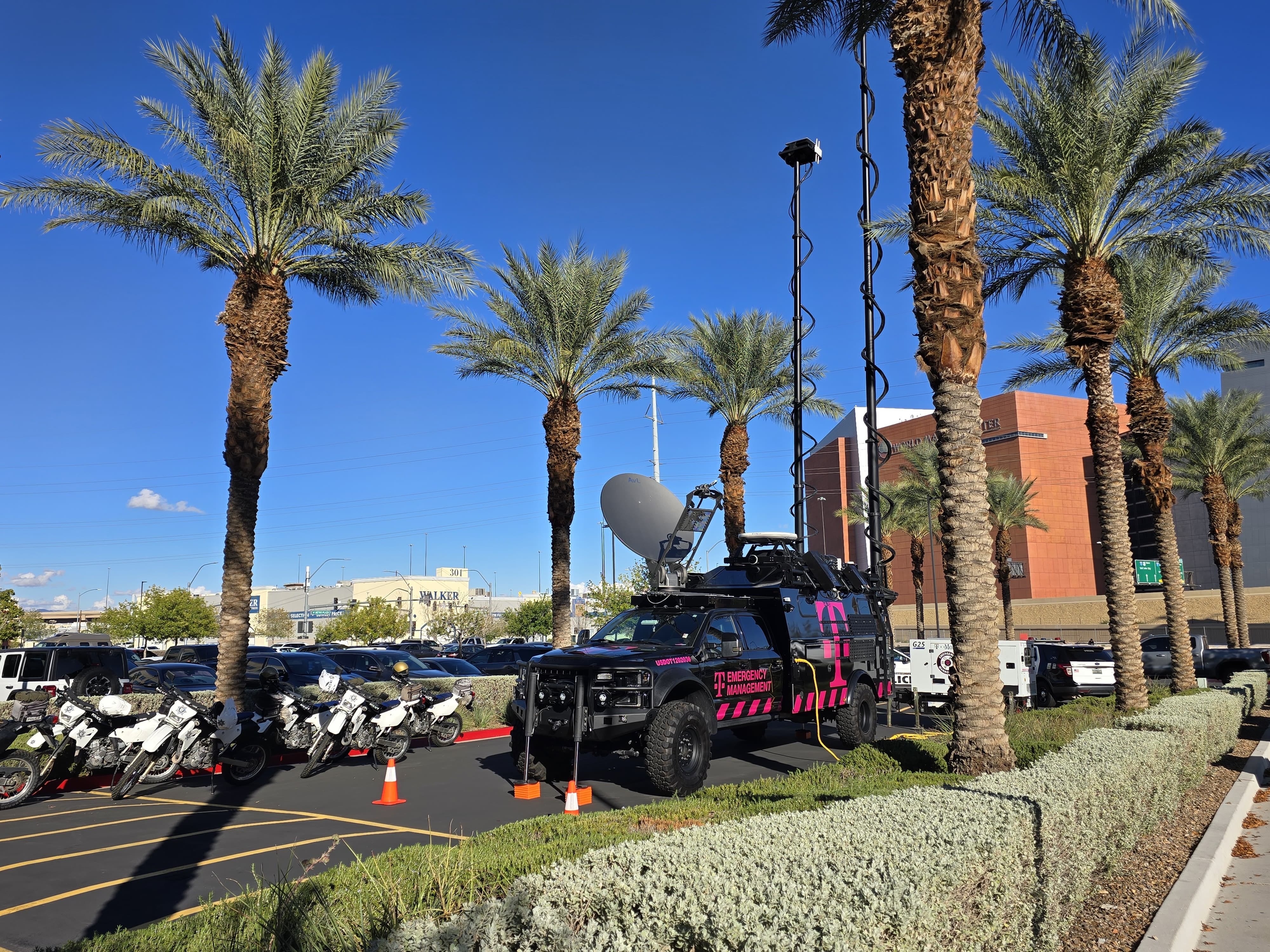
T-Mobile has been the race’s official 5G partner since the first race in 2023. The partnership was announced in 2022 and extended last November. The first year was about the basics, like ticketing and point-of-sale. Each year since, more of it has become permanent equipment, with temporary mobile cell sites added wherever the crowds gather. The permanent upgrades are designed to bring Ultra Capacity 5G to all the grandstands.
“A lot of times you went to a major sporting event, your phone didn’t work,” Schnellbacher said. His measure of success is that nobody thinks about it. “You don’t think about it, it just works.”
Mature technologies tend to end up this way. The early versions demand attention, and the good ones fade into the background until people stop noticing them.
Not All Traffic is Equal
On race night, someone is posting video, a vendor is running a card, and a police officer is calling in a medical problem. To the network, these are all just data, but to the people involved, they are very different things.
So the network gets divided. Network slicing sets aside a dedicated piece of the network for one kind of traffic, such as ticketing, payments, production video, or dispatch, so that traffic keeps moving when demand peaks. Last year, a dedicated slice kept concession payments flowing, according to T-Mobile.
First responders get T-Priority, which moves their calls and data ahead of general traffic when the network is congested. It covers LVMPD and critical LVGP staff and performed well in 2024 and 2025. I had the opportunity to talk to Assistant Sheriff Dori Koren last year about how T-Priority gives them the connectivity they need during critical moments.

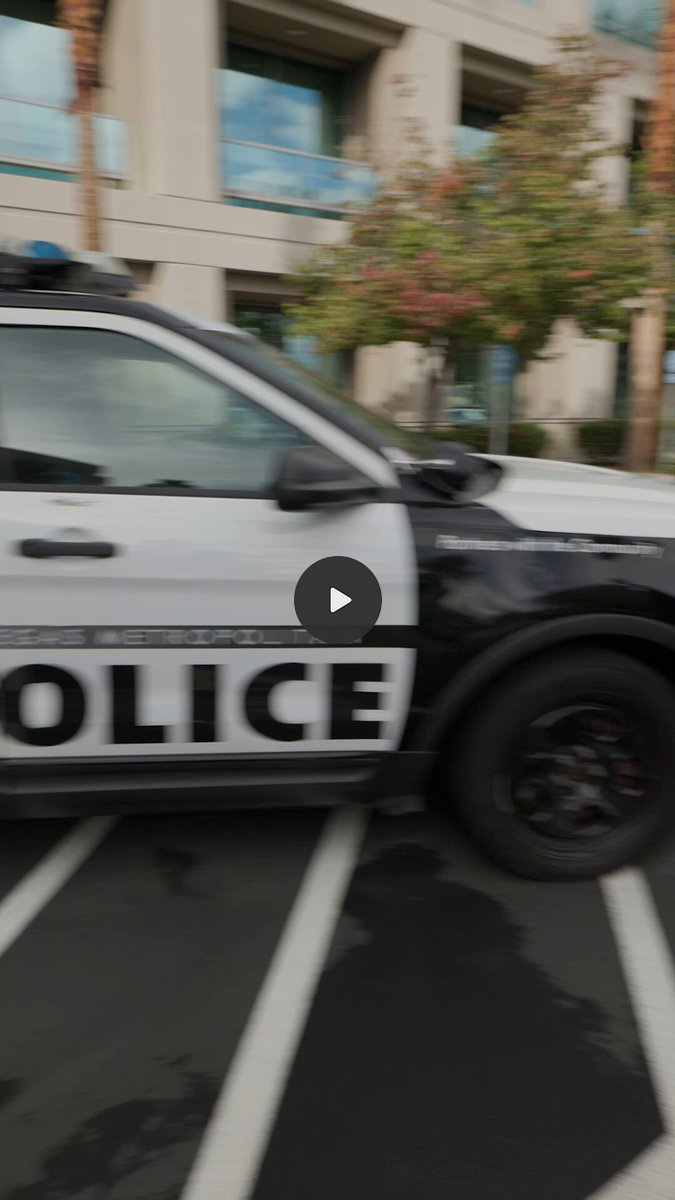
Older systems remain in use, so the new ones must connect to them. Mission-critical push-to-talk links T-Mobile Direct Connect with traditional Land Mobile Radio, so teams on phones and teams on radios can still talk. LVMPD’s Drone as First Responder program is back too, with police flying the drones and T-Mobile providing the connection. On Thursday, we’ll be visiting the LVMPD Department Operations Center to see how these pieces fit together.
No More Cables
More than 20 iPhones are working as broadcast cameras around the circuit this year, according to the LVGP 2026 tech brief. They connect over T-Mobile 5G and send footage into F1’s production without a wire at each camera. There’s also a drone camera on the Bellagio rooftop.
Removing the cable changes where a camera can go. A new angle no longer has to be its own connectivity project, so cameras can go where wires and satellite trucks can’t reach.
On the F1 Paddock Rooftop, Edge Control supports several cameras. It processes video close to where it’s captured, cutting the delay between the camera and your screen and making the feed more resilient. Photographers and creators send high-resolution images in near real time, so the old ritual of running SD cards from the track to an editor goes away.
Last year produced a strange request. A broadcast camera went on top of a hotel tower on the Strip, higher than T-Mobile’s nearby cell sites, and its feed still had to reach the international broadcast. The team combined 5G and satellite into one connection and carried it on its own network slice.
The Whole Event
New this year is the Smart Operations Command Center, a live 3D digital twin of the circuit. It pulls crowd density, medical and security incidents, ticketing and network health into one view for the operations staff, with AI-powered alerts. It debuted at the 2026 PGA Championship, where T-Mobile for Business says it “cut incident response time and unified venue domains into one view with zero manual data stitching.”
For most of history, running a large event meant many people each holding one piece of the picture. A digital twin puts the pieces in one place, changing who can see a problem and how soon.
At the T-Mobile Zone at Sphere this week, there’s a humanoid robot, Figure 03, built by Figure AI. It has 5G built in, with T-Mobile as its primary connection. The robot handles its own movement and safety. The network carries its data, software updates, new skills, outside AI services, and telemetry — the live status data a team uses to monitor it.
T-Mobile’s line is “Physical AI needs a network that can keep up.” Machines like this could one day work in manufacturing, logistics, or event operations. As more of them arrive, the network becomes part of how they work.
Planning for Failures
Last year a radio supporting production in the T-Mobile Zone at Sphere lost power. The team had another site ready and switched it on. That led to plans this year for ruggedized backup power and better generator monitoring, so engineers get earlier warning. Schnellbacher said the approach borrows from how T-Mobile hardens its sites against hurricanes, at a smaller scale. A mobile cell site also stands by to provide backup connectivity if there’s an emergency.
One of his favorite moments last year came when everything was working. He stood in the T-Mobile Zone at Sphere and watched the race on the big screen. “I was [finally] able to catch some racing,” he said.
Everyone in F1 tech sells speed. What stuck with me is that the win here is invisible. If nobody notices the network all weekend, T-Mobile did its job.
Business of Speed covers the business, technology, and lifestyle of racing: Formula 1, IndyCar, IMSA, WEC, NASCAR, and more. From Vincenzo Landino, entrepreneur and creator, featured in Bloomberg, TBPN, Yahoo! Finance, Forbes, Adweek, and Front Office Sports. You can find us on Instagram, Substack, and LinkedIn.