


Every Monday, we publish a series called CAPITAL MOVES, a look into the off-track investments of individuals involved in the world of racing. Be sure to check out previous editions.
“So we beat on, boats against the current.” F. Scott Fitzgerald, The Great Gatsby
It was a beautiful morning in Daytona Beach, Florida, on July 10, 2007. Lesa France Kennedy, granddaughter of NASCAR’s founder, daughter of the man who put the sport on national television, and the President of the company that owned twelve of its most important racetracks, had a trip planned with her husband.
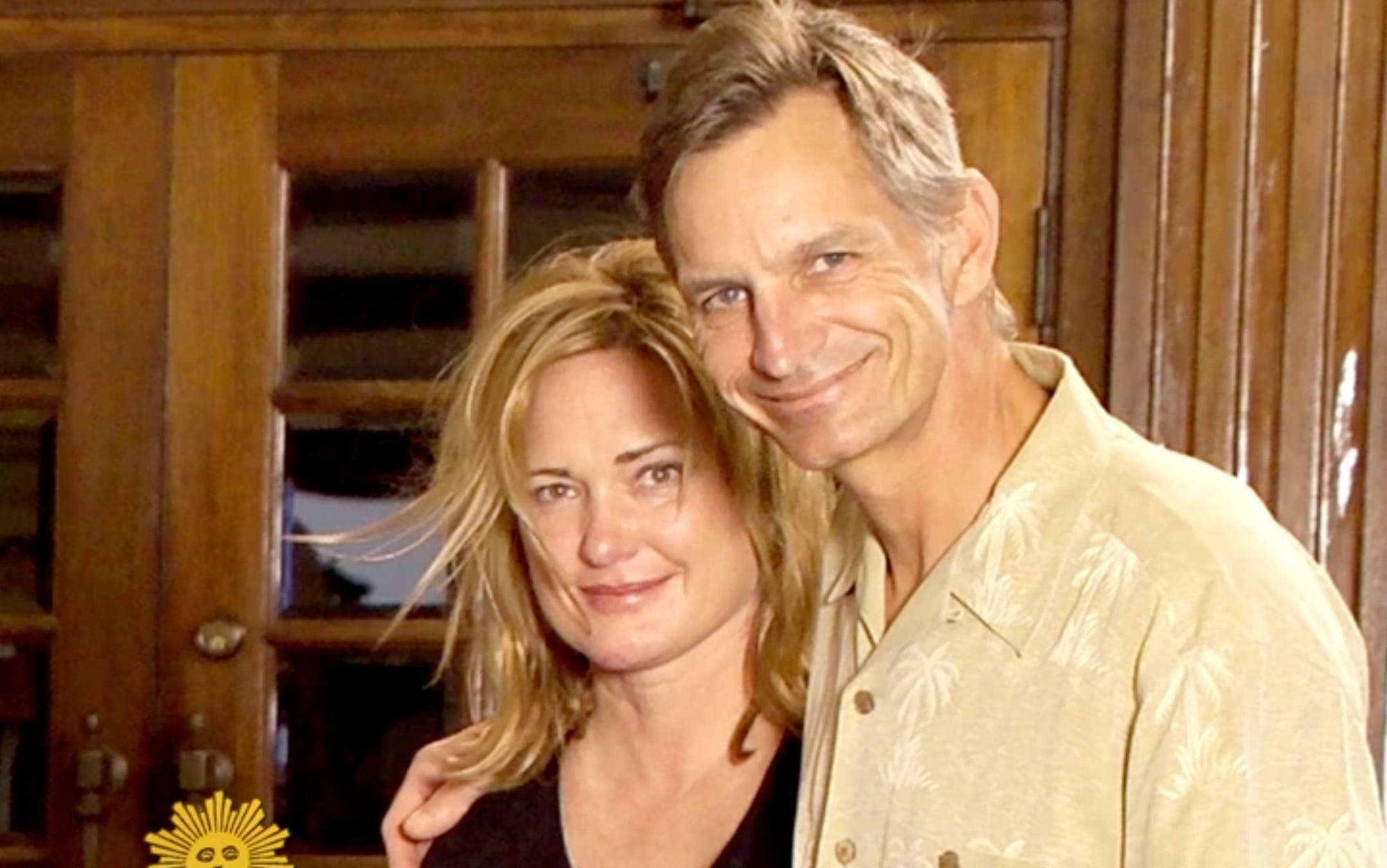
Dr. Bruce Kennedy, a 54-year-old plastic surgeon, took off from Daytona Beach International Airport at approximately 8:30 a.m. in a twin-engine Cessna 310 registered to a France family affiliate. He had a co-pilot with him: Michael Klemm, a senior captain with NASCAR Aviation. They were bound for Orlando. Lesa and Bruce were going on their own trip later that same day.
At approximately 8:40 a.m., smoke began to fill the cockpit. Dr. Kennedy declared an emergency and turned the plane toward Orlando Sanford International Airport. Unfortunately, he did not make it. The Cessna came down in a suburban neighborhood a few miles short of the runway. It struck two houses and instantly engulfed both in fire. Bruce Kennedy and Michael Klemm both died. One adult and two children inside one of the homes also died.
Thirty-six days earlier, her father, Bill France Jr., the man who had taken the sport Lesa France Kennedy’s grandfather founded and turned it into a national television juggernaut, had died of lung cancer at his Daytona Beach home. He was 74. He had been diagnosed in 1999 and had spent eight years slowly deteriorating; a motorized scooter had eventually replaced his formerly confident stride. France Kennedy watched her father, the man who had negotiated a $2.4 billion television contract, slowly run out of breath. His death was announced during the live Fox broadcast of a race at Dover. In a show of respect, the flag was at half-staff.
“2007 was the toughest year of our lives,” she said in an interview with CBS Sunday Morning in 2015.
With the loss of Dr. Kennedy, she was left to raise her son Ben as a single mom.
She was 46 years old, a widow with a young son, running the family dynasty's track empire as its President, at the exact moment the sport those tracks were built to host was beginning the most serious decline in its history. Two years later, she was promoted to CEO.
What France Kennedy did next deserves a closer look.
The Infield
Lesa Dawn France was born on May 24, 1961, in Daytona Beach. Her grandfather, Bill France Sr. (known as “Big Bill”), had founded NASCAR in 1948 at a meeting in the Ebony Room, a rooftop lounge at the Streamline Hotel. The drivers had been getting cheated by promoters. Big Bill organized everyone, wrote the rules, and created a sanctioning body. Then he built Daytona International Speedway. His son Bill Jr. was there for every day of construction: twelve hours a day, seven days a week, for thirteen months, driving compactors and bulldozers through the swamp.
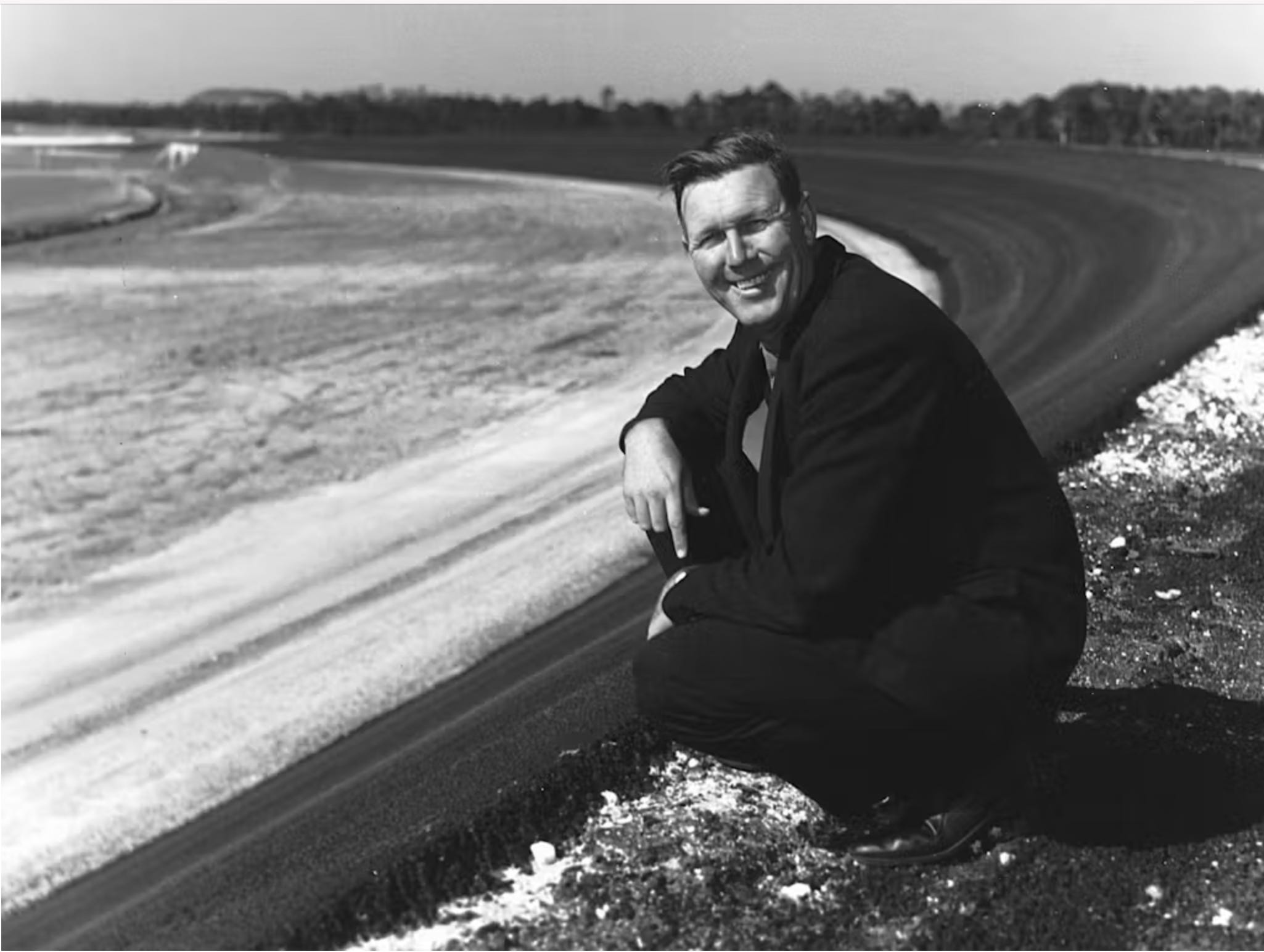
France Kennedy grew up in the infield of that track. When she was eleven, she worked at the ticket office. She made $11 for her first day. One dollar per year of her life. “My dad made us walk the walk,” she said years later. He was famous for offering almost no sympathy when his children came to him with problems. The response was reliably the same: “figure it out.”
Her grandmother, Anne “Annie B.” France, NASCAR’s first Secretary and Treasurer, kept two sets of books. The real one, and a smaller one, she would show her husband when he came looking for the numbers. “She’d tell me, ‘Now don’t tell him that we’ve been piling up a little bit of cash over here, because he’ll go out and spend it as soon as we get it.’” The instinct to protect capital while others spent it freely would resurface, decades later, in a granddaughter who chose to deploy capital precisely when everyone else was pulling it back.
France Kennedy graduated from Duke in 1983 with degrees in Economics and Psychology. She came home anyway. The track was in her blood, and she probably knew it before Duke did.
The Climb
She joined International Speedway Corporation in 1983, served as Secretary, then Treasurer, spending a decade learning how money moved through a publicly traded racetrack company. In 1996, she became Executive Vice President. In 2002, she led the construction of Kansas Speedway and Chicagoland Speedway, expanding NASCAR from a Southern sport into a national one. The pattern was already forming: identify the market the sport hasn’t reached, build the infrastructure to reach it, and trust that the fans will follow the facility.
In April 2003, she became President of ISC. In April 2009, the CEO. Forbes named her the Most Powerful Woman in Sports four months later. The timing was brutal. Between 2005 and 2010, annual NASCAR race attendance fell 22 percent. Television viewership dropped by a third. Sponsorship dollars were drying up. Teams were merging, shrinking, or disappearing.
The conventional response is to conserve. Cut costs. Wait.
France Kennedy did the opposite.
$600 Million Against the Current
She understood something the declining numbers obscured: NASCAR’s problem was not the product. It was the experience. The racing was still extraordinary. What had deteriorated was the experience of being there in person. Tracks built for a different era, with poor sightlines and nothing to do before or after the race, made for an expensive day trip to uncomfortable seats. When a fan could watch twelve camera angles from a living room, the value proposition of attending in person had eroded.
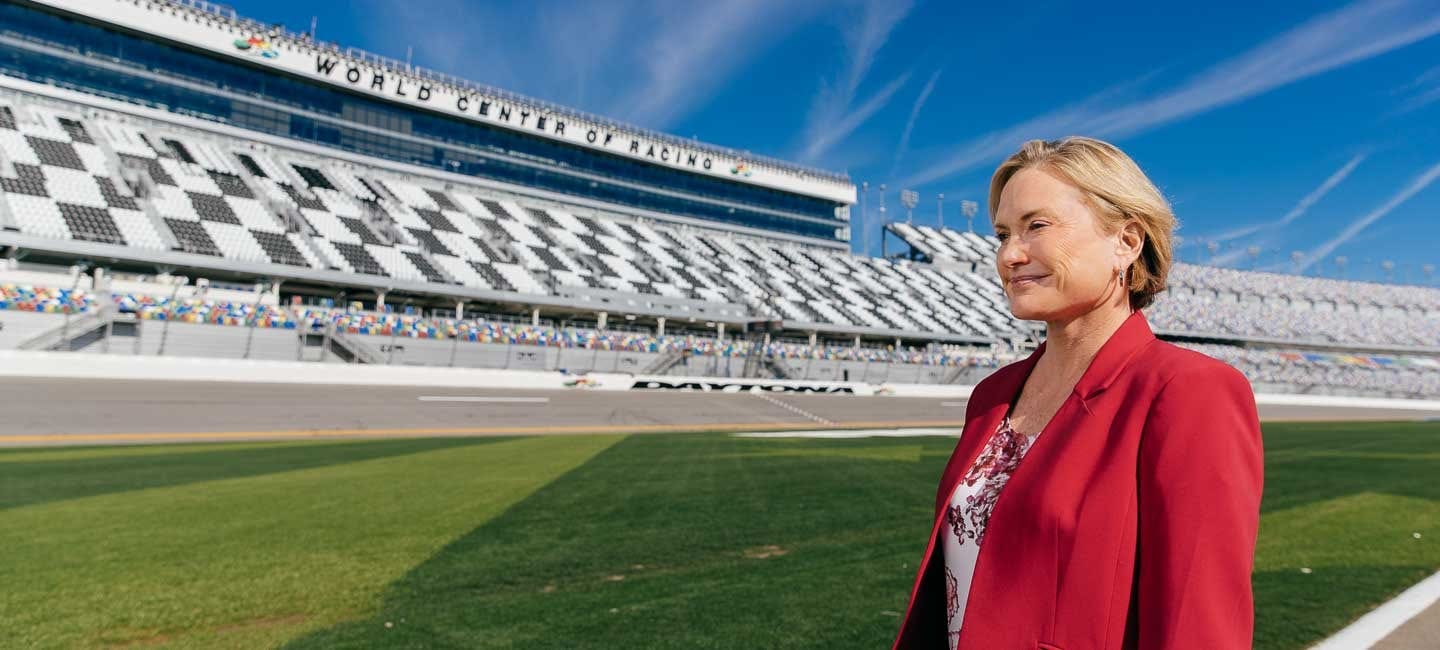
In June 2013, ISC’s board endorsed a five-year capital plan not to exceed $600 million. The centerpiece, approximately $400 million, was DAYTONA Rising: a complete reinvention of the frontstretch at NASCAR’s most iconic racetrack. Not a refurbishment. A stadium, the first of its kind for motorsport. 101,500 new seats. Forty escalators. Integrated Wi-Fi. Named sponsorship opportunities for the world’s largest brands.
To fund part of it, she sold ISC’s Staten Island property (purchased in 2004 for $100 million as the site of a proposed New York speedway that locals had killed at a public hearing so hostile police ended it early) for $80 million, a loss on paper that generated $117.7 million in total cash flow after a tax benefit. The New York dream became the Daytona stadium. Sometimes the best capital allocation decision is knowing when to walk away.
DAYTONA Rising opened in January 2016 to a sold-out Speedweeks and was named Sports Facility of the Year. Phoenix Raceway followed: a $178 million overhaul completed in 2018. Then ONE DAYTONA, a $120–$150 million mixed-use district across the street from the speedway, was designed to make Daytona a year-round destination rather than a facility that sat dormant for 350 days a year.
The Numbers
ISC had annual revenues of approximately $700 to $750 million during her tenure. On May 22, 2019, NASCAR acquired ISC for approximately $2 billion. The France family converted their 35% stake into NASCAR ownership rather than cash.
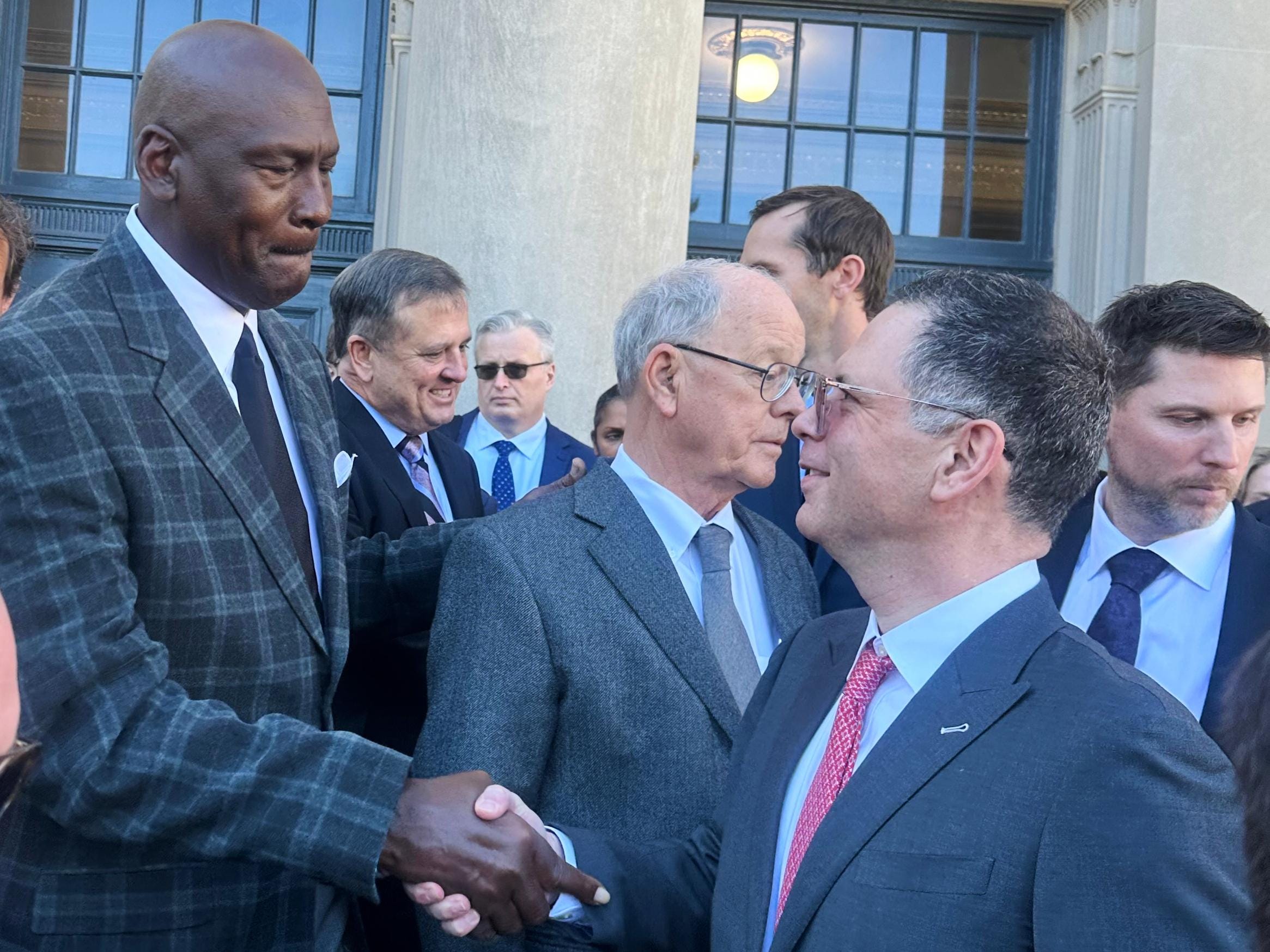
The antitrust litigation of 2025, in which 23XI Racing (co-owned by Michael Jordan and Denny Hamlin) and Front Row Motorsports sued NASCAR over its charter system, produced a rare window into the ownership structure: the Jim France Family Trust owns 54.7% of NASCAR. The Lesa France Kennedy Family Trust owns 45.3%.
NASCAR generated $285 million in EBITDA in the most recently disclosed fiscal year. Its 2025–2031 media rights deal, with Fox, NBC, Amazon, and Warner Bros. Discovery, is valued at $7.7 billion. The sport her grandfather organized at a bar in 1947 is worth several billion dollars. France Kennedy’s Family Trust holds nearly half of it.
What Endures
The quality that appears consistently in the France family, across four generations, is conviction. Bill Sr. had it when he wrote the rulebook in 1947. Bill Jr. had it when he signed the CBS deal in 1979 that put the Daytona 500 on national television for the first time. Lesa had it in 2013 when she committed $400 million to a racetrack renovation while the sport was hemorrhaging fans.
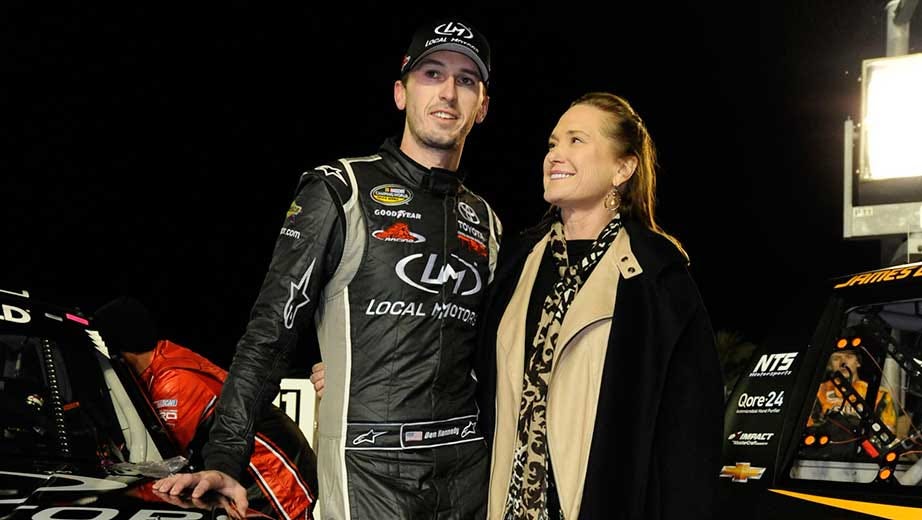
Today, Ben Kennedy, Lesa and Bruce’s son, serves as Executive Vice President of Venue and Racing Innovation at NASCAR. Fourth generation. He grew up driving the sewage truck through the driver-owner lot at Daytona, just as his mother grew up selling tickets for $11 a day.
The family has run NASCAR for three generations without selling, without surrendering control, and without abandoning the sport when it got hard. For the first time in its history, credible reports indicate that outside investors, Liberty Media, and private equity may be invited in.
If they come, the asset they would be buying was shaped, in no small part, by a woman who looked at a sport everyone else was leaving and decided to swim against the current.