

Every Monday, we publish a series called CAPITAL MOVES, a look into the off-track investments of individuals involved in the world of racing. Be sure to check out previous editions.
After becoming the first man to summit Everest, Edmund Hillary was asked what it felt like to conquer the mountain. “It is not the mountain we conquer,” he said, “but ourselves.”
Pierre Gasly knows something about that.
On the morning of August 12, 2019, Gasly received a call from Helmut Marko, Red Bull’s longtime motorsport advisor. For two decades, Marko had controlled the careers of every driver in the Red Bull program, deciding who rose and who didn’t. He called at 8:42 a.m. Gasly was on holiday in Spain. After twelve races alongside Max Verstappen at Red Bull Racing, the team Gasly had spent his entire career trying to reach, he was being sent back down, demoted to Toro Rosso, the junior team he had come from. The decision had already been made. There was nothing to discuss.
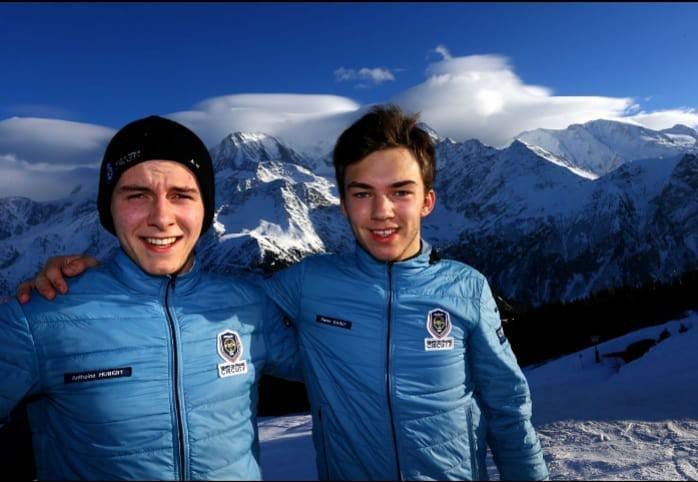
Two weeks later, at Spa, during the Formula 2 support race, Anthoine Hubert was killed at Raidillon. Hubert and Gasly had shared a bedroom as teenagers, trained together for years, and been karting rivals since the age of seven. The last time Gasly saw him was at a party in Budapest, the weekend before the Marko call. On his way out, he waved from across a terrace: Have a good summer, I’ll see you in Spa. Eighteen hours after Hubert’s death, Gasly had to climb into his car and race the Belgian Grand Prix.
He was 23 years old, publicly humiliated, privately devastated, and he had a race to drive.
Normandy
Pierre Jean-Jacques Gasly was born on February 7, 1996, in Rouen, Normandy. The city has its own motorsport heritage, having hosted the French Grand Prix in the 1950s and 1960s. He is the youngest of five, with four half-brothers from his parents’ previous marriages.
His grandfather competed in karting. His grandmother was a karting champion. His father, Jean-Jacques, raced karting, endurance racing, and rallying until he fell off a mountain after his co-driver misread the pace notes, and well, that was the end of that.
Pierre first sat in a kart at a local track in Anneville-Ambourville at the age of six. By ten, he was competing. By thirteen, he had left Rouen for Le Mans to pursue a racing career seriously.
Anthoine Hubert, the friend he grew up alongside, the one who pushed him to do one more push-up, the one he waved goodbye to on a terrace in Budapest, was a product of the same world. They had been roommates at a private school in Le Mans, grinding through the same junior program, racing each other every weekend, eating breakfast across the same table. “I know I would never have achieved what I did without growing up with him,” Gasly said years later, “because we were pushing each other so much whether it was on or off the track. It made me a better athlete, made me a better driver.”
He has organized a run at Spa every year since Hubert died. Every year, he lays flowers at the Raidillon barrier in honor of Anthoine.
The Mountain
Back at Toro Rosso, rebranded AlphaTauri for 2020, Gasly found something he had lost at Red Bull: the sense that the car responded to him, that the team was built around him rather than around his more celebrated teammate.
Then came Monza.
September 6, 2020. Gasly started tenth in an AlphaTauri that had no business winning a Formula 1 race. He pitted one lap before the safety car came out. The pit lane closed. Lewis Hamilton dived in anyway and collected a ten-second stop-go penalty. Charles Leclerc crashed at the Parabolica. Race red-flagged. When it restarted, Pierre Gasly was leading.
Carlos Sainz closed to within DRS range on the final lap. He never got close enough. Gasly crossed the line 0.415 seconds clear, the first French Formula 1 winner since Olivier Panis in 1996, thirteen months after being stripped of his Red Bull seat, in a car that had no right to be at the front. He stood on the podium and wept. Monza’s grandstands were empty, closed by COVID.
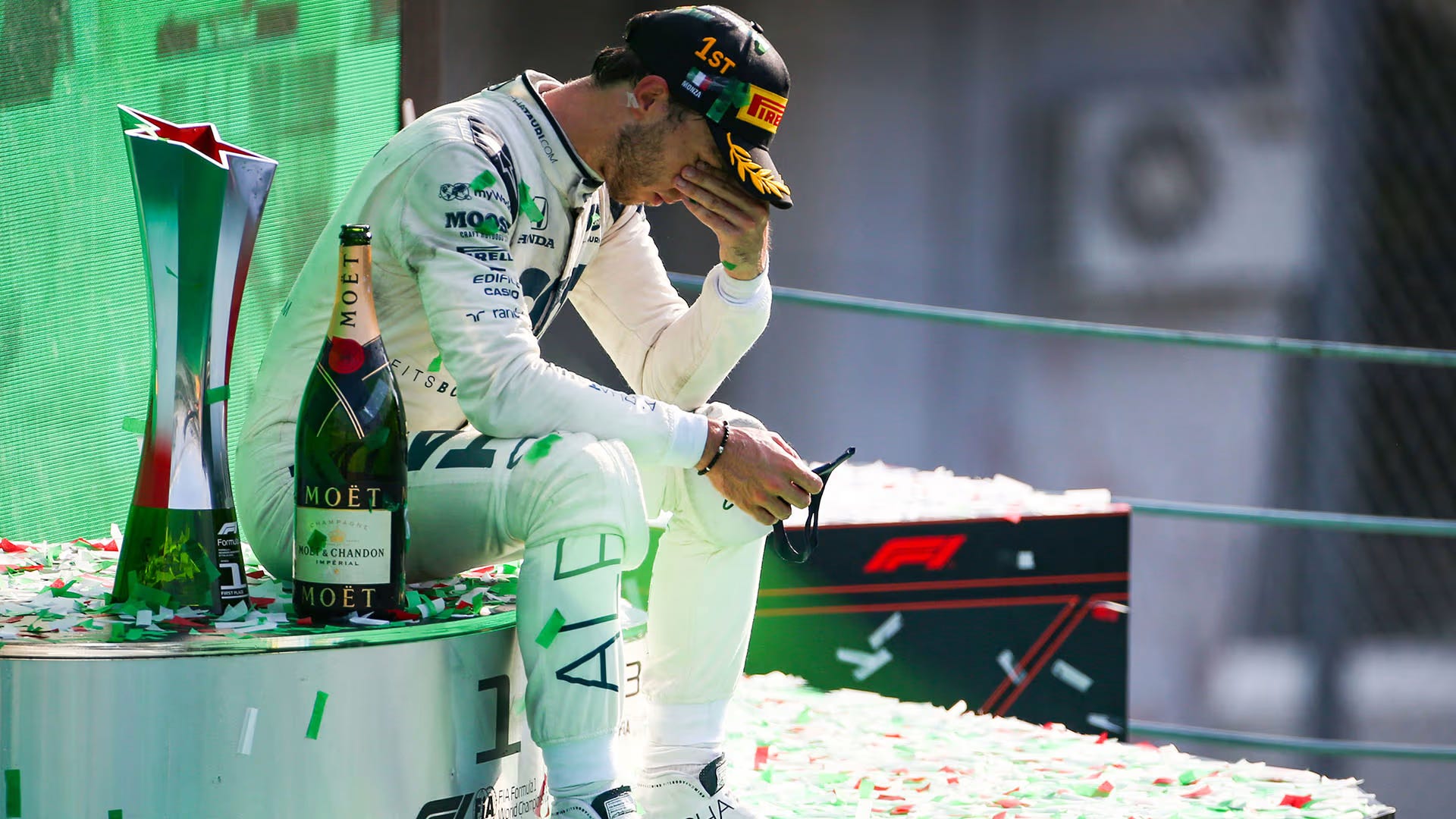
“I’ve been through so much in the space of 18 months,” he said in parc fermé. “I have no words.”
Something shifted after Monza, in his thinking more than his driving.
Formula 1 gives you access, credibility, network, and global visibility. All of it has a shelf life. Most drivers monetize that platform through endorsement deals and brand partnerships. Gasly has done that too. But he has also done something rarer: deployed real capital into actual assets, with co-investors who manage billions, on a long-horizon thesis. While still an active F1 driver, under contract with Alpine through 2028 and earning approximately $10 million a year, he is interested in ownership.
Football: FC Versailles
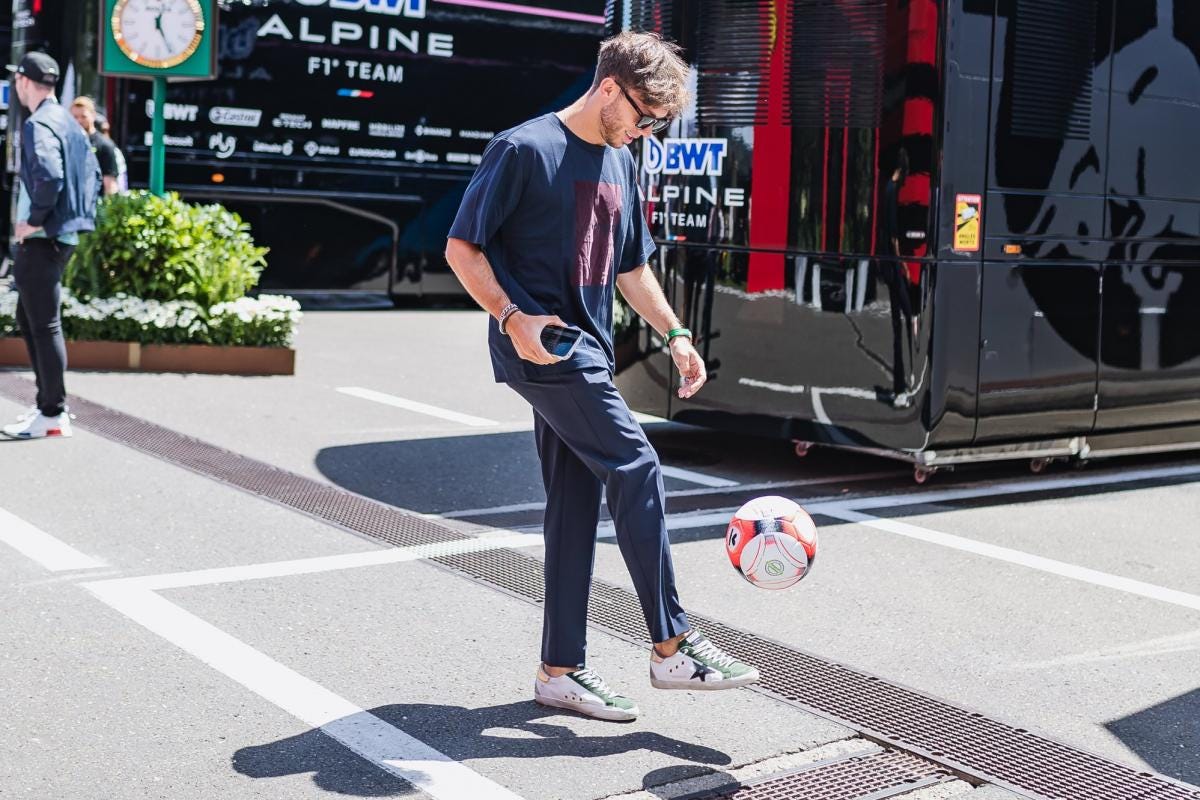
In March 2024, Gasly invested in FC Versailles, a club in France’s third division, as an equal third partner alongside Alexandre Mulliez, grandson of the founder of the Auchan retail empire, and Mulliez’s business partner Fabien Lazare, who had acquired the club the previous June for approximately $1.62 million. Gasly asked that his exact figure not be disclosed, but Mulliez confirmed to RMC Sport it was substantial: “It is not 3 or 4 percent. He owns the club at the same level as me and Fabien.”
He had watched Ryan Reynolds and Rob McElhenney buy Wrexham AFC in 2020 and turn a fifth-tier Welsh club into a global media property. He saw the same model in Versailles. “We have medium and long-term ambitions for five, 10, and 15 years,” he told L’Equipe. A docuseries is already in development.
The thesis is direct: buy undervalued, attach a story, execute patiently over a decade, let the compounding do the work. Versailles is a fifteen-year-old arc dressed in a third-division kit.
Padel: Hexagon Cup
In parallel, Gasly invested in the Hexagon Cup, the team-based padel competition that, in just two editions, has become the most commercially ambitious event in a sport rewriting the global sports participation map. Padel has grown from approximately 10 million players worldwide in 2017 to more than 35 million across 150 countries as of 2025. The International Padel Federation recorded a 42 percent increase in registered members in 2025 alone.
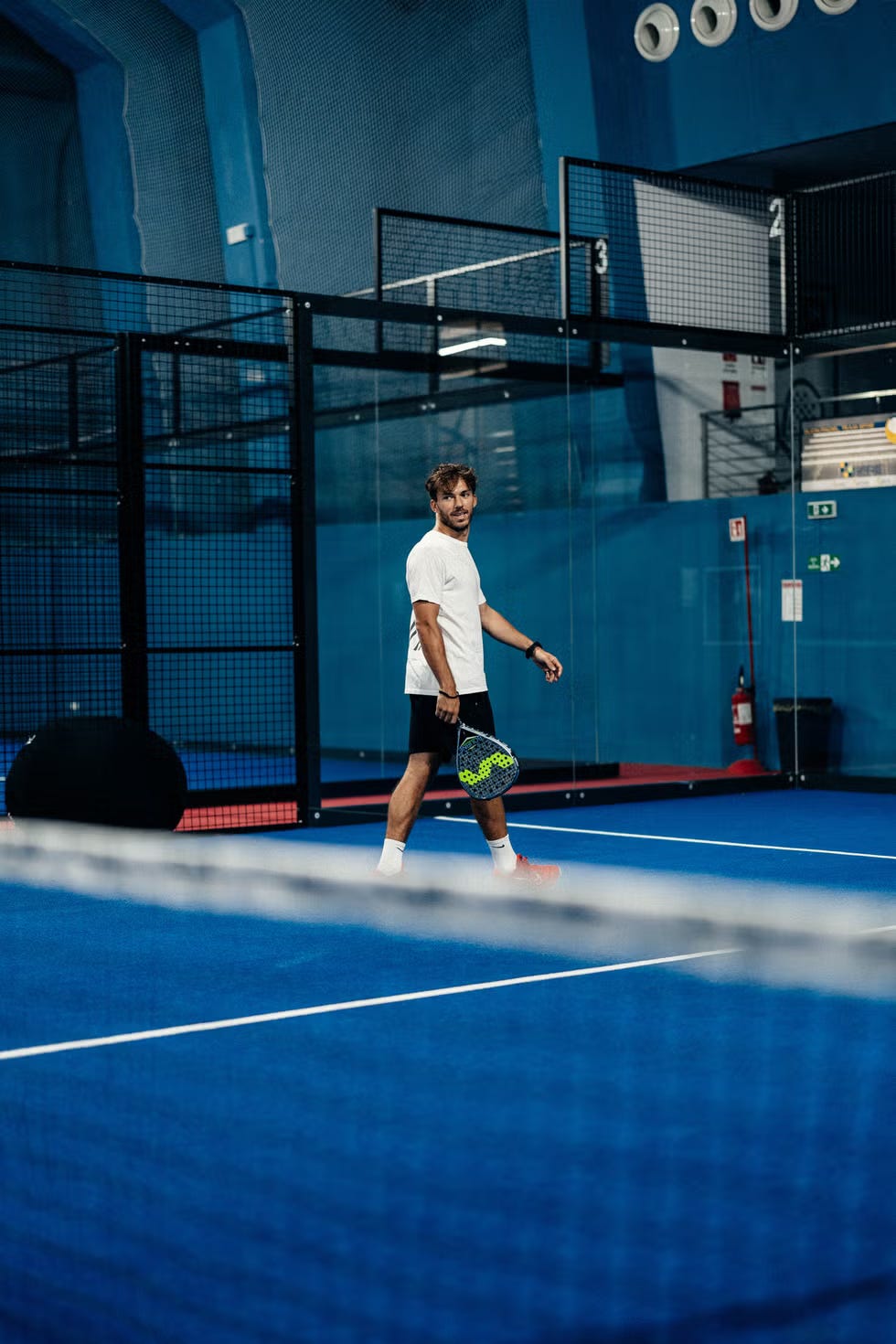
Gasly’s co-investors as team owners include Rafa Nadal, Andy Murray, Robert Lewandowski, and Eva Longoria. In December 2025, the Hexagon Cup announced a strategic alliance with 54, the global sports agency behind LIV Golf, and the International Padel Federation, launching the Hexagon World Series: the first FIP-governed global team circuit. The investment is a bet on a sport that has not yet crossed the threshold from regional phenomenon to global mainstream.
MotoGP: Tech3 KTM
On January 30, 2026, Gasly announced an investment in the Tech3 KTM MotoGP team, as part of the Guenther Steiner-led consortium that had acquired the French-based outfit in September 2025. The total deal was worth approximately $22.6 million, with IKON Capital leading the investor group alongside David Blitzer’s Bolt Ventures and Main Street Advisors, whose founder, Paul Wachter, manages $8.7 billion in assets tied to sport and entertainment. Gasly invested through his co-founded TRAIL SLAM investment fund.
He became the first active Formula 1 driver to invest in a MotoGP team.
The timing traces back to July 3, 2025, when Liberty Media completed its acquisition of Dorna Sports for approximately $3.1 billion, an 84 percent stake in a deal valued at approximately $4.75 billion. Liberty is the same company that acquired Formula 1 in 2017 and grew revenue from $2.04 billion to $3.65 billion in seven years, launched Drive to Survive, opened street races in Miami and Las Vegas, and grew the 18-34 fanbase by an estimated 40 percent. The playbook for MotoGP is identical, and MotoGP’s enterprise value at acquisition was less than a quarter of Formula 1’s current valuation. Gasly saw the gap from the inside. He moved before it closed.
The returns case is already compelling. The personal case starts with a borrowed helmet.
When he was a child, about to race in his first competitive karting event, his helmet was rejected by the organizers. They needed a replacement, fast. The one they found was a replica of Shinya Nakano, the Japanese MotoGP rider who raced for Tech3 in the 250cc class in 2000, lost the world title in a dramatic final-race shootout, and stepped up to the premier class with the same team in 2001.
More than twenty years later, Pierre Gasly is a co-owner of the team whose helmet he wore as a ten-year-old boy.
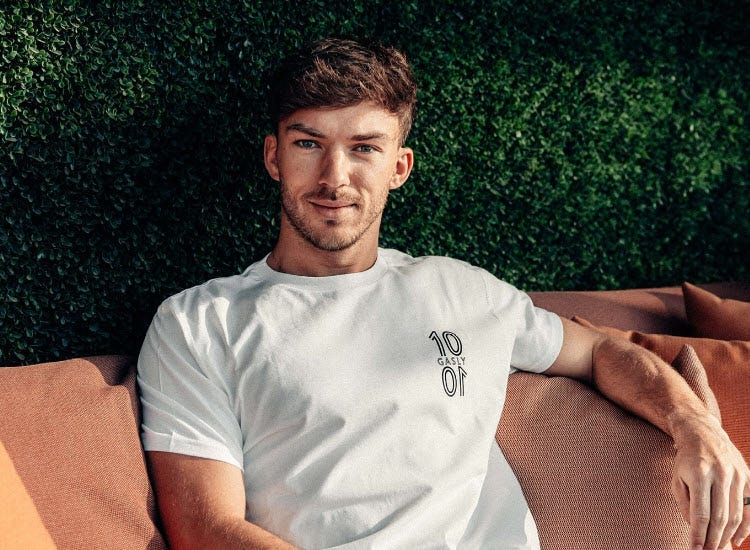
Edmund Hillary said it was not the mountain that was conquered, but the self. Gasly’s mountain was 2019; the demotion, the grief, the Grand Prix raced in a fog of loss. He came through it with a framework in place.
The bigger picture always exists, and platforms are only worth something if you deploy them while you still have them.
The Nakano helmet connects the child on a kart track to the co-owner writing checks. When Gasly exits Alpine in 2028, the portfolio will be four years in. If Liberty Media executes on MotoGP the way it did on Formula 1, that Tech3 stake should be worth multiples of what it paid. FC Versailles keeps compounding. The Hexagon Cup either breaks through in American and Asian markets, or it stays a European premium event. None of these bets is certain. All of them were made early, with the right partners, from a platform that won’t exist forever.
He’s using it while he has it. That’s the play.
This dispatch brought to you by Omologato UK

This newsletter is made possible through the support of our subscribers and our partners. When you support our partners, you’re supporting independent media like Business of Speed. We recently had Omologato founder, Shami Kalra, on the podcast. Use partner code BOS10 on your Omologato purchase to let them know we sent you.
