

Remaining an independent source of motorsport business is what we strive for. If Business of Speed has given you useful knowledge this year, please consider a subscription.
Billionaires play the same games as us normies, they just do it on a much bigger scale. We play fantasy sports, they do it with real teams.
The NFL’s New York Jets owner, Woody Johnson, now owns a minority stake in Aston Martin’s Formula 1 team and will join its board as vice chairman. The team says his focus will be commercial growth, especially in the United States.


Johnson owns the New York Jets, holds a stake in Crystal Palace, and served as the United States ambassador to the United Kingdom. Aston Martin needs him to open commercial doors.
The United States has become Formula 1’s most contested commercial market, with races in Austin, Miami, and Las Vegas, Cadillac on the grid, and American brands trying to turn F1 from a media buy into a broader customer and hospitality platform. Johnson understands those buyers because he has spent decades selling access to sports properties.
In July 2025, Aston Martin Lagonda sold its 4.6% stake in the F1 team for £110 million. The transaction valued the racing operation at roughly £2.4 billion, or about $3.2 billion. Bloomberg reported the sale, and Business of Speed previously broke down the gap between the F1 team and the struggling road-car company that shares its name.
Stroll bought the Force India operation out of administration in 2018 for roughly $120 million. Seven years later, even with the team yet to win a race under the Aston Martin name, its value has risen anyway. A small stake in the same team holds a multibillion-dollar valuation.
The asset carries a global media audience, a limited number of grid positions, premium hospitality, sponsor inventory, and a cost structure that gives investors more predictability than the sport had in its old hand-to-mouth era. The car still needs to perform. The investment case can rise ahead of the results.
Commercial access has a hard limit because somebody still has to build a fast car.
Aston Martin has Adrian Newey, a works partnership with Honda, a technical relationship with Aramco, and a new technology campus. Johnson can improve the conversations around the team. He cannot design the floor, calibrate the power unit, or put the car on pole.
Verstappen’s New Deal
Did we really think this was going to end up any other way?
The money is hard to ignore.
The reported deal is worth between $107 million and $134 million. That would make Max Verstappen the highest-paid driver in F1 history, potentially the biggest contract in motorsport, and place him among the five highest-paid athletes in the world before endorsements.
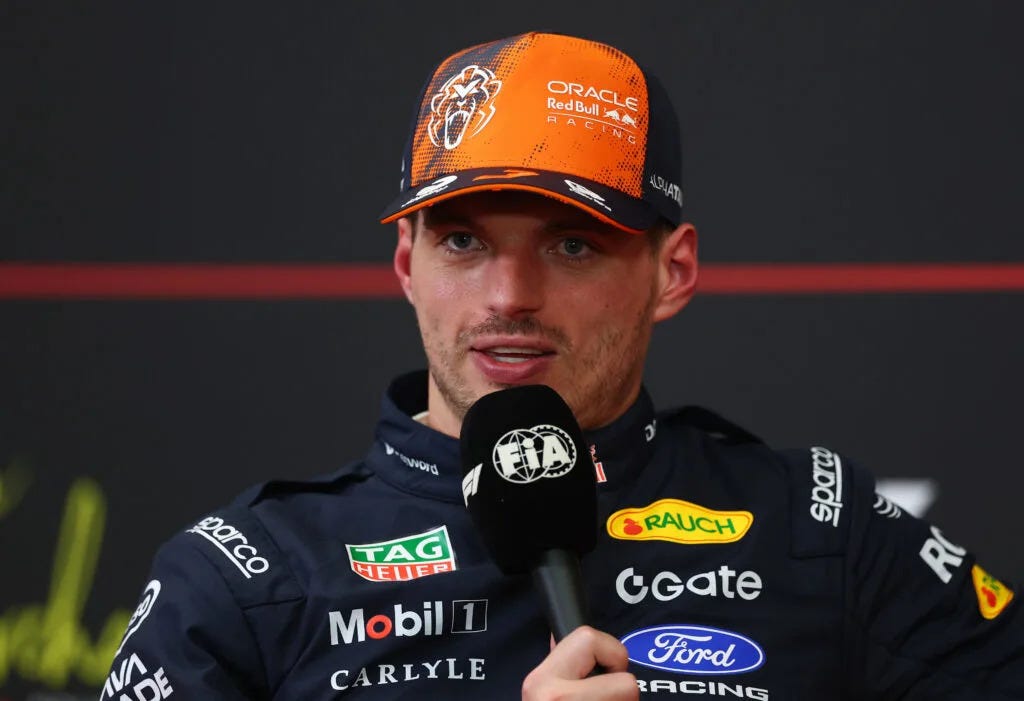
Red Bull’s new deal with Verstappen also gives Laurent Mekies the first piece of his plan for the team’s next winning cycle.
Mekies has identified three priorities: keep Verstappen, retain and attract top talent, and build the infrastructure needed to produce a competitive car. Verstappen’s decision settles the first question. It can also help Red Bull with the second.
Red Bull has lost several senior figures, including Adrian Newey, Rob Marshall, Jonathan Wheatley, Helmut Marko, and Christian Horner. Those departures, combined with years of speculation about Verstappen’s future, made the team look unstable to potential recruits.
Mekies can now point to Verstappen’s commitment when trying to keep engineers or convince new ones to join. The fastest driver in the world has chosen to stay. That gives the project credibility.
The deal has already affected one personnel decision. Verstappen wanted Tom Hart, his performance engineer, to replace Gianpiero Lambiase. Hart was set to join Williams but has stayed at Red Bull and will work with Verstappen next season.
That still leaves Mekies with plenty to fix. Verstappen’s signature buys Red Bull time. The car has to improve, Red Bull Ford Powertrains has to deliver, the new wind tunnel has to come online, and the team has to rebuild around a new generation of leaders.
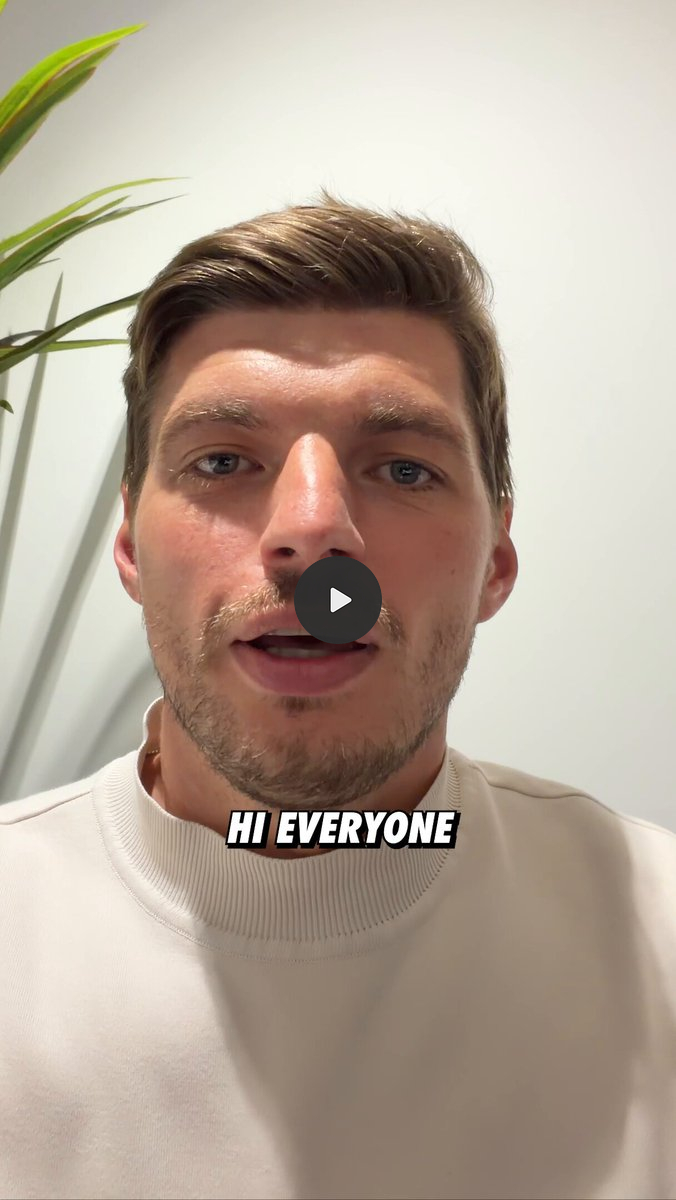
Verstappen’s contract also removes most of the surprise from the driver market for the next few seasons.
He is committed through 2030. Charles Leclerc is expected to remain at Ferrari through 2031 or 2032, while Lewis Hamilton is signed through 2027 and wants to continue if his 2026 form holds. Mercedes should keep Kimi Antonelli and George Russell. McLaren has Oscar Piastri through 2028 and Lando Norris through 2027, with another long-term deal likely for Norris.
That leaves few obvious routes into F1’s top teams.
Verstappen’s departure would have started a chain reaction. A move to Mercedes or Ferrari would have opened seats, shifted contracts, and forced the rest of the grid into motion. Instead, drivers such as Oliver Bearman, Pierre Gasly, and Carlos Sainz are left waiting.
Williams has already extended Alex Albon and Carlos Sainz, giving both sides more time to see whether James Vowles’ project can recover. Aston Martin faces a similar situation. Fernando Alonso is expected to stay unless Honda’s upgrade fails badly, while Lance Stroll has a seat at his father’s team.
Audi offers the next credible route to a front-running seat, but joining now requires patience. Driver movement gives broadcasters fresh storylines and helps F1 build national stars, as we wrote in Italy Is Back.
Business of Speed covers the business, technology, and lifestyle of racing: Formula 1, IndyCar, IMSA, WEC, NASCAR, and more. From Vincenzo Landino, entrepreneur and creator featured in Bloomberg, TBPN, Yahoo! Finance, Forbes, Adweek, and Front Office Sports. You can find us on Instagram, Substack, and LinkedIn.
A Different Kind of Ask
This one is a bit different.
Years ago, I worked with the Cystic Fibrosis Foundation and helped get New Haven’s Finest off the ground.
Today, I’m honored to be a 2026 Connecticut’s Finest honoree myself.
A lot has changed in CF since I first became involved. Treatments like Trikafta have given many people with CF a completely different future than they might have imagined a decade ago.
But there are still people who don’t respond to existing treatments. There is still a tremendous amount of work to do.
So I’m setting a goal of raising (at least) $2,500 for the Foundation.
If you’re in a position to donate, I’d genuinely appreciate your support. If not, sharing this with someone who might be interested is incredibly helpful too.
Thank you to everyone who has supported me over the years. This one means a lot.