

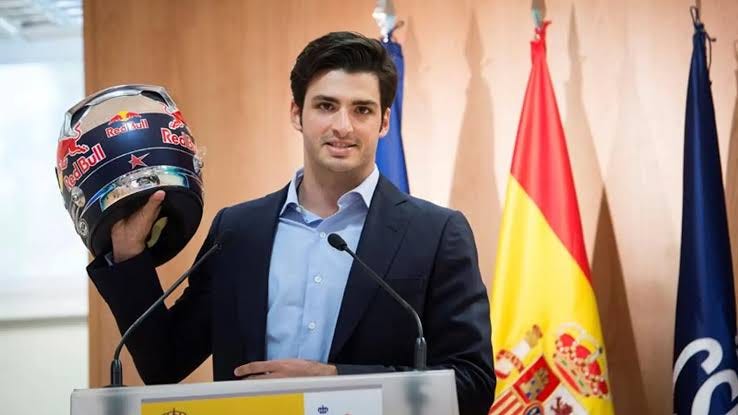
The first time Carlos Sainz drove a single-seater, María de Villota was ahead of him. He was 13. Years later, when he became an ambassador for her legacy, he remembered following her on his first laps and the opportunity she gave him. He had begun carrying her star on his helmet in 2014, before his Formula 1 debut.
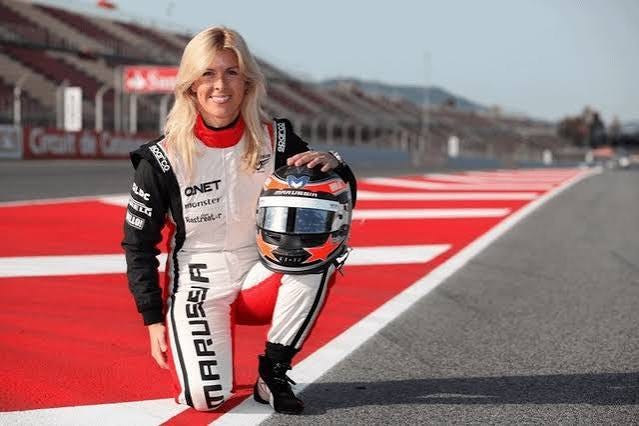
María was pursuing a place on the grid herself. She had spent years racing, and she also coached young drivers.
Born in Madrid, she grew up in a family that took racing seriously. Her father, Emilio, had competed in Formula 1 and ran a driving school at Jarama. Her younger brother, also Emilio, became a racer. In a 2023 interview with Relevo, their father remembered the siblings arguing after Formula Toyota races, each blaming the other for contact. At home, he had to remind them that the opponents included everybody else.
María moved through karting and Spanish Formula 3, then raced sports cars and touring cars. Her career took her to the Daytona 24 Hours and the World Touring Car Championship. In Germany’s ADAC Procar series, she won at the Nürburgring in 2007 and finished third in the standings. Returning to faster single-seaters, she represented Atlético Madrid in Superleague Formula and finished fourth at the Nürburgring in 2010.
She kept finding places to drive while working toward Formula 1. Alongside her own racing, she helped young drivers learn at the family school. She also studied physical activity and sports science at the European University of Madrid; her final degree project concerned motorsport marketing.
In August 2011, she finally drove an F1 car at Paul Ricard. Lotus Renault gave her the R29, its 2009 car, and she completed 300 kilometers. Éric Boullier, the team principal, said she had completed the work as expected, built up her pace and made no mistakes.
Her father later described how the test came about. According to his account, Bernie Ecclestone had questioned whether María could handle an F1 car physically and deliver the performance. She proposed putting it to the test. Her reply, translated from Spanish, was: “The stopwatch doesn’t lie. Let’s test it.” Ecclestone called Boullier. Emilio remembered his daughter climbing out at Paul Ricard, convinced that she belonged there.
That confidence still needed somewhere to go. On March 7, 2012, John Booth announced her appointment to Marussia’s test driver program. She would work with the team at races and have an opportunity to drive its new MR01 later in the year. In the team’s announcement, preserved by Motor Sport Press, María described the job as a step toward her ambition to race in Formula 1.
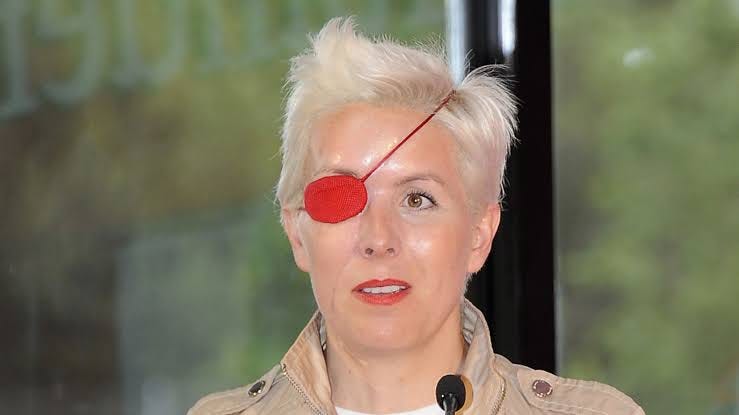
On July 3, 2012, during straight-line testing at Duxford Aerodrome in England, her Marussia struck a support truck in the service area. She suffered severe head and facial injuries and lost her right eye. After operations and months of recovery, she made a public appearance in Madrid that October.
When she returned to the Spanish Grand Prix in May 2013, she told La Vanguardia that she had previously arrived early, stayed late and tried to learn everything she could. She hadn’t expected the affection she received after the accident, including from strangers who stopped her in the street.
She missed driving and the long working days at a circuit. She also described relying on Rodrigo, her partner, and their dog, and discovering that she could enjoy a life away from the car. At the end of the interview, she said, translated from Spanish: “Right now, what I want most is to put my foot down again.”
Earlier that year, in March, the FIA had asked her about women in motorsport. She described feeling alone during her career and wanting to support other women so they could keep going. She had tried to keep a low profile in F1 and concentrate on doing the work. “From a professional point of view, you just want to be a racing driver,” she said.
She continued working with the FIA’s Women in Motorsport Commission and campaigned for road safety. At the 2013 Spanish Grand Prix, she joined F1 drivers in the Long Short Walk, a campaign for pedestrian safety during the United Nations’ road safety week.
There was another family loss during her recovery. According to the account published by her legacy, her nephew Javi died at three from a neuromuscular mitochondrial disease. María went to his funeral while she was still convalescing. In 2012, she created Primera Estrella to help children with these conditions and their families, initially funding it through sales of a charity bracelet.
She also wrote La vida es un regalo, or Life Is a Gift, about the accident and her recovery. Plataforma Editorial published the book in October 2013.
María died in Seville on October 11, 2013. Her family’s account attributes her death to the neurological injuries sustained in the crash. The following year, the family and Fundación Deporte Joven established Legado María de Villota to continue her charitable work.
Primera Estrella continues under the Fundación Ana Carolina Díez Mahou, supported by the legacy’s activities and by companies that had backed María during her racing career. The funding pays for medical care and therapies, including physiotherapy in clinics, at home, and in water. The program’s website reports that it has financed more than 20,000 treatments for 200 children.
Business of Speed covers the business, technology, and lifestyle of racing: Formula 1, IndyCar, IMSA, WEC, NASCAR, and more. From Vincenzo Landino, entrepreneur and creator, featured in Bloomberg, TBPN, Yahoo! Finance, Forbes, Adweek, and Front Office Sports. You can find us on Instagram, Substack, and LinkedIn.