


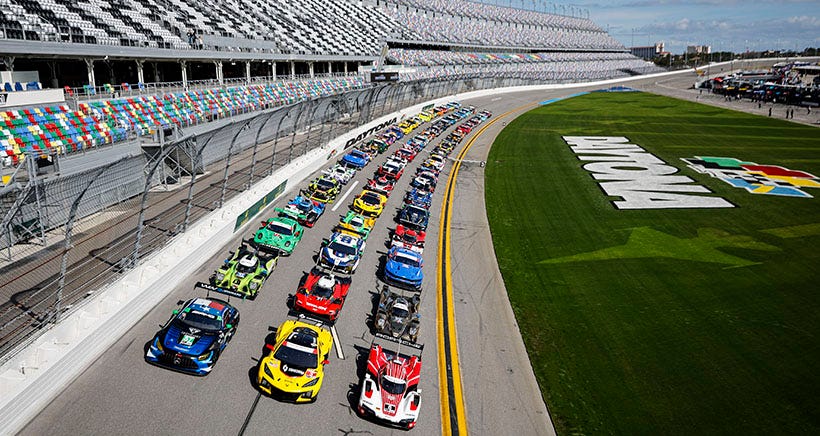
Walking through the paddock here in Daytona ahead of the Rolex 24, the atmosphere hits you differently than an F1 grid walk. There’s a feeling of grit and industrial utility to IMSA that you don’t find elsewhere.
And there’s plenty of business happening, too.
One of those business stories is the launch of IMSA Labs.
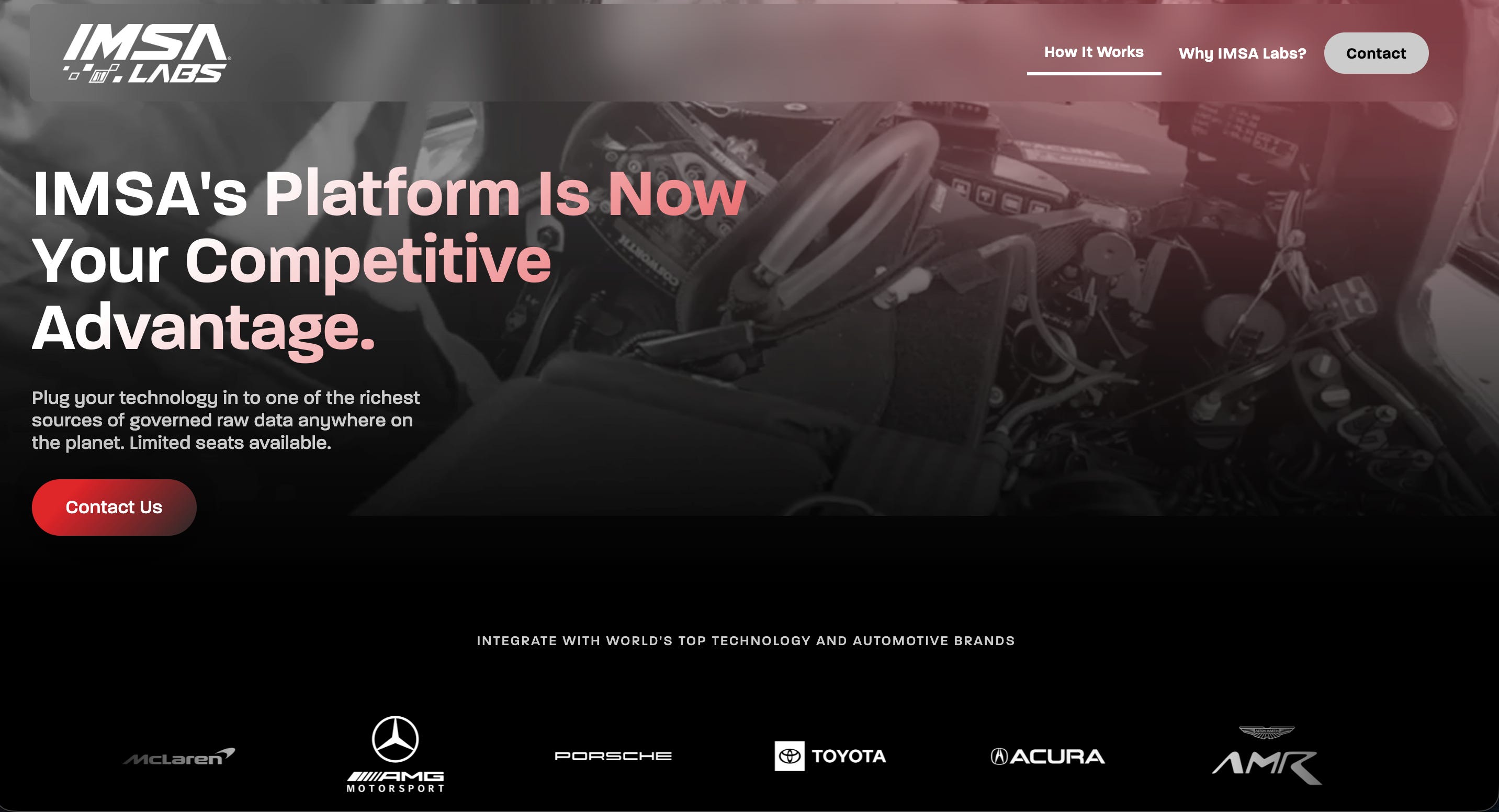
For decades, we’ve leaned on the old adage: “Win on Sunday, sell on Monday.” But let’s be honest—that motto is dated. Today, it’s “Validate on Sunday, integrate on Monday.”
IMSA has formalized what was previously an ad-hoc playground for engineers. They are turning the series into a governed, commercialized R&D facility for AI, edge computing, and sensor tech.
Historically, motorsport sponsorship came out of a CMO’s budget. You paid for eyeballs, brand awareness, and hospitality.
IMSA Labs flips the script. It targets the CTO’s budget.
The concept is simple: The racing environment provides stress factors that you simply cannot replicate in a sterile lab in Detroit or Stuttgart.
By formalizing this, IMSA is telling tech giants: “Go beyond sponsorship…fix your tech before it hits the consumer market.”
This is a smart pivot. We’ve seen Formula E do this with battery efficiency and WEC with hybrid powertrains. But IMSA is positioning itself specifically as the “Industrial Tech” partner, helping understand the messy reality of the road.
The Three Lanes of Innovation
What strikes me about this rollout is the structure. It’s not a one-size-fits-all entry fee. They’ve tiered it like a SaaS product:
Foundational: The heavy hitters. Think long-term integration.
Program: Project-based sprints. Testing a specific brake sensor or a latency algorithm.
Ecosystem: The open network for startups and universities (like Embry-Riddle).
This modularity is brilliant. It lowers the barrier to entry for a Silicon Valley startup that might have incredible AI vision software but can’t afford a $5M primary sponsorship on a GTP car.
By launching IMSALABS.com, they are signaling that this goes beyond a simple sponsorship handshake; it is a true development ecosystem.
Beyond the Sticker Slap
Let’s look at the partners involved.
AMD is using the series for latency and compute validation. Racing requires real-time decisions at 200 mph. If an edge GPU can process vision data in a GTP car vibrating over the bumps at Sebring, it can handle a consumer autonomous vehicle on a potholed highway.
AWS continues its global motorsport dominance here. We see them in F1 and the NFL, but in IMSA, the focus shifts toward scalable ingestion. It’s about building the pipes that move terabytes of telemetry from the track to the cloud instantly.
Bosch is the veteran here. They are validating hardware durability. Electronics hate heat and vibration. Endurance racing is literally a torture test for sensors.
Monetizing the “Governed Surface”
The term “Governed Surface” was thrown around in the release, and it’s critical.
In SailGP, they control the entire tech stack: it’s fantastic for close racing, but hard for third parties to test their own gear. F1 is so secretive that teams protect their data with military-grade paranoia.
IMSA is carving out a middle ground: an open API for racing.
By creating a permissioned, observable environment, they allow vendors to log failures and compare datasets across multiple events.
This opens up new revenue streams:
Technical Validation Partnerships: “Intel Inside” but for racing reliability.
Data Licensing: Selling anonymized, high-fidelity datasets to third-party developers.
Co-authored IP: Whitepapers and case studies that serve as marketing collateral for tech firms.
A Look Ahead
Where does this go in 3-5 years?
I expect we will see the rise of the Digital Twin in IMSA. With enough sensor data validated through IMSA Labs, manufacturers will be able to build perfectly accurate digital simulations of their components.
This also puts pressure on IndyCar and NASCAR to define their “tech identities.” NASCAR is leaning into entertainment and streaming, while IndyCar is leaning into the hybrid debate. IMSA can firmly stake its flag in the ground as the R&D Lab.
It’s a long play, but it’s the only business strategy that makes sense in an AI-driven world.
Read the press release here.
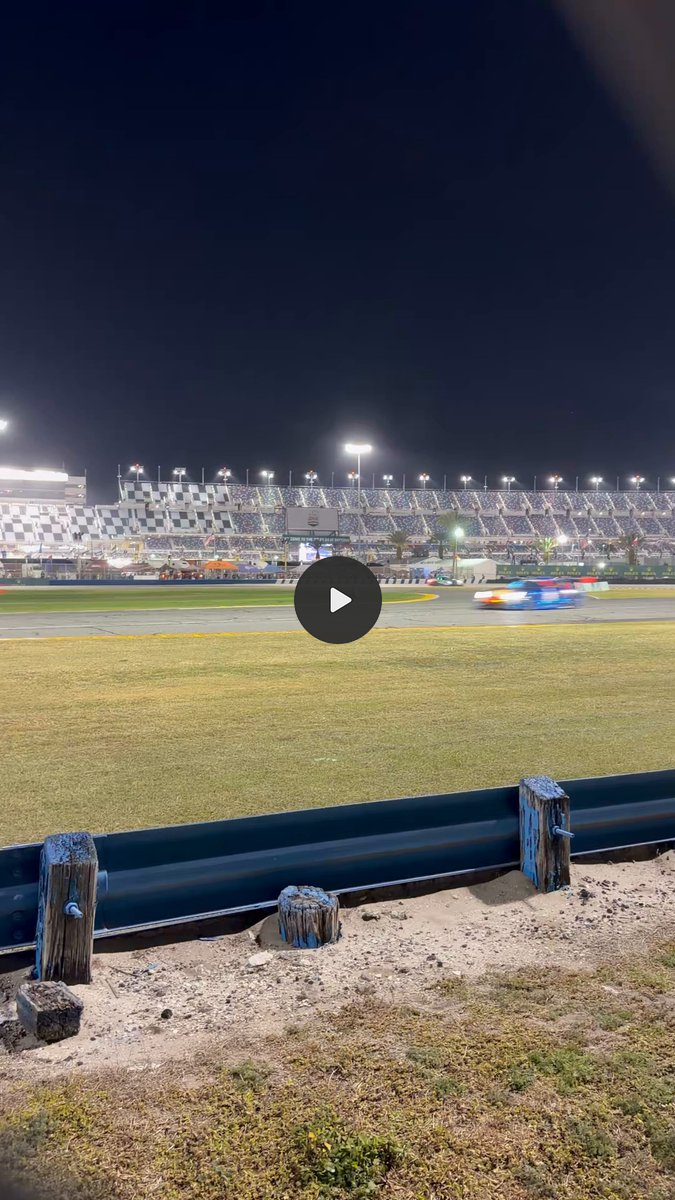
Oh, and I finally got a chance to hear the Aston Martin Valkyrie in person…

This article comes at the perfect time. Your insight into validating AI on track is truly vtal.