


Count the logos on the 2026 grid. Banks. Crypto exchanges. Payment processors. Trading platforms. Nearly every car carries at least one financial services partner. Most carry several. Finance has become the dominant sponsorship category in Formula 1, and growth continues to accelerate.
The numbers
Fintech Branding Studio’s analysis of the 2026 grid identified 34 financial companies as sponsors. In 2025, that figure sat around 20. A 70% jump in a single season.
The breakdown by subsector:
Crypto accounts for 26% of financial sponsors (9 companies)
Institutional finance holds 24% (8 companies)
Trading and investing platforms are also at 20% (7 companies)
Payments makes up 15% (5 companies)
Digital banking, automotive finance, and e-commerce finance round out the remaining 15%
Traditional finance now represents 74% of the financial sponsor pool. Two years ago, crypto dominated the conversation around financial services in F1. That has flipped.
Who is where?
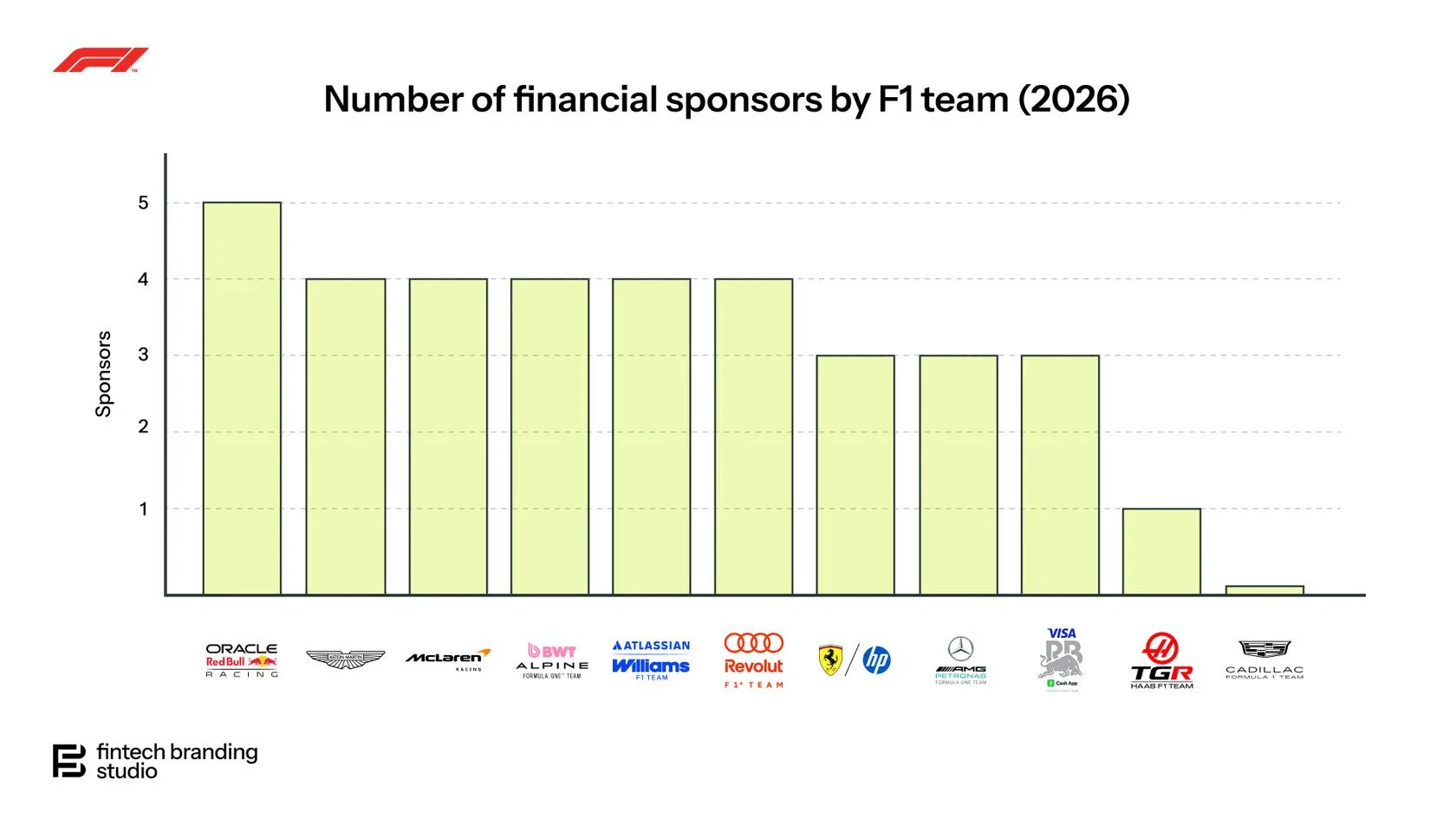
The 2026 ecosystem has some new contenders in the ring, including Revolut, BingX, Nubank, eToro, BlockDAG, IC, XMTrading, Barclays, BNY, Nuveen, Nexo, Aleph, Public, AvaTrade, and Carlyle.
McLaren Mastercard Formula 1 Team
Mastercard
FxPro
Airwallex
OKX
Scuderia Ferrari HP F1 Team
UniCredit
ZCG
BingX
Oracle Red Bull Racing Formula 1 Team
VISA
Carlyle
ROKT
Avatrade
Mercedes-AMG PETRONAS F1 Team
Nasdaq
Nubank
UBS
Aston Martin Aramco F1 Team
Coinbase
Public
Pepperstone
CoinPayments
BWT Alpine F1 Team
eToro
ApeCoin
BlockDAG
Mobilize Financial Services
TGR Haas F1 Team
IC
Visa Cash App Racing Bulls F1 Team
Visa
Cash App
XMTrading
Atlassian Williams F1 Team
Nuveen
Barclays
BNY
Kraken
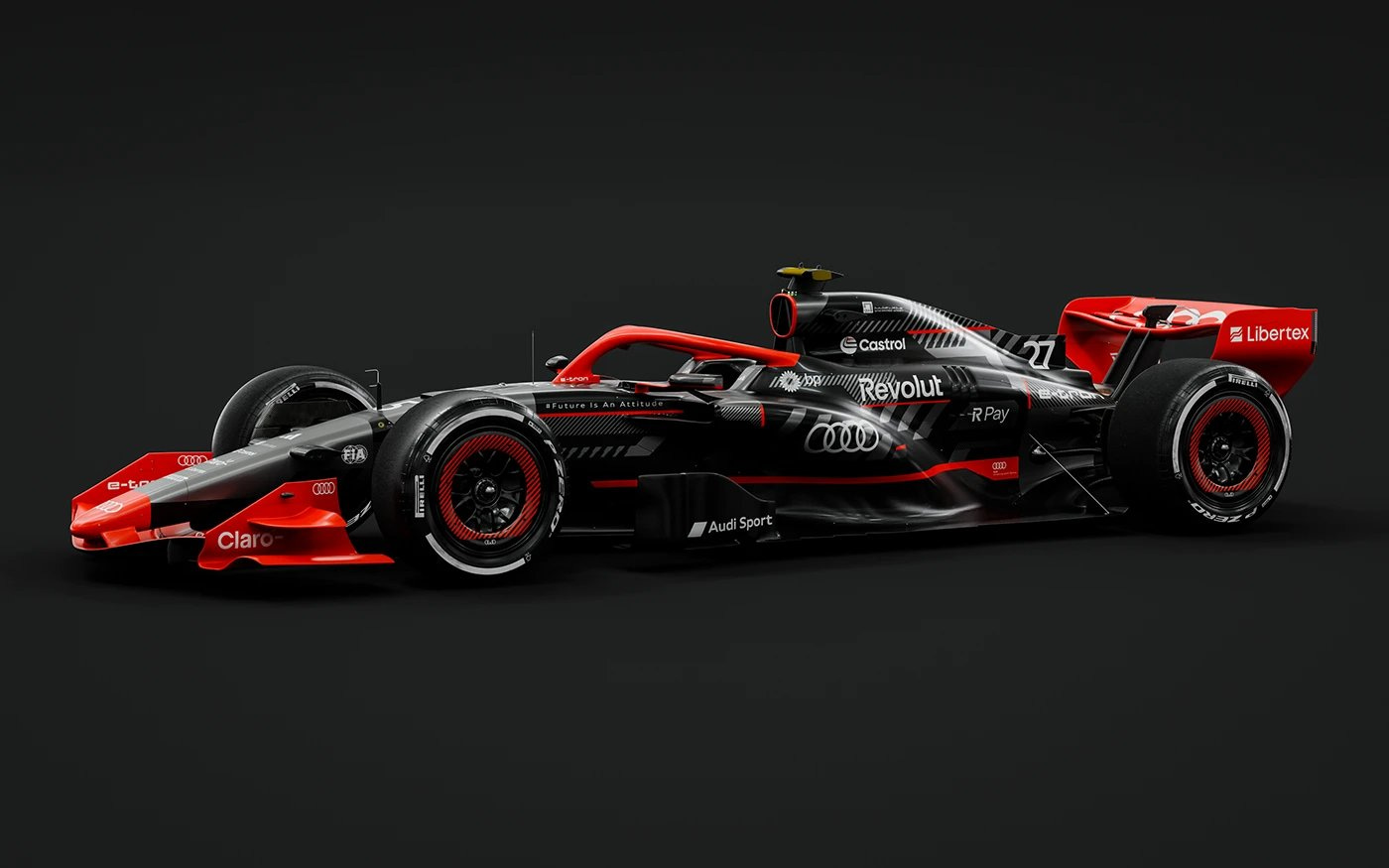
Audi Revolut F1 Team
Libertex
Nexo
Revolut
Aleph
Only Cadillac, as of this writing, is missing a major finance or crypto partner.
Why F1, Why Now?
Three dynamics explain the surge.
The audience. Formula 1 reaches over 800 million viewers annually, with the fastest growth in the 18-to-34 demographic. For financial services companies fighting to acquire younger customers, the cost-per-qualified-impression math works.
Regulatory arbitrage. Financial services advertising restrictions vary by country. F1’s global broadcast model lets a brand appear in 25+ markets through a single sponsorship. For crypto companies facing patchwork regulation, this solves a distribution problem that no other marketing channel can.
Competitive pressure. When Visa sponsors a team, every payment network recalculates its marketing allocation. When Revolut secures a title sponsorship, every neobank takes notice. The category has reached a tipping point where absence from F1 feels like a strategic gap.
But what does the mix say?
Crypto companies still represent a quarter of financial sponsors, but they are now outnumbered by banks, payment networks, and asset managers. That maturation is the story. Crypto brands were early because they had large marketing budgets and fewer traditional channels. That first-mover advantage brought the rest of the industry in behind them.
The grid now looks more like a cross-section of the global financial system than a crypto conference. The diversity of the financial sponsor base is the strongest signal that this category has moved from speculative to structural.
How F1 stacks up against the NFL, and the Premier League
Thirty-four financial sponsors across 10 teams is a striking concentration. But financial services companies are flooding into every major sport right now. How they appear on each platform tells you what each platform actually delivers.
The NFL
Financial services is the league’s second-largest sponsorship category, generating roughly $250 million in team-level revenue for the 2024 season.
Total NFL club sponsorship hit $2.49 billion that year, up 6%, with financial services growing at 10%.

Visa has a seven-year deal with the Buffalo Bills. Intuit renewed as the league’s official financial and accounting software sponsor through 2026.
Bank of America is embedded with the Dallas Cowboys.
Truist is the official retail bank of the Miami Dolphins.
The Chargers and Rams play in SoFi Stadium.
The average NFL team now carries 113 sponsorship deals.
The profile skews legacy. Banks. Insurance companies. Accounting software. The fintech insurgents that define the F1 grid are largely absent. The NFL’s audience is massive and overwhelmingly domestic. A neobank chasing global customer acquisition gets scale in one market. F1 gives them 25.
Crypto sponsors have been cautious about the NFL since the FTX collapse, and the league has been cautious right back.
The Premier League
The most interesting sponsorship story in global sport right now is happening in English football. Starting in the 2026-27 season, betting companies will be banned from front-of-shirt positions. Eleven clubs currently carry betting sponsors on their chests. That is 11 shirt fronts about to hit the open market simultaneously.
Financial services already have a presence. Liverpool’s Standard Chartered deal runs through 2027 at approximately £40 million per year. Axi sponsors Manchester City with access to the broader City Football Group ecosystem. Trade Nation holds a sleeve deal with Aston Villa. Crypto platforms have invested over £400 million in Premier League partnerships between 2021 and 2026, with seven clubs maintaining digital asset deals.
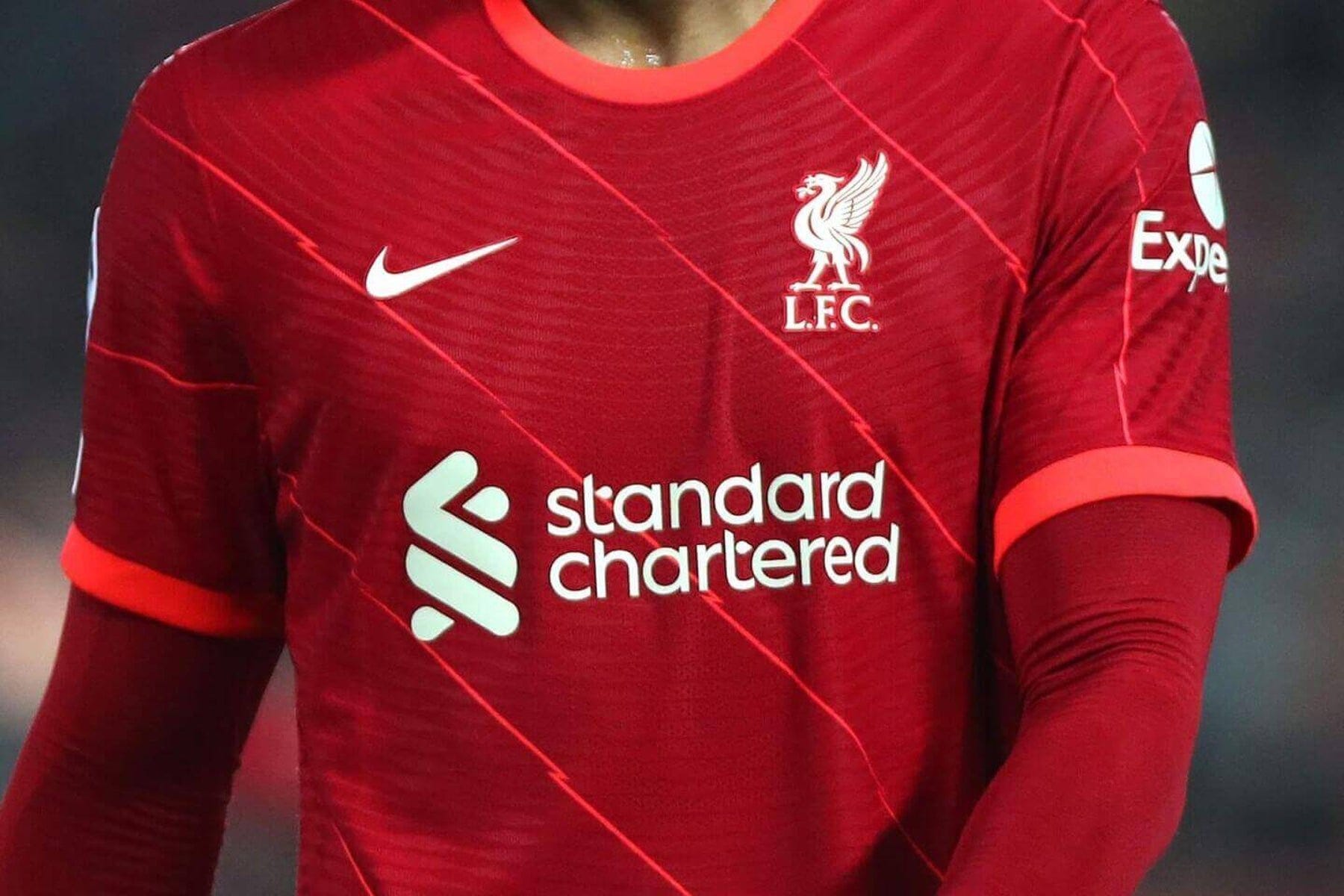
The structural difference from F1 is the inventory. A club has one shirt front, one sleeve, and a handful of high-visibility positions. An F1 team can layer multiple financial sponsors across a car, race suits, garage branding, and digital assets without conflict. McLaren can carry both Mastercard and Airwallex. A Premier League club cannot stack two competing financial brands on the same shirt.
F1 can absorb more financial sponsors per team. The Premier League’s fintech wave will be constrained by the number of available slots. Demand is there. Space is not.
Each platform offers something different to a financial services brand:
F1 delivers global reach, regulatory flexibility, and the ability to stack multiple financial sponsors per team. Broadest subsector mix of any sport.
The NFL delivers a domestic scale that nothing else can match. Attracts established financial institutions. Fintech disruptors have mostly stayed away.
The Premier League is about to open up a historic number of shirt slots as betting sponsors exit. Limited inventory will mean premium pricing and fierce competition.
F1 sits at the intersection of global audience, young demographics, regulatory flexibility, and ample inventory. No other sport combines all four.
The question going forward
At 34 financial sponsors and counting, the grid is approaching category saturation. The next phase will sort the brands that extract measurable commercial value from those that discover a logo at 200 mph, which does not automatically translate into customer acquisition.
The same ROI logic is reshaping media rights deals across motorsport applies here.
Teams that can prove returns for their financial partners will command premium rates. The rest will watch those sponsors rotate out after two or three seasons. The boom is real. Whether it lasts depends on results that have nothing to do with what happens on track.
Explore the full analysis from Fintech Branding Studio here, including additional stats and visuals on every financial sponsor across the grid.
Know someone in finance or sports investment who'd find this useful? Forward this issue to them. They can subscribe here