


Every Monday, we publish a series called CAPITAL MOVES, a look into the off-track investments of individuals involved in the world of racing. Be sure to check out previous editions.
Vince Lombardi once said, “Winning isn’t everything; it’s the only thing.”
Floyd “Chip” Ganassi Jr. grew up in Pittsburgh, Pennsylvania, in the 1960s and 1970s, when that philosophy ran through the city like a river. The Steelers won four Super Bowls in the 1970s. The Pirates won the World Series in 1971 and again in 1979. “I was so lucky to grow up here during the age of the Steelers and the Pirates,” he has said. “It was about hard work, perseverance, grit on the field, excellence, and ability. To me, that’s what it’s all about.”
It is no coincidence that his best-known catchphrase, deployed after every victory, is three words: “I like winners.”
He has had no shortage of material to work with.
He had just turned five in 1963, when his father, Floyd Ganassi Sr., a World War II veteran who had parlayed a small asphalt-paving operation into a concrete and commercial real estate business called FRG Group, brought home an 8-millimeter film of the Indianapolis 500. Parnelli Jones won that year. Ganassi has said he watched that film more than 700 times, frame by frame. The Indy 500, on eight-millimeter film, on a loop, in a house in Pittsburgh, watched by a five-year-old who would one day win that race six times.
Steel City
Ganassi was born on May 24, 1958, in Monessen, Pennsylvania, a small mill town on the Monongahela River south of Pittsburgh, and grew up in Fox Chapel, a suburb to the northeast of the city along the Allegheny River. He attended Fox Chapel Area High School, where he discovered motocross and skiing before his focus shifted. He attended the Bob Bondurant Driving School in 1977, won his first auto race in a Formula Ford at eighteen, and began competing in open-wheel racing while simultaneously working in the family business and pursuing a degree in finance at Duquesne University, Pittsburgh’s Spiritan institution perched on the Bluff above the Monongahela River.
“My apprenticeship as a race car driver went fast,” he has recalled. “I turned 23, graduated from college, and qualified for the Indy 500 all in a 10-day period.”
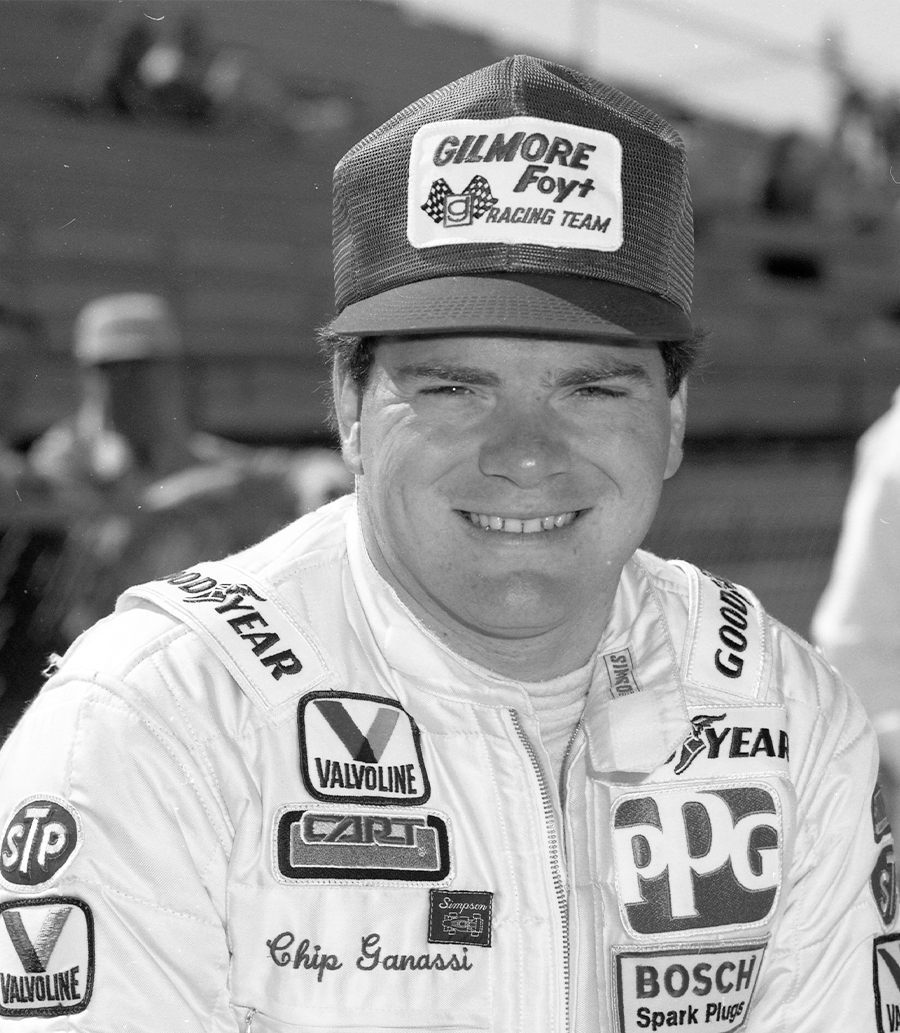
At that first Indianapolis 500 in 1982, he was the fastest rookie qualifier on the grid, averaging 197 mph. He was voted Most Improved Driver in the CART series (now IndyCar) in 1983. He put Patrick Racing’s Wildcat on the podium twice that season. The following year, he finished second at the Budweiser Grand Prix of Cleveland.
Then came July 22, 1984, and the Michigan 500.
Michigan
The race was on lap 148 when Ganassi’s car cut a tire exiting one of the banked turns at Michigan International Speedway. The car darted left into Al Unser Jr. Both cars slid toward the infield. Unser’s car lost its top but stayed upright. Ganassi’s car flew, twisted, slammed into the inside Armco barrier, tumbled multiple times, and broke apart. Legendary CART team doctor Stephen Olvey reached the wreck to find Ganassi unconscious and unresponsive, and was preparing to administer CPR when Ganassi resumed breathing. He was airlifted to the University of Michigan Hospital with a broken sternum, a broken hand, stitches in his knee, and serious head injuries. He was briefly comatose.
“I was very, very, very lucky,” he has said.
He never returned to full-time racing. After a handful of CART and sports car appearances in 1986, including a Le Mans entry in 1987 where his car’s gearbox failed, his driving career was over. He was twenty-six years old.
Most people in that position grieve the loss of the thing they loved. Ganassi redirected it. He had a finance degree from Duquesne, a working knowledge of what a top racing team required, and a competitive instinct with nowhere else to go. In 1988, he bought a minority stake in Pat Patrick’s IndyCar operation, one of the oldest and most respected entries in the sport. He stayed in the background, learning the business from the inside. The following year, he stood in Victory Lane at Indianapolis when the Patrick/Ganassi car, driven by Emerson Fittipaldi, won the 1989 Indy 500. He was a co-owner watching the race he had watched on film 700 times as a child, now win in real life.
Patrick had agreed to sell Ganassi the team, but then had second thoughts. He went ahead with the deal regardless, handed Ganassi the assets, and restarted his own team elsewhere. Chip Ganassi Racing was born: one car, one driver in former Formula 1 racer Eddie Cheever, and one sponsor. The sponsor was a midwestern department store chain that had recently begun a national expansion. It was called Target.
The Target Years
The partnership between Chip Ganassi Racing and Target lasted twenty-seven years. When the IndyCar partnership ended after the 2016 season, a new Target chairman had decided to shift the company’s sports marketing budget toward soccer. Mike Hull, managing director of Chip Ganassi Racing, described the twenty-seven-year run as unheard of in professional sports. Ganassi himself called it “the greatest sponsor in racing, ever.” Between 1990 and 2016, Target-sponsored Ganassi cars won 102 IndyCar races and 11 championships.
The red-and-white Target bullseye became one of the most recognizable liveries in American motorsport.
Wins came in time. The first arrived in 1994, when Michael Andretti, just returned from a disastrous Formula 1 season at McLaren, joined the team and won in his first race with Ganassi, at the season opener in Surfers Paradise, Australia. Ganassi had stretched to sign Andretti: “I knew then we had a guy that could win races. I thought, ‘If I have a guy in the car that can win races and we don’t win races, who are they going to look at?’”
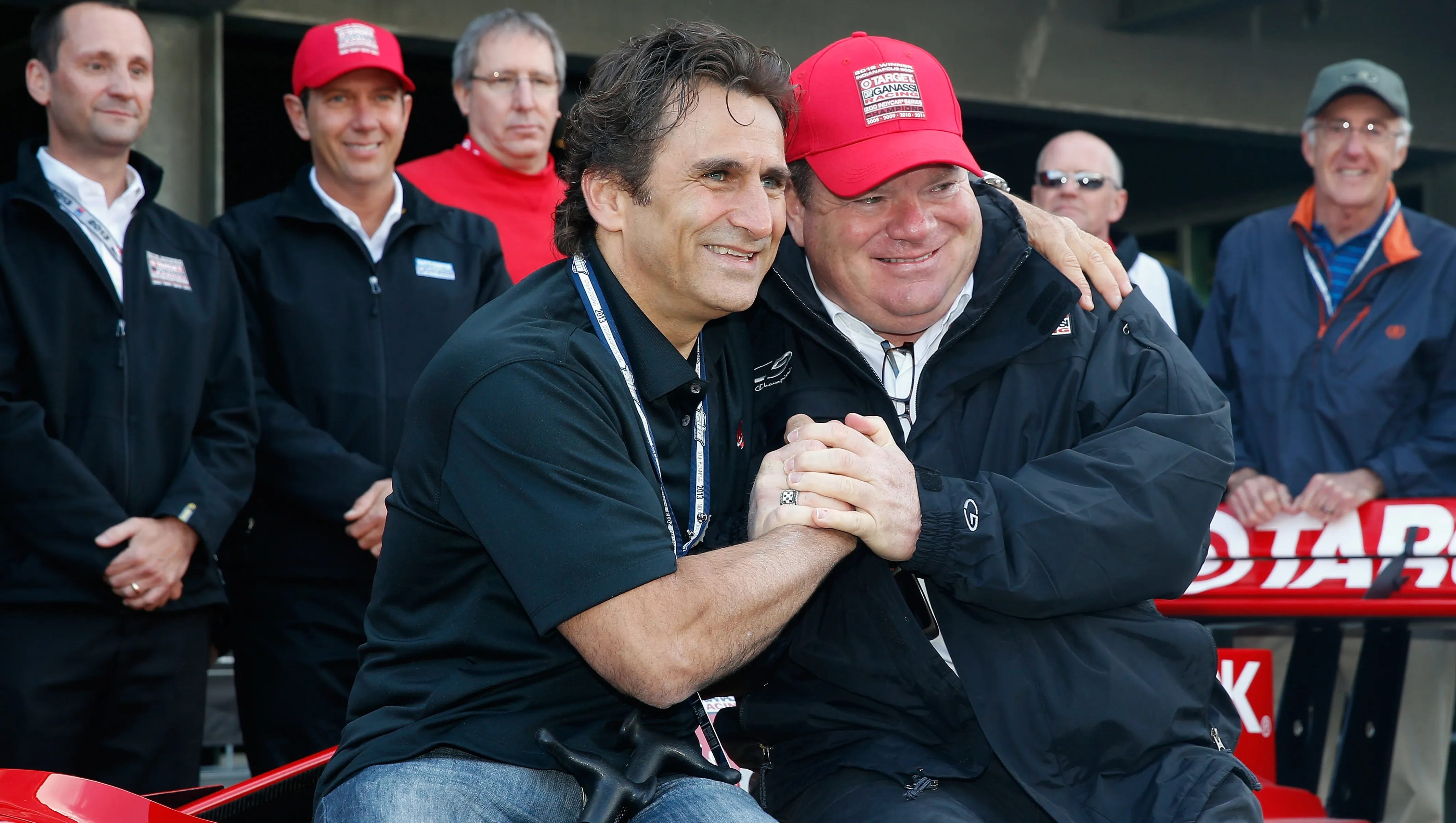
Two years later, Jimmy Vasser won the CART championship. One year after that, Alex Zanardi, the Italian with elite racecraft and a wonderful smile, won it again, and then again in 1998. In 1999, a twenty-three-year-old Colombian rookie named Juan Pablo Montoya arrived at Ganassi, attacked the CART series with what Ganassi would later describe as lightning, and won the championship at his first attempt. Four consecutive CART titles, 1996 to 1999. No car owner had ever done that before.
Then Ganassi did something that redefined the politics of American open-wheel racing.
Crossing the Line
In 1996, a bitter split had divided American open-wheel racing into two competing series: the established CART, which Ganassi had dominated, and the upstart Indy Racing League, which controlled the Indianapolis 500. For four years, the teams lined up on one side or the other. In 2000, Ganassi crossed, entering Montoya and Jimmy Vasser in the Indianapolis 500 under the IRL banner as the first major CART operation to break ranks. The decision was commercially and politically seismic. It also worked: Montoya dominated the race and won at his first attempt, leading 167 of 200 laps and winning by more than seven seconds, a margin that left no debate.
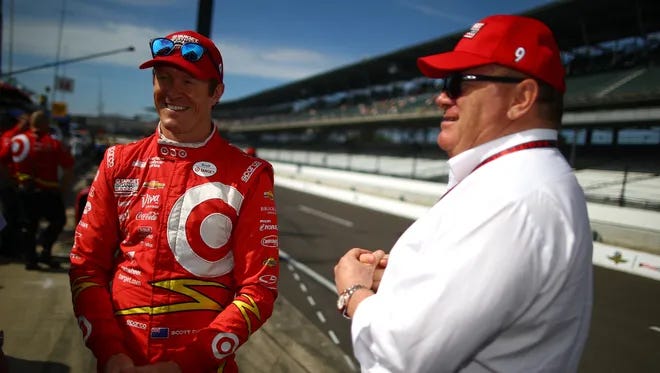
By 2003, Ganassi had committed fully to IndyCar. He brought a quietly ferocious New Zealander named Scott Dixon into the fold. Dixon won the championship in his first full season, 2003. He would win it again in 2008, 2013, 2015, 2018, and 2020, for a total of six titles, the second-most in the history of the series, behind only A.J. Foyt’s seven. He has 59 career victories, also second to Foyt’s 67. He has won a race in twenty-one consecutive seasons and in twenty-three of his twenty-five years in the series. He set the all-time IndyCar starts record in 2025. “Nobody had Montoya’s swagger at that age,” Ganassi has said. “But nobody in the sport’s history has had Dixon’s staying power.”
Dario Franchitti joined in 2009, adding three more championships in three consecutive years, 2009, 2010, and 2011, and two more Indy 500 wins in 2010 and 2012. Between Dixon and Franchitti, Chip Ganassi Racing won six IndyCar championships in six years. No organization in the sport has matched that.
NASCAR: Entry, Expansion, Exit
Ganassi entered NASCAR in 2001, buying an 80 percent stake in Felix Sabates’s Team SABCO, an operation founded by a Cuban-born entrepreneur that had been competing since 1989. No purchase price was ever disclosed, but Sabates retained 20 percent and remained a partner for nearly two decades. The terms of entry mattered less than what Ganassi proceeded to build on top of them.
The partnership grew quickly. In 2009, Ganassi merged with Dale Earnhardt Inc., running briefly under the Earnhardt Ganassi Racing banner until 2014, when the name reverted to Chip Ganassi Racing. At its peak, the organization ran four cars across the Cup and Xfinity Series and employed hundreds of staff at a race shop in Concord, North Carolina. Kyle Larson became the centerpiece driver from 2014 to 2020, “a once-in-a-generation talent” in Ganassi’s own words, until a racial slur incident during a virtual race in April 2020 ended his tenure within days. Over twenty years in stock cars, the NASCAR operation produced forty-four Cup and Xfinity Series wins.
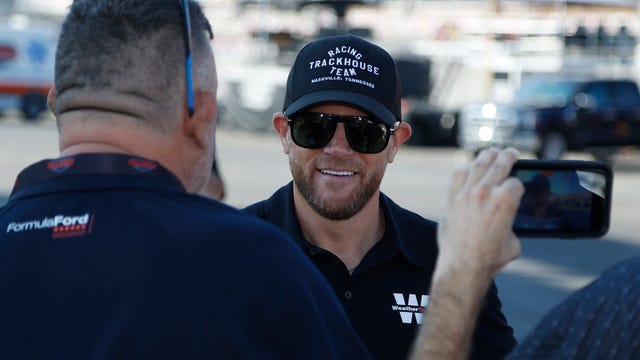
In June 2021, Ganassi received an unsolicited call from Justin Marks, a former Ganassi Xfinity Series driver who had founded Trackhouse Racing with musician Pitbull as co-owner. “I can honestly say that my NASCAR team was not for sale,” Ganassi told the AP. “Justin simply came to me with a great offer and an even better vision.”
No financial terms were disclosed, but the two Cup Series charters alone were then trading at more than $10 million each on the open market, meaning the charter value alone exceeded $20 million before the Concord shop, equipment, and assets were factored in. Ganassi walked away from two decades in stock cars without visible regret. “I’m 63 years old. What am I going to do? Am I going to do this for 10 more years or something?” He turned back to IndyCar, where the dynasty was about to produce its most extraordinary chapter yet.
The Grand Slam
The achievement that stands alone in the history of American motorsport came from a single calendar year.
In February 2010, Jamie McMurray won the Daytona 500 for Ganassi’s NASCAR team, the first of the season’s three major crowns. In May, Dario Franchitti won the Indianapolis 500 for the IndyCar team. In July, McMurray passed Kevin Harvick on a late restart and pulled away to win the Brickyard 400, completing what no team owner in the history of American motorsport had ever done: winning the Daytona 500, the Indianapolis 500, and the Brickyard 400 in the same season. “You wouldn’t dare to dream this,” Ganassi said. “You wouldn’t dare to dream this kind of year.”
He was not finished. In January 2011, his sports car team won the Rolex 24 at Daytona, making Ganassi the first owner in history to hold all four of the most important titles in North American racing simultaneously. He subsequently added the 12 Hours of Sebring and a 24 Hours of Le Mans class win, making him the only team owner in history to have won the Indianapolis 500, the Daytona 500, the Brickyard 400, the Rolex 24 at Daytona, the 12 Hours of Sebring, and the 24 Hours of Le Mans. Six trophies, and no other owner in the history of motorsport holds all of them.
The Palou Affair
In the summer of 2022, news broke that Chip Ganassi Racing had re-signed reigning IndyCar champion, Spaniard Alex Palou, for the following season. Within hours, Palou issued a statement denying it. It emerged he had already signed a contract with McLaren Racing to drive for Arrow McLaren, McLaren’s IndyCar operation, from 2024 to 2026, with the promise of a pathway to Formula 1. Ganassi exercised a contractual option on Palou for 2023. A federal court fight followed, settled through mediation, with McLaren covering Palou’s legal costs. Palou remained at Ganassi in 2023 and was McLaren’s reserve and test driver for the F1 team.
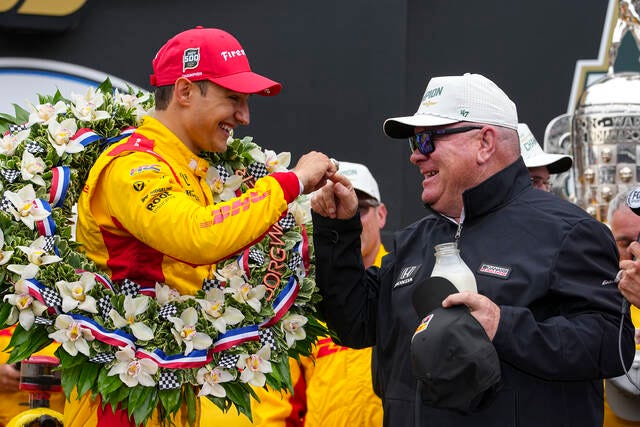
Then, when Oscar Piastri signed with McLaren to be their F1 driver and Palou’s IndyCar dominance deepened, Palou decided he did not want to join Arrow McLaren after all. He reneged on his contract.
McLaren sued for $31 million. A six-week trial was held at the UK Commercial Court in London in the autumn of 2025. In January 2026, the judge awarded McLaren $12 million in damages, tied to sponsorship losses, most notably $5.3 million covering losses from the team’s deal with NTT Data, while dismissing McLaren’s Formula 1-related claims entirely. Chip Ganassi paid Palou’s legal fees throughout. “Alex has our full support, now and always,” Ganassi said when the verdict landed. “We know the character of our driver and the strength of our team, and nothing changes that.”
By that point, the man he fought to keep had won the IndyCar championship in 2021, 2023, 2024, and 2025, four titles in five years, including the most dominant season in modern IndyCar history in 2025 when Palou won eight of seventeen races and clinched the championship with two rounds remaining. Combined with Scott Dixon’s six titles, Chip Ganassi Racing has now won thirteen IndyCar championships since 2003 and seventeen open-wheel championships overall, including the four consecutive CART titles of the 1990s. No other team in American open-wheel history has come close.
The Numbers
By design, Chip Ganassi Racing’s financial architecture is not publicly disclosed. The available data tells a clear enough story.
As of 2024, the team’s annual revenue is estimated at approximately $35 million, generated primarily from sponsorship, Honda manufacturer support, and prize money. Against that, the costs are unrelenting: running three competitive IndyCar cars at championship level requires budgets of $8 to $14 million per car per season, according to RACER. Honda engine leases alone run $1.6 million per car annually, meaning Ganassi’s three-car IndyCar operation carries an engine bill alone of nearly $5 million a year before a wheel has turned. By conservative estimates, the total operating costs are well over $33 million a year simply to field.
The margins in IndyCar are thin by the standards of any professional sport.
The sponsor roster tells its own story about how the team sustains itself. PNC Bank anchors the No. 9, Scott Dixon’s car, the most decorated active seat in the sport. DHL, the global logistics company, anchors the No. 10, Palou’s championship-winning car, in a multi-year partnership signed at the end of 2023. Both fit the template Ganassi has always used: multi-year, multi-million dollar commitments, deep enough to be structurally important to the operation. The template was set by Target, which stayed for twenty-seven years. The names change. The model has not.
The broader financial context matters. Each IndyCar charter, introduced in 2025 to give teams a tradeable franchise value, is estimated to be worth approximately $1 million. NASCAR charters trade at between $25 and $45 million each and are rising. An F1 team is valued in the billions. Ganassi built his dynasty in the least financially leveraged major motorsport series in the world. Twenty-four championships. Six Indianapolis 500 wins. The only Grand Slam in American motorsport history. All of it is built on the economics of a series in which the charters, even today, are worth less than a mid-range Manhattan apartment.
Ganassi’s personal net worth is estimated at approximately $100 million, a figure that reflects the racing operation, the FRG Group’s commercial real estate and transportation holdings that his father built and that underpin the family’s broader wealth, and thirty-five years of accumulated competitive success. He lives in Fox Chapel, the same suburb where he grew up. He maintains his corporate offices in Pittsburgh. He has an honorary doctorate from Carnegie Mellon University, is a member of the Motorsports Hall of Fame, and was a minority owner of the Pittsburgh Pirates for nearly a decade, “to do something good for the city that I grew up in.”
His father’s equation, etched into his Motorsports Hall of Fame induction citation, is three words: Life times people.
700 Times
Chip Ganassi is sixty-six years old. He started with one car, one sponsor, one rented shop, and a finance degree, and has spent thirty-five years as the most decorated team owner in American motorsport history.
The eight-millimeter film his father brought home in 1963 showed a race at the Indianapolis Motor Speedway. Ganassi has since won it six times, along with the Daytona 500, the Brickyard 400, the Rolex 24 at Daytona, the 12 Hours of Sebring, and a class win at the 24 Hours of Le Mans. He is the only person in the history of motorsport to have done all of that.
Palou is twenty-seven. Dixon will retire in the next few years, and when he does, Ganassi will need to find what he has always found: a driver nobody else has fully committed to yet, built into a champion before the field catches up. He has done it with Montoya, Dixon, Franchitti, and Palou. The process looks less like luck each time.
Expect the dynasty to run through the decade.
This dispatch brought to you by Omologato UK

This newsletter is made possible through the support of our subscribers and our partners. When you support our partners, you’re supporting independent media like Business of Speed. We recently had Omologato founder, Shami Kalra, on the podcast. Use partner code BOS10 on your Omologato purchase to let them know we sent you.