

Every week, Business of Speed publishes a series called CAPITAL MOVES by Lali Michelsen, a look into the off-track investments of individuals involved in the world of racing. Be sure to check out previous editions.
At the end of Candide, after the shipwrecks and the earthquakes and the endless philosophizing, Voltaire lets his hero arrive at a conclusion that is so modest, it almost reads like a shrug: “Il faut cultiver notre jardin.” We must cultivate our garden. Stop chasing grand theories. Tend the ground in front of you. Grow something.
Fred Vasseur has spent three decades doing exactly that. He never chased the headline fortune. He patiently tended the ground in front of him, on his own terms.
His fortune carries no single defining deal or acquisition, no rich-list number anyone has ever managed to pin on him. His is a sprawling, patiently cultivated garden: a constellation of companies he founded one by one over 30 years, across nearly every layer of motorsport. Engine preparation, race teams spanning a dozen championships, driving simulators, electric and hydrogen chassis manufacturing that supplies entire FIA global series.
Vasseur took his time planting many seeds, and perhaps he has a green thumb, because most of them grew.
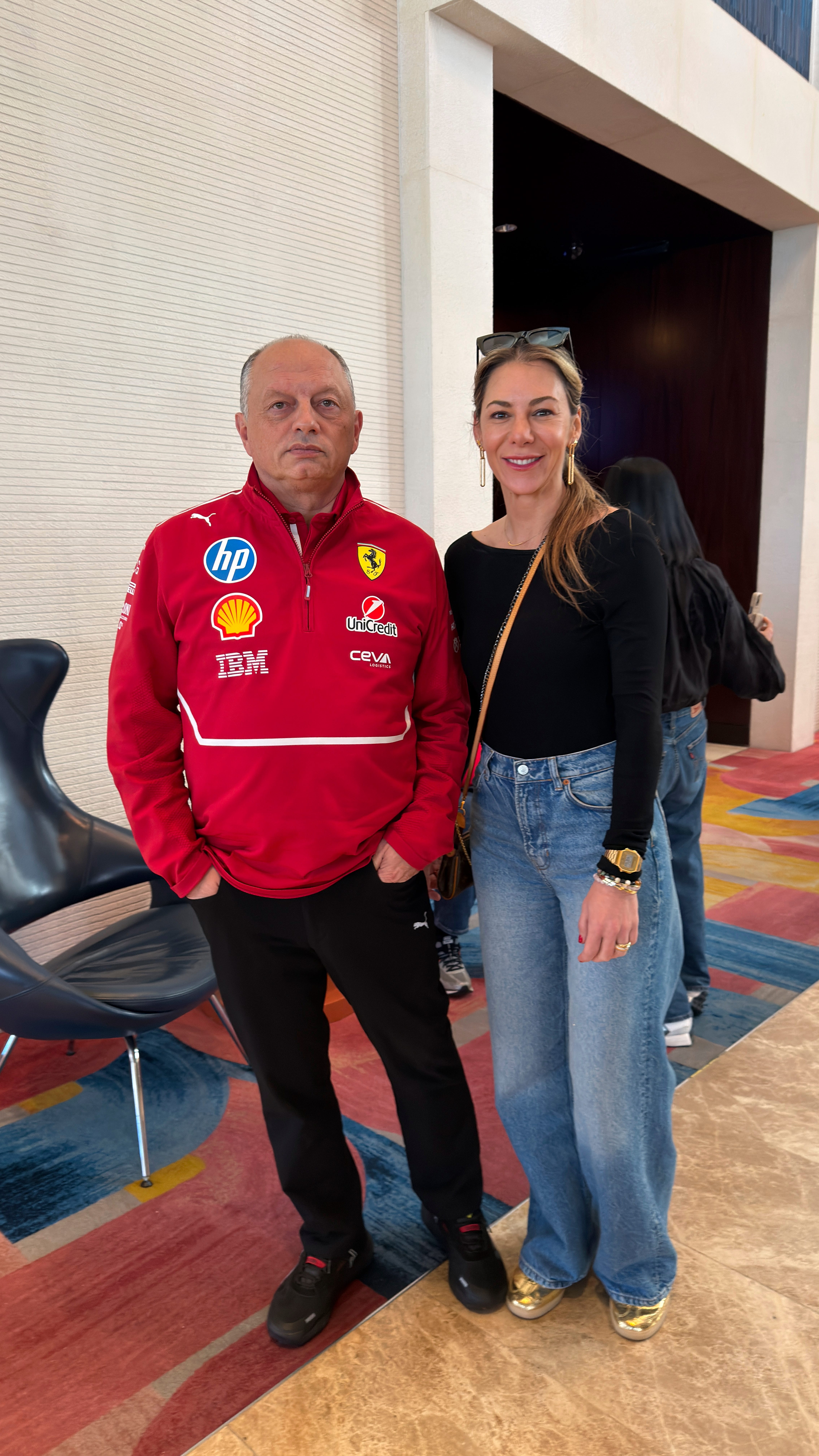
Today, he runs Scuderia Ferrari, the most valuable team in Formula 1, worth somewhere around $7 billion. He is paid a fraction of what his rivals earn and has no shares in the team. His businesses are private and mostly unknown to the layman. He built these companies himself, and their worth has never been disclosed.
Draveil
Frédéric Jean Henri Vasseur was born on May 28, 1968, in Draveil, a quiet commune in the southern suburbs of Paris. He is not the son of a champion. He is not the heir to a family business. The only clue to what became of him lies in his schooling. He studied at ESTACA (the École Supérieure des Techniques Aéronautiques et de Construction Automobile), graduating in 1995 with a degree in aeronautical and automotive engineering.
Vasseur entered motorsport through a workshop, not through money. He is, first and foremost, an engineer. He believes in the slow accumulation of small correct decisions. You can describe his entire competitive philosophy in five words he used when speaking of Hamilton’s 2026 form: “small stone after small stone.”
RPM
While still a student, Vasseur founded his first company, RPM. It prepared Formula 3 engines for Renault. Without a team or a track record, his first move in the sport was to build engines others could win with.
Vasseur’s instinct was to supply, not to drive or invest. RPM shouldn’t be a footnote in his story. It’s a scale model of the entire Vasseur operating system that he established when he was still in his mid-twenties: identify the unglamorous, indispensable layer, build a business around it, and let everyone else chase trophies and glory.
The Nursery
In 1996, a year after graduating from engineering school, Vasseur took over a small Formula 3 team called ASM. He ran it for a bit, and then pretty quickly bought the whole thing and renamed it ASM F3.
ASM won the French Formula 3 title in 1998. Then, working first with Renault and later with Mercedes, the team moved up to European F3 and basically stopped losing. They won four straight continental titles from 2004 to 2007. But the trophies weren’t the point. The real point was that ASM became the place talented kids went to get made.
In 2004, he went bigger. He teamed up with Nicolas Todt, the son of then-Ferrari boss and future FIA president Jean Todt, to start ART Grand Prix, aimed at the brand-new GP2 Series (what’s now Formula 2). Todt handled the commercial side; Vasseur ran the racing. ART grew into something much larger than one team. Today it races in Formula 2, Formula 3, Formula Regional, the all-female F1 Academy, and GT endurance. Vasseur has made a permanent imprint on the junior ladder.
Here are some of the names that came through his teams: Nico Rosberg, GP2 champion in ART’s first season. Lewis Hamilton, F3 champion under Vasseur in 2005, GP2 champion in 2006. Charles Leclerc, GP3 champion in 2016. Others over the years include: Sebastian Vettel, Romain Grosjean, Valtteri Bottas, Stoffel Vandoorne, Jules Bianchi, Paul di Resta, Kamui Kobayashi, Pastor Maldonado, Sébastien Buemi.
ART won multiple team titles across GP2 and GP3 and turned out champion after champion.
Instead of betting on one kid and hoping for a Hail Mary, Vasseur built the machine that turns out the kids and charged for the seats. That’s the business behind it. Junior single-seater racing is brutal, low-margin work. Think of it as the restaurant industry of motorsport. He ran it and won at it for twenty years, while the drivers he developed went off to earn tens of millions further up the grid. He was the sport’s talent supplier. (He ran ASM until 2015. Nicolas Todt sold his ART stake in 2018, and the team still races today under Sébastien Philippe.)
But the teams were only half of it. The other half he built out of pure engineering.
Picks and Shovels
There’s an old line about the Gold Rush: the people who got rich weren’t the ones panning for gold. They were the ones selling the picks and shovels. Vasseur did that twice.
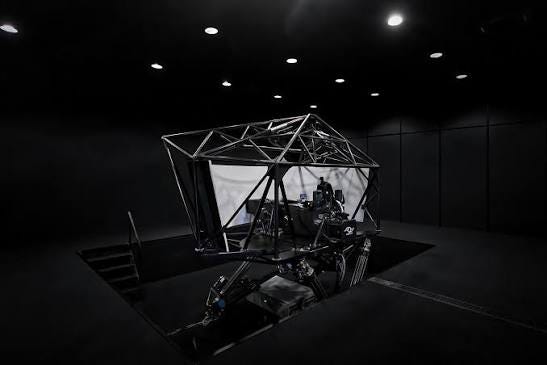
In 2010, he started AOTech, which builds driving simulators and does the aerodynamic design work that no serious team can exist without. Simulators and aero are where lap times are gained or lost, and AOTech sold those tools to the people chasing the margins that make a difference.
Then in 2012 came the big one. Vasseur set up a company called Spark Racing Technology, right as the FIA and promoter Alejandro Agag were putting together something nobody had seen before: a world championship for fully electric single-seaters, called Formula E. Everyone else looked at the new series and asked the obvious question: How do I win it? Vasseur asked a different one: How do I supply it?
He’d been preparing. Back in 2010, his ART operation had built an electric prototype, betting on an all-electric series. So when the FIA put the contract out to tender, Spark was ready. By November 2012, it was named the sole supplier of cars for Formula E’s first season. Spark then built forty identical chassis — every car on the grid — for every team, pulling together Dallara, McLaren, Williams, and Hewland to do it.
You don’t have to win a single race to make money. You don’t need a driver, a sponsor, or a lucky strategy call on race day. You keep building the cars; the whole championship is required to buy from you.
And the hits kept on coming. Spark won the contract for Formula E’s second-generation car in 2017, the third in 2020, the Gen3 Evo after that, and it’s now signed on for the fourth-generation car coming in 2026–27. Spark also built every car for the off-road Extreme E series, and when that wound down in 2025 and gave way to the hydrogen-powered Extreme H, Spark built the chassis for that.
For more than a decade, entire FIA world championships have run on chassis built by a company one French engineer set up to sell picks and shovels…it might be this story’s smartest single move.
So by the time Vasseur got a real Formula 1 job, he’d built an engine shop, a racing team that grew into a junior empire, a simulator-and-aero firm, and a manufacturer that supplies whole world championships, far more than some salaried manager with a couple of side projects. That’s the garden. What all of it is worth today and how much of each he still owns have never been made public. This is why nobody has ever managed to put an exact number on Vasseur’s net worth.
The Other Side of the Pit Wall
By 2016, Vasseur had proven he could build teams and businesses. What nobody knew was whether he could run a Formula 1 operation from the inside. Renault, coming back as a full works team, gave him the chance. They named him racing director first, then team principal by July.
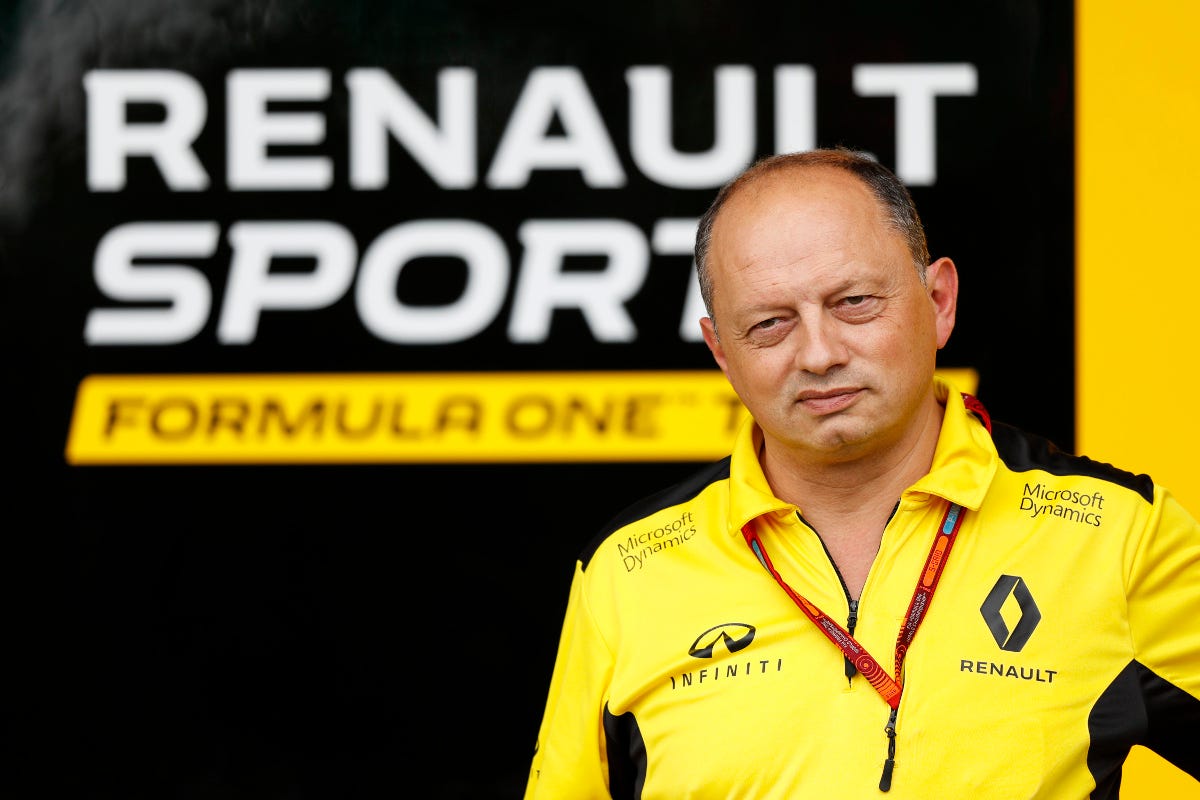
It lasted one season. Vasseur clashed with Renault’s managing director, Cyril Abiteboul, over how the whole thing should be run, and rather than fight a political war he wasn’t going to win, he walked away at the end of 2016. It tells you something about him. He’s an operator, not a politician. He wants clear lines and room to build. He didn’t have them, so he left. And he found somewhere that would give them to him almost immediately.
In 2017, he took over Sauber, the small, perma-broke Swiss team that spent much of its existence as a privateer doing more with a lot less. He became CEO and team principal and did what he always does: he fixed it. He steadied the money, rebuilt the technical side, and landed the Alfa Romeo title deal that rebranded the team. He also brought in a Ferrari junior that he knew very well. In 2018, Charles Leclerc made his Formula 1 debut for Vasseur’s Sauber. Mentor and mentee, one rung higher up the ladder.
For six years, he turned Sauber from a backmarker into a regular points-scorer on a fraction of the top teams’ budgets. As it turns out, that was the exact résumé Ferrari was looking for when its house caught fire.
Maranello
At the end of 2022, Ferrari pushed out Mattia Binotto after a year in which the car was often the fastest on the grid but was repeatedly undone by botched strategy calls and a string of engine failures. On January 9, 2023, Fred Vasseur walked into Maranello to run the most scrutinized, most passionate, and least forgiving team in the sport.
“Ferrari has always represented the very pinnacle of the racing world to me,” he said when he arrived. The team hadn’t won a drivers’ title since Kimi Räikkönen in 2007. The pressure at Ferrari comes from all directions: the tifosi, the Italian press, a century of expectation. It has broken plenty of capable men.
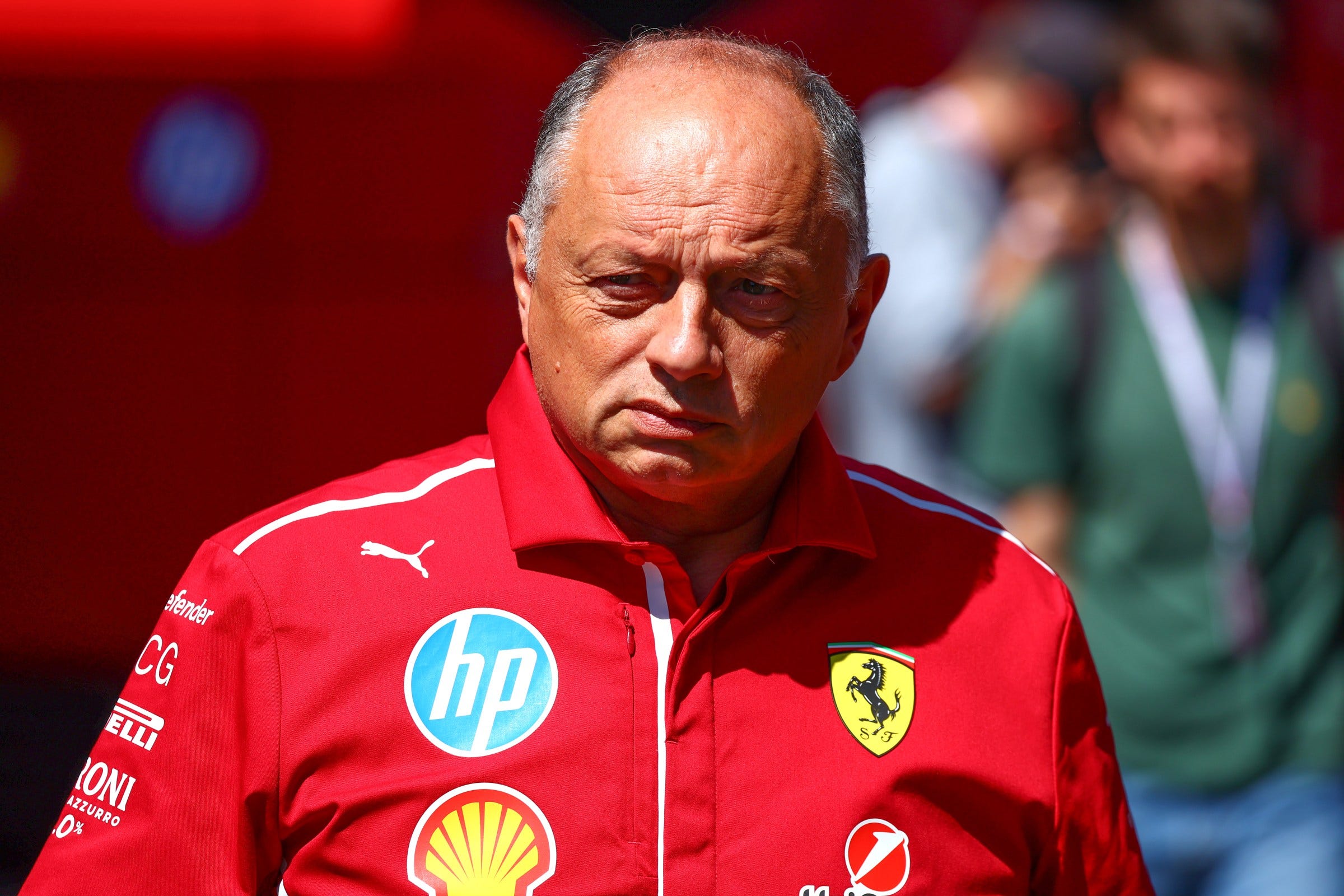
It must have been a proud, full-circle moment for Vasseur. He had developed Lewis Hamilton in 2005 and 2006, and Charles Leclerc in 2016, and now he was running the most mythical team in F1, with Leclerc as its star and, from 2025, Hamilton alongside him. Two of his old students, driving for him at the top of the sport.
The results have come slowly. 2023 was mainly about clawing back respect. In 2024, the team won five races, three for Leclerc, including a huge home win at Monaco and the win at Monza, and two for the departing Carlos Sainz. They lost the Constructors’ Championship to McLaren by just fourteen points at the final round.
Then Vasseur made his boldest call yet: he signed seven-time world champion Lewis Hamilton away from Mercedes for 2025. The driver he’d first put in a winning car nearly twenty years earlier was set to finish his career in red. Hamilton said flat out that Vasseur was the reason he went to the Scuderia.
Then 2025 almost ended him.
The Fire
It was a miserable year, no way around it. Ferrari didn’t win a Grand Prix. It finished fourth. And Hamilton, one of the greatest drivers who’s ever lived, went a whole season without a single podium for the first time in his career. It’s jarring to even write that.
The Italian press did what the Italian press does. Gazzetta dello Sport and Corriere della Sera reported that Ferrari’s management was ready to fire Vasseur. Over the Canadian weekend, Vasseur, who is normally the calmest guy in any garage, hit back hard, saying the speculation “hurt” the team and calling the reporting around his staff “disrespectful” and “very harsh.” Hamilton backed him publicly, calling the rumors nonsense, and repeating that Vasseur was the reason he’d left Mercedes.
Ferrari’s answer came just before the Hungarian Grand Prix at the end of July 2025. Instead of firing him, they gave him a new multi-year deal, reportedly running through at least the end of 2027. “Today we want to recognize what has been built and commit to what still needs to be achieved,” said CEO Benedetto Vigna. The speculation died. Vasseur had survived the chaos. It seems insiders at Maranello knew the total rules reset in 2026 would settle it.
Small Stone by Small Stone
2026 is the season that matters, and as I write this, it’s only half done. But so far it’s looked a lot like Vasseur being proven right.
Formula 1 threw out the rulebook for 2026. New engines, lighter cars, a clean slate that reshuffled the order. Ferrari’s new car, the SF-26, has a clear personality. The chassis is good: balanced, easy to drive, one of the most developable cars Maranello has turned out in years. The engine is the problem. Ferrari went with a smaller turbo, which makes the car quick off the line but leaves it down on top speed. Leclerc puts it at four or five tenths a lap short of Mercedes, and it qualifies around half a second slower.
There’s a Sunday catch, too. The SF-26 is hard on its rear tires in the heat, so a stint that starts on pace can quickly slide away. On a cool day, it can win. On a hot one, it’s managing a problem. Vasseur has acknowledged as much. He’s not here to sell us a fantasy.
But the results have come anyway. Leclerc opened with a podium in Australia. Hamilton got his first Ferrari podium in China, then at Barcelona in June, his first win in red, on the same track where Michael Schumacher scored his first Ferrari win thirty years earlier. At Silverstone, Leclerc took his first career win at the track, Ferrari’s 250th in F1, with Hamilton third. Nine rounds in, the driver who didn’t manage a single podium in all of 2025 has five. “It’s small stone after small stone,” Vasseur said.
It hasn’t been a coronation. The man leading the championship into the summer break (50 points clear of his rivals) is 19-year-old Mercedes driver Kimi Antonelli. He’s the youngest points leader the sport has ever had. Mercedes has been the team to beat, with eight wins in the first eleven rounds. Even Lando Norris, the defending champion, didn’t win until Hungary, the last race before the summer break.
Ferrari’s closer to the front than any of that suggests. Hamilton sits second in the drivers’ standings. But second isn’t first.
Last weekend in Hungary, Ferrari topped Friday practice and looked good for the win. Then came Sunday, and it all fell apart. Leclerc fourth, Hamilton fifth after a pit-lane speeding penalty. The car keeps surprising the team by being quick where it’s supposed to struggle and slow where it’s supposed to shine. The Scuderia is competitive again, in the fight, but not quite there. The World Drivers’ title drought still runs back to 2007 and Kimi Räikkönen…
and the pressure at Ferrari never lets up.
The Numbers
The thing Fred Vasseur runs is enormous. Ferrari is the most valuable team in Formula 1. Sportico puts it at about $7 billion, ahead of Mercedes and McLaren, on roughly $725 million in revenue and $152 million in operating profit. It’s owned by the publicly listed Ferrari N.V. (NYSE: RACE); the Agnelli family’s Exor is the biggest shareholder, and Enzo Ferrari’s son Piero Ferrari holds about ten percent. It’s the crown jewel of the grid.
The man running it gets paid a fraction of what his rivals do. Vasseur’s Ferrari pay is estimated at $7–9 million per year, well under Mercedes’ Toto Wolff (reportedly north of $16 million, and himself a billionaire co-owner) and under former Red Bull boss Christian Horner. His own drivers make him look cheap! Hamilton’s 2026 base salary is reported to be around $70 million, and Leclerc’s around $34 million. The two guys in his cars out-earn their boss roughly ten-to-one, the same two guys he first strapped into winning cars when they were teenagers and he was running a team out in the French countryside.
The net-worth sites list Vasseur at a few million dollars. Take that with a big grain of salt. Those trackers can only see what’s visible, and what’s visible is a salary. They can’t price RPM, ASM years, ART, AOTech, or Spark, the private company that’s held an exclusive FIA World Championship supply deal for over a decade. None of those businesses have a posted value anywhere, and Vasseur has never said what any of them are valued at or how much of each he still owns. So nobody outside his accountant knows what Vasseur is worth.
The Garden
Voltaire’s line is often read as a sign of giving up. Candide, worn out by the world, retreats to tend a little plot. But I find the alternate interpretation the better one: tending a garden is an honest way to make progress, not surrender. You can’t argue a garden into bloom. You work it, season after season, and you accept that the payoff comes slowly, and maybe sometimes not at all.
That’s Vasseur’s whole career. He never had one big fortune to throw around, so he grew a lot of small things instead: an engine shop, a race team he bought and turned into a title machine, a junior empire spanning a dozen championships, a simulator company, a manufacturer that builds the cars for an entire world championship, generation after generation. And running through all of it, a talent pipeline that produced two of the drivers now sitting in his Ferraris. He’s tending the most valuable, most demanding patch of ground in the sport, trying to grow a championship out of soil that hasn’t produced one in almost twenty years.
Vasseur is fifty-eight. He never chased a fortune. Instead, he built his businesses one stone at a time. The tifosi (yours truly included) hope it’s time now to decorate his garden with some hardware.
