

We strive to remain an independent source of motorsport business. If Business of Speed has provided you with useful insights this year, please consider subscribing.
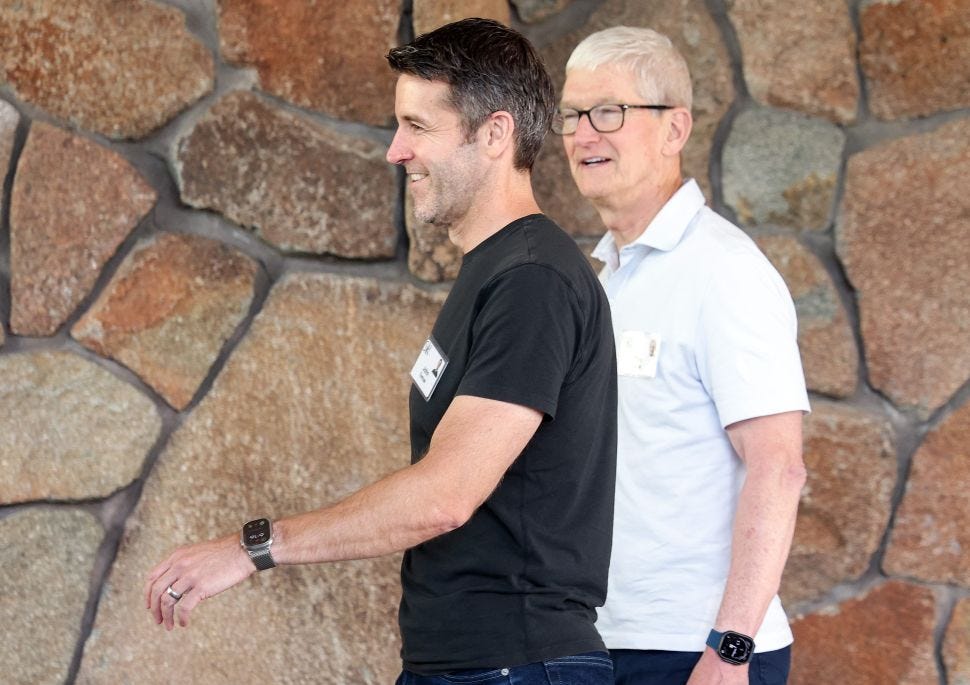
Tim Cook and John Ternus went to Idaho together earlier this month. Reuters photographed the Apple executives at Allen & Company’s Sun Valley conference on July 9. In another photograph from the resort, Mark Zuckerberg appeared alongside Netflix’s Ted Sarandos.
These are people who can get a meeting almost anywhere. They still made the trip.
What is Sun Valley?
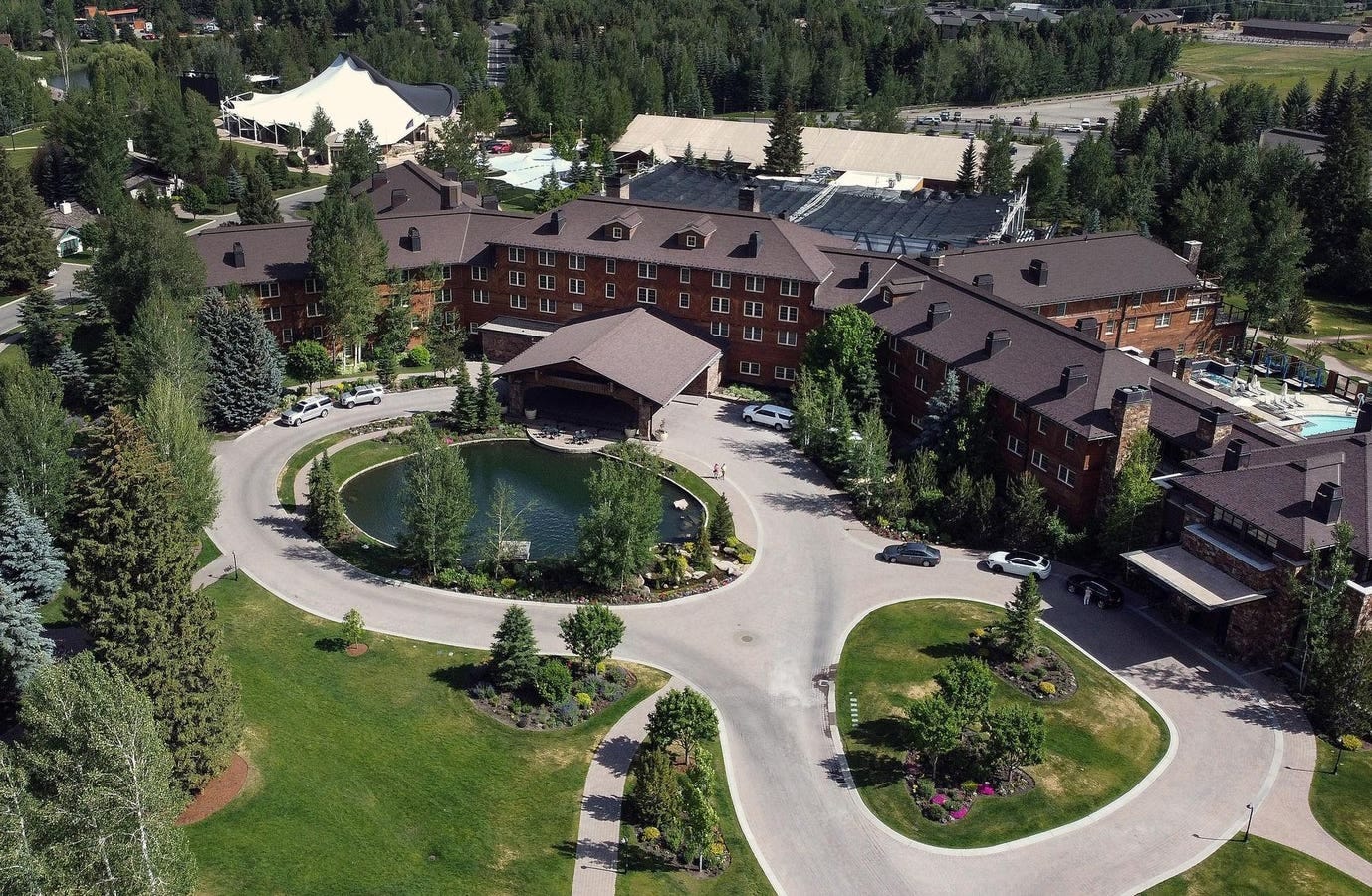
Sun Valley is a resort town in Idaho. In business circles, the name usually means Allen & Company’s annual invitation-only conference. Each July, the investment bank brings executives from media, technology and finance to the Sun Valley Resort for several days together. It’s the gathering often called “summer camp for billionaires.”
The conference combines private talks with meals and time around the resort. Families come, too. Allen has offered childcare to help guests stay longer, giving executives time together beyond the formal sessions. Photographers can capture who’s there; what gets discussed inside is largely private.
Allen & Company chooses the guests. If you’re invited, you have several days to get to know people you might otherwise have to spend months trying to meet, with the bank’s relationships helping bring everyone together. That gives conversations room to develop before anyone needs to negotiate a deal.
Allen & Company’s invitation-only retreat brings media, technology and finance leaders together for private conversations, with a bank as the host and executives who might eventually need its advice as the guests, giving people who normally have to negotiate a place on one another’s calendars several days to spend time together.
Formula 1 could build a recurring version of that around the Paddock Club. A sponsor’s customer could meet someone hosted by another team, with both hosts involved in the introduction and a reason to continue the conversation after the weekend. I think that would make an F1 partnership easier to renew. The teams would have to help shape it.
Last October, in our Business of Speed Manifesto episode, I described brands asking me for knowledgeable hosts who could help deepen relationships. They wanted people who understood the sport and could introduce guests to one another. As I put it then, “create more partnerships right there within the room.”
That request deserves a bigger place in how Formula 1 sells hospitality. The people who have already paid to be there could get much more from knowing who else has come.
Sun Valley gives its host a reason to keep the relationships going
Allen & Company’s core business is investment banking. Its bankers build relationships with executives who may later need advice on a transaction. Sun Valley gives those relationships time together, away from the ordinary meeting calendar.
For F1, the likely return would come through sponsorship renewals and hospitality spending: when you can show that a hosted weekend helped an important account progress, you’ve given the person approving next year’s budget something more concrete to consider than whether everybody enjoyed themselves. Nobody needs to announce a merger beside a timing screen.
The person making the introduction needs to know what the guest wants. A logo won’t tell you much. A procurement chief considering a supplier and a founder seeking distribution could each have a specific reason to accept an introduction, provided the host understands what they’re looking for. Somebody invited to celebrate a good year may prefer to watch qualifying.
If you’ve spent months arranging time with a customer who’s difficult to get into a meeting, you’ll want to keep some of the weekend to yourself. You might welcome an introduction to a complementary business. A rival supplier is a different conversation, and you’d want to know before making that introduction.
Turning every lunch into a prospecting session would make the next invitation less appealing.
F1 has already experimented with a more organized approach. In April 2016, Christian Sylt reported in Forbes that a business suite and networking app were launching in Bahrain, giving guests a way to find corporate attendees who wanted to connect and a quieter room where they could meet them during the weekend. The reporting doesn’t establish how many useful relationships followed.
Jeff Dodds described networking across Formula E’s partners
When Jeff Dodds joined the BoS podcast in December, we asked him about Formula E’s hospitality. He described F1’s approach as separate areas where brands entertain their prospects and customers. He said Formula E offered a more open environment where guests could mingle across those groups.
Dodds told us that Formula E’s partners and teams’ partners ended up doing business with one another because they could interact in that shared space. He didn’t give us a transaction total or a dollar figure. His account points to a behavior F1 could organize more deliberately.
I wouldn’t copy Formula E’s room wholesale. A private suite gives the sponsor time with its own customers, and that privacy is part of what it bought. An F1 program could offer a few selected introductions while leaving the host in control of the rest of the weekend, so the sponsor gains access it couldn’t arrange alone without surrendering the relationship it came to develop.
The invitation would start with a specific request from the guest and an agreement from the host. F1 could connect people across its own partnerships and the teams’. The original host could help choose the introduction and stay involved afterward. I’d want that host to get credit for the work.
There is a useful role here for someone who remembers the conversation between races. If a guest meets a potential supplier at one round, the next discussion should start with what’s changed since then. You shouldn’t have to explain your business again every time you arrive at a circuit.
Las Vegas is selling the meeting alongside the race
On July 28, F1 announced the return of its Business Summit on November 19 at Caesars Palace's Colosseum. A summit-only ticket costs $550, including taxes and fees. The $2,500 VIP package adds Thursday hospitality at Trackside Tavern on the Paddock Club Rooftop, transportation and a track tour, among other benefits.
Stefano Domenicali is scheduled to give opening remarks, with Liberty Media CEO Derek Chang closing the program. F1 has a place to bring executives together around a business agenda and carry those conversations into race hospitality later in the day.
The public ticket offer also shows how much work the Sun Valley comparison asks of F1. Allen & Company’s retreat is invitation-only. A conference ticket doesn’t guarantee the person you need to meet will attend, have time for you, or want the conversation. F1 would have to organize that part separately.
The $2,500 package bundles several benefits, so its price can’t tell us what someone would pay for an introduction. A useful meeting might strengthen the case for renewing an existing partnership even if F1 never charges a separate fee for arranging it.
I’d keep the initial program small enough that the hosts know everyone participating. That would give the teams a chance to see what their clients gained, and give guests a reason to ask for another introduction at a later race. F1 could grow it through relationships that continue between weekends, with different guests joining where it makes business sense.
I think the team commercial directors belong in the room where this gets designed. They’re the people who have to persuade the sponsors to bring back their best customer.
Business of Speed covers the business, technology, and lifestyle of racing: Formula 1, IndyCar, IMSA, WEC, NASCAR, and more. From Vincenzo Landino, entrepreneur and creator, featured in Bloomberg, TBPN, Yahoo! Finance, Forbes, Adweek, and Front Office Sports. You can find us on Instagram, Substack, and LinkedIn.


