

Ben Sulayem removes the ceiling
Who controls the money, who controls the room, and who's cooking dinner for Leclerc

Business of Speed is heading into the summer with momentum: 77% subscriber growth since the beginning of the year; we’re now seeing over 100,000 visitors to the site per month, and our podcast guests have included Tony Kanaan, Will Buxton, Marshall Pruett, and freaking Mario Andretti! That growth means more eyes on our partners.
Right now, we have one sponsorship spot available for the Q2/summer across the newsletter and full BoS ecosystem, and three remaining for Q3. These are integrated partnerships, not just banner ads. If that’s interesting to you or someone in your network, please reach out to partnerships@bizofspeed.com
Ben Sulayem removes the ceiling
On Thursday in Macau, the FIA’s member clubs voted to remove the limit on how long their presidents can serve. More than 90 percent backed it. Mohammed Ben Sulayem, who took the job in 2021 and ran unopposed for his second term in December, can now stay in power past the three-term cap that Jean Todt’s reforms put in place.
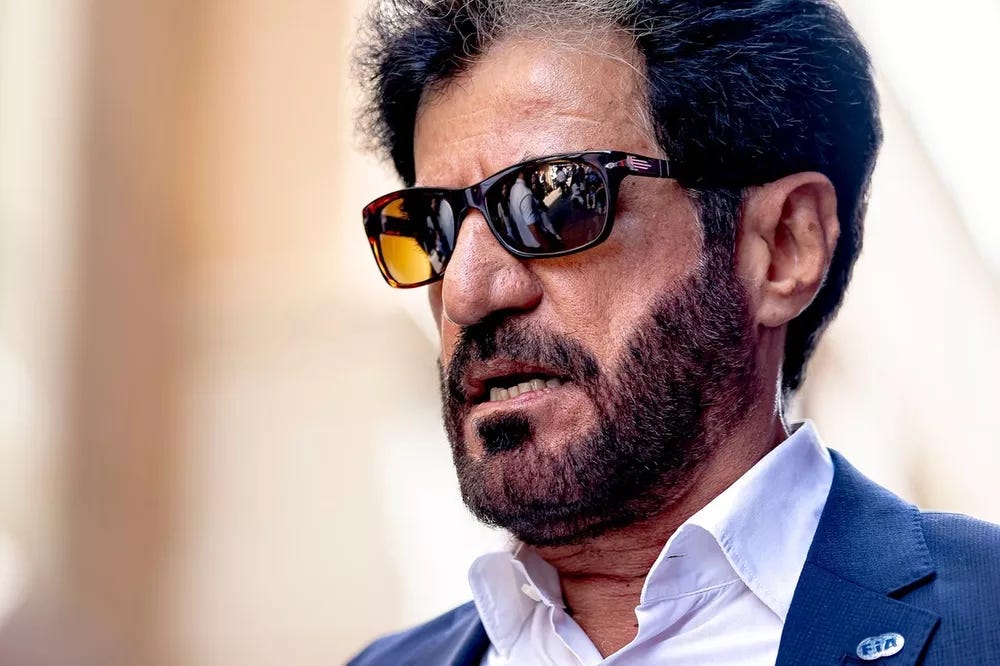
Future candidates must now “demonstrate sufficient experience within an FIA member or an FIA body,” language vague enough to mean whatever the sitting president needs it to mean. Ben Sulayem raised the ceiling above his own head and thickened the walls around the office in a single afternoon.
The people who might have challenged him are already gone. Carlos Sainz Sr., the two-time world rally champion, looked at the rules and walked. So did Tim Mayer, the former FIA chief steward we covered when he tried to take on the system, and Laura Villars, who we had on the Business of Speed podcast last year during her campaign. The barrier that stopped them was bureaucratic and effective: a candidate has to field a full slate of vice presidents drawn from all six FIA regions before the ballot will accept the name. Try assembling that as an outsider in a few months.
One guardrail survives. Candidates still cannot run past the age of 70, which would cap Ben Sulayem at the 2029 election, where he would be 68. The BBC reports he wants that gone too. Watch for it.
This is the same operator whose plan to bring naturally aspirated V8s back to F1 fell apart last autumn when he could not find the votes, and who removed the UK’s senate representative when the politics turned. When Ben Sulayem loses a fight on the merits, he changes the rules of the room. That is a pattern, and patterns predict.
Robert Reid saw it coming. The deputy president for sport resigned earlier this year and said, on the way out, that “fundamental principles were being eroded” and that “raising legitimate concerns was not always welcomed.” At the time it read as one official’s frustration. After Thursday it reads as a forecast.
Here is the business question underneath the governance theater. F1 is in its richest era, and Liberty’s machine has turned the championship into a global entertainment product. All of it sits atop a regulator now built around one man with no expiration date. Sponsors, manufacturers, and promoters are writing nine-figure checks into a sport whose rulebook can be rewritten by whoever controls the assembly. Stability is good for business until it becomes the wrong kind of stability.
Fox found IndyCar a bigger audience
IndyCar is posting the kind of television numbers it has chased for two decades. Through the first ten races of 2026, the series is averaging 1.7 million viewers on Fox, the strongest start in its modern history. The first three rounds each cleared a million, something that had not happened since the open-wheel split healed in 2008.
The standout is Arlington. The Grand Prix in the Cowboys’ backyard drew 1.336 million, up 142 percent on last year’s comparable round at Long Beach and 54 percent above the 2025 average for a Sunday that is not the Indianapolis 500. The 110th running of the 500 itself pulled 6.635 million. Across everything Fox has aired, the season average is 2.383 million, 10% ahead of last year.
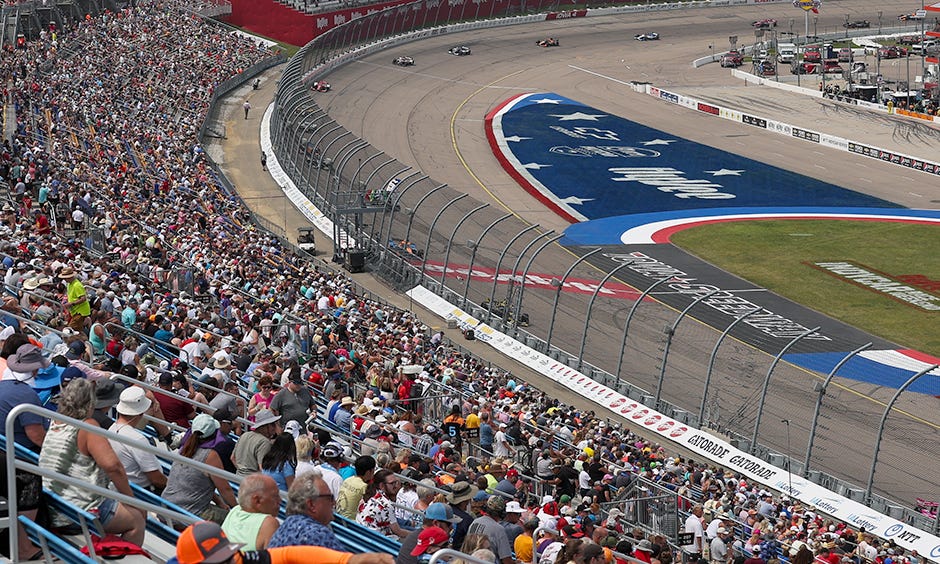
The most instructive number came from Road America. Fox scheduled the race directly behind a World Cup match and handed IndyCar 1.8 million viewers, its largest non-500 audience in fifteen years. That was engineered. Fox moved its inventory around to feed a property it co-owns, having bought a third of Penske Entertainment last summer for somewhere between 125 and 135 million dollars and tied the deal to a multi-year rights extension.
Doug Boles is the other variable. He took the president’s chair fewer than three weeks before the 2025 season after years running the Indianapolis Motor Speedway, where he steered more than 150 million dollars in investment. He treats each round as an event in its own right. Gateway goes to Sunday night primetime on network television this year, a first for the series. Mexico is on the expansion board.
We have been skeptical here before, and the skepticism still has teeth. The series carries what we called its 364-day problem: enormous relevance for the month of May and a fight to hold attention the rest of the year. A World Cup lead-in is borrowed reach. A primetime experiment is a bet that has to be repeated to count. The honest read is that the floor has risen, the million-viewer races are real, and the open question is whether Fox’s promotional muscle is building a year-round audience or renting one race by race.
What I’ve Been Following
Seventy days ago, a caterer in Liberty Lake, Washington, made a promise to the internet. Tim Mitchell, who runs Mangia Catering Co. and served 53,454 guests across 520 events last year, said he would cook and post a cinematic food video every single day, with no end date, until Ferrari’s Charles Leclerc agrees to sit at his table. He has not missed a day.
The campaign, called Cook for Charles, is completely organic, no agency, no paid reach. Gordon Ramsay has liked the work. HexClad has reached out.
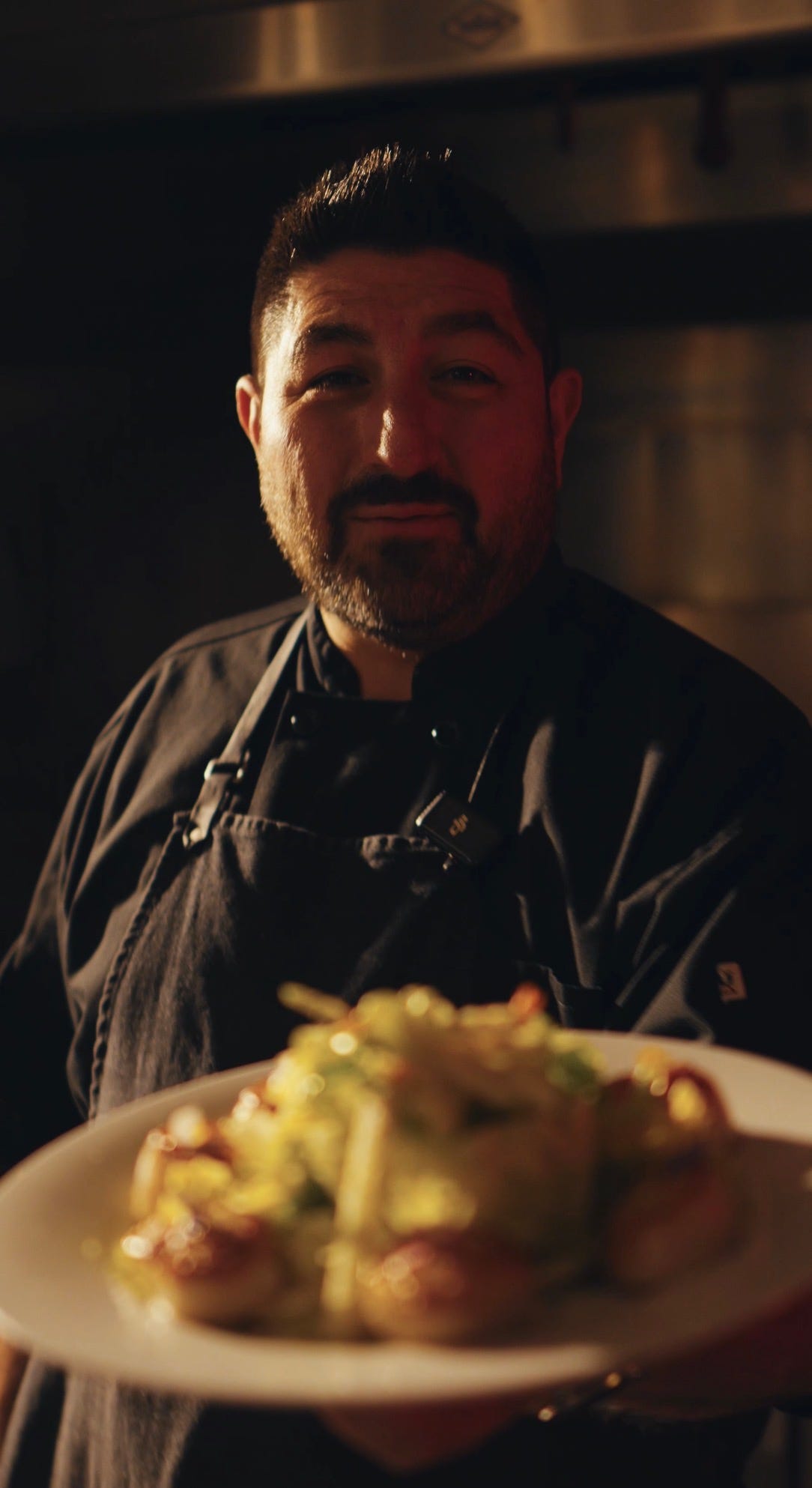
I’ll be talking to Chef Tim this week to get more details and report back. Stay tuned, but for now, give him a follow on Instagram.
My take: somebody on Leclerc’s commercial team should book the dinner, film it, and turn a regional caterer’s obsession into a Ferrari content win. The story is too fun to leave on the table.


Really good piece here what are your top 3 sports
Any news on Laura Villars legal action against the FIA election framework?